82nd Airborne Division Activation Reshapes Middle East Posture
Global markets react as the 82nd Airborne Division receives deployment orders to support Operation Epic Fury in March 2026.

The United States Department of War has initiated a significant shift in its regional strategy, as the Immediate Response Force activation begins for elite paratroopers destined for the Middle East. This movement, involving approximately 3,000 soldiers from the 82nd Airborne Division, marks a critical pivot in the ongoing military campaign known as Operation Epic Fury. The deployment, which comes amidst 82nd Airborne Iran news and heightening maritime tensions, underscores Washington’s intent to maintain a “rapid-entry” ground option while continuing its intensive air and naval strikes. Current developments suggest three primary drivers: the need for localized security at key transit nodes, the degradation of Iranian littoral capabilities, and the logistical preparation for potential contingencies involving high-value infrastructure.
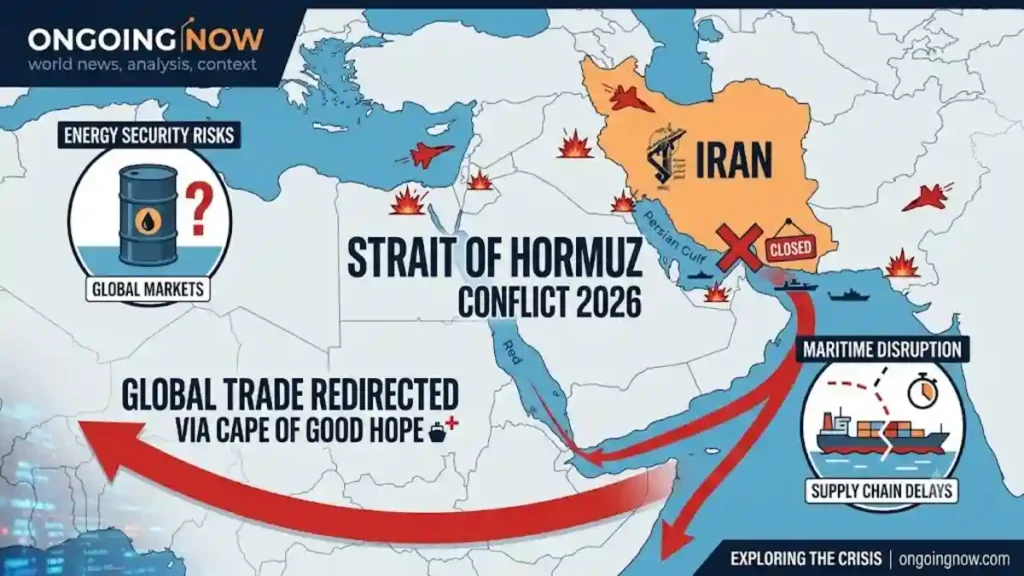
Within the opening hours of these deployment orders March 2026, the Pentagon confirmed that units from Fort Liberty (formerly Fort Bragg) are transitioning to a high-readiness posture. This decision follows weeks of Operation Epic Fury updates detailing more than 7,000 strikes against Iranian military assets, including the destruction of over 120 naval vessels and all 11 of the regime’s submarines. General Dan Caine, Chairman of the Joint Chiefs of Staff, noted that while the current focus remains on air dominance, the arrival of the Immediate Response Force provides “preserved optionality” for U.S. Central Command mission updates. International bodies, including the G7 and the European Union, have expressed concern over the economic ripple effects, particularly as oil prices fluctuate in response to Kharg Island invasion rumors and the continued closure of the Strait of Hormuz to U.S.-affiliated vessels.
Strategic Shift Under Operation Epic Fury
The transition of Operation Epic Fury from a purely standoff air campaign to one involving rapid-deployment ground forces signals a new phase in the Pentagon Iran strategy 2026. Military analysts suggest that the deployment of the 82nd Airborne Division is not intended as a traditional “heavy” occupation force but rather as a precision instrument for “joint forcible entry.” This capability allows the U.S. to seize and secure critical nodes, such as airfields or coastal facilities, within 18 hours of notification.
Secretary of War Pete Hegseth recently emphasized that the campaign is “laser-focused and decisive,” aiming to dismantle missile launchers and ensure the permanent cessation of Iran’s nuclear ambitions. However, the introduction of Army paratroopers deployment list updates has led to increased scrutiny from global diplomatic circles. While the White House maintains that ground troops are not currently slated for offensive land maneuvers, the presence of the 31st Marine Expeditionary Unit alongside the 82nd Airborne creates a formidable “rapid response” envelope in the North Arabian Sea.
Immediate Response Force Activation: Logistics and Readiness
The mechanical reality of the Immediate Response Force activation involves a complex synchronization of airlift and sustainment. Based out of Fort Liberty, North Carolina, the 82nd Airborne Division Sustainment Brigade has been working in high-intensity “Panther Avalanche” exercises to ensure that lethal precision can be delivered to the Persian Gulf theater at scale.
By the Numbers: Regional Force Posture (March 2026)
| Asset Category | Specific Units/Quantity | Primary Mission Objective |
| Ground Forces | 82nd Airborne IRF (3,000 troops) | Rapid entry and airfield seizure |
| Naval Presence | CSG 3 (USS Abraham Lincoln) & CSG 12 | Strike sorties and cruise missile launch |
| Amphibious | 31st Marine Expeditionary Unit | Littoral security and potential evacuations |
| Air Assets | F-22, F-35, B-1B, B-2, A-10 | Suppression of Integrated Air Defense (IADS) |
| Total Personnel | Approx. 50,000+ | Regional stability and mission support |
The “hard-fail” readiness of these units is designed to mass forces within 96 hours of an initial jump. This logistical speed is viewed as a deterrent against Iranian attempts to further disrupt global energy lanes or utilize its remaining mobile ballistic missile batteries.
Analyzing the 82nd Airborne Iran News and Regional Impact
The latest 82nd Airborne Iran news focuses on the cancellation of domestic training exercises to preserve the “freshness” of the Immediate Response Force. This tactical pause ensures that the brigade is not fatigued by simulation before a real-world insertion. Geopolitically, the move serves as a “strategic signal” to Tehran. By keeping a paratrooper brigade on a “tether,” the U.S. forces Iranian planners to distribute their remaining defensive resources across a wide range of potential landing zones rather than concentrating them against air threats.
International observers have noted that this deployment coincides with reports of “force majeure” declarations on liquid natural gas (LNG) contracts by regional suppliers like QatarEnergy. The economic dimension of the conflict is now at the forefront, with the EU Vice President and Estonian Prime Minister Kaja Kallas warning that “Europe has the right plan, but not the time” to adapt to these sudden shifts in energy security and air defense requirements.
Kharg Island: The Economic and Military Flashpoint
Central to recent Kharg Island invasion rumors is the island’s role as the backbone of the Iranian oil economy, handling nearly 90% of its crude exports. While the Pentagon has not confirmed any plans to seize the facility, the deployment orders March 2026 for specialized light infantry have fueled speculation regarding a “limited ground action” to secure the island and stabilize global energy markets.
Military experts compare this potential scenario to past operations where specialized units were used to secure oil terminals to prevent environmental catastrophes or “scorched earth” policies. However, the human impact on the civilian workers and the surrounding maritime environment remains a primary concern for humanitarian organizations. Any escalation around Kharg would likely result in an immediate spike in global Brent crude prices, which have already seen significant volatility since combat operations began on February 28.
US Military Buildup Middle East: Comparative Context
The current US military buildup Middle East is frequently compared in scale to the 2003 Iraq campaign, though the operational goals differ significantly. Unlike the heavy armored divisions used in previous decades, the 2026 posture relies on “Drone Dominance” and high-precision electronic warfare.
“The current conflict differs from the long wars in Iraq and Afghanistan. This campaign is about destroying capabilities, not holding territory indefinitely,” stated Secretary Hegseth during a March 19 briefing.
Analysis indicates that the U.S. is facing a “magazine depth” challenge. Iran’s strategy of launching low-cost Shahed-136 drones to exhaust expensive Patriot interceptors has forced the U.S. to transition toward more cost-effective countermeasures, including A-10 Thunderbolt II “tank killers” hunting fast-attack craft and AH-64 Apache helicopters providing southern-flank overwatch.
Human and Community Impact: The Civilian Perspective
Behind the Fort Liberty troop movements and high-level strategy are the human stories of those within the conflict zone and the service members deploying. In Iran, reports indicate that the air campaign has significantly degraded military infrastructure, but the “tit-for-tat” nature of the war has put civilian power grids at risk. The U.S. Embassy in Jerusalem has already directed all government employees to shelter in place, citing the risk of retaliatory missile strikes that have already caused damage in Tel Aviv and other regional hubs.
For the paratroopers at Fort Liberty, the sudden transition from training to deployment has significant effects on families and the local North Carolina community. The 82nd Airborne Division has a long history of being the “first to go,” a role that carries immense psychological and social weight. The “resolve and resiliency” mentioned by Pentagon Press Secretary Kingsley Wilson reflects the high stakes for the 50,000 service members currently supporting Operation Epic Fury.
Future Implications of Central Command Mission Updates
As Central Command mission updates continue to flow, the focus is expected to shift toward the “manufacturing” of threats. Admiral Brad Cooper, CENTCOM chief, stated that operations are now targeting drone and missile production sites to “eliminate the threat of the future.” This suggests that even if a ceasefire is negotiated, the structural military landscape of the region will have been permanently altered.
The Immediate Response Force activation remains the most visible sign of American commitment to this outcome. By placing paratroopers within hours of the Iranian coast, the U.S. has effectively “boxed in” the regime’s options, forcing a choice between diplomatic concessions or facing a joint forcible entry. The coming weeks will determine if the presence of the 82nd Airborne serves as the final deterrent or the vanguard of a new phase of ground engagement.
Stay sharp with Ongoing Now!
Source and Data Limitations: This report is based on official briefings from the U.S. Department of War, Pentagon fact sheets dated March 16–23, 2026, and verified reporting from Anadolu Agency, Reuters, and ABC News. Some details regarding specific troop arrival times and exact landing zones are withheld due to operational security (OPSEC) protocols. Rumors regarding the “invasion” of Kharg Island remain unverified by official government sources and are treated as strategic possibilities rather than confirmed orders. Data on interceptor stockpiles and Iranian naval losses are based on CENTCOM estimates and may be subject to revision as battle damage assessments (BDA) are finalized. Discrepancies between official U.S. statements and Iranian regime claims regarding civilian impact are noted; Ongoing Now prioritizes neutral, multi-sourced verification.