How Energy Security Risks Drive the Strait of Hormuz conflict 2026
How maritime disruptions and strategic aerial operations during the Strait of Hormuz conflict 2026 impact global trade.
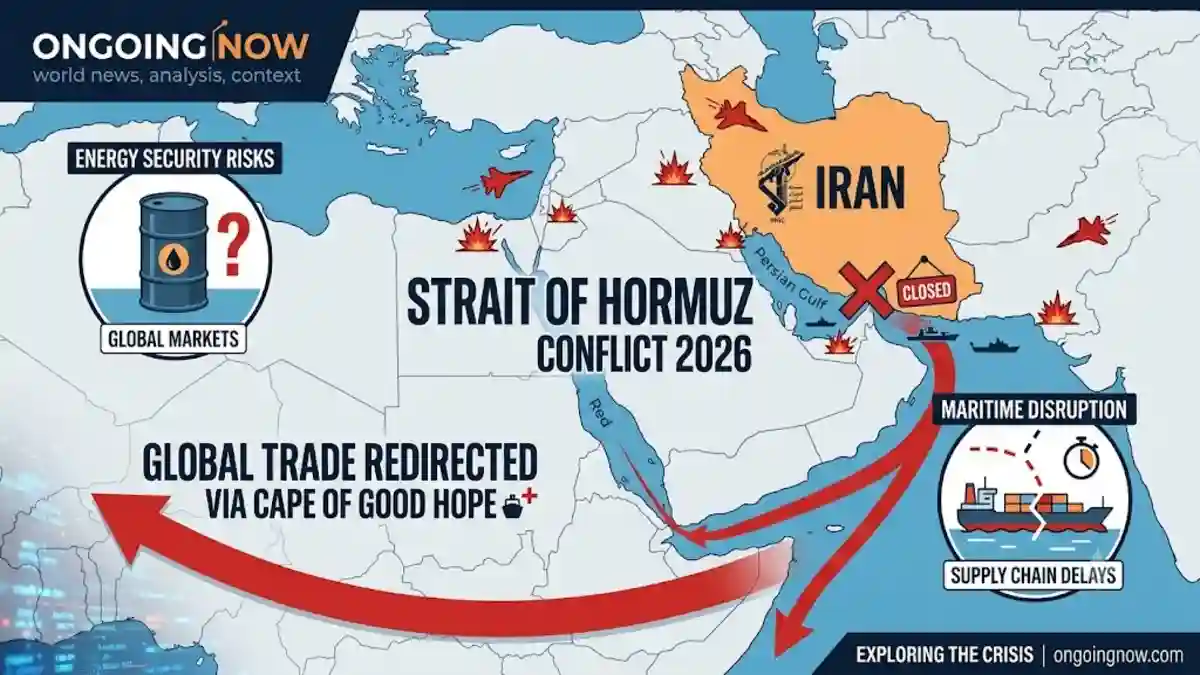
In the latest US Iran military conflict updates, the Operation Epic Fury escalation has redefined regional security, placing the Strait of Hormuz conflict 2026 at the center of international energy concerns. Following a coordinated Israel US joint military action and subsequent Middle East air strikes response, recent reports of B1 bomber strikes Iran IRGC positions highlight intensifying aerial operations. Simultaneously, heightened Red Sea shipping security risks and new Tehran military deployment news underscore the widening impact on global trade routes and maritime navigation.
Governments and international maritime bodies are closely monitoring these developments as global supply chains adapt to dual chokepoint disruptions. With key international shipping corridors experiencing unprecedented operational changes, the economic and logistical ramifications reach far beyond the immediate region.
Regional Security Dynamics in the Strait of Hormuz conflict 2026
The geopolitical landscape across the Persian Gulf and Gulf of Oman has undergone a fundamental shift since military operations commenced on February 28, 2026. Coordinated aerial and naval engagements involving the U.S. Department of Defense and the Israeli Defense Forces (IDF) initially focused on degrading strategic missile infrastructure, naval assets, and command networks.
In response to sustained pressure, Iran’s Islamic Revolutionary Guard Corps (IRGC) implemented maritime restrictions along the narrow waterway, asserting control over commercial shipping channels. This standoff directly threatens a narrow passage through which approximately 20 percent of global seaborne petroleum and liquefied natural gas (LNG) normally flows.
Diplomatic statements from Washington and Tel Aviv underscore divergent yet overlapping operational objectives. While U.S. officials emphasize counterproliferation and maritime security, regional allies have focused heavily on neutralizing long-range delivery systems and proxy support channels.
“The mission of Operation Epic Fury is laser-focused: Destroy Iranian offensive missiles, destroy Iranian missile production, destroy their navy and other security infrastructure – and they will never have nuclear weapons,” stated U.S. Secretary of War Pete Hegseth during a Pentagon operational briefing.
Operation Epic Fury Escalation and Aerial Campaign Operations
The scale of military engagements expanded markedly in mid-July 2026 following a brief lull in direct combat operations. U.S. Central Command (CENTCOM) resumed targeted air missions after commercial vessels encountered renewed hostile actions in strategic waters.
Key elements of the ongoing air campaign include the deployment of heavy strategic bombers. The U.S. Air Force utilized long-range B-1B Lancer strategic bombers operating out of British airbases to strike reinforced IRGC positions and weapons assembly facilities.
Strategic Aircraft Deployment: B-1B Lancer bombers carrying high-capacity precision ordnance were integrated into CENTCOM strike packages to target deeply buried facilities.
Target Infrastructure: Operations prioritized ballistic missile storage silos, coastal defense missile sites, air defense command nodes, and IRGC naval staging bases.
Base Approvals: The operational expansion was facilitated by host-nation coordination, including approval from British Prime Minister Andy Burnham for U.S. forces to conduct strikes from bases in the United Kingdom.
In tandem with aerial missions, Iranian defense authorities announced renewed military deployments, repositioning mobile missile batteries and fast-attack coastal craft along the Iranian coastline. This strategic posture has heightened risks for international shipping lanes navigating the Persian Gulf.
Maritime Disruption and the Strait of Hormuz conflict 2026 Impact
The primary economic strain of the conflict stems from the near-total shutdown of commercial tanker traffic through the Strait of Hormuz. Following initial strikes in late February, major global maritime insurers canceled Protection and Indemnity (P&I) coverage for vessels navigating the passage.
Concurrently, commercial shipping lines have faced expanding hazards in the Red Sea and the Bab el-Mandeb Strait. Houthi forces in Yemen re-engaged in maritime targeting, forcing international container carriers and energy transport fleets to divert away from both primary Middle Eastern maritime routes.
| Operational Metric | Pre-Conflict Baseline | Status in Mid-2026 | Economic Impact |
| Strait of Hormuz Petroleum Flow | ~20–21 Million Barrels/Day | Near-zero commercial transit | Global crude price volatility; supply constraints |
| Global LNG Transit (QatarEnergy) | ~20% of global trade | Force Majeure declared | European and Asian gas spot price spikes |
| Alternate Maritime Routing | Suez Canal / Direct Transit | Cape of Good Hope transit | Adds 10–14 transit days; higher shipping costs |
| Maritime Insurance Rates | Standard commercial premiums | Widespread coverage cancellations | Severe capital tie-ups for cargo in transit |
This dual-chokepoint obstruction represents the most significant logistical disruption to international maritime trade in decades. Commercial operators must choose between prolonged transit around the African continent or halting shipments entirely.
What the Data Shows: Supply Chain Realignment
Data compiled by global logistics tracking agencies indicates that diverting container vessels around the Cape of Good Hope increases transit times by 10 to 14 days for Asia-to-Europe trade lanes. This extended voyage consumes additional fuel, inflates container shipping spot rates, and creates severe equipment imbalances at major manufacturing hubs.
Furthermore, major transshipment hubs in the Persian Gulf, such as Jebel Ali, face severe operational bottlenecks. Thousands of container units containing essential industrial parts, automotive components, and IT hardware remain stranded, impacting global supply chains dependent on just-in-time delivery models.
Strategic Drivers Behind the Strait of Hormuz conflict 2026
Understanding the underlying mechanisms of this crisis requires examining both military objectives and regional economic dynamics. The conflict reflects long-standing tensions surrounding nuclear proliferation, regional proxy networks, and freedom of navigation in international waters.
┌──────────────────────────────────────────────────────────┐
│             Operation Epic Fury Escalation               │
└────────────────────────────┬─────────────────────────────┘
                             │
            ┌────────────────┴────────────────┐
            ▼                                 ▼
┌──────────────────────────┐     ┌──────────────────────────┐
│ Targeted Aerial & Naval  │     │ Coastal Deployment &     │
│ Strikes on IRGC Assets   │     │ Maritime Restrictions    │
└───────────┬──────────────┘     └───────────┬──────────────┘
            │                                 │
            ▼                                 ▼
┌──────────────────────────┐     ┌──────────────────────────┐
│ Disruption of Regional   │     │ Dual Blockade: Hormuz    │
│ Security Infrastructure  │     │ & Red Sea Trade Routes   │
└───────────┬──────────────┘     └───────────┬──────────────┘
            │                                 │
            └────────────────┬────────────────┘
                             │
                             ▼
┌──────────────────────────────────────────────────────────┐
│  Global Energy Price Volatility & Supply Chain Diversion │
└──────────────────────────────────────────────────────────┘
The closure of maritime routes has forced energy-importing nations in Europe and Asia to seek alternative petroleum and gas suppliers. While land-based pipelines—such as Saudi Arabia’s East-West Pipeline to Yanbu on the Red Sea—provide limited relief, their capacity is insufficient to fully offset the loss of Hormuz transit volume.
Analysis: Energy Security and Strategic Vulnerabilities
The dependence of global markets on narrow maritime chokepoints remains a primary structural vulnerability. Unlike land-based energy transport, maritime chokepoints can be effectively restricted through asymmetrical military measures, including sea mines, fast-attack craft, and coastal anti-ship missile systems.
Consequently, the current security environment has compelled international bodies to re-evaluate freedom-of-navigation enforcement mechanisms. Military strategists emphasize that short-term tactical actions alone may not resolve the underlying structural risks to commercial shipping without formal diplomatic protocols.
Humanitarian and Community Impact Across Middle East Transit Hubs
Beyond the economic and strategic dimensions, the conflict has generated substantial human impacts across regional communities. Maritime personnel, port workers, and civilian populations residing near strategic infrastructure face heightened safety risks and logistical isolation.
Merchant seafarers stranded aboard commercial vessels in the Persian Gulf encounter significant hazards due to ongoing military exchanges and sea mine risks. International maritime unions have raised concerns regarding crew safety, access to essential supplies, and delayed rotations for thousands of civilian mariners stuck in conflict zone waters.
In coastal port towns and regional urban centers, non-combatant populations contend with broader disruptions. Attacks on regional utility infrastructure, including desalination plants in Gulf Arab states, highlight the vulnerability of essential civilian services during high-intensity regional conflicts. Humanitarian organizations continue to stress the imperative of protecting critical civil infrastructure and upholding international humanitarian law.
Key Metrics and Timeline of the Conflict
The evolution of hostilities since February 2026 demonstrates a rapid transition from targeted counterproliferation strikes to a sustained regional crisis.
February 28, 2026: Launch of joint operations under the designation Operation Epic Fury (U.S.) and Operation Roaring Lion (Israel). Initial strikes target military command facilities, air defense networks, and strategic infrastructure.
March 2–4, 2026: Iranian authorities announce restrictions on navigation through the Strait of Hormuz. QatarEnergy declares force majeure on LNG exports following strikes near processing facilities.
March 18–20, 2026: The U.S. Pentagon deploys the USS Boxer Amphibious Ready Group and the 11th Marine Expeditionary Unit to bolster CENTCOM forces in the region.
May 5, 2026: Concluding phase of the initial high-intensity strike campaign, transitioning to maritime blockade and containment operations.
June 2026: Diplomatic negotiations in Islamabad produce a preliminary memorandum of understanding aimed at reopening shipping lanes, though operational terms remain contested.
July 6–21, 2026: Resumption of maritime incidents leads to renewed U.S. air operations, including the first reported operational use of B-1B strategic bombers in the updated phase.
Comparative Analysis of Maritime Chokepoint Crises
To contextualize the current developments, analysts frequently reference historical maritime conflicts in the Middle East. The most direct precedent is the “Tanker War” phase of the 1980–1988 Iran-Iraq War, during which both belligerents targeted commercial shipping vessels in the Persian Gulf.
| Conflict Context | Primary Geographic Scope | Tactical Methods Used | Global Impact & Response |
| Tanker War (1984–1988) | Persian Gulf & Strait of Hormuz | Naval mines, anti-ship missiles, gunboats | U.S. Operation Earnest Will (convoy escorts); minor crude price spikes |
| Red Sea Attacks (2023–2024) | Bab el-Mandeb & Red Sea | Drones, anti-ship ballistic missiles | Operation Prosperity Guardian; partial trade rerouting around Africa |
| Strait of Hormuz Conflict 2026 | Hormuz, Persian Gulf & Red Sea | Integrated strikes, mines, dual blockade | Concurrent dual-chokepoint closure; global energy market shock |
Unlike earlier conflicts, the 2026 crisis is characterized by the simultaneous disruption of both primary Middle Eastern maritime passages. Modern anti-ship capabilities, combined with extensive satellite tracking and uncrewed aerial systems, have significantly heightened the operational complexity of protecting commercial shipping compared to 20th-century operations.
Diplomatic Mediation Efforts in the Strait of Hormuz conflict 2026
International diplomatic efforts to de-escalate the crisis remain active, involving regional and global intermediaries. Diplomatic delegations from Qatar and Oman have facilitated indirect talks between U.S., Iranian, and international representatives to negotiate maritime security guarantees and restore commercial transit rights.
However, diplomatic negotiations face persistent friction regarding the terms of maritime access and sanctions policy. Public statements from executive leadership highlight the fragile status of ongoing negotiations.
“They are being hit so hard, and they want to make a deal,” stated U.S. President Donald Trump during a public address on recent regional developments. “But I say they are not ready to make a deal, because every time they make a deal, they want to change it. They are not ready. They will be ready very soon”.
In response to continued shipping threats, U.S. officials warned that additional strikes could target key transportation and utility infrastructure if commercial vessels encounter further attacks in international waters.
Measured Outcomes and International Repercussions
The ongoing standoff in the Middle East carries significant implications for global trade, security alliances, and energy policy. As energy-importing nations adapt to long-term maritime uncertainty, governments worldwide are reassessing national strategic petroleum reserves and supply chain resilience.
Key international outcomes under observation include:
Energy Market Restructuring: European and Asian nations are accelerating long-term contracts for non-Gulf LNG and crude oil supplies to reduce vulnerability to regional chokepoints.
Maritime Escort Operations: Discussions continue among international naval coalitions regarding structured convoy frameworks to protect merchant vessels transiting international corridors.
Macroeconomic Strains: Prolonged shipping delays and elevated transport costs contribute to persistent inflationary pressures in import-dependent economies.
As military and diplomatic actions unfold, global observers remain focused on whether diplomatic channels can establish a durable security framework for international maritime commerce.
Stay sharp with Ongoing Now!
—
Source and Data Limitations: This report relies on verified operational updates, official press briefings, and data compiled by maritime security organizations, CENTCOM, and public news archives up to July 2026. Information regarding operational details, naval transit metrics, and damage assessments is subject to military classification and ongoing field reporting delays. Unverified claims regarding tactical casualties, speculative political forecasts, and non-attributed military reports were excluded to maintain analytical rigor and factual compliance.