USPS Liquidity Crisis: Why FERS Payments Are Paused
The United States Postal Service halts employer annuity contributions to preserve cash flow through fiscal year 2026.
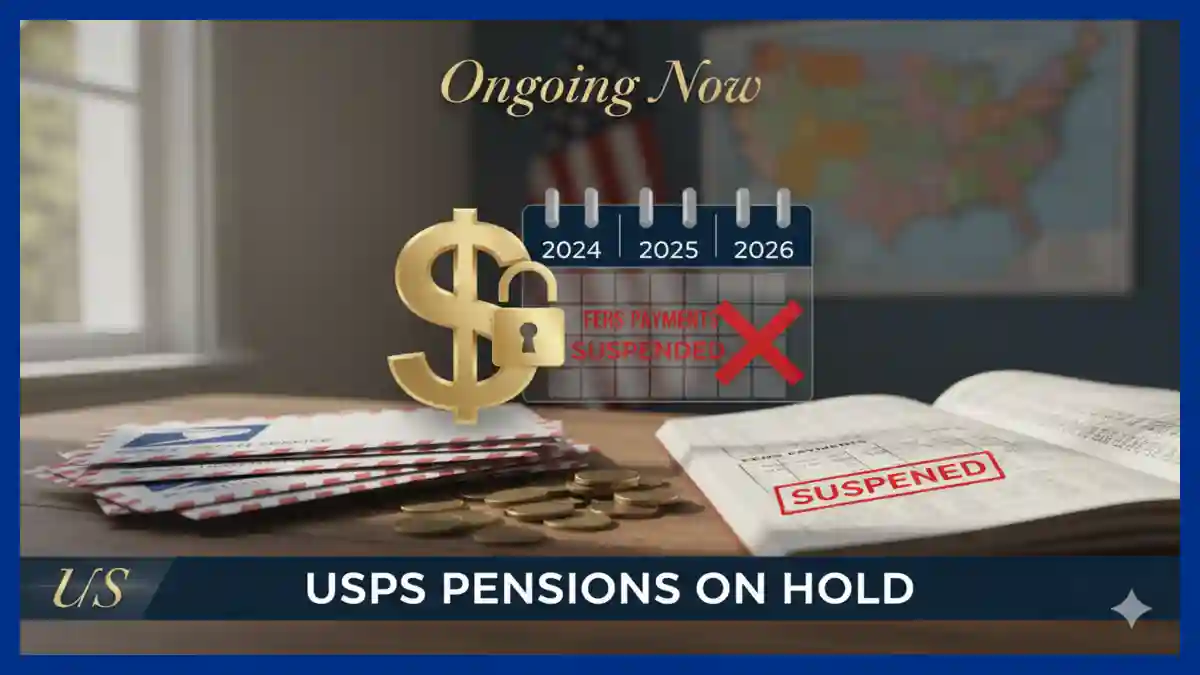
The United States Postal Service (USPS) has officially entered a period of heightened fiscal preservation as the Board of Governors USPS decision to suspend employer contributions to the Federal Employees Retirement System (FERS) takes effect. This administrative action, effective April 10, 2026, is a direct response to a looming USPS liquidity crisis that federal officials warn could leave the agency with insufficient cash for operations by early 2027. By pausing these payments, the agency aims to conserve approximately $2.5 billion through the end of the current fiscal year, addressing immediate government agency payment defaults while maintaining essential mail delivery services.
While the move signals a “severe financial crisis,” the USPS has confirmed that current postal worker retirement benefits and the postal service pension fund’s long-term stability remain intact for now. The suspension specifically targets the employer-paid portion of the FERS annuity, while employee withholdings and Thrift Savings Plan (TSP) contributions continue to be processed and transmitted to the Office of Personnel Management (OPM). The postal union response FERS has been measured, with organizations like the National Association of Letter Carriers (NALC) and the American Postal Workers Union (APWU) emphasizing that there is no immediate threat to retiree checks, though they are calling for urgent legislative reform to resolve the underlying USPS financial news trends.
The Strategic Suspension of FERS Annuity Payments
The decision to halt employer contributions represents one of the most significant fiscal maneuvers by the Postal Service since the 2022 Postal Service Reform Act. The USPS Board of Governors authorized this FERS annuity suspension updates protocol following a series of quarterly reports showing multi-billion dollar net losses. Chief Financial Officer Luke Grossmann stated that the risk of insufficient liquidity for daily operations “dramatically outweighs” the long-term risk to the pension fund, which remains among the best-funded in the federal government.
Under the current plan, the agency will stop paying its portion of the “normal cost” for FERS—estimated at roughly $200 million every two weeks. This conservation strategy is designed to ensure that the USPS can meet its primary obligations, including payroll for its 600,000-plus employees and payments to the private-sector suppliers that power its logistics network. The suspension does not apply to Social Security or the matching funds for the TSP, ensuring that the defined-contribution portion of worker retirements remains unaffected.
Analysis: Why the USPS Liquidity Crisis Reached a Breaking Point
Financial analysts point to a “perfect storm” of declining mail volumes and rising operational costs as the catalyst for the current cash crunch. Despite the “Delivering for America” 10-year plan intended to modernize the agency, First-Class Mail—traditionally the agency’s most profitable product—has seen volume drops of over 2 billion pieces annually. While the Shipping and Packages segment has grown, the revenue gains have not been sufficient to offset the massive legacy costs associated with a universal service mandate that requires delivery to every American address six days a week.
| Key Metric (FY 2025) | Value | Trend vs. Previous Year |
| Total Operating Revenue | $80.5 Billion | +1.2% |
| Net GAAP Loss | $9.0 Billion | -5.3% |
| First-Class Mail Volume | 41.8 Billion Pieces | -5.0% |
| Estimated Cash Exhaustion | February 2027 | N/A |
| Immediate FERS Savings | $2.5 Billion | N/A |
The table above illustrates the central paradox of the current USPS financial news: while revenue is technically increasing due to aggressive price hikes, the net losses remain staggering due to “uncontrollable” costs like retirement health benefits top-ups and workers’ compensation adjustments.
Institutional Response and Legal Precedent
The suspension of payments to the OPM is not without precedent, though its current scale is notable. In previous decades, the USPS has deferred payments to the Civil Service Retirement System (CSRS) and retiree health funds during periods of extreme economic duress. The Office of Legal Counsel has historically affirmed that such pauses do not strip employees of their “service credit,” meaning that postal workers continue to accrue time toward their retirement eligibility even when the agency is not actively funding the annuity in real-time.
“The Board’s action was based on a sound business judgment that prioritizes our competing obligations in a rational manner,” the agency noted in an official statement. This “rationalization” is essentially a defensive posture against a hard deadline: if the USPS were to continue the FERS payments at the current rate, it would likely lack the cash to keep trucks moving and post offices open through the next winter peak season.
Impact on the National Postal Workforce
For the hundreds of thousands of individuals currently employed by the agency, the FERS annuity suspension updates bring a mix of administrative assurance and long-term concern. The APWU has been vocal in ensuring its members understand that their personal checks will not be smaller, as employee-side contributions are still being deducted and sent to the federal government. However, the union has used the moment to pivot toward Capitol Hill, arguing that the “liquidity crisis” is an artificial byproduct of outdated investment rules.
“APWU members should rest assured that this will have no immediate impact on their retirement security. However, this pause is a direct result of continued inaction by Congress to fix legislative constraints.”
— American Postal Workers Union (APWU) Official Statement
The postal union response FERS highlights a growing consensus that the 2022 reforms, while helpful, did not go far enough. Unions are now pushing for the USPS to be allowed to invest its pension assets in higher-yield private index funds—similar to the TSP—rather than being restricted to low-yield Treasury bonds.
Legislative Outlook and Economic Implications
The broader government agency payment defaults discussion has now shifted toward the 2026 midterm elections. The Postal Service is seeking three primary legislative remedies to avoid a permanent “default” on its pension obligations:
CSRS Recalculation: A fair reassessment of legacy pension obligations that the USPS argues are overfunded.
Investment Reform: The authority to move pension funds out of government bonds.
Debt Ceiling Increase: Raising the agency’s statutory borrowing limit to provide a larger safety net.
Without these changes, the $2.5 billion saved through the FERS suspension acts merely as a “bridge” to early 2027. If the underlying structural deficit is not addressed, the agency may be forced to consider more drastic measures, including further facility consolidations or adjustments to delivery standards, which could have a ripple effect across the American e-commerce economy.
Evidence-Based Political Insights
The current USPS strategy is a calculated risk. By choosing to “default” on a payment to another government entity (the OPM) rather than to private vendors or employees, the Board of Governors is betting that the political fallout will be more manageable than a total operational shutdown. This move essentially forces Congress to become a stakeholder in the agency’s survival.
If the USPS runs out of cash, it cannot be “bailed out” in the traditional sense without significant legislative gymnastics, as it is designed to be self-sustaining. The current suspension is less of a financial solution and more of a political signal—a “flare” sent up from one of the nation’s oldest institutions, indicating that the status quo is no longer mathematically viable.
Stay sharp with Ongoing Now!
Source and Data Limitations: This report is based on official USPS financial disclosures (FY 2025 10-K and Q1 2026 reports), the April 9, 2026, Board of Governors announcement, and official statements from the National Association of Letter Carriers (NALC) and the American Postal Workers Union (APWU). Data regarding the February 2027 cash exhaustion date is sourced from the USPS “Mandatory Stand-Up Talk” documents issued in early April 2026. This analysis excludes speculative commentary regarding potential 2026 election outcomes or unverified rumors of Postmaster General resignation, focusing strictly on documented fiscal policy and institutional responses.