F-16 Jets Scramble in New Jersey as Pilots Breach VIP Temporary Flight Restrictions
NORAD intercepts multiple civilian planes over Bedminster and MetLife Stadium during high-profile diplomatic events.
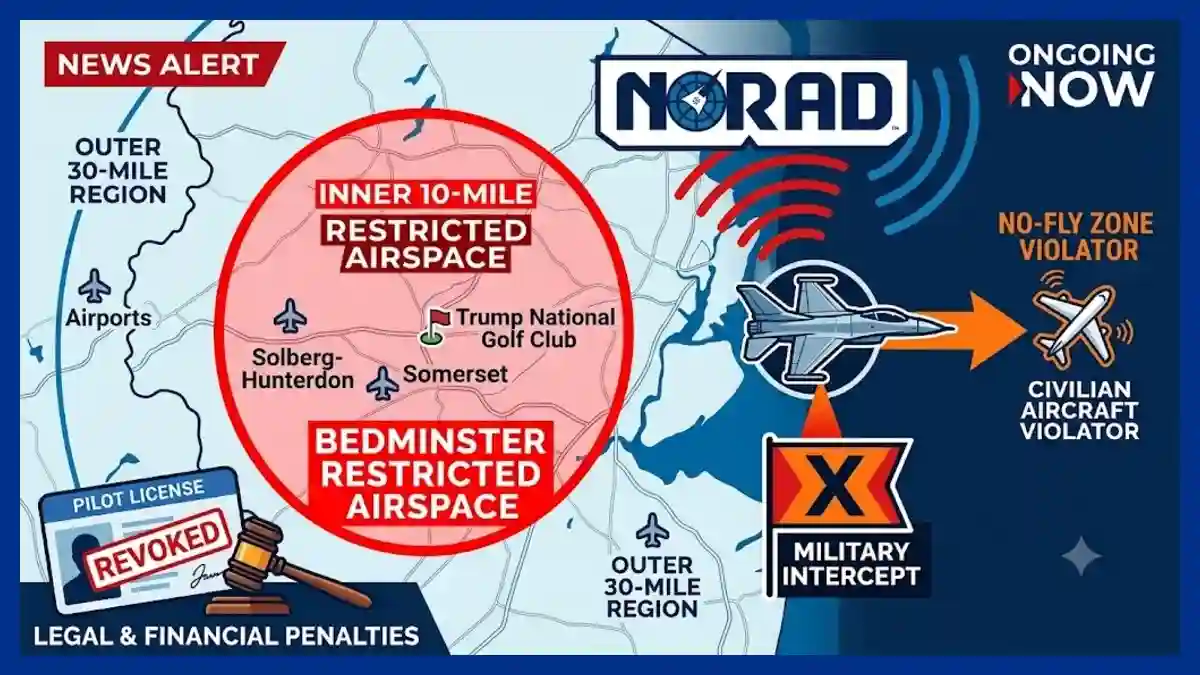
A complex network of federal temporary flight restrictions centered over Somerset County continues to reshape air traffic patterns throughout the mid-Atlantic region. Whenever former President Donald Trump travels to his Bedminster golf resort, the Federal Aviation Administration (FAA) implements strict security perimeters in coordination with the United States Secret Service. These recurring security zones place significant administrative burdens on the region’s aviation infrastructure, altering routes for commercial carriers and halting recreational flights across northern New Jersey.
The operational friction caused by these presidential no-fly zones highlights a long-standing tension between national security protocols and local economic activity. With general aviation flight boundaries tightly enforced, regional facilities must adjust to sudden drops in traffic, while local pilots navigate strict compliance rules. The enforcement of these boundaries remains absolute, with federal agencies prepared to deploy military intercepts to secure the airspace from unauthorized civilian aircraft.
The Architecture of Presidential Airspace Restrictions
The FAA manages VIP travel by carving out temporary flight restrictions (TFRs) structured as two concentric cylinders of protected airspace. The inner ring spans a 10-nautical-mile radius from the secure location, acting as an absolute no-fly zone for standard civilian aircraft. Within this core perimeter, only commercial airliners on active instrument flight plans and official military or law enforcement flights are permitted to operate.
+-------------------------------------------------------------+
|               30-Nautical-Mile Outer Ring                   |
|  - Transit permitted only with active IFR flight plans       |
|  - Continuous discrete transponder squawk code required      |
|  - Constant two-way radio contact with air traffic control   |
|  - Banned: Flight schools, gliders, drones, banner-towers   |
|                                                             |
|               10-Nautical-Mile Inner Ring                   |
|       +---------------------------------------+             |
|       |  - Total general aviation ban         |             |
|       |  - Local airfield runways closed      |             |
|       |  - Authorized commercial transit only |             |
|       |                                       |             |
|       +---------------------------------------+             |
+-------------------------------------------------------------+
The outer ring extends the restriction to a 30-nautical-mile radius, heavily regulating transit through a zone that encompasses some of the busiest general aviation airfields in the country. To enter this outer boundary, pilots must maintain constant two-way radio communication with air traffic control and broadcast a discrete transponder code. Recreational activities, including flight training, banner towing, glider operations, and unmanned drone flights, are entirely suspended within the full 30-mile perimeter.
Operational Strain on Local New Jersey Airfields
The geographic footprint of the Bedminster restricted airspace directly impacts multiple regional transportation hubs. Local airfields situated within the inner 10-mile radius, such as Somerset Airport in Bedminster and Solberg-Hunterdon Airport in Readington, bear the brunt of the security mandates. During active TFR windows, these airports are effectively closed to non-commercial operations, grounding local flight schools and private aircraft owners.
            [Bedminster Security Epicenter]
                           │
         ┌─────────────────┴─────────────────┐
         ▼                                   ▼
   Within 10 Miles                     10 to 30 Miles
[Somerset & Solberg]              [Princeton & Central NJ]
 ── Total GA Grounding             ── Standard Transit Restricted
 ── Flight Schools Paired Down     ── Transponder Tracking Required
 ── Maintenance Runs Halted        ── Flight Training Suspended
According to data compiled by regional aviation advocacy groups, an active multi-day TFR disrupts operations for up to 17 airfields across New Jersey and eastern Pennsylvania. Facilities like Princeton Airport and Central Jersey Regional Airport find their daily traffic sharply reduced. Air traffic control centers must manually reroute regional flights away from the secure corridor, creating minor ripple delays that can extend into the wider commercial arrival streams for Newark Liberty International Airport.
NORAD Enforcement and Intercept Protocols
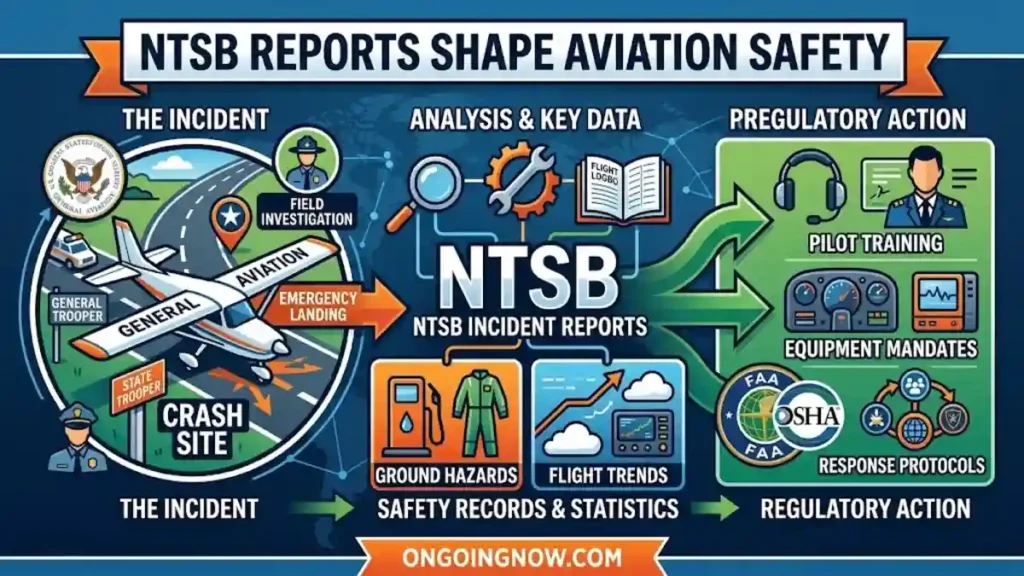
Airspace security is monitored continuously by the North American Aerospace Defense Command (NORAD). If a civilian aircraft enters the restricted zone without authorization or fails to broadcast the correct transponder signal, the pilot is categorized as an unauthorized track. NORAD regularly scrambles armed military aircraft, typically F-16 fighter jets out of Atlantic City or nearby atmospheric defense stations, to visually identify and divert the aircraft.
Unauthorized Airspace Entry Detected
       │
       ▼
NORAD Scrambles Armed F-16 Fighter Jets
       │
       ▼
Visual Intercept & Wing-Rocking Signals Established
       │
       ▼
Emergency Frequency Radio Contact (121.5 MHz)
       │
       ▼
Civilian Aircraft Escorted to Nearest Safe Airfield
Military pilots follow strict international protocols during an intercept. The fighter jet positions itself on the left side of the civilian aircraft, rocking its wings to establish visual contact and command the pilot to follow. If the civilian pilot does not respond, the military aircraft may execute a sharp turn across the plane’s flight path to create wake turbulence, or deploy quick-burning flares to draw attention. Intercepted pilots are required to immediately switch their radios to the emergency frequency 121.5 MHz and follow instructions to land at the nearest designated airfield.
Legal and Administrative Penalties for Pilots
The FAA treats temporary flight restriction violations with significant administrative severity. Under federal aviation regulations, the agency has the authority to issue immediate emergency orders suspending or revoking pilot certificates. Data from historical airspace incursions shows that enforcement actions are pursued aggressively to deter future violations in high-density corridors.
| Enforcement Category | Primary Trigger Action | Typical Regulatory Consequence |
| Minor Incursion | Inadvertent clipping of the outer 30-mile boundary | Administrative warning letter; mandatory safety counseling. |
| Unresponsive Transit | Entering outer ring without active ATC contact | 90 to 180-day pilot license suspension; potential civil fines. |
| Core Penetration | Entering the inner 10-mile no-fly zone | Permanent revocation of license; civil penalties up to $10,000. |
Note: Penalty outcomes are based on historical FAA enforcement trends and remain subject to administrative review based on the specific circumstances of the flight.
Beyond FAA sanctions, pilots who knowingly violate national defense airspace face potential criminal prosecution by the Department of Justice under federal law. Convictions can carry penalties of up to one year in federal prison and substantial criminal fines. Because these penalties are severe, flight planning applications and digital flight logs now regularly integrate real-time NOTAM alerts to warn pilots before they approach active restriction coordinates.
Financial Impact on the General Aviation Industry
The recurring application of VIP flight restrictions introduces financial strain for small businesses operating within the New Jersey general aviation sector. Unlike major commercial airlines, local aviation businesses depend heavily on short-notice charter flights, corporate transit, and weekend flight training hours to sustain their operations.
“A single weekend under an active VIP flight restriction can cause a local flight school to lose 20% to 25% of its projected monthly revenue,” states a regional airport economic assessment. “When these restrictions occur multiple times during the summer peak season, the cumulative losses directly impact the viability of aircraft maintenance shops, fuel suppliers, and hangar operations.”
Aircraft maintenance facilities face unique hurdles under these security protocols. Federal rules require certified mechanics to perform test flights after major repairs before an aircraft can be legally returned to service. Because test flights are prohibited within the inner security ring, completed aircraft remain grounded inside hangars, causing scheduling backlogs and delaying customer deliveries for weeks at a time.
Societal Effects on Suburban Communities
The footprint of these security protocols extends beyond local runways into the residential communities underlying the flight paths. When military jets are scrambled to intercept an unresponsive aircraft, they must occasionally accelerate rapidly over populated areas. The resulting low-altitude engine roar regularly prompts surges in emergency calls to local police departments from residents concerned by the unexpected military activity.
Additionally, the ban on unmanned aircraft systems (UAS) within the 30-mile outer ring creates operational hurdles for commercial drone pilots. Businesses that rely on drones for real-estate photography, construction site inspections, utility mapping, and agricultural surveys are forced to pause operations completely during active security windows. This temporary regulatory halt disrupts project timelines and creates revenue gaps for local independent contractors.
The Evolution of Executive Airspace Security
The current framework governing presidential airspace security is the result of major policy shifts implemented after the events of September 11, 2001. Prior to these updates, temporary flight restrictions were relatively small, localized blocks used primarily to manage traffic density around airshows or major disaster areas. The integration of expansive, multi-ring VIP perimeters represents a permanent transition toward proactive defense monitoring.
Pre-2001 Airspace Protocols
  - Localized, small-radius flight restrictions
  - Primary focus on basic traffic separation
  - Minimal involvement of military intercept tracking
       │
       ▼ [Post-9/11 Security Infrastructure Shift]
       │
Modern VIP Airspace Architecture
  - 30-mile multi-tiered defensive cylinders
  - Continuous radar coordination with NORAD command
  - Strict administrative license revocation policies
National pilot organizations, including the Aircraft Owners and Pilots Association (AOPA), have consistently worked with federal agencies to advocate for solutions that balance security with economic survival. While the FAA has occasionally introduced narrow transit corridors to help pilots navigate around the edges of the restricted zones, the fundamental policy remains unchanged. The protection of executive figures takes priority over civilian airspace access, making these multi-ring restrictions a regular reality for contemporary flight operations.
Analysis of Airspace Incursion Data
An analysis of FAA airspace enforcement records reveals that the vast majority of temporary flight restriction violations are caused by pilot disorientation or incomplete pre-flight briefings rather than malicious intent. The highly congested nature of the tri-state airspace makes it easy for private pilots to wander across an active boundary if they rely solely on visual navigation without checking real-time NOTAM updates.
[Incomplete Pre-Flight Briefing] ──> [Accidental Boundary Crossing]
                                                   │
                                                   ▼
                                      [FAA Radar Alert Triggered]
                                                   │
                                                   ▼
                                      [NORAD Scramble Order Given]
To reduce the frequency of these accidental entries, federal regulators have collaborated with aviation software developers to integrate automated push notifications into digital navigation programs. These tools issue visual and audible alerts when an aircraft’s GPS path intersects with an active or upcoming flight restriction. By improving real-time situational awareness, safety officials aim to lower the number of military scrambles, ensuring that defense resources remain focused on genuine security threats while keeping civilian pilots clear of regulatory penalties.
Stay sharp with Ongoing Now!
Source and Data Limitations: This article relies on official federal aviation regulatory guidelines, including FAA Order JO 7930.2 and historical Notice to Airmen (NOTAM) archives. Airspace dimensions and operational rules conform to standard United States Secret Service security protocols for VIP travel as defined under Title 14 of the Code of Federal Regulations (14 CFR) Section 91.141. Intercept procedures and communication mandates are sourced directly from the Aeronautical Information Manual (AIM) and public NORAD flight safety directives. Financial impact estimates and airport data are based on operational surveys compiled by regional general aviation advocacy groups.