Fatal Shooting Triggers Backlash as ICE Enforcement Guidelines Stir Legal Battles
Federal operational shifts in Maine prompt constitutional litigation, congressional scrutiny over body cameras, and regional defense funding.
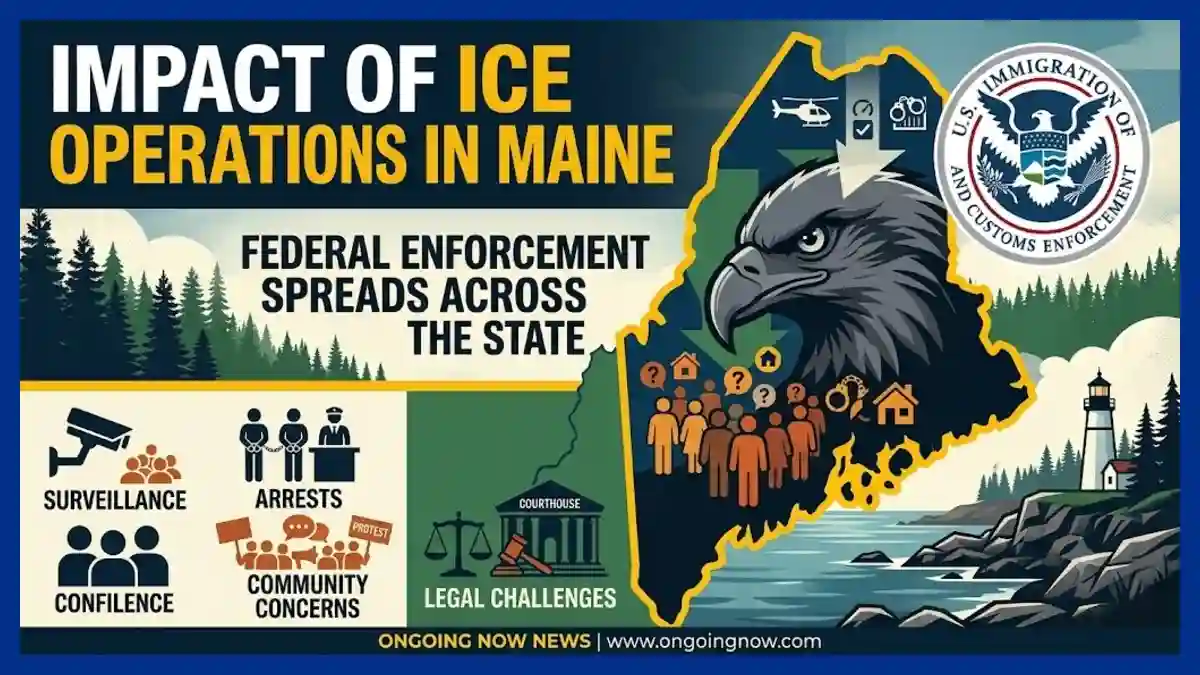
The implementation of updated federal immigration enforcement guidelines has altered the operational parameters of Department of Homeland Security (DHS) personnel across northern border sectors, bringing intense scrutiny to ICE department jurisdiction limits. As Immigration and Customs Enforcement shifts its localized strategy, the execution of the administrative removal warrants process has faced immediate administrative challenges. Concurrently, congressional committees are reviewing federal agency accountability protocols to ensure oversight over rising immigration enforcement budget allocations. These adjustments directly impact how regional employers engage with workplace authorization verification services and how federal deportation tracking systems log local actions. In response, municipal coalitions are expanding regional immigration legal defense funds to navigate these evolving enforcement frameworks.
The Evolution of Northern Border Enforcement Policy
The administrative updates to federal immigration enforcement guidelines represent a significant pivot in how interior areas away from the southern border are monitored. Historically, the New England sector, particularly Maine, experienced lower concentrations of enforcement personnel compared to states along the Mexican border. However, shifting priorities within the executive branch have realigned personnel deployments to address northern border traffic and interior tracking.
The enforcement framework relies heavily on clear determinations of ICE department jurisdiction limits. Under federal law, immigration officers possess specific statutory authorities within 100 miles of any international border or maritime boundary. In states like Maine, where the entire geography falls within this zone due to its expansive coastline and international border with Canada, the practical boundaries of this authority are a subject of ongoing legal debate.
+--------------------------------------------------------------------------+
|                 U.S. IMMIGRATION ENFORCEMENT FRAMEWORK                   |
+--------------------------------------------------------------------------+
| 100-Mile Border Zone Authority  | Permits expanded checkpoints, vessel   |
|                                 | searches, and warrantless stops within |
|                                 | constitutional limits.                 |
+---------------------------------+----------------------------------------+
| Administrative Warrants Process | Utilizes civil immigration warrants    |
|                                 | signed by ICE officers rather than     |
|                                 | judicial branch magistrates.           |
+---------------------------------+----------------------------------------+
| Statutory Local Coordination    | Governed by 8 U.S.C. § 1357(g),        |
|                                 | defining voluntary versus mandated    |
|                                 | municipal cooperation parameters.      |
+--------------------------------------------------------------------------+
The Mechanism of the Administrative Removal Warrants Process
A central component of recent domestic enforcement operations is the reliance on the administrative removal warrants process. Unlike criminal warrants, which are reviewed and issued by independent judicial magistrates under Article III of the U.S. Constitution, administrative warrants are executed entirely within the executive branch. They are signed by designated immigration officers to authorize the arrest of individuals suspected of civil immigration violations.
Civil rights organizations argue that this process lacks the traditional checks and balances inherent in the judicial system. When federal agents operate within residential neighborhoods or commercial sectors, the distinction between administrative authority and judicial mandates frequently complicates local law enforcement responses. Many municipalities have established local ordinances that prohibit municipal police officers from honoring administrative detainers or warrants unless accompanied by a judicial order signed by a judge.
The operational friction caused by these warrants is visible in recent field actions across northern New England. While federal agencies maintain that administrative removal warrants are essential for maintaining the integrity of statutory deportation mandates, legal advocates contend that their widespread execution without judicial oversight can lead to systemic due process challenges.
Federal Agency Accountability Protocols under Review
Following recent high-profile enforcement operations that resulted in community disruptions and operational casualties, lawmakers have intensified their review of federal agency accountability protocols. The absence of comprehensive body-worn camera mandates during specific field operations has drawn criticism from both state and federal legislators. Accountability frameworks are designed to ensure transparency, yet implementation varies significantly across regional field offices.
+--------------------------------------------------------------------------+
|                  CORE ELEMENTS OF AGENCY ACCOUNTABILITY                  |
+--------------------------------------------------------------------------+
| Body-Worn Camera Mandates      | Standards governing when field agents  |
|                                 | must record operational encounters.    |
+---------------------------------+----------------------------------------+
| Use-of-Force Investigations     | Protocols defining internal affairs    |
|                                 | versus independent law enforcement     |
|                                 | review after critical incidents.       |
+---------------------------------+----------------------------------------+
| Data Log Transparency           | Requirements for the publication of    |
|                                 | localized arrest and detention stats.   |
+--------------------------------------------------------------------------+
Congressional oversight committees have requested detailed logs regarding the application of these protocols during interior enforcement actions. The primary objective is to establish clear operational guidelines that protect the constitutional rights of individuals while allowing federal agencies to fulfill their statutory obligations. Legal analysts emphasize that without uniform enforcement of accountability protocols, public trust in localized law enforcement partnerships diminishes rapidly.
Analysis: Immigration Enforcement Budget Allocations and Scale
An examination of federal immigration enforcement budget allocations reveals a sustained shift in resources toward technology-driven interior enforcement and data integration. Congress has appropriated significant funds to modernize field tracking systems, expand detention capacities, and increase the number of tactical units deployed to non-traditional border sectors.
+--------------------------------------------------------------------------+
|               FISCAL DATA AND RESOURCE DISTRIBUTION MAPPING              |
+--------------------------------------------------------------------------+
| Fiscal Year | Interior Enforcement | Technology Systems | Border Security|
+-------------+----------------------+--------------------+----------------+
|   2024      | $4.10 Billion        | $380 Million       | $5.20 Billion  |
|   2025      | $4.45 Billion        | $412 Million       | $5.50 Billion  |
|   2026 (Est)| $4.85 Billion        | $465 Million       | $5.90 Billion  |
+--------------------------------------------------------------------------+
| Caveat: Estimates are based on requested appropriations and historical    |
| line-item distributions across DHS operational components.               |
+--------------------------------------------------------------------------+
The expansion of these budgets directly correlates with the increased frequency of field operations in states like Maine, New Hampshire, and Vermont. Financial data indicates that resources are increasingly funneled into automated data systems, allowing field offices to coordinate directly with national repositories. This fiscal strategy prioritizes long-term infrastructure improvements over temporary personnel assignments, ensuring that heightened enforcement capabilities remain structural rather than seasonal.
Workplace Authorization Verification Services and Corporate Compliance
As federal immigration enforcement guidelines are enforced more rigorously, businesses throughout the Northeast are adjusting their hiring practices to ensure strict compliance with statutory requirements. The utilization of workplace authorization verification services, such as the federal E-Verify system, has become a core component of corporate risk management strategies.
Employers face substantial civil penalties if found to be knowingly employing individuals without valid work authorization. However, the integration of verification services introduces distinct administrative challenges for seasonal industries, such as agriculture, hospitality, and seafood processing, which form the backbone of Maine’s regional economy.
Administrative Delays: Tentative non-confirmations generated by electronic verification databases often require weeks to resolve, during which time employees remain in a precarious legal status.
Compliance Costs: Small and medium-sized enterprises frequently lack the legal infrastructure necessary to navigate complex employment eligibility verification audits, leading to operational friction.
Labor Market Strains: Stricter enforcement frameworks reduce the available pool of seasonal laborers, forcing industries to compete intensely for authorized personnel.
Federal Deportation Tracking Systems and Constitutional Challenges
The technical infrastructure supporting interior operations relies heavily on federal deportation tracking systems. These interconnected databases compile biometric data, travel histories, and administrative records to identify and track individuals subject to removal orders. While proponents argue that integrated tracking systems enhance national security and operational efficiency, civil liberties groups raise significant constitutional concerns.
Litigation filed in the U.S. District Court for the District of Maine highlights the potential for systemic errors within these electronic repositories. In cases such as Carvajal-Muñoz v. Ravencamp, plaintiffs allege that flawed entries within national tracking systems have led to the unlawful detention of legally present individuals, including valid visa holders and permanent residents.
The legal arguments focus primarily on Fourth Amendment protections against unreasonable seizures and Fifth Amendment guarantees of due process. When automated systems misidentify an individual’s current legal status, field agents acting on that data may inadvertently execute unlawful detentions, triggering costly federal litigation and undermining the integrity of federal immigration enforcement guidelines.
Regional Immigration Legal Defense Funds and Community Impacts
In response to heightened federal activity, local governments and non-profit organizations have mobilized to expand regional immigration legal defense funds. These funds are designed to provide access to counsel for low-income individuals facing administrative removal proceedings, a right that is not guaranteed in civil immigration court.
+--------------------------------------------------------------------------+
|                 REGIONAL LEGAL DEFENSE RESOURCE MAPPING                  |
+--------------------------------------------------------------------------+
| Service Focus Area         | Primary Function                            |
+----------------------------+---------------------------------------------+
| Direct Representation      | Assigning qualified immigration attorneys   |
|                            | to individuals in detention facilities.     |
+----------------------------+---------------------------------------------+
| Know-Your-Rights Education | Conducting community workshops regarding    |
|                            | interaction protocols with federal agents.  |
+----------------------------+---------------------------------------------+
| Bond Assistance            | Providing financial resources to secure the |
|                            | release of eligible detainees during trials.|
+--------------------------------------------------------------------------+
Data from legal service providers indicates that individuals with legal representation are statistically far more likely to successfully navigate complex immigration court procedures and secure available relief than those who proceed pro se. By strengthening regional immigration legal defense funds, community coalitions aim to mitigate the disruptive social and economic impacts of sudden detentions on families and local workforces.
Institutional Frameworks and the Path Forward
The intersection of federal immigration enforcement guidelines with state autonomy and individual rights remains one of the most complex policy challenges in contemporary American governance. As federal agencies exercise their mandated authorities, the legal and operational boundaries will continue to be refined by federal courts and legislative oversight.
The balance between national statutory enforcement and local community stability requires precise policy mechanisms, transparent operations, and rigorous adherence to constitutional protections. Observers from all perspectives agree that the structural shifts observed in northern border sectors serve as a critical case study for the broader evolution of domestic policy, immigration law, and intergovernmental relations across the United States.
Stay sharp with Ongoing Now!
— Source and Data Limitations: The analysis presented in this article is compiled from public federal court dockets from the U.S. District Court for the District of Maine, published congressional appropriations reports regarding Department of Homeland Security budget allocations, and official policy manuals detailing federal immigration enforcement guidelines. Data concerning regional hotline tracking and community impacts is sourced from statements provided by the Maine Immigrants’ Rights Coalition. This reporting deliberately excludes unverified social media accounts, speculative operational timelines, and active, non-public internal investigations by the Federal Bureau of Investigation or state authorities.