Why This Tactical Senate Rules Motion Stalled the $1.15 Trillion Defense Bill
Majority Leader John Thune utilizes a vital parliamentary maneuver to block defense funding updates in the 119th Congress.
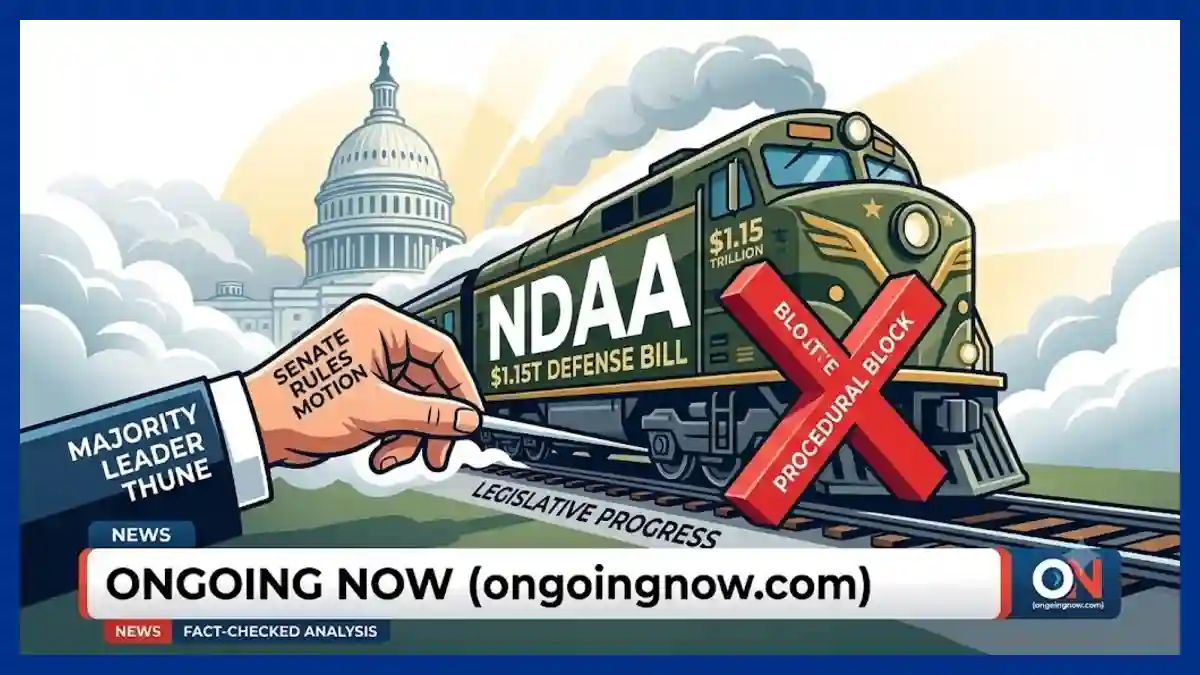
Senate Majority Leader John Thune utilized a vital parliamentary procedure during the roll call vote for the $1.15 trillion National Defense Authorization Act (NDAA), switching his vote to “no” to enter a motion to reconsider the legislation. The procedural maneuver provides the Republican defense bill strategy with the structural flexibility needed to revive the defense policy package later, navigating an intense floor impasse with Senate Democrats over unauthorized military actions and broader federal budget negotiation updates.
Senate Rejects Motion to Proceed on NDAA
The upper chamber of Congress blocked an initial procedural vote to advance the Fiscal Year 2027 National Defense Authorization Act (S.4784), which failed to clear the 60-vote threshold necessary to invoke cloture and proceed to floor debate. The final tally ended in a 50–46 vote that largely tracked uniform party lines, halting the progress of the $1.15 trillion annual defense policy framework despite its initial 18–9 bipartisan approval within the Senate Armed Services Committee.
                       119th Congress Roll Call Data: Cloture on S.4784
==================================================================================================
  VOTE TALLY         TOTAL     REPUBLICANS     DEMOCRATS / INDEPENDENTS     ABSENT / NOT VOTING
--------------------------------------------------------------------------------------------------
  YEAS                50           50                     0                          0
  NAYS                46            1 *                  45                          0
  TOTAL VOTING        96           51                    45                          4
--------------------------------------------------------------------------------------------------
* Note: Senate Majority Leader John Thune (R-SD) switched his vote from "yes" to "no" solely for
        parliamentary reasons to log a motion to reconsider under Senate Rule XIII.
        Four senators (Fetterman, Justice, McConnell, and Padilla) were absent.
==================================================================================================
The standard path for the defense department funding status stalled because minority lawmakers withheld the necessary procedural votes to force a broader debate over executive wartime authority. Minority Leader Chuck Schumer explicitly tied the legislative delay to the administration’s active deployment of military assets in the Middle East without seeking fresh statutory backing.
The Strategic Purpose Behind Majority Leader Thune’s Parliamentary Procedure
The decision by Senate Majority Leader John Thune to cast a negative vote surprised observers unaware of long-standing Capitol Hill legislative updates and institutional rules. Under Senate parliamentary procedure, specifically Senate Rule XIII, only a member voting on the prevailing side of a motion can enter a motion to reconsider the vote.
“Every Republican voted in favor of moving ahead except for the chamber’s Republican majority leader, John Thune of South Dakota, who voted no under Senate rules only in order to enter a motion to reconsider.”
Had the Majority Leader voted “yes” along with the rest of his conference, the motion to proceed would have failed, and the legislative option would be dead under standard rules without a complex unanimous consent agreement. By switching his vote to the losing (and thus technically prevailing) “no” side, Thune secured the absolute right to reset the clock and call for a new vote on the exact same motion whenever ongoing fiscal and military negotiations bear fruit.
Foreign Policy Realities Influence Defense Policy Strategy
The legislative gridlock on Capitol Hill is deeply linked to an intensifying separation-of-powers dispute between the White House and congressional lawmakers. The renewed U.S. military conflict alongside Israel against Iran, which initiated with joint airstrikes on February 28, has altered non-election public affairs tracking regarding defense authorizations.
              Legislative Context: War Powers Resolution vs. 119th Congress Action
+---------------------------+--------------------------------------------------------------------+
| Legal / Statutory Marker  | Institutional Impact and Status                                    |
+---------------------------+--------------------------------------------------------------------+
| War Powers Resolution     | Mandates presidential reporting within 48 hours of hostilities and  |
| of 1973                   | caps unauthorized troop deployments at a maximum of 60 days. |
+---------------------------+--------------------------------------------------------------------+
| White House Position      | Maintained that the initial phase of hostilities "terminated" in   |
|                           | April, treating the recent escalations as a separate track. |
+---------------------------+--------------------------------------------------------------------+
| Congressional Notice      | The executive branch formally notified Congress of the resumption  |
|                           | of active hostilities on July 13, 2026.       |
+---------------------------+--------------------------------------------------------------------+
Democrats argued that advancing the NDAA at this moment would signal passive congressional endorsement of an un-debated war.
“The NDAA, in my view, has become a referendum on the Iran war. Donald Trump does not get to drag the American people deeper into a war he cannot explain and does not know how to end.”
— Sen. Richard Blumenthal (D-CT)
Spending Caps and Federal Budget Deficits Deepen Gridlock
Beyond the intense debates over military intervention, the defense bill strategy is entangled in systemic friction surrounding federal budget negotiation updates. The fundamental disagreement centers on statutory defense and non-defense spending caps established under prior fiscal agreements.
               Key Provisions of the Proposed $1.15 Trillion FY2027 NDAA
--------------------------------------------------------------------------------------------------
  POLICY SEGMENT                PROPOSED LEGISLATIVE ALLOCATION & TARGETS
--------------------------------------------------------------------------------------------------
  Personnel Compensation        Supports a 3.6 percent statutory pay raise for active troops.
  Unmanned Systems              Heavy investment focus on drone procurement and counter-drone tech.
  Naval Modernization           Sustained shipbuilding targets to expand the active naval fleet.
  Strategic Air Power           Mandatory maintenance of 1,800 fighter jets; funds B-21 bombers.
  Procurement Reforms           Permits multi-year acquisition contracts to minimize waste.
--------------------------------------------------------------------------------------------------
Republicans seek to decouple the defense department funding status from civilian allocations, arguing that growing geopolitical dangers require standalone defense increases. Conversely, Senate Democrats demand a dollar-for-dollar match between defense boosts and domestic spending categories, raising concerns that a massive Pentagon budget expansion would squeeze vital safety-net infrastructure.
National Defense Implications and Public Realities
The procedural stall creates direct operational challenges for the Department of Defense and impacts military families nationwide. The bill contains key provisions intended to improve standard of living metrics across various military installations.
Compensation Adjustments: The legislation authorizes a 3.6 percent pay raise for active duty service members to help offset inflation impacts.
Family Support Infrastructure: Millions in funding are earmarked for military housing improvements, early childhood education centers, and expanded medical access on bases.
Industrial Predictability: Defense manufacturers face delays in securing long-term supply contracts, impacting local economies in states like Virginia, Connecticut, and Texas.
Without final enactment of the policy bill, these upgrades remain frozen, forcing the military to rely on older authorizations that do not match current operational or economic demands.
Historical Context of Bipartisan Defense Authorizations
The current delay is notable because the NDAA has historically stood as a resilient symbol of bipartisan compromise. For 65 consecutive years, Congress has successfully sent a completed, unified defense policy bill to the president’s desk, navigating deep partisan divisions during past foreign conflicts.
                     Historical Comparison: Modern NDAA Disruption
+-----------------------+-----------------------+------------------------------------------------+
| Legislative Milestone | Historical Normal     | 119th Congress Status                          |
+-----------------------+-----------------------+------------------------------------------------+
| Bipartisan Consensus  | 65-year streak of     | Procedural deadlock at the first floor vote   |
|                       | uninterrupted passage | due to War Powers and budget disputes.|
+-----------------------+-----------------------+------------------------------------------------+
| Armed Services Vote   | Strong majority text  | Bipartisan 18–9 committee approval, which      |
|                       | negotiated in advance | fractured under floor pressures. |
+-----------------------+-----------------------+------------------------------------------------+
The breakdown of this bipartisan norm on the Senate floor reflects how deeply institutional mechanisms are being influenced by disagreements over executive power limits and fiscal priorities.
“As I’ve said so often before, if you don’t get national security right, the rest is just conversation. I certainly hope that Democrats won’t now put politics ahead of support for our men and women in uniform.”
— Senate Majority Leader John Thune (R-SD)
What Follows the Parliamentary Standpoint?
By successfully logging the motion to reconsider, Majority Leader Thune has put the defense bill on the Senate’s official calendar of business for immediate recall. The path forward relies on cross-party talks involving three primary variables:
War Powers Frameworks: Potential addition of reporting requirements or funding limitations concerning the ongoing active deployment in Iran.
Topline Budget Targets: Bipartisan consensus on overall spending limits that balances defense priorities with domestic social safety-net programs.
Amendment Access: Agreements allowing votes on high-profile amendments regarding drone warfare, procurement rules, and troop benefits.
The legislative standoff demonstrates that even must-pass national security bills remain subject to the Senate’s unique rules and procedures.
Stay sharp with Ongoing Now!
Source and Data Limitations: This report is compiled directly from official U.S. Senate roll call records for the 119th Congress, public floor transcripts, and formal statements issued by Senate Majority Leader John Thune and Minority Leader Chuck Schumer on July 14, 2026. It excludes unverified claims regarding private cloakroom negotiations, anonymous leaks concerning potential compromise text, or speculative outcomes regarding the duration of the conflict with Iran.