Tesla Production End Date for Model S and Model X
The pioneer of the modern electric vehicle era is preparing for a structural transformation as Tesla transitions from luxury automotive manufacturing to a focused robotics and autonomous systems platform.
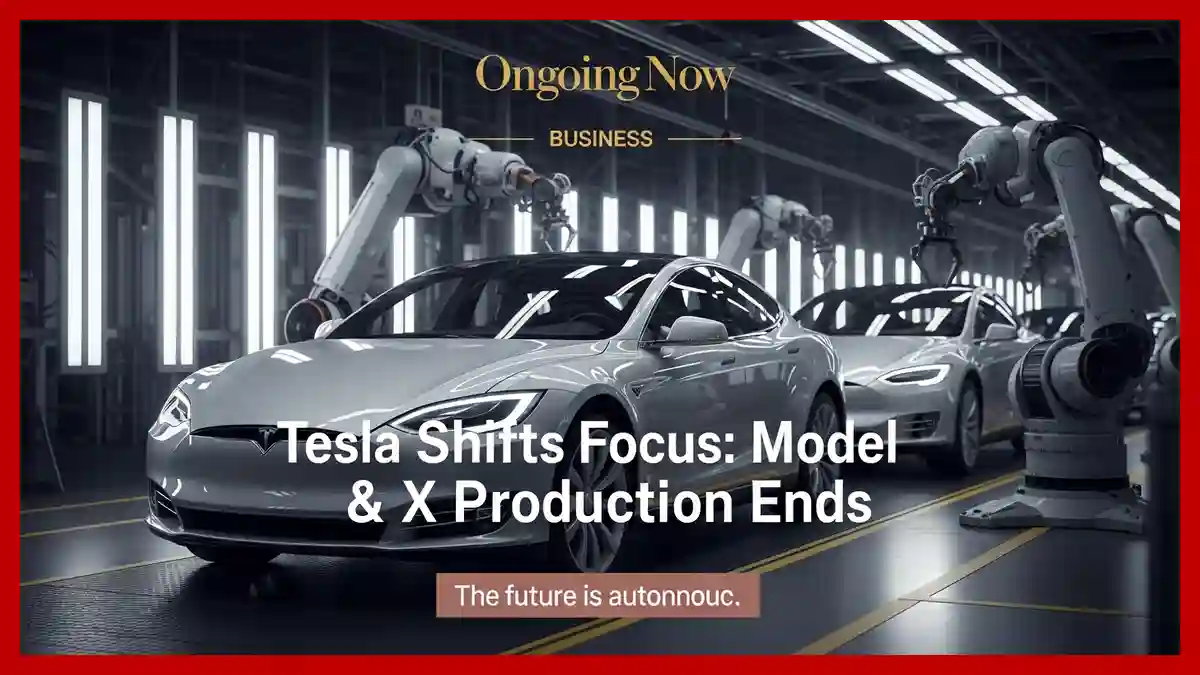
Tesla CEO Elon Musk confirmed on January 28, 2026, that the company will conclude production of its long-standing flagship vehicles, the Model S sedan and Model X SUV. During the Elon Musk earnings call 2026, held to discuss fourth-quarter 2025 results, the executive described the move as an “honorable discharge” for the programs that established Tesla’s brand identity.
The manufacturing wind-down is scheduled to begin in the second quarter of 2026, with the Fremont factory repurposing efforts immediately following. This transition marks a significant shift in the Tesla EV lineup changes, as the company reallocates its capital and floor space toward the mass production of the Optimus humanoid robot and the Cybercab robotaxi.
The Tesla production end date for these premium models follows a period of declining deliveries for the aging platforms. While the Model S and Model X were once the primary drivers of company revenue, they have been largely eclipsed by the high-volume Model 3 and Model Y. In 2025, combined deliveries of the S and X, along with the Cybertruck, totaled approximately 50,850 units—a fraction of the nearly 1.6 million vehicles delivered for the company’s entry-level models.
Strategic Realignment: The Model S Retirement News
The retirement of the Model S concludes a 14-year production run that fundamentally altered the global automotive landscape. Launched in 2012, the Model S was the first high-volume electric sedan to compete directly with internal combustion luxury flagships in terms of range, performance, and technology.
Tesla’s decision to retire the model without a direct sedan successor indicates a pivot toward different vehicle architectures. Musk noted on the call that the company is “moving into a future that is based on autonomy,” suggesting that traditional luxury sedans no longer align with the brand’s long-term trajectory. For consumers, this means the Model X final edition and the final production run of the Model S represent the last opportunity to purchase these specific form factors.
By the Numbers: The 2025 Financial Context
| Metric | 2025 Performance | Year-over-Year Change |
| Total Revenue | $94.8 Billion | -3% |
| Total Deliveries | 1.64 Million Units | -9% |
| Combined S/X/Cybertruck Sales | ~150,000 Units* | Significant Decline |
| Automotive Gross Margin | 17.9% | Increase (from 15.4%) |
| 2026 Capital Expenditure Target | >$20 Billion | +122% |
*Estimated based on Q4 delivery disclosures and historical model weighting.
Fremont Factory Repurposing for Optimus Production
The Fremont, California facility—Tesla’s original high-volume plant—will undergo a massive overhaul to accommodate the Gen 3 Optimus robot. Musk stated that the production lines currently dedicated to the Model S and Model X will be converted into an Optimus manufacturing hub. The company has set an ambitious long-term target of producing one million humanoid units per year at the site.
Unlike traditional automotive manufacturing, the robotics lines require different assembly logic and tighter integration of AI-driven hardware. Despite the shift away from vehicle assembly in these specific bays, Tesla officials confirmed that there are no planned layoffs at the Fremont facility. Instead, the workforce of approximately 22,000 is expected to grow as the company ramps up its robotics and AI infrastructure.
This repurposing is the centerpiece of a record-breaking $20 billion capital expenditure plan for 2026. CFO Vaibhav Taneja clarified that this spending is necessary to support the “structural transformation” from a car company to a robotics firm. The investment also covers the scale-up of 4680 battery cell production and the development of the “Cortex 2” AI supercluster.
Market Impact: Tesla Stock News and EV Lineup Changes
The announcement had an immediate effect on investor sentiment. While the discontinued electric cars 2026 news might typically signal a retreat, Tesla stock impact news showed a positive reaction, with shares rising approximately 2% in pre-market trading following the call. Analysts suggest that the market is rewarding Tesla’s focus on higher-margin technology over low-volume luxury manufacturing.
The Tesla EV lineup changes leave the company with a streamlined consumer portfolio:
Model 3: The primary mass-market sedan.
Model Y: The top-selling crossover SUV.
Cybertruck: The specialized stainless-steel pickup.
Cybercab: The upcoming dedicated autonomous vehicle (steering-wheel-free).
“The bigger story is the business model transition now underway,” noted Scott Acheychek, COO of REX Financial. “Tesla’s car business is no longer the main focus; the emphasis is now on autonomous driving and robotics.”
Analysis: Why the Luxury Pivot Matters
From a technical perspective, the Model S and Model X reached the limits of their original architectures. While “Plaid” performance updates extended their relevance, the underlying platforms remained more complex and expensive to manufacture than the simplified, casting-heavy designs of the Model Y.
By retiring these models, Tesla eliminates the overhead of maintaining older supply chains and low-volume production lines. This allows the engineering team to focus entirely on “unboxed” manufacturing processes intended for the Cybercab and Optimus. It is a calculated risk: sacrificing the “halo” vehicles that defined the brand’s prestige to bet everything on a future where human-driven cars are secondary.
“It’s time to basically bring the Model S and X programs to an end with an honorable discharge,” Musk stated during the call. “If you’re interested in buying a Model S and X, now would be the time to order it.”
Human and Societal Impact: Beyond the Driver’s Seat
The discontinuation of the Model S and X reflects a broader trend in the 2026 automotive market: the “utility-first” shift. As electric vehicle technology matures, the market is bifurcating into highly affordable utility vehicles (Model 3/Y) and specialized autonomous platforms.
For current owners, Tesla has pledged continued support. “We will obviously continue to support the Model S and X programs for as long as people have the vehicles,” Musk confirmed. However, the lack of right-hand drive models in recent years and the now-confirmed end of production may impact long-term resale values for these pioneering EVs.
Environmentally, the shift to Optimus production in Fremont suggests a new phase of industrial sustainability. If Tesla succeeds in its goal of using robots to perform “unsafe, repetitive, or boring tasks,” the factory itself becomes a test case for a new type of labor economy. Factually, however, the success of this transition remains dependent on the Gen 3 Optimus meeting mass-production targets by late 2026.
Comparative Analysis: Tesla vs. Emerging Premium Rivals
As Tesla exits the premium sedan and SUV segments, competitors such as Lucid, Rivian, and high-end Chinese manufacturers like BYD are positioning themselves to capture the remaining demand for human-driven luxury EVs.
Lucid Motors: Continues to focus on high-efficiency luxury sedans (Air).
Rivian: Scaling the R1S and R1T while introducing the smaller R2 platform.
BYD: Expanding its “Yangwang” luxury sub-brand into global markets.
Tesla’s departure from these segments suggests a belief that the “luxury car” category is inherently limited compared to the total addressable market for autonomous robotics. Whether this strategic bet pays off depends on the regulatory approval of the Cybercab and the functional utility of Optimus in real-world industrial settings.
Key Executive Perspectives
Elon Musk (CEO): “We are really moving into a future that is based on autonomy.”
Vaibhav Taneja (CFO): “2026 will be a very big capex year… making big investments for an epic future.”
Scott Acheychek (REX Financial): “The car business was no longer the main focus.”
Stay sharp with Ongoing Now!
Source and Data Limitations: This report is based on Tesla’s Q4 2025 earnings call held on January 28, 2026, official financial statements, and subsequent verified reporting from Reuters, The Guardian, and CNBC as of January 29, 2026. Production timelines and factory repurposing details are sourced directly from executive statements made during the investor presentation. Performance data for 2025 (1.64 million deliveries, $94.8 billion revenue) is derived from Tesla’s official 2025 annual summary.
A limitation of this report is the reliance on manufacturer-provided estimates for future production targets (e.g., one million Optimus units), which have historically been subject to significant shifts. While Tesla confirmed the end of production for the Model S and Model X, specific “final edition” trim specifications or exact final-day production dates have not yet been disclosed via regulatory filings. All mentions of the 2026 “Cybercab” refer to current production intent as stated by Tesla management and do not reflect finalized NHTSA safety certifications for steering-wheel-free operation.