A historic fallout: How the federal secrets investigation reshapes DNI transparency
The Office of the Director of National Intelligence faces institutional scrutiny over the handling of historically significant federal records and inter-agency document transfers.
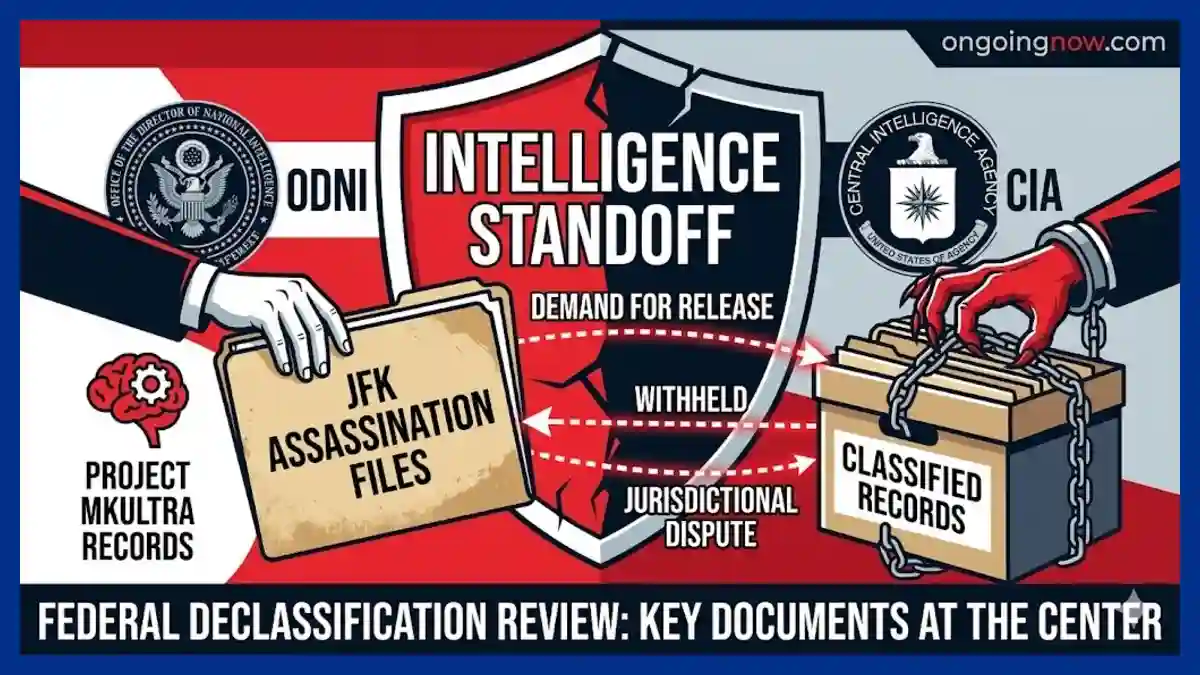
The Office of the Director of National Intelligence (ODNI) has become the center of a federal inquiry involving the transfer and security of sensitive documents related to the JFK assassination and Project MKUltra. Director of National Intelligence Tulsi Gabbard remains in her post despite viral social media rumors suggesting otherwise, as the administration maintains its focus on a “new era” of transparency regarding Cold War-era secrets. Central to the current friction is a series of allegations involving the Central Intelligence Agency (CIA) and the House Oversight Task Force concerning the custody of declassified materials and the role of whistleblowers in detailing internal intelligence disputes.
Recent developments have highlighted significant procedural tensions between the ODNI and the CIA regarding jurisdiction over sensitive files. Representative Anna Paulina Luna has formally addressed the CIA, requesting the return of documents allegedly removed from ODNI oversight. This friction follows testimony from James Eardman III, a CIA operations officer, who discussed the movement of records during past government transitions. While social media reports characterized these events as a “raid,” official clarifications indicate the dispute centers on administrative jurisdiction and the enforcement of presidential executive orders regarding the release of the JFK assassination files and MKUltra documents.
Federal Oversight and the Task Force on Declassification
The House Committee on Oversight and Accountability has intensified its review of how the intelligence community handles the declassification of historical records. Representative Anna Paulina Luna, leading efforts within a specialized task force, recently issued a preservation notice to the CIA regarding boxes of files linked to the JFK assassination and Project MKUltra. These documents were reportedly under review by Tulsi Gabbard’s office for public release before being transferred back to CIA custody.
The Task Force on the Declassification of Federal Secrets is investigating whether these transfers were in direct defiance of executive mandates. Internal reports suggest that approximately 40 boxes of material were at the heart of the jurisdictional dispute. The committee’s focus remains on ensuring that the ODNI maintains its statutory authority to lead counterintelligence and declassification efforts without interference from subordinate agencies.
Historical Transparency: JFK and MKUltra Records
The push for transparency involves some of the most protected secrets in American history, including the final tranches of the JFK assassination files release. While thousands of documents were made public in 2025, several hundred remain redacted or withheld due to national security concerns. Director Tulsi Gabbard has frequently advocated for the removal of these “final veils,” asserting that the public interest now outweighs original classification justifications.
Project MKUltra, a clandestine CIA human experimentation program from the 1950s and 60s, also remains a focal point of the declassification push. The Task Force has sought specific MKUltra documents that were allegedly discovered in “burn bags” or secondary storage locations. The recovery of these files is seen by oversight members as essential for a complete historical record, though the CIA has historically maintained that many such records were destroyed decades ago.
| Entity | Role in Declassification | Key Objective |
| ODNI | Oversight Lead | Centralize intelligence and enforce transparency orders. |
| CIA | Record Custodian | Maintain operational security of historical sources/methods. |
| House Oversight | Legislative Body | Subpoena documents and hold agencies accountable. |
| National Archives | Permanent Repository | Final storage and public access for declassified files. |
Inter-Agency Jurisdictional Tensions
The relationship between the ODNI and the CIA has faced renewed pressure following the testimony of whistleblower James Eardman III. Eardman, a veteran operations officer, alleged that internal shifts in analytic conclusions—particularly regarding COVID-19 origins and historical secrets—were influenced by senior management rather than raw intelligence. These claims have fueled a broader debate about “politicization” within the intelligence community.
Press Secretary Olivia Coleman recently issued a statement on behalf of the DNI, emphasizing that the office’s role is to identify vulnerabilities and protect national security through transparency. The ODNI maintains that it has the legal authority to review and declassify files from all 18 intelligence agencies. However, critics in Congress argue that the CIA’s move to retain certain boxes suggests a lack of cooperation with the DNI’s transparency initiatives.
The Role of Whistleblowers in Intelligence Reform
The testimony provided by James Eardman III has provided a rare glimpse into the internal mechanics of the ODNI’s Biological Sciences Experts Group and other sensitive units. Whistleblower protections have become a central theme in the House Oversight Committee’s strategy, as they seek to bridge the gap between classified internal reports and public summaries.
Evidence Suppression: Allegations that draft reports were rewritten by agency management to soften conclusions.
Document Access: Concerns that investigators were denied access to underlying raw intelligence.
Accountability: Calls for Congress to use its “power of the purse” to enforce compliance with declassification orders.
The Institutional Impact of Secrecy
The current dispute is not merely about historical curiosity; it represents a fundamental struggle over the hierarchy of the U.S. intelligence community. By law, the Director of National Intelligence is the head of the intelligence community and the principal advisor to the President. When subordinate agencies like the CIA are accused of withholding documents from the DNI, it raises questions about the efficacy of the post-9/11 intelligence reforms designed to prevent “siloing.”
This institutional friction has real-world consequences for public trust. The delay in the JFK assassination files release 2026 and the ongoing debate over MKUltra documents seizure contribute to a narrative of government opacity. For the ODNI to succeed in its mission of transparency, it must demonstrate an ability to compel cooperation from agencies that have spent decades operating in the shadows.
Public Trust in Governance
For the American public, the declassification of historical secrets is a matter of institutional integrity. Families of historical figures and survivors of Cold War-era programs have long sought closure through the release of federal records. The ongoing investigation into “federal secrets” highlights a growing demand for a government that is accountable to its citizens.
The regional impact is also notable, as community groups and historical societies across the United States utilize these releases to correct the historical record. When rumors of a “raid” or “firing” go viral, they often overshadow the technical, high-stakes work being done by the House Oversight Task Force to ensure that the rule of law applies to every agency, regardless of its classification level.
Stay sharp with Ongoing Now!
Source and Data Limitations: This report is based on official statements from the Office of the Director of National Intelligence (ODNI), testimony from the House Committee on Oversight and Accountability (May 13, 2026), and press releases from Representative Anna Paulina Luna’s office. Factual details regarding the JFK assassination files and MKUltra were cross-referenced with National Archives (NARA) status reports. Information regarding “raids” or “firings” was treated as unverified social media rumor and countered with official White House and ODNI rebuttals. Data on Project MKUltra relies on the 1977 Church Committee findings and subsequent 2024-2025 declassification tranches.