Riverside PD Officer Terminations 2026: Why Discipline Rose
Following Skelly hearing outcomes, Riverside PD officer terminations 2026 highlight a complex legal dispute regarding disabled military veteran benefits.
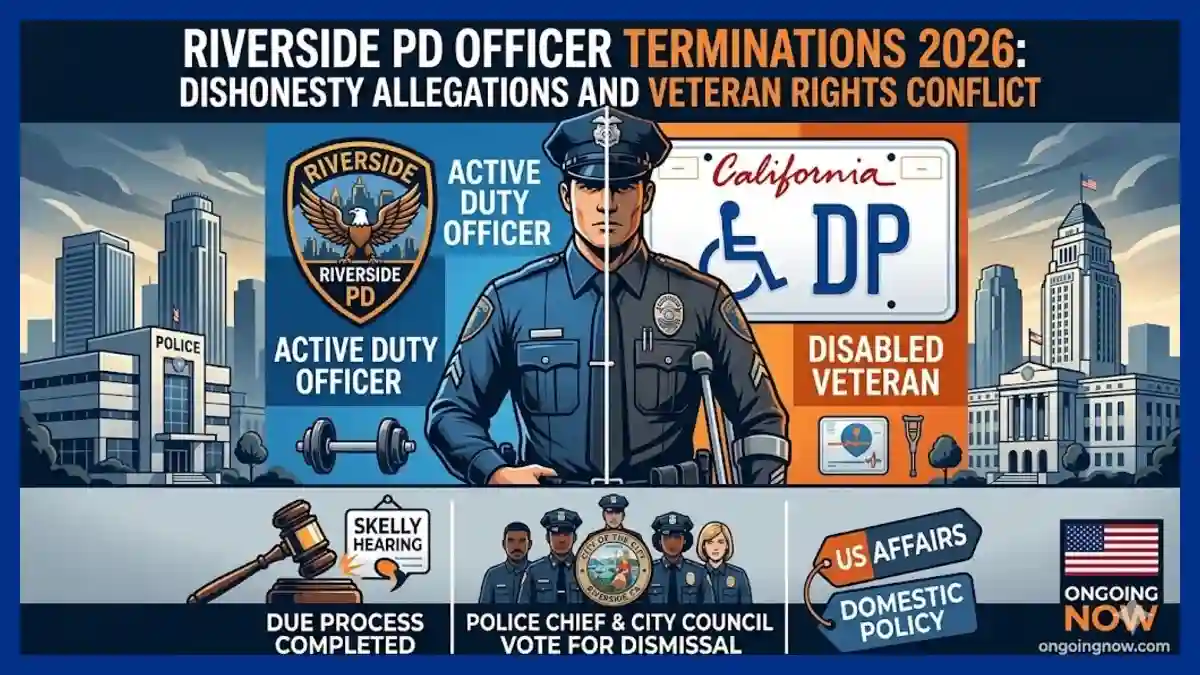
The Riverside Police Department finalized the dismissal of three veteran patrol officers on April 28, 2026, marking the conclusion of a year-long internal investigation and a contentious administrative process. Riverside Police Chief Larry Gonzalez confirmed the terminations following a series of Skelly hearings where the officers contested the department’s intent to fire them over the use of disabled military veteran license plates. The dismissed personnel—Timothy Popplewell, Raymond Olivares, and Richard Cranford—face allegations of making false claims regarding physical limitations to secure the Department of Motor Vehicles (DMV) benefits. This case has drawn national attention to the intersection of municipal employment standards, veteran disability ratings, and the procedural rights of California public employees.
Institutional Context and the Termination Timeline
The disciplinary action against the three officers is rooted in a May 2025 suspension that removed them from active duty. Following the suspension, the officers initiated a civil lawsuit alleging discrimination based on their status as disabled veterans. Despite the ongoing litigation, the administrative disciplinary process moved forward through early 2026.
On February 25, 2026, the officers were formally served with notices of intent to terminate. This led to the pivotal Skelly hearings held on April 21, 2026, a mandatory due process requirement in California. Chief Gonzalez, acting as the final arbiter of department discipline, ultimately determined that the findings of the internal investigation warranted immediate dismissal.
Key Figures in the Riverside Disciplinary Case
| Entity/Official | Role in Case | Key Status |
| Larry Gonzalez | Riverside Police Chief | Final disciplinary authority |
| Timothy Popplewell | Terminated Officer | U.S. Army veteran; former SWAT member |
| Raymond Olivares | Terminated Officer | U.S. Marine veteran; former Honor Guard |
| Richard Cranford | Terminated Officer | U.S. Army veteran; former SWAT member |
| Riverside City Council | Municipal Oversight | Voted against a legal settlement in Feb 2026 |
| California DMV | Regulatory Body | Issuer of the contested license plates |
The Dispute Over Veteran Disability Ratings
At the center of the Riverside PD officer terminations 2026 is a fundamental disagreement between the department’s leadership and the U.S. Department of Veterans Affairs (VA) certification process. The VA had previously rated all three officers as 100% disabled, a designation that legally entitles veterans in California to specialized license plates offering reduced fees and parking privileges.
The department’s internal investigation reportedly focused on the perceived discrepancy between a 100% disability rating and the rigorous physical demands of full-time police work, particularly in specialized units like SWAT. However, legal representatives for the officers argue that VA disability ratings are not synonymous with an inability to work. These ratings often account for a cumulative “schedule of ratings” for various service-connected conditions that may not impair the specific functions required of a law enforcement officer.
Legal Precedents and the Skelly Hearing Outcomes
Under California law, public employees are protected by the “Skelly” rule, derived from the 1975 California Supreme Court case Skelly v. State Personnel Board. This rule ensures that employees receive notice of proposed discipline and an opportunity to respond before a “reasonably impartial” official.
The Skelly hearing outcomes for Popplewell, Olivares, and Cranford did not result in a reversal of the department’s intent. During these hearings, the officers and their legal counsel presented evidence to refute the department’s claims of dishonesty. Chief Gonzalez stated that the decision was “based on facts” revealed during a thorough investigation, though he declined to provide specific details due to the officers’ pending discrimination lawsuit.
By the Numbers: Officer Service History
2019: Year all three officers joined the Riverside Police Department.
3: Total number of officers terminated in this specific action.
100%: The VA disability rating held by each officer involved.
11 Months: Approximate duration the officers remained on leave before final termination.
Riverside Police Union Reaction and Legal Strategy
The Riverside Police Officers’ Association (RPOA) and the officers’ private legal counsel have expressed significant opposition to the dismissals. Attorney Matthew McNicholas, representing the officers in their civil suit, has characterized the department’s actions as a “disservice to veterans.”
The union’s legal strategy appears focused on two fronts:
Administrative Appeal: The officers may seek further review through a neutral arbitrator or a civil service board to challenge the “just cause” of their firing.
Civil Litigation: The existing discrimination lawsuit argues that the department lacks the medical expertise to override VA certifications and that the officers were targeted for exercising their legal rights as veterans.
Public Impact and Municipal Governance
The Riverside City Council played a decisive role in the trajectory of this case by voting in February 2026 to reject a proposed settlement. This vote effectively signaled the city’s support for Chief Gonzalez’s disciplinary path, despite the potential for a lengthy and costly jury trial.
The community impact of these terminations is multifaceted. While the department maintains it is upholding standards of integrity and fitness for duty, critics argue that the move could deter other veterans from seeking careers in local law enforcement. Riverside, like many California cities, relies on the military-to-police pipeline to fill its ranks, making the optics of this dispute particularly sensitive.
Analysis: The Definition of “Disabled” in Modern Policing
This case highlights a growing tension in modern labor law regarding “invisible” disabilities. The VA recognizes many conditions—including hearing loss, respiratory issues, and post-traumatic stress—that contribute to a high disability percentage without necessarily preventing an individual from passing a police physical or performing patrol duties.
What the data shows is a systemic gap between federal veteran benefits and local department fitness standards. If the officers’ lawsuit proceeds to trial, it may establish a new legal precedent in California regarding whether a municipality can use a federal disability benefit as evidence of “dishonesty” or “unfitness” without conducting its own independent medical evaluation.
Evidence-Based Political and Social Insights
The Riverside PD officer terminations 2026 serve as a case study for several broader trends in US domestic policy:
Standardization of Benefits: There is no national standard for how municipal employers should interpret VA disability ratings.
Transparency in Discipline: The use of closed-door council votes and “confidential personnel actions” often creates a vacuum of information that can lead to public distrust.
Veteran Recruitment: Policy analysts suggest that high-profile disputes involving veteran benefits may impact recruitment goals for departments currently facing staffing shortages.
As the legal proceedings move into the discovery phase of the civil trial, the Riverside Police Department will likely face increased scrutiny over its internal auditing processes and how it reconciles the medical privacy of its officers with the public’s demand for administrative accountability.
Stay sharp with Ongoing Now!
Source and Data Limitations: This report is based on official statements from Riverside Police Chief Larry Gonzalez, public records from the Riverside City Council, and verified reporting from The Press-Enterprise, Police1, and Military.com. Information regarding the Skelly hearings and the officers’ service history is derived from legal filings and department announcements current as of May 2026. Specific medical details of the officers’ disability ratings are protected under privacy laws and were not disclosed by the department or the VA. The article excludes speculative claims regarding the officers’ specific physical capabilities outside of what is documented in the administrative record.