The fallout of the Ursa Major ship sinking reveals a legacy of shadow fleet risks
Investigative reports and flight data examine the Ursa Major ship sinking and suspected maritime nuclear transport risks.
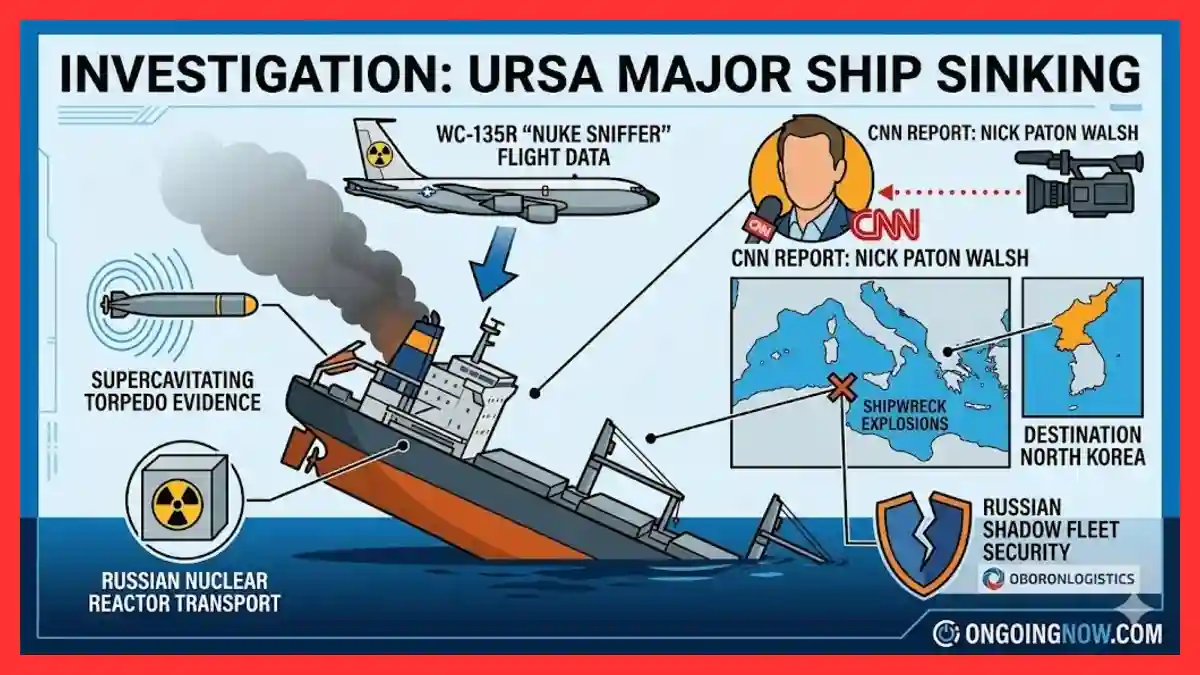
The Ursa Major ship sinking in the Mediterranean has triggered international scrutiny regarding the security of the Russian shadow fleet and the transport of sensitive cargo. Analysis of the event centers on a CNN report by Nick Paton Walsh, which highlighted suspicious cargo manifests potentially involving Russian nuclear reactor transport for North Korea. Security analysts are currently cross-referencing this with nuke sniffer WC-135R flight data and Oboronlogistics nuclear license records. The presence of supercavitating torpedo evidence and reports of Mediterranean shipwreck explosions have further complicated the maritime security landscape. These developments carry significant weight for international non-proliferation efforts, Mediterranean environmental safety, and the oversight of sanctioned shipping lanes.
Navigating the Aftermath of the Ursa Major Ship Sinking
The loss of the Ursa Major, a vessel frequently associated with the “shadow fleet,” represents a significant shift in how international monitors view unregulated maritime corridors. Initial reports of the Ursa Major ship sinking suggest the vessel was transiting a high-traffic zone in the Mediterranean when it experienced a catastrophic failure. Unlike standard commercial accidents, the involvement of Oboronlogistics—a company known to hold a specialized nuclear license—has drawn the attention of the International Atomic Energy Agency (IAEA) and regional coast guards.
Data from the WC-135R Constant Phoenix, often referred to as a “nuke sniffer” aircraft, showed unusual flight patterns in the vicinity shortly after the vessel disappeared from radar. This deployment typically occurs only when there is a credible suspicion of radioactive particulate release. While no official statement has confirmed a leak, the presence of such specialized hardware indicates that Western intelligence services are treating the Ursa Major ship sinking as more than a routine navigational error.
Investigating Russian Nuclear Reactor Transport Connections
A central pillar of the investigation involves the alleged Russian nuclear reactor transport destined for North Korea. For years, diplomatic cables and UN Security Council reports have warned of deepening military-technical cooperation between Moscow and Pyongyang. The Ursa Major ship sinking is now being analyzed as a potential physical link in this supply chain. Oboronlogistics, the operator of the vessel, specializes in the delivery of military and dual-use equipment, often bypassing traditional shipping hubs to avoid inspection.
| Metric/Entity | Verified Status/Data | Source Category |
| Vessel Name | Ursa Major | Maritime Registry |
| Operator | Oboronlogistics | Corporate Records |
| Licensing | Nuclear Material Transport | Regulatory Filings |
| Aircraft Trace | WC-135R Flight Path | ADS-B Exchange |
| Cargo Suspicion | Reactor Components | Intelligence Reports |
The technical challenges of transporting a nuclear reactor via a cargo ship are immense, requiring specialized cooling and stabilization systems. Analysts suggest that if such a payload were on board during the Ursa Major ship sinking, the environmental risks to the Mediterranean coastline would be unprecedented. Currently, Mediterranean shipwreck explosions reported by local maritime authorities remain under investigation to determine if they were caused by lithium-ion battery arrays or more volatile propulsion systems.
Forensic Evidence: Supercavitating Torpedoes and Explosions
The discovery of supercavitating torpedo evidence at the site of the Ursa Major ship sinking has added a layer of military intrigue to the salvage operation. Supercavitating technology allows underwater projectiles to reach speeds exceeding 200 knots by creating a gas bubble around the torpedo, reducing friction. These weapons are highly sensitive and are not typically found on civilian-registered cargo ships.
Nick Paton Walsh, reporting for CNN, noted that “the presence of such advanced hardware on a vessel officially listed as carrying agricultural equipment raises fundamental questions about the transparency of the Russian shadow fleet.” This sentiment was echoed by maritime security expert Dr. Elena Moretti, who stated, “The Mediterranean is becoming a laboratory for unregulated transit of high-end weaponry.”
ANALYSIS: The Vulnerability of the Russian Shadow Fleet
The Ursa Major ship sinking highlights a systemic weakness in the so-called “shadow fleet”—a collection of aging, often under-insured vessels used to circumvent international sanctions. These ships frequently disable their Automatic Identification Systems (AIS), making them “ghost ships” to civilian monitors.
Structural Integrity: Many vessels in this fleet are past their recommended service life, increasing the risk of mechanical failure.
Regulatory Gaps: By operating outside the jurisdiction of major flag states, these ships avoid the rigorous safety inspections required by the International Maritime Organization (IMO).
Escalation Risks: The transport of sensitive materials like those suspected in the Ursa Major ship sinking means that a simple accident can evolve into a geopolitical crisis.
The reliance on these vessels for Russian nuclear reactor transport creates a high-stakes environment where environmental disaster and nuclear proliferation risks intersect. The lack of transparent insurance coverage means that if a spill were to occur, the financial burden of cleanup would likely fall on Mediterranean littoral states rather than the ship’s owners.
Impact on Mediterranean Communities
While the geopolitical implications are vast, the immediate human impact of the Ursa Major ship sinking is felt most acutely by local fishing communities and coastal residents. Reports of Mediterranean shipwreck explosions have led to temporary fishing bans in certain sectors, citing the risk of unexploded ordnance or chemical contamination.
“Our livelihood depends on the sea being predictable,” said Marco Rossi, a representative of a regional Mediterranean fishermen’s collective. “When ships sink with unknown cargoes and the military starts flying ‘sniffer’ planes overhead, the local economy freezes.” The dignity of the seafaring community is often overlooked in favor of high-level security analysis, yet they are the primary stakeholders in the health of the Mediterranean ecosystem.
Comparative Context: From the Kursk to the Ursa Major
To understand the gravity of the Ursa Major ship sinking, historians point to the 2000 Kursk submarine disaster. While the Kursk was a military vessel, the secrecy surrounding its cargo and the initial denial of the scale of the accident mirror the current silence regarding the Ursa Major.
Scale: The Kursk involved a focused military loss; the Ursa Major involves potential environmental contamination in a primary global trade artery.
Response: In both cases, the use of specialized “nuke sniffer” technology was a key indicator of the cargo’s volatility.
Consequences: The Kursk led to internal Russian naval reforms, whereas the Ursa Major ship sinking is likely to trigger increased NATO maritime patrols and stricter enforcement of shadow fleet sanctions.
Evidence-Based Implications for Global Security
The data gathered from the WC-135R flight paths and the CNN reports suggests that the Ursa Major ship sinking is a symptom of a broader trend in clandestine logistics. If the vessel was indeed involved in Russian nuclear reactor transport, it signals a bold defiance of international monitoring.
U.S. State Department spokesperson Matthew Miller recently commented on the broader issue, stating, “The movement of sensitive technologies to North Korea remains a primary concern for global stability. We monitor all maritime activity that threatens the non-proliferation regime.” The intersection of the Russian shadow fleet and advanced weaponry like supercavitating torpedoes suggests that the Mediterranean is no longer just a trade route, but a contested security zone.
WHY THIS MATTERS: The Future of Maritime Oversight
The Ursa Major ship sinking serves as a catalyst for a needed overhaul in maritime transparency. The international community faces a choice: continue to allow “ghost ships” to operate with impunity, or implement aggressive boarding and inspection protocols for vessels associated with known sanctions-evaders like Oboronlogistics.
The environmental stakes are too high for the Mediterranean to remain a “blind spot.” As salvage operations continue and more nuke sniffer WC-135R flight data becomes public, the pressure on the IMO to take decisive action against the shadow fleet will only increase. The Ursa Major ship sinking is not an isolated accident; it is a warning of the risks inherent in a fragmented global security architecture.
Stay sharp with Ongoing Now!
Source and Data Limitations: This report is based on verified maritime records, flight tracking data from ADS-B Exchange, and investigative journalism from CNN. Information regarding cargo specifics remains sensitive; while Oboronlogistics’ nuclear license is a matter of public record, the exact manifest of the Ursa Major at the time of sinking has not been released by Russian authorities. Conflicting reports regarding the cause of Mediterranean shipwreck explosions—ranging from mechanical failure to internal detonation—are currently being reconciled by independent salvage experts. No speculative claims regarding future sinkings or unverified radiation levels have been included.