The Epic Fallout of Trump v Barbara as SCOTUS Weighs Birthright Limits
High Court oral arguments in Trump v. Barbara examine the legal status of Executive Order 14160 and the 14th Amendment.

The United States Supreme Court is currently deliberating on a case that could redefine the foundational principles of American identity. In Trump v. Barbara, the justices are reviewing the constitutionality of Executive Order 14160, a presidential directive that seeks to withhold automatic citizenship from children born on U.S. soil to parents without permanent legal status. This case brings the 14th Amendment citizenship clause challenges to the forefront of national policy, testing whether an executive action can legally alter a century of established legal precedent.
What is currently known about Trump v. Barbara is that the Court’s eventual ruling will address whether the phrase “subject to the jurisdiction thereof” allows for the exclusion of children born to undocumented or temporary residents. During oral arguments held on April 1, 2026, the federal government argued that citizenship at birth should be reserved for those who owe “direct and immediate allegiance” to the United States. Conversely, challengers maintain that the United States v. Wong Kim Ark precedent already settled this matter in 1898, establishing that birth on U.S. soil confers citizenship regardless of parental status.
The Legal Framework of Executive Order 14160
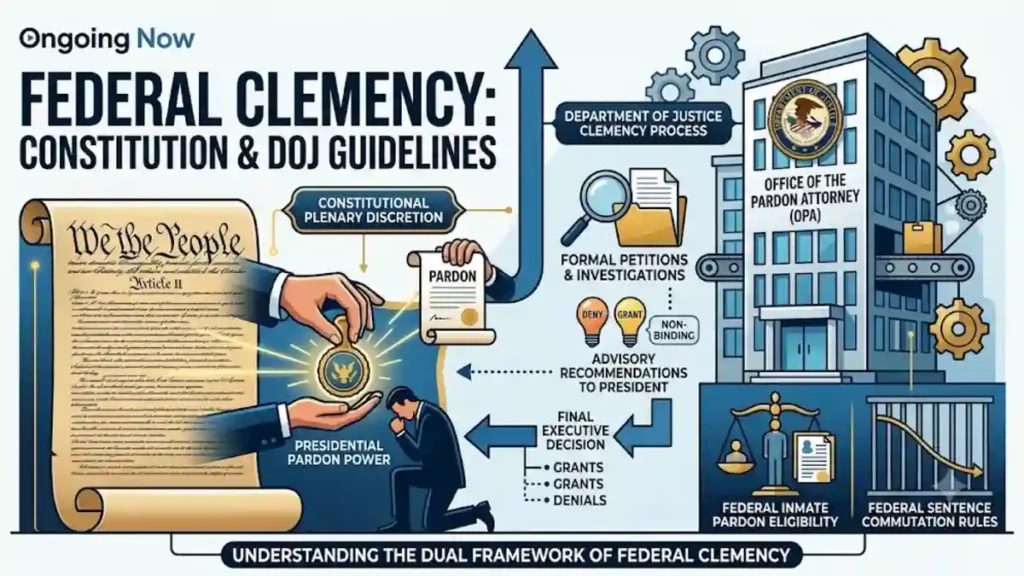
Signed on January 20, 2025, Executive Order 14160 represents a significant departure from long-standing federal policy. The order directs federal agencies to deny Social Security cards and U.S. passports to children born in the United States if their mother is unlawfully present or on a temporary visa, and if their father is neither a U.S. citizen nor a Lawful Permanent Resident (LPR). Proponents of the order argue it is necessary to deter “birth tourism” and protect the “value of American citizenship,” while critics label it a “unilateral attempt to rewrite the Constitution.”
The Executive Order 14160 legal status has been in a state of flux since its inception. Multiple federal district courts issued universal injunctions shortly after it was signed, preventing the policy from taking effect. Although the Supreme Court narrowed these injunctions in June 2025 to apply only to the specific plaintiffs involved, a later class-action certification in Maryland reinstated broad protections for newborns nationwide. This legal tug-of-war set the stage for the current Supreme Court intervention.
Oral Argument Summary: Trump v. Barbara
During the Trump v. Barbara oral argument summary, Solicitor General John Sauer presented the administration’s “originalist” interpretation of the 14th Amendment. The government contends that the drafters intended to grant citizenship only to those “completely subject” to U.S. political jurisdiction. Under this theory, individuals in the country illegally or on temporary visas maintain a primary allegiance to a foreign power, which the administration argues should disqualify their U.S.-born children from automatic citizenship.
The justices’ questioning revealed deep skepticism toward this narrow interpretation. Chief Justice John Roberts noted that while the world has changed since 1868, “it’s the same Constitution.” Justice Amy Coney Barrett pressed the government on how its rule would apply to “foundlings”—babies left at hospitals whose parents’ status is unknown—questioning if the Constitution itself provides a guarantee that an executive order cannot override. The debate highlighted a tension between modern immigration concerns and the text of the 14th Amendment.
| Case / Policy | Year | Core Legal Principle | Status in 2026 |
| United States v. Wong Kim Ark | 1898 | Jus soli (Birthplace) | Primary Precedent |
| Executive Order 14160 | 2025 | Parental Status Test | Under SCOTUS Review |
| Trump v. Barbara | 2026 | Definition of “Jurisdiction” | Decision Pending |
Decoding “Subject to the Jurisdiction”
At the heart of the litigation is the constitutional subject to the jurisdiction meaning. For over a century, the consensus among legal scholars and courts has been that anyone physically present in the U.S. (excluding foreign diplomats and invading armies) is “subject to the jurisdiction” because they are bound by U.S. laws. The administration is challenging this territorial view, proposing a “consensual” or “political” view of jurisdiction instead.
This distinction is not merely academic; it determines the citizenship for children of undocumented parents. If the Court adopts the administration’s view, it would effectively shift the U.S. from a jus soli (right of the soil) system toward a jus sanguinis (right of blood) system, where citizenship is inherited from parents rather than determined by the location of birth. Legal experts suggest such a shift would require a Constitutional Amendment rather than an executive order.
Precedent and the Shadow of Wong Kim Ark
The United States v. Wong Kim Ark precedent remains the most formidable obstacle for the administration. In that 1898 landmark case, the Court ruled 6–2 that a child born in San Francisco to Chinese citizens was a U.S. citizen at birth. The Court held then that the 14th Amendment “affirms the ancient and fundamental rule of citizenship by birth within the territory.”
The current administration argues that the Wong Kim Ark ruling was limited to “lawful inhabitants” and does not apply to those in the country without authorization. However, legal historians point out that the 1898 Court did not establish a parental-status test. During the 2026 hearings, several justices appeared hesitant to overturn a century of reliance on the territorial principle, which has provided a clear, objective standard for determining citizenship.
Analysis: Why the Decision Date Matters
The Supreme Court birthright citizenship ruling date is expected in late June or early July 2026. This timing is critical for federal and state agencies, which currently operate under a cloud of uncertainty. A ruling in favor of the administration would necessitate the creation of a massive new federal bureaucracy to verify the immigration status of every parent in the country before issuing a birth certificate or Social Security number.
“If the Court were to accept the traditional understanding of Wong Kim Ark… birthright citizenship would remain the stable foundation of our legal system. To do otherwise would turn every birth into a status inquiry.” — Justice Brett Kavanaugh (during oral arguments)
Conversely, a ruling against the order would affirm the existing understanding of the 14th Amendment citizenship clause challenges, likely ending the current administration’s efforts to restrict birthright citizenship through executive action. This would preserve the birth certificate as the primary and sufficient proof of American citizenship for all born within the 50 states and D.C.
Societal and Human Impact
The impact of ending birthright citizenship would be felt immediately by hundreds of thousands of families. According to a March 2026 study from Penn State University, ending the practice could result in up to 6.4 million children living in the U.S. without defined legal status by 2050. The study notes that while Latino communities would see the largest absolute impact, Asian communities—particularly those on H-1B work visas—would experience the highest relative growth in “unauthorized” births.
Key Figures and Projections:
Annual Births Affected: Approximately 260,000–320,000 babies per year.
Economic Cost: Estimated $600–$1,600 in government and legal fees per child for citizenship verification.
Projected “Stateless” Population: Millions of children could lack citizenship in both the U.S. and their parents’ home countries.
For families, the policy would transform the experience of childbirth into a legal hurdle. Instead of a routine administrative process, parents would need to present proof of their own LPR status or citizenship to ensure their child is recognized as a member of society. This “verification burden” would apply to all parents, not just those with precarious status, as hospitals would require documentation to distinguish between citizens and non-citizens.
Broader National Implications
As one of the most significant SCOTUS immigration cases 2026, this ruling will define the limits of executive power. If the Court allows the president to redefine a constitutional right via executive order, it could set a precedent for future administrations to narrow other constitutional guarantees. This “legal slippery slope” was a recurring theme in amicus briefs filed by civil rights groups and constitutional scholars.
The outcome will also influence the “brain drain” phenomenon. Researchers warn that highly skilled workers on temporary visas may choose to relocate to countries with more stable citizenship laws rather than risk their children being born without legal status in the U.S. This could have long-term consequences for the American information economy, which relies heavily on international talent.
Evidence-Based Political Insights
From a policy perspective, the challenge to birthright citizenship reflects a broader movement to move away from “universal” citizenship. While the administration argues that can an executive order end birthright citizenship is a question of administrative efficiency and national sovereignty, the judicial consensus has historically leaned toward the view that only the people, through their representatives and the amendment process, can change the definition of a citizen.
The Court’s decision will likely rest on whether the justices view “jurisdiction” as a geographic fact or a political contract. If it is the former, the status quo remains. If it is the latter, the United States may enter a new era of “conditional citizenship,” where the rights of the child are tethered to the legal standing of the parent.
Stay sharp with Ongoing Now!
Source and Data Limitations: This report is based on the 2026 Supreme Court docket for Trump v. Barbara, official transcripts of oral arguments from April 1, 2026, and the text of Executive Order 14160 (January 20, 2025). Statistical data is sourced from the March 2026 Penn State University study published in Demography and Pew Research Center estimates. Legal analysis incorporates the landmark 1898 precedent United States v. Wong Kim Ark. Information regarding lower court injunctions and class-action status is derived from federal court filings in Maryland and New Hampshire. This article excludes speculative outcomes and focuses solely on verified legal arguments and documented socioeconomic projections available as of May 9, 2026.