Navigating the Shift: A Comprehensive VA Mortgage Interest Rates Comparison
How updated VA funding fees and the latest Federal Reserve outlook impact borrowing costs for military families in 2026.
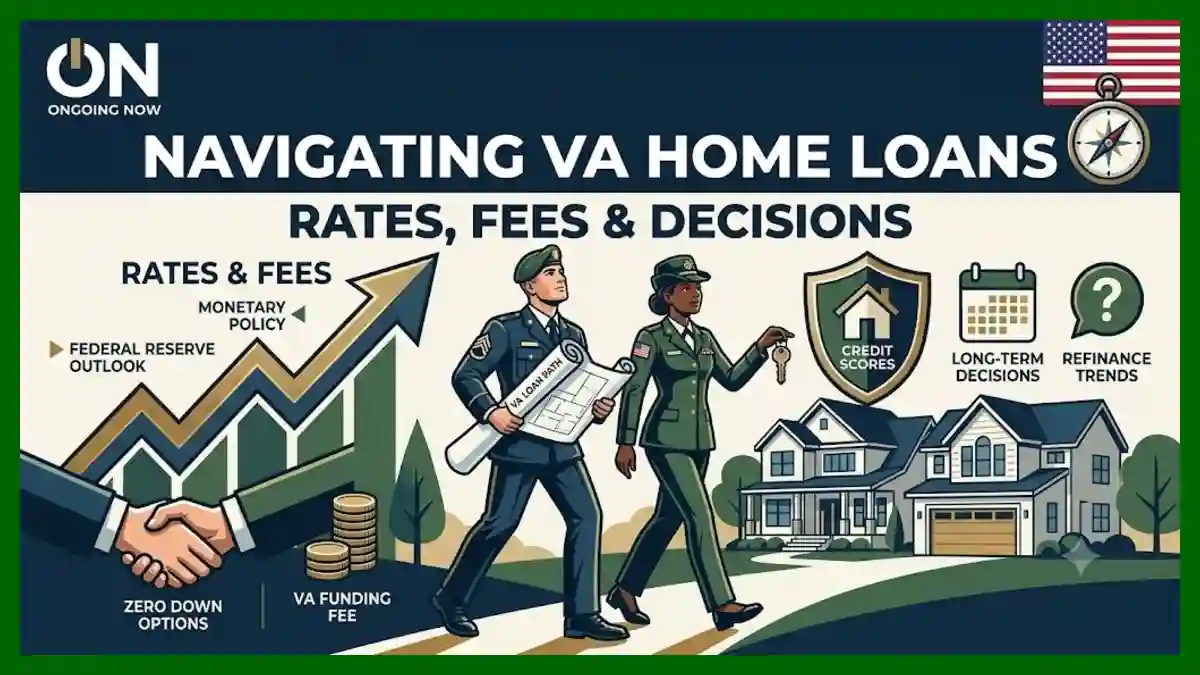
Finding a path to homeownership often feels like moving toward a shifting target for military families navigating today’s housing market. A prospective buyer looking at suburban housing inventory may find that while their military service grants them unique buying power, the broader economic landscape introduces significant variables. The intersection of persistent inflation, central bank policy adjustments, and evolving loan regulations has changed the math behind home financing.
Understanding a current va mortgage interest rates comparison matters right now because borrowing conditions have fundamentally adjusted over the last two quarters. Data from financial analytics firms indicates that everyday consumers are spending more time evaluating financing structures before committing to a purchase. For veterans and active-duty service members, these macro-level shifts alter the traditional cost advantages associated with government-backed lending programs.
Navigating the Shifting Realities of Military Home Financing
For many households, the initial appeal of a military housing loan lies in its distinct structural advantages, particularly the absence of a mandatory down payment. However, current market participants are discovering that the total cost of borrowing is closely tied to broader economic benchmarks. As families assess their monthly budgets against rising living expenses, the relationship between initial loan fees and long-term interest obligations becomes a critical focal point.
Consumer behavior patterns indicate a growing caution among military buyers, with many delaying purchases or adjusting their target home price points. This caution stems from an environment where borrowing costs remain elevated compared to the historical lows seen earlier in the decade. The decision-making process is no longer just about qualifying for a loan, but managing how that loan fits into a tighter household balance sheet.
Central Bank Directions Shape the Lending Landscape
The primary driver behind recent borrowing shifts is the evolving stance of the nation’s monetary authorities. Under the leadership of Federal Reserve Chair Kevin Warsh, the central bank recently elected to maintain the benchmark federal funds rate at a target range of 3.50% to 3.75%. This decision reflects persistent inflation pressures, notably driven by volatile energy and commodity costs earlier in the year.
The federal reserve warsh interest rate outlook suggests that policymakers are in no rush to implement rate reductions in 2026. In fact, Summary of Economic Projections data indicates that a majority of committee officials view stable or even higher rates as the likely path forward for the remainder of the year. This hawkish baseline directly influences the broader mortgage market, keeping upward pressure on consumer financing products.
Federal Reserve Stance: The central bank’s focus on price stability means benchmark interest rates are projected to remain elevated, directly impacting consumer borrowing costs across the housing sector.
Analyzing Current Borrowing Benchmarks and Trends
When examining the practical numbers available to qualified buyers, the distinction between different loan structures becomes clear. According to the latest national tracking data from Bankrate va refinance rate trends, the national average 30 year fixed va loan apr hovers around 6.28%, while the standard interest rate sits near 6.24%. These figures represent a slight decline from previous weekly peaks but remain high enough to influence long-term affordability metrics.
For buyers looking to minimize their total interest exposure over time, alternative timelines are increasingly part of the conversation. Current 15 year fixed va purchase loan quotes show average interest rates near 5.50%, carrying an APR of roughly 6.141% when factoring in standard closing points. While the shorter duration significantly reduces the total interest paid over the life of the loan, it demands a much higher monthly cash flow, presenting a distinct trade-off for working families.
Evaluating the Impact of Updated Structural Fees
A major component of government-backed lending that consumers must consider is the mandatory administrative fee paid to the Department of Veterans Affairs. The veterans mortgage funding fee chart 2026 outlines specific charges that are typically rolled into the principal balance of the loan. For first-time borrowers utilizing a zero down payment option, the standard funding fee is set at 2.15% of the total loan amount.
+-----------------------------------------------------------------------+
|                 2026 VA Mortgage Funding Fee Percentages              |
+------------------------------------+------------------+---------------+
| Down Payment Amount                | First-Time Use   | Subsequent Use|
+------------------------------------+------------------+---------------+
| Less than 5% Down (Zero Down)      |      2.15%       |     3.30%     |
| 5% to 9.99% Down                   |      1.50%       |     1.50%     |
| 10% or More Down                   |      1.25%       |     1.25%     |
+------------------------------------+------------------+---------------+
| Note: Interest Rate Reduction Refinance Loans (IRRRL) carry a flat    |
| fee of 0.50% regardless of prior usage or down payment parameters.     |
+-----------------------------------------------------------------------+
As illustrated by the data, subsequent users who choose to buy another home with no money down face a higher fee of 3.30%. On a $400,000 home purchase, a 2.15% fee adds $8,600 to the starting debt, which then accrues interest over the life of the loan. Certain individuals, such as veterans receiving disability compensation for service-connected conditions, are completely exempt from this charge, creating a vastly different cost structure depending on individual status.
Credit Metrics and Equity Withdrawal Realities
While government-backed programs are known for having flexible zero down home loan credit score requirements, individual lenders still apply their own risk assessments. Most competitive institutional rates require a credit score of 720 or higher, even though the underlying program does not enforce a rigid minimum floor. Borrowers with lower scores may still secure approval, but often face higher interest adjustments or additional underwriting scrutiny.
For existing homeowners looking to convert home equity into liquid capital, the regulatory framework requires careful navigation. The va cash out refinance underwriting guidelines state that these transactions are treated as higher-risk originations by lenders. Consequently, a cash-out refinance typically carries an average interest rate of roughly 6.375% with a higher APR, and subsequent users face a steep 3.30% funding fee, altering the cost-benefit analysis of extracting home equity.
Behavioral Shifts Among Modern Homebuyers
In response to these compounding economic factors, consumer habits are evolving away from the rapid decision-making seen in previous years. Homeowners are increasingly turning toward home equity lines of credit or choosing to remain in their current properties to protect historically low fixed rates. The volume of streamline refinancing has moderated, as fewer households find an immediate financial benefit in altering their existing mortgage terms.
Families are also dedicating more time to comparative shopping, obtaining multiple institutional quotes rather than accepting an initial offer. This deliberate pace reflects a broader trend of financial preservation, where consumers prioritize minimizing upfront transaction fees and long-term debt loads. The focus has shifted from maximizing purchase power to optimizing long-term balance sheet stability.
Key Considerations for Daily Financial Planning
When evaluating the current lending environment, several neutral factors shape household outcomes:
The Down Payment Trade-Off: While a zero-down loan preserves liquid cash reserves, making a down payment of 5% or more directly reduces the upfront regulatory funding fee.
Loan Duration Dynamics: Opting for a shorter amortization timeline lowers the total interest expense but locks the household into a significantly higher mandatory monthly payment.
Exemption Verification: Confirming disability or service status early can eliminate substantial upfront administrative costs that would otherwise be financed into the loan principal.
Market Timing Realities: Waiting for potential rate cuts carries the risk of facing continued inflation or shifting housing inventory costs, as central bank policy remains data-dependent.
Broader Context and Financial Outlook
The personal finance choices made by military families do not exist in a vacuum; they are tethered to global bond yields and domestic monetary strategy. When the yield on 10-year Treasury bonds fluctuates due to geopolitical uncertainty or inflation reports, consumer mortgage rates respond in kind. With central bank officials signaling that benchmark rates will remain steady to protect price stability, the era of ultra-low borrowing costs remains paused.
This environment highlights the importance of thorough budget tracking and realistic forecasting for everyday households. Managing debt-to-income ratios and preserving personal credit health serve as the primary mechanisms for capturing the most favorable terms available in a restrictive market.
Key Takeaways
Central bank policy under Chair Kevin Warsh keeps benchmark rates steady between 3.50% and 3.75%, maintaining upward pressure on consumer mortgage options.
Standard 30-year VA loan APR averages sit near 6.28%, while shorter-duration 15-year options trade lower interest rates for higher monthly payments.
The 2026 regulatory funding fees range from 1.25% to 3.30% based on down payments and usage history, though disability exemptions can reduce this cost to zero.
Cash-out refinancing guidelines and lender risk premiums generally result in higher interest rates compared to traditional purchase loans.
The contemporary housing market demands an analytical approach to long-term debt. By evaluating how interest rates, regulatory fees, and credit metrics interact, consumers can better position themselves to navigate an extended period of elevated borrowing costs. Remaining informed about these structural elements forms the foundation of sustainable everyday financial management.
This is for informational purposes only and not personalized financial advice. Consult a licensed professional for your specific situation.
Stay sharp with Ongoing Now!
Source and Data Limitations: The data and financial benchmarks cited in this article are derived from official public releases by the Federal Reserve Board, including the June 2026 Summary of Economic Projections and statements from Chair Kevin Warsh. Mortgage rate averages, annual percentage rates (APR), and refinance trends reflect national survey data compiled by Bankrate and Veterans United as of June 2026. Regulatory fee structures and exemption rules are based on the official 2026 guidelines published by the U.S. Department of Veterans Affairs.
All tracking data, interest quotes, and fee charts represent market averages and standardized program parameters that are subject to frequent change based on secondary market fluctuations and institutional underwriting adjustments. Individual terms vary significantly based on localized factors, specific lender policies, property types, and unique applicant financial profiles. This content is intended strictly for high-level informational and journalistic purposes and does not constitute credit approvals, financial forecasts, or specific product endorsements.