How New Trump Account Limits Are Reshaping Long-Term Family Savings Goals
Understanding the new $5,000 annual cap, employer contribution matches, and custodial age restrictions under the latest federal frameworks.
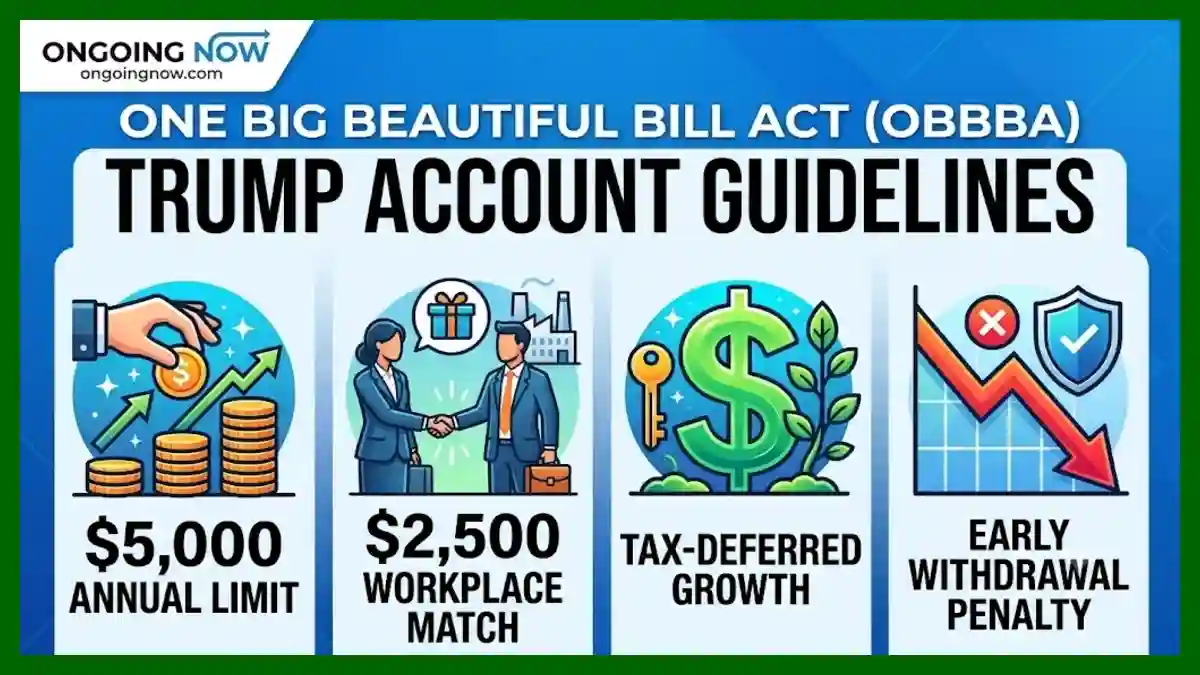
Families across the country are navigating shifting paths toward building generational security, heavily weighing options for early childhood savings amid dynamic cost-of-living challenges. In this environment, the recent roll-out of tax-advantaged vehicles under the One Big Beautiful Bill Act (OBBBA) has brought structured, long-term options to the forefront of household conversations. Understanding how these distinct savings structures align with broader family goals is becoming essential as new federal parameters shape how parents approach generational financial security.
Navigating the Framework of the Trump Account Annual Contribution Limit 2026
When evaluating these new savings vehicles, parents are first assessing the absolute boundaries placed on annual savings capacity. For the current calendar period, the trump account annual contribution limit 2026 sets a firm threshold at $5,000 per child per year during the designated growth period. This specific cap applies to combined inputs from parents, extended family members, and friends, offering a structured boundary designed to facilitate steady, incremental wealth accumulation over time.
Fulfilling the trump account annual contribution limit 2026 parameters requires coordinated awareness among family members, as total individual and workplace contributions count toward this unified total. Notably, certain specialized inputs—such as the one-time $1,000 federal pilot program seed deposit for eligible U.S. citizens born between 2025 and 2028—exist outside of this standard yearly baseline. The ceiling is slated to remain locked at this level until adjustments for inflation commence in subsequent periods, making precise annual tracking a priority for households aiming to maximize early savings.
The Role of Workplace Support: Max Employer Contribution Trump Account Rules
A growing element of modern employee benefits involves institutional support for family savings goals, shifting how households view total compensation packages. Under the structural provisions of these vehicles, the max employer contribution trump account limit is capped at $2,500 annually per employee. This cap functions on a per-employee basis rather than a per-account basis, meaning an individual employee’s total workplace allocations across multiple dependents cannot exceed this boundary.
Any capital provided by a workplace under the max employer contribution trump account guidelines automatically counts toward the child’s comprehensive annual limit. A key structural characteristic of these employer-provided funds is their exclusion from the worker’s gross taxable income, providing an incentive for workplace participation. For households with access to these benefits, tracking the interplay between private family deposits and employer matches is critical to preventing excess contributions that require structural correction.
Long-Term Growth Dynamics: The Reality of Tax Deferred Growth Trump Accounts
The foundational appeal of utilizing dedicated custody vehicles rests on how internal asset appreciation is handled by fiscal authorities over multi-decade horizons. The baseline mechanism governing these assets relies on tax deferred growth trump accounts, which shields compounding returns from yearly assessment. As long as funds remain inside the custodial boundary, the realization of capital gains, dividends, or interest distributions does not trigger an immediate annual tax liability for the minor or the parent.
Utilizing tax deferred growth trump accounts allows the entirety of the portfolio’s structural earnings to reinvest continuously, maximizing the compounding effect during the initial eighteen years of the beneficiary’s life. However, this structure carries an important distinction from alternative vehicles: the initial contributions are made using after-tax dollars and do not reduce the donor’s current-year taxable income. The true value sits entirely in the deferral phase, allowing the market-tracking index funds required by the Treasury to compound without annual friction.
Structural Divergence: Evaluating a Trump Account vs 529 Plan for Long-Term Goals
Families frequently face a choice between general-purpose wealth accumulation and target-specific funding vehicles when planning for a child’s future. When comparing a trump account vs 529 plan, the core distinction lies in the tension between investment flexibility and mandatory distribution purposes. A traditional 529 mechanism is explicitly hardwired for qualified educational expenses, granting completely tax-free distributions if used for tuition, room, and board, but imposing penalties if diverted elsewhere.
+-----------------------------------+-----------------------------------+-----------------------------------+
| Feature                           | Trump Account                     | 529 Plan                          |
+-----------------------------------+-----------------------------------+-----------------------------------+
| Primary Savings Purpose           | General Wealth / Retirement       | Higher Education / K-12           |
+-----------------------------------+-----------------------------------+-----------------------------------+
| Investment Options                | Limited to low-cost index ETFs    | State-selected portfolios         |
+-----------------------------------+-----------------------------------+-----------------------------------+
| Earnings Tax Treatment            | Tax-deferred growth               | Tax-free for qualified education  |
+-----------------------------------+-----------------------------------+-----------------------------------+
| Ownership Transition              | Absolute transfer to child at 18  | Maintained by the account owner   |
+-----------------------------------+-----------------------------------+-----------------------------------+
Conversely, contrasting a trump account vs 529 plan highlights that the newer framework provides a vehicle aimed at general wealth or long-term retirement planning rather than educational rigidity. While a 529 plan allows substantial lifetime contributions without a low annual ceiling, the newer option relies on the strict $5,000 threshold while mandating investments solely in low-cost index products tracking broad domestic equity markets.
Age Boundaries and Transitions: Managing Trump Account Age Limit Restrictions
Every custodial vehicle features a distinct operational horizon that governs who maintains fiduciary authority and when the structure undergoes automated conversion. Under current guidelines, the trump account age limit restrictions dictate that regular contributions and unique regulatory structures apply exclusively before the year the beneficiary attains age 18. During this initial phase, an authorized adult or legal guardian serves as the sole custodian, managing the interface through official platforms.
Once the beneficiary crosses the threshold established by trump account age limit restrictions, ownership shifts directly and fully to the young adult on January 1 of the year they turn 18. At this juncture, the specialized framework transitions, and the vehicle automatically adopts the standard operational rules of a Traditional Individual Retirement Account (IRA). Consequently, future contribution capacities immediately align with standard IRA limits and require the young adult to possess documented earned income.
Assessing the Friction points: Capital Gains Tax Trump Accounts and Liquidations
Understanding how funds are treated at the point of exit is vital for long-term planning, as distribution rules differ significantly from standard brokerage accounts. The application of capital gains tax trump accounts framework does not leverage preferential long-term capital gains rates at distribution; instead, all realized growth is treated as ordinary income. Upon withdrawal, both the original pre-tax employer contributions and all accumulated investment earnings face standard income tax rates.
Navigating the rules surrounding capital gains tax trump accounts requires an understanding of basis tracking. While direct after-tax parental contributions create a non-taxable basis upon withdrawal, any portion derived from government seeds, employer inputs, or market growth faces full income taxation. This structural reality requires meticulous record-keeping via Form 5498-TA to ensure that families accurately differentiate between taxable earnings and non-taxable initial principal during later distributions.
Access Constraints: The Realities of Trump Account Early Withdrawal Penalty Tax
A primary consideration for any locked custodial structure is the financial consequence of attempting to access capital prior to designated milestones. The trump account early withdrawal penalty tax structure is designed to heavily discourage early liquidations during the minor’s growth years. In fact, prior to the age of 18, distributions are generally prohibited entirely, with narrow exceptions limited to full trustee-to-trustee transfers or the removal of documented excess contributions.
Following the transition to a Traditional IRA framework at adulthood, the trump account early withdrawal penalty tax aligns with standard statutory retirement rules. Accessing the accumulated growth prior to age 59½ triggers a standard 10% federal penalty tax in addition to the mandatory ordinary income tax liability. While certain traditional exemptions exist for first-time home purchases or qualified higher education costs, the framework is fundamentally engineered to preserve capital for long-term horizons rather than short-term liquidity needs.
Guardrails for Minors: Understanding Child Investment Rules Trump Accounts
Managing wealth for minors requires adherence to specific statutory frameworks designed to protect the beneficiary’s long-term interests while limiting speculative risk. The child investment rules trump accounts framework enforces strict guardrails on asset allocation, completely banning speculative individual stock picking, options trading, or cryptocurrency exposure. Instead, all inflows are automatically directed into low-cost, broad-market index funds or exchange-traded funds (ETFs) tracking major domestic equity benchmarks.
These strict child investment rules trump accounts reflect a regulatory philosophy focused on steady market replication rather than active management. By capping administrative fees and limiting options to diversified index products, the structure aims to mitigate the risk of catastrophic loss during the child’s developmental years. This hands-off mechanism ensures that the portfolio’s trajectory mirrors the broader American economy, removing the need for daily portfolio management by parents.
Changing Consumer Financial Behavior and Savings Trends
Economic observers note distinct shifts in how modern families approach long-term savings, driven by changing views on historical wealth milestones. Many households are actively moving away from traditional, unstructured savings accounts that offer minimal yields in favor of structured, market-linked custodial vehicles. This transition reflects an increasing awareness of inflation’s impact on cash reserves and a desire to capture compound market growth as early as possible.
Consumer data indicates that families are increasingly prioritizing automated, small-dollar contributions over erratic, large-scale deposits. The integration of mobile applications and direct-deposit employer allocations has streamlined this habit, making regular savings more achievable for diverse income groups. However, this ease of access requires careful monitoring, as the involvement of multiple donors increases the risk of inadvertently exceeding annual regulatory limits.
Financial Insight: Evaluating Structural Trade-Offs
When considering these newly established savings structures, the primary challenge for families lies in balancing immediate liquidity needs against long-term financial goals. The strict limitations on early withdrawals mean that capital committed to these vehicles is effectively locked for decades, making it unsuitable for emergency funds or near-term expenses. Families must carefully evaluate their household cash flow before committing funds to ensure they do not compromise their current financial stability.
Additionally, the transition of absolute control to the beneficiary at age 18 represents a significant milestone that requires careful preparation. Unlike alternative vehicles where a donor can control the timing of distributions, this framework grants full financial autonomy to the young adult immediately upon reaching maturity. Preparing the next generation with the foundational financial literacy needed to manage an independent investment portfolio is an essential component of maximizing the long-term value of these accounts.
Key Takeaways
Firm Limits: The combined annual contribution capacity remains strictly capped at $5,000 for the current period, requiring careful coordination among all contributing parties.
Workplace Integration: Employer contributions face a distinct $2,500 per-employee annual cap and count directly toward the child’s comprehensive yearly limit.
Tax Deferral Benefits: Investment growth accumulates free from annual tax drag, though all earnings face ordinary income tax rates upon eventual distribution.
Investment Guardrails: Portfolio choices are legally confined to low-cost index funds tracking major domestic equity benchmarks to minimize speculative risk.
Absolute Transition: Full administrative and fiduciary control transfers entirely to the beneficiary on January 1 of the year they attain age 18.
The emergence of updated custodial frameworks presents families with unique opportunities to build long-term security, provided they navigate the structural rules with diligence. By understanding the boundaries governing contributions, tax treatments, and ownership transitions, households can integrate these vehicles effectively into their broader financial strategies. Balancing these long-term commitments with day-to-day liquidity needs remains the cornerstone of sustainable financial planning.
Stay sharp with Ongoing Now!
Source and Data Limitations: The analysis presented in this article is based on official program guidelines from the U.S. Department of the Treasury, internal revenue statutes established under the One Big Beautiful Bill Act (OBBBA), and published regulatory summaries from the Bipartisan Policy Center and major tax preparation authorities. All contribution caps, penalty structures, and tax deferral parameters reflect verified rules applicable for the 2026 calendar year. Readers should note that tax laws are subject to ongoing administrative updates, legislative revisions, and inflation adjustments that may alter these frameworks in future periods. This is for informational purposes only and not personalized financial advice. Consult a licensed professional for your specific situation