Older Adults Face Budget Shifts as 2027 Social Security COLA Projections Climb
Early analytical modeling from AARP signals a potential 3.6% benefit increase to counter persistent healthcare and living costs.
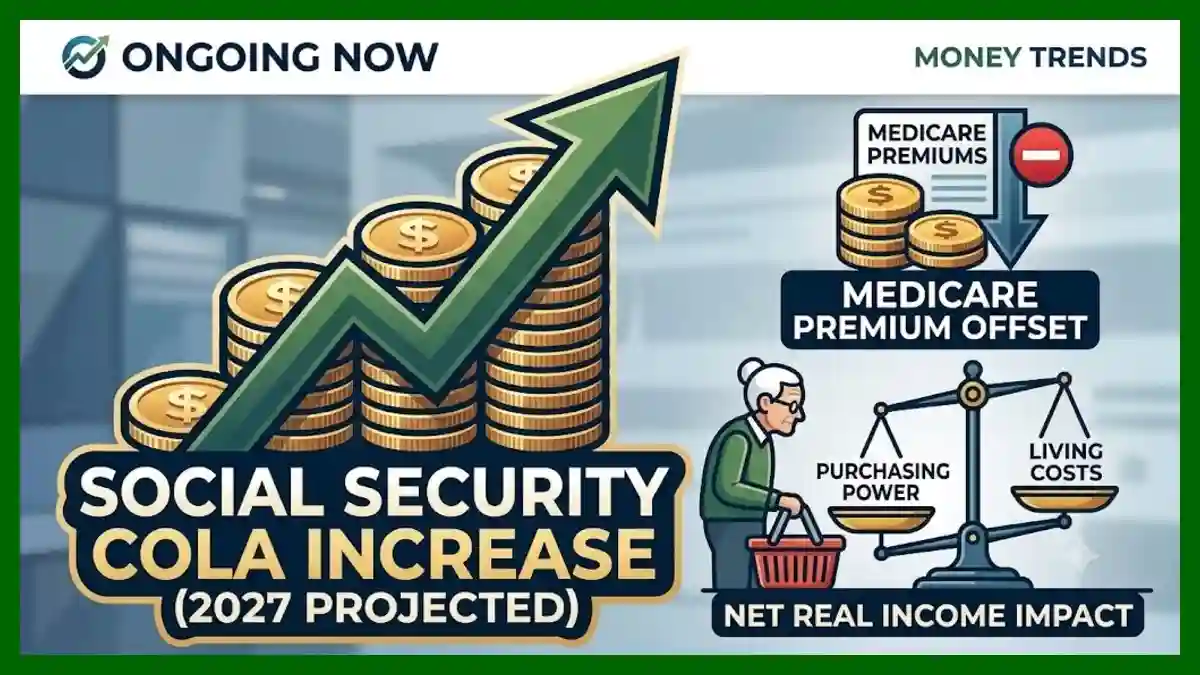
Managing a household budget on a fixed income requires constant adjustments, especially as everyday living expenses remain elevated. For millions of older Americans, the annual adjustments made to federal benefits serve as a critical baseline for maintaining purchasing power. Recent early projections concerning the social security cost of living adjustment 2027 suggest that beneficiaries may see a noticeable shift in their monthly checks, altering how households approach their upcoming financial planning.
Understanding the mechanics behind these shifts helps households prepare for broader economic transitions. The social security cost of living adjustment 2027 is directly tied to inflationary changes, serving as a structural counterweight to rising prices. When inflation remains persistent throughout the spring and summer months, the eventual adjustment reflects those cumulative pressures, giving older adults an indicator of where consumer prices are headed.
Economic changes in the broader market consistently alter consumer confidence and spending patterns. For those relying on fixed distributions, an early look at data trends provides the necessary window to evaluate lifestyle expenses, recurring obligations, and general savings buffers before the winter months arrive.
Tracking CPI-W Data for Social Security COLA
The foundational metric driving these changes is the Consumer Price Index for Urban Wage Earners and Clerical Workers, compiled monthly by the U.S. Bureau of Labor Statistics. The Social Security Administration relies strictly on cpi-w data for social security cola determinations, specifically measuring the average price shifts during the third quarter of the calendar year. This period spans July, August, and September, comparing the average to the same timeframe from the previous year.
Recent statistical tracking indicated a year-over-year acceleration in consumer index gauges during the early quarters of 2026, driven by persistent service-sector costs and energy fluctuations. Even when broader indicators show brief periods of cooling, the specific categories within the CPI-W—such as shelter, transportation, and medical care—often sustain higher baselines. This divergence creates a scenario where the calculated index remains elevated, directly pressuring the upcoming annual adjustment upward.
AARP highlighted these shifts by releasing an uncharacteristically early analytical outlook, pointing toward a projected 3.6% increase for the 2027 calendar year. Historically, organizations wait until third-quarter data begins rolling out, but the sustained trajectory of inflation prompted early modeling. This preliminary figure offers an analytical baseline, though the final percentage remains dependent on the official data finalized by the federal government in mid-October.
Evaluating Independent Medicare Policy Analyst Projections
Annual balance sheets are rarely affected by a single policy variable, as increases in one area are frequently met with adjustments in another. Independent medicare policy analyst projections play a crucial role in balancing the baseline expectations set by COLA updates. These analysts closely monitor the financial health of federal trust funds, healthcare utilization rates, and legislative adjustments that dictate premium baselines.
Current modeling from non-partisan senior advocacy groups, including the Senior Citizens League, presents a slightly alternative outlook, floating an estimated adjustment closer to 3.8%. These variances highlight the volatility of late-summer economic data, where minor shifts in fuel costs or commodity supply chains can skew the final three-month average. For households trying to establish a baseline, these competing projections underscore the importance of maintaining a flexible fiscal outlook.
The interaction between social security cost of living adjustment 2027 trends and healthcare premiums represents a recurring puzzle for retirement planning. Analysts emphasize that looking at benefit bumps in isolation often creates an incomplete picture. A comprehensive view requires looking at how premium adjustments, deductibles, and out-of-pocket maximums alter the actual net income landing in bank accounts each month.
Estimating the Average Monthly Retired Worker Benefit Bump
For the average beneficiary, abstract percentages matter less than the tangible changes reflected in monthly bank deposits. Based on mid-2026 distribution data provided by the Social Security Administration, the average monthly retired worker benefit bump under a 3.6% adjustment would equal approximately $75 per month. If the alternative 3.8% projection materializes, that monthly increase shifts to roughly $79.
These dollar amounts vary significantly across different beneficiary categories, reflecting the diverse structural foundation of the system. Surviving spouses face distinct baseline averages, where a 3.6% adjustment might yield a $70 monthly increase, while individuals receiving Social Security Disability Insurance could see an average bump of $59. These variations demonstrate that macro-level percentages manifest differently depending on a household’s specific historical earnings record.
| Beneficiary Category | Average Benefit Baseline (Mid-2026) | Projected Monthly Increase (3.6% COLA) | Projected Monthly Increase (3.8% COLA) |
| Retired Workers | $2,084 | +$75 | +$79 |
| Surviving Spouses | $1,931 | +$70 | +$73 |
| Disabled Workers (SSDI) | $1,635 | +$59 | +$62 |
The incremental nature of these bumps highlights the necessity of accurate baseline tracking. A minor monthly increase can cover specific localized utility hikes or grocery variances, but it rarely resets a household’s fundamental financial trajectory. Observing these increments helps consumers understand the difference between absolute dollar growth and the preservation of real purchasing power.
Anticipating Medicare Part B Premium Updates 2027
A primary variable acting against the annual benefit increase is the cost of public healthcare coverage. The anticipated medicare part b premium updates 2027 are poised to absorb a portion of the projected COLA gains, a pattern that consistently impacts older demographics. Because Medicare Part B premiums are standardly deducted directly from Social Security checks, changes to healthcare pricing hit beneficiaries automatically.
Rising healthcare labor costs, advanced treatment approvals, and general programmatic expenditures drive these premium adjustments. When Medicare expenses outpace general economic inflation, the standard premium climbs proportionally to ensure system solvency. This structural reality means that a higher social security cost of living adjustment 2027 is frequently accompanied by a corresponding escalation in mandatory healthcare deductions.
Beyond the monthly premium, consumers must also track standard medicare deductible estimates 2027 to fully map out potential out-of-pocket exposures. Early policy outlines suggest that the baseline annual deductible for outpatient services will continue its upward trend, mirroring the broader rising costs within the American medical system. For individuals managing chronic conditions or requiring regular specialist consultations, these structural threshold updates can impact liquidity throughout the first half of the year.
Financial Behavior and Senior Citizen Monthly Budget Planning 2027
Faced with shifting income projections and rising fixed costs, consumer behavior patterns among older demographics are undergoing notable changes. Observational data reveals a shift away from discretionary long-term commitments toward immediate liquidity preservation. Senior citizen monthly budget planning 2027 increasingly prioritizes fixed essential categories, with households actively reducing variable outlays like travel, leisure, and non-essential consumer goods.
This behavioral adaptation is largely driven by the phenomenon of psychological inflation fatigue, where consumers alter spending habits based on the perception of sustained high prices, even if official metrics show stabilization. Many individuals are choosing to delay major vehicle upgrades or home renovations, preferring to keep liquid reserves intact within high-yield savings vehicles or short-term deposit certificates.
[Fixed Income Adjustments]
       │
       ├──► Premium Offsets (Medicare Part B increases reduce net COLA gains)
       │
       ├──► Essential Prioritization (Shifting allocations toward utilities & healthcare)
       │
       └──► Liquidity Preservation (Postponing major discretionary expenditures)
Furthermore, the rise of digital financial management has changed how households track their resources. Rather than relying on static annual reviews, consumers are utilizing personal retirement wealth management tools to track real-time cash flow, project tax liabilities, and evaluate inflation impacts. This technological adoption reflects a broader push for granular control over personal balance sheets in an unpredictable macroeconomic climate.
Long-Term Retirement Income Inflation Protection Strategies
Relying entirely on federal adjustments is rarely sufficient for comprehensive long-term stability, leading many consumers to evaluate supplemental retirement income inflation protection strategies. The core challenge of fixed-income management is time; over a decade or two, even mild inflation can erode the purchasing power of unadjusted private pensions or traditional cash savings.
Diversification remains a central theme within general financial literacy discussions regarding asset preservation. Consumers frequently examine the role of Treasury Inflation-Protected Securities, annuities with cost-of-living riders, or equity allocations aimed at outpacing baseline price index increases. Each avenue presents specific structural trade-offs regarding liquidity, risk exposure, and guaranteed yield timelines that require careful review.
Ultimately, navigating the social security cost of living adjustment 2027 requires an understanding of how distinct financial pieces connect. Balancing federal benefit updates against shifting healthcare premiums and localized living costs forms the baseline of modern wealth management. Staying informed on these trends allows individuals to maintain perspective, adapt behavioral patterns, and approach long-term budgetary planning with clarity.
Stay sharp with Ongoing Now!
—
Source and Data Limitations: The projections and data points cited in this article are based on preliminary calculations from the American Association of Retired Persons (AARP), the Senior Citizens League (TSCL), and historical consumer index metrics provided by the U.S. Bureau of Labor Statistics (BLS) as of mid-2026. The Social Security Administration (SSA) will announce the final official 2027 COLA rate on October 14, 2026, utilizing complete third-quarter CPI-W statistics. This coverage is for informational purposes only and does not constitute personalized financial, investment, legal, or medical advice. Consult a licensed professional for your specific situation.