Project Freedom: Naval Security and the Strait of Hormuz Standoff
US Strategy Shifts Toward Escorted Safe Passage for Neutral Vessels
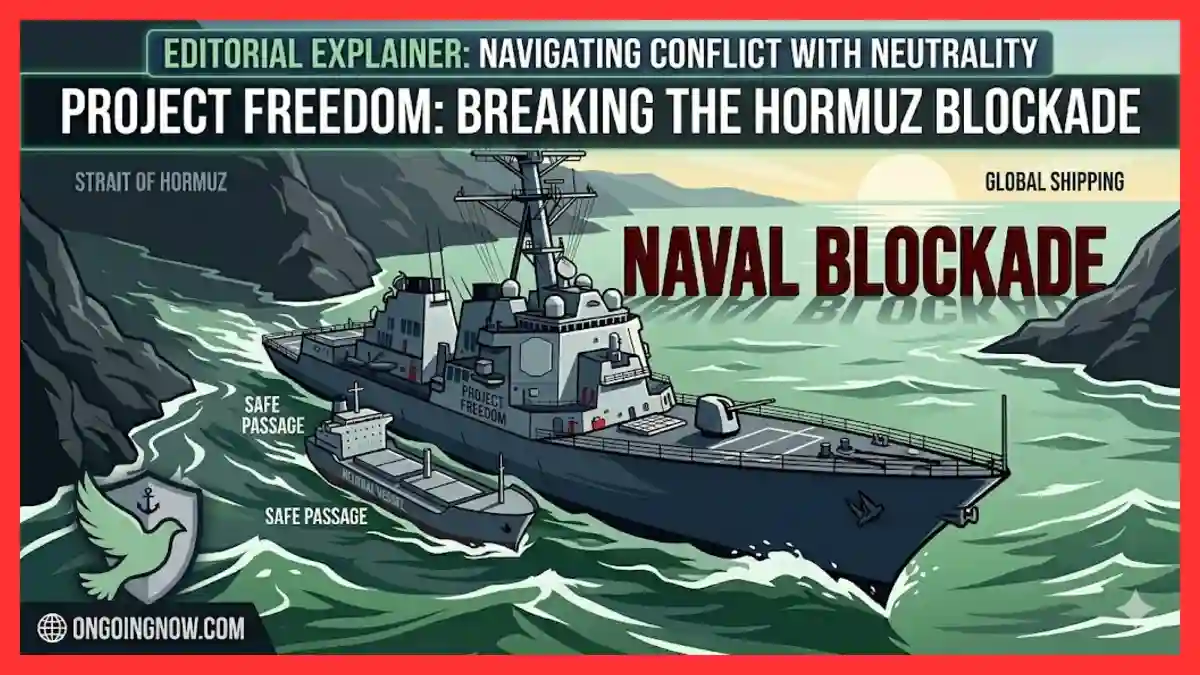
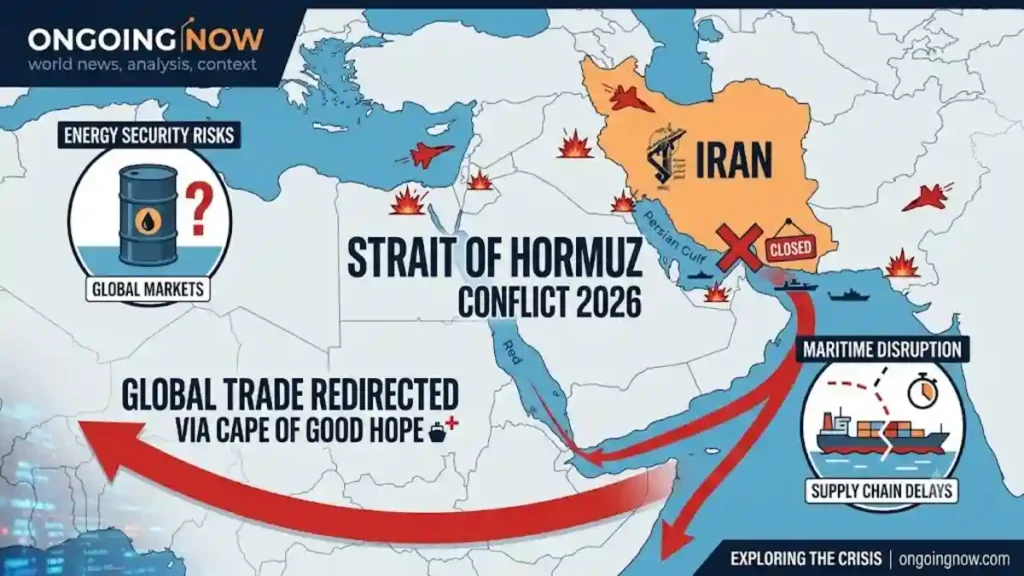
The United States has initiated a specialized maritime operation to facilitate the exit of commercial ships currently stranded within the Persian Gulf. Known as Project Freedom, the initiative responds to a month-long maritime deadlock that has restricted global shipping through the Strait of Hormuz. The operation represents a significant shift in regional strategy, focusing on the extraction of “neutral and innocent bystanders” to stabilize international supply chains.
The implementation of Project Freedom matters globally due to three primary factors:
Humanitarian Impact: Hundreds of civilian crew members have faced critical shortages of food and medical supplies while trapped in contested waters.
Geopolitical Stability: The operation tests the limits of current ceasefire frameworks between the United States and Iran.
Economic Continuity: Roughly 25% of the world’s seaborne oil passes through this chokepoint, and the continued disruption has caused the largest monthly energy price increase in historical record.
Key Entities and Strategic Framework
Within the first 24 hours of the announcement, U.S. Central Command (CENTCOM) mobilized assets to oversee the safe transit of vessels. According to Admiral Brad Cooper, the mission integrates guided-missile destroyers and over 100 aircraft. While the United States describes the move as a “humanitarian gesture,” the government of Iran has voiced sharp opposition through its Khatam al-Anbiya military headquarters.
Regional partners, including the United Arab Emirates and Oman, are monitoring the development as ships are encouraged to consider territorial waters for routing. International maritime bodies, such as BIMCO and Lloyd’s List, continue to assess the insurance risks associated with the new “dual blockade” environment.
Technical Scope of Project Freedom and Regional Security
The logistical scale of Project Freedom involves a multi-domain military presence designed to deter interference during ship extractions. The mission is not characterized as a general reopening of the waterway but as a targeted effort to “guide” specific vessels out of restricted zones.
Operational Assets and Personnel
Personnel: Approximately 15,000 U.S. service members.
Naval Assets: Multiple guided-missile destroyers and amphibious transport dock ships, including the USS New Orleans.
Aerial Support: More than 100 land and sea-based aircraft, including Boeing P-8 Poseidon patrol planes.
Technology: Integration of multi-domain unmanned platforms for real-time surveillance of sea mines.
The Strait of Hormuz ship escort protocols involve direct communication between U.S. naval commanders and commercial masters. This coordination aims to prevent accidental escalations while enforcing the existing naval blockade on Iranian ports.
Global Shipping Impacts: By the Numbers
The following table outlines the current status of maritime traffic and the economic consequences of the ongoing Strait of Hormuz crisis as of May 2026.
| Metric | Current Status (May 2026) | Historical Context (Pre-Crisis) |
| Seaborne Oil Flow | Estimated 70% reduction | ~21 million barrels per day |
| Daily Economic Cost | ~$500 million (estimated for Iran) | N/A |
| Stranded Vessels | Hundreds of commercial ships | Daily transit of ~50 tankers |
| Insurance Status | War risk coverage removed | Standard maritime coverage |
| Transit Tolls | Reported “tolls” up to $2M (unverified) | Free transit under UNCLOS |
Analysis: The “dual blockade” creates a unique legal and physical barrier. While Iran restricts exit to assert regional control, the U.S. blockade targets Iranian energy exports, leaving third-party commercial vessels caught in the crossfire.
Iran Response to Project Freedom and Ceasefire Risks
The diplomatic climate surrounding the Strait of Hormuz ship escort is increasingly fragile. Iranian officials, including Ebrahim Azizi, head of the parliament’s National Security Committee, have categorized the U.S. intervention as a violation of existing ceasefire agreements.
Tehran’s response has been multifaceted:
Military Warnings: Major General Ali Abdollahi stated that any “approach or entry” by foreign armed forces would be subjected to attack.
Narrative Competition: State media outlets, such as the Tasnim News Agency, have claimed successful interceptions of U.S. destroyers, though CENTCOM has officially denied any hits on U.S. vessels.
Counter-Proposals: Iran has submitted a 14-point proposal to Washington, which includes requests for the removal of sanctions and a “new mechanism” for managing the Strait of Hormuz.
The US Navy Iran standoff remains at a high-readiness state. While U.S. representatives describe ongoing discussions with Iran as “very positive,” the threat of localized skirmishes persists if the “humanitarian extraction” is perceived as a permanent military occupation of the waterway.
Human Impact and Community Resilience
Beyond the high-level geopolitics, the crisis has a profound effect on the civilian maritime community. Thousands of sailors from diverse nations—many of whom are not party to the regional conflict—remain on board ships with dwindling supplies.
Conditions for Civilian Crews
Reports from crews stuck near the port of Fujairah indicate high levels of psychological stress. Some sailors have reported spending nights on deck to monitor for projectiles or drone activity. The Strait of Hormuz ship escort is specifically intended to address these conditions by providing a “humanitarian exit” for ships running low on food, fresh water, and sanitary supplies.
Regional Humanitarian Concerns
Supply Shortages: Essential goods for crew health are reaching critical lows on vessels stranded for more than 20 days.
Safety Risks: The presence of unmitigated sea mines in the strait poses a persistent threat to non-military hulls.
Right of Refusal: Many international crews have exercised their right to refuse sailing into the high-risk zone, complicating the eventual recovery of global trade routes.
Analysis: Comparative Historical Precedents
The current Project Freedom initiative bears resemblance to Operation Earnest Will (1987–1988), during which the U.S. escorted Kuwaiti oil tankers to protect them from attacks during the Iran-Iraq War.
| Feature | Operation Earnest Will (1987) | Project Freedom (2026) |
| Primary Goal | Protect oil flow during regional war | Extract neutral ships from dual blockade |
| Enemy Tactics | Sea mines and speedboats | Drones, missiles, and cyber-interference |
| Legal Basis | Re-flagging of tankers | Humanitarian extraction of neutral ships |
Why This Matters: Unlike the 1980s, the current crisis involves more sophisticated “gray zone” tactics, including the use of unmanned platforms and disinformation campaigns. The success of Project Freedom depends on its ability to maintain a strictly defensive posture while navigating a waterway that Iran claims the right to manage.
Measured Outcomes and Maritime Security
The primary objective of Project Freedom is to restore “neutral ship safe passage” without triggering a broader regional war. The initiative serves as a test of the Maritime Freedom Construct, a State Department framework designed to coordinate international responses to chokepoint disruptions.
Verified Quotes from Leadership
“This process is meant to free up people, companies, and countries that have done absolutely nothing wrong — they are victims of circumstance.” — U.S. Presidential Statement
“Any American interference in the new maritime regime of the Strait of Hormuz will be considered a violation of the ceasefire.” — Ebrahim Azizi, Iranian National Security Committee
“Our support for this defensive mission is essential to regional security and the global economy as we also maintain the naval blockade.” — Adm. Brad Cooper, CENTCOM Commander
The mission’s success will be measured by the number of vessels safely reaching the Gulf of Oman and the stabilization of global energy indices. As of the current date, the transition from military planning to active extraction has begun, with the international community watching for any signs of direct kinetic engagement.
Stay sharp with Ongoing Now!
Source and Data Limitations: This report is based on verified updates through May 4, 2026. Information regarding “Project Freedom” is derived from official U.S. Central Command releases and confirmed presidential social media communications. Iranian perspectives are sourced from state-linked agencies including IRIB and Tasnim. Due to the high-security nature of the Strait of Hormuz, real-time satellite imagery and transponder data (AIS) may be intermittently unavailable or spoofed. Reports of physical strikes on vessels have been subject to conflicting claims; this article prioritizes verified military denials over unconfirmed state media reports. Humanitarian data is based on limited crew testimony and shipping industry alerts.