A Major Federal Debate Puts Voter Roll Audit Procedures Under Review
Voter roll audit procedures face federal scrutiny as Congress and courts weigh citizenship checks and mail voting rules.
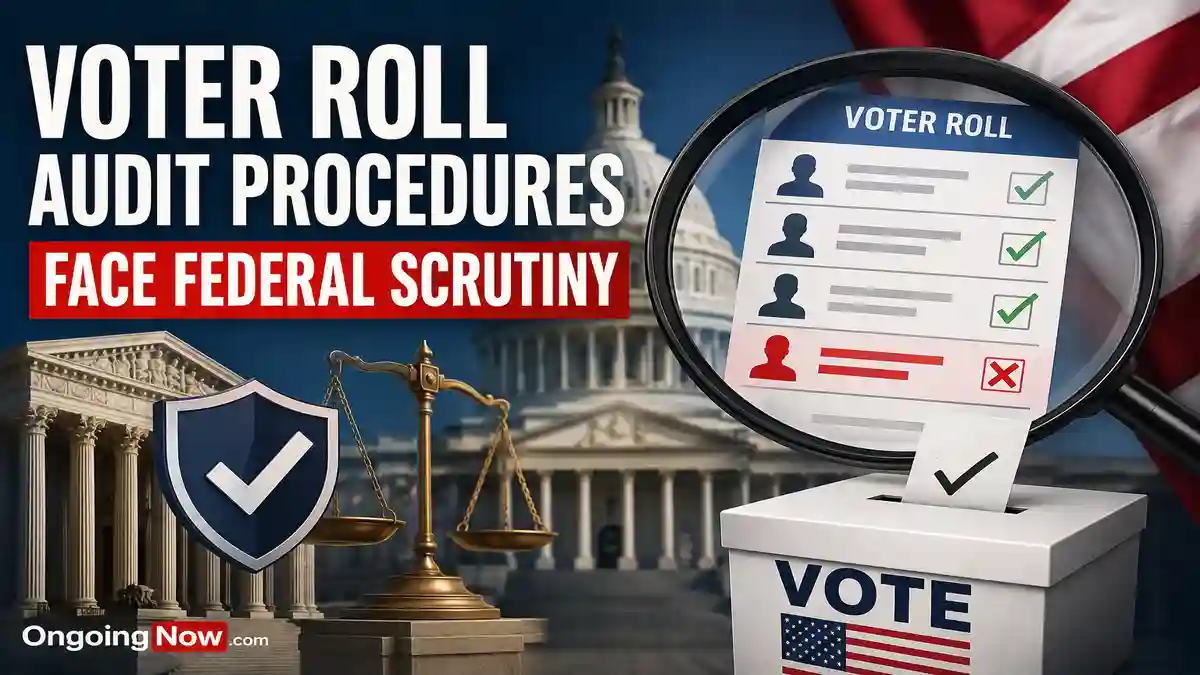
Voter roll audit procedures have become a central issue in the 2026 debate over federal voting legislation updates, the noncitizen voting law debate, and a proposed federal election reform bill. The discussion also covers voter verification standards, election integrity policy analysis, mail in ballot policy updates, and voter registration integrity guidelines. Together, these developments concern how federal agencies and states verify eligibility, maintain voter lists, administer federal elections, and protect access for eligible voters.
The debate now involves United States Congress, the United States Department of Homeland Security, the United States Postal Service, state election officials and the federal courts. President Donald Trump has also made election administration a significant federal policy priority.
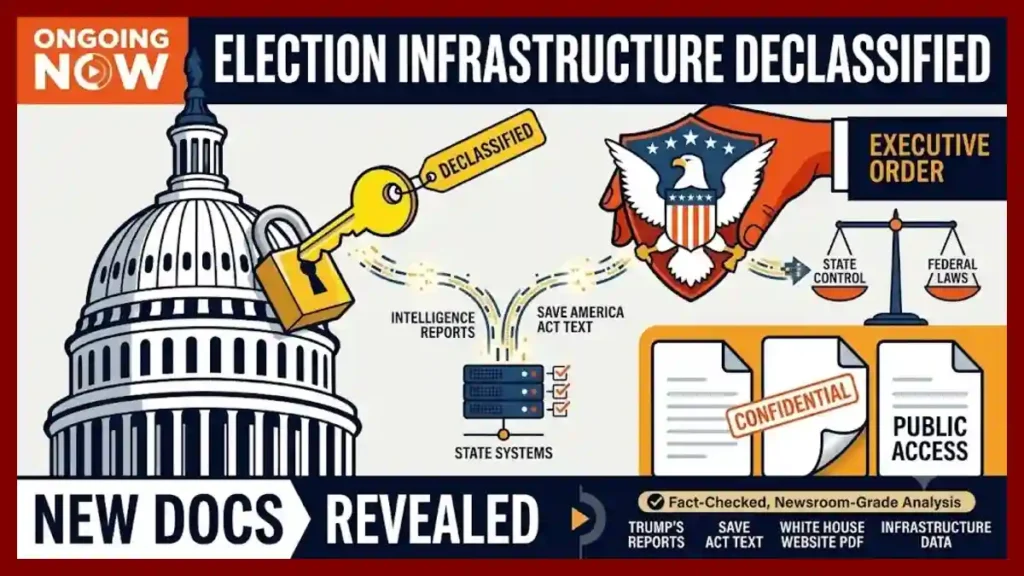
The most important fact is that several different initiatives are moving on separate legal tracks. The 2025 SAVE Act passed the House but has not become law; a newer SAVE America Act was introduced in January 2026; Executive Order 14399 sought broader citizenship verification and mail-ballot changes; and federal courts have blocked important parts of that executive order for the 2026 election.
The latest voter-roll dispute illustrates why verification methodology matters. On July 17, DHS said preliminary reviews identified more than 250,000 potential noncitizens across California, New Jersey, Nevada and Pennsylvania. By August 21, however, DHS had acknowledged that only 185 potential noncitizens had been identified through its verification work in Nevada, while thousands of other names remained subject to further review.
Voter roll audit procedures now face a test of verification
The Nevada episode demonstrates the difference between identifying a possible database match and establishing that a person is actually ineligible to vote. A preliminary match can involve names, dates of birth, addresses or other records, but election officials generally need additional verification before taking action against an individual registration.
In July, DHS told Nevada Secretary of State Francisco Aguilar that as many as 15,903 noncitizens might be registered to vote. Aguilar responded that DHS had not identified the individuals and asked for the underlying data, methodology and scope of the review. Nevada’s official response also described existing state procedures requiring applicants to attest to citizenship and providing legal mechanisms for addressing fraudulent registration.
DHS Secretary Markwayne Mullin said in July: “Election security is national security.” DHS also stated that its preliminary review had identified more than 250,000 potential noncitizens across four states. Those figures were presented by the department as preliminary findings rather than final determinations of unlawful registration or voting.
The subsequent Nevada review is significant because it illustrates why voter roll audit procedures require several stages: data matching, manual verification, confirmation of eligibility status, notice where required, and lawful removal procedures. A database flag is therefore not equivalent to a verified finding that a person illegally registered or voted.
What the latest Nevada numbers show
| Measure | Latest reported figure | What it means |
|---|---|---|
| DHS preliminary Nevada figure | 15,903 | Potential matches requiring review |
| Higher-confidence matches cited in July | 8,576 | Matches based on multiple identifying fields |
| Potential noncitizens identified after subsequent review | 185 | Cases DHS officials said had been identified so far |
| Remaining names | More than 14,000 | Still subject to additional review |
| November 2026 federal election | Nov. 3, 2026 | Election affected by current legal framework |
Caveat: These figures are not interchangeable. The preliminary figure represented possible matches, while the later figure reflected cases identified through additional verification. The numbers should not be described as equivalent counts of noncitizens who voted.
Federal voting legislation updates remain incomplete
Congress has considered citizenship verification legislation for more than one session of the current Congress. H.R. 22, the 2025 SAVE Act, would amend the National Voter Registration Act to require documentary proof of U.S. citizenship when registering for federal elections. The House passed it 220-208 on April 10, 2025, and the measure was then received by the Senate. Congress.gov does not show that it became law.
The bill contains several mechanisms that are directly relevant to voter roll audit procedures. It would require states to establish ongoing programs to identify noncitizens using information from sources including DHS’s Systematic Alien Verification for Entitlements program, Social Security Administration records and state identification agencies.
It would also establish procedures for removing noncitizens from federal voter-registration lists after verified information or documentation established that a registrant was not a citizen. The legislation includes an alternative process for applicants unable to provide specified documentary proof, allowing other evidence and an attestation under penalty of perjury.
A separate measure, H.R. 7296, the SAVE America Act, was introduced on January 30, 2026. Congress.gov currently lists it as introduced and referred to the House Committee on House Administration. Unlike H.R. 22, the newer proposal would also establish a federal photo-identification requirement for voting in federal elections and identification requirements for absentee voters.
That distinction is important. Describing either proposal as current federal law would be inaccurate. They remain legislative proposals unless and until the constitutional lawmaking process produces an enacted statute.
Voter verification standards depend on federalism
The underlying institutional question is not simply whether voter records can be checked. It is who has authority to establish the procedures and how federal requirements interact with state election administration.
The National Voter Registration Act requires states to maintain voter-registration systems and establishes federal rules for registration and list maintenance. The Help America Vote Act also requires states to maintain computerized statewide voter-registration databases and establishes certain identity-verification requirements, while leaving substantial implementation responsibility to states.
This division of responsibility has become particularly important in litigation surrounding Executive Order 14399. In an August 11 order, U.S. District Judge Indira Talwani preliminarily blocked implementation of Section 3 of the order for the November 3, 2026 election and earlier federal elections covered by the injunction.
The court stated that “Congress has not delegated authority to USPS to sort the mail, let alone to refuse to transmit mail ballots for certain voters.” The ruling treated the proposed federal mail-ballot system as raising separation-of-powers and federalism questions because Congress, rather than the executive branch alone, has constitutional authority over federal election rules.
The Supreme Court of the United States has also been central to the broader constitutional framework governing federal and state election authority. The Massachusetts federal court’s August order cited Supreme Court precedent recognizing states’ responsibility for administering congressional elections while acknowledging Congress’s power to establish overriding federal rules.
This means voter verification standards cannot be evaluated only as technical data-management policies. Their legal basis, statutory authority and interaction with state election systems are equally important.
Mail in ballot policy updates remain constrained by court orders
Executive Order 14399, issued March 31, 2026, directed federal agencies to pursue new citizenship-verification measures and instructed USPS to establish new procedures for federal mail and absentee ballots. The order contemplated standardized ballot-envelope requirements, voter lists supplied by states and restrictions on transmitting ballots that did not satisfy the proposed system.
USPS subsequently published a proposed rule on June 2, 2026. The proposal addressed the transmission of mail-in and absentee ballots for federal elections and contemplated changes involving ballot-envelope design, identification and tracking information, and state-provided participation lists. The public-comment period closed July 2.
But the proposed changes do not currently operate as a blanket federal requirement for the November 2026 election. On August 11, Judge Talwani’s preliminary injunction barred USPS and other defendants from implementing Section 3 of Executive Order 14399 for the November election and from completing the specified rulemaking for that election.
The litigation therefore creates an important distinction between a federal policy proposal and an enforceable election rule. The USPS proposal remains part of the administrative record, but the court’s injunction limits implementation of the executive-order provisions covered by the case.
Analysis: What the voter-roll evidence actually establishes
The available evidence supports a narrower conclusion than some of the early public claims surrounding noncitizen registration. There are documented cases in which noncitizens have appeared in voter-registration databases, and federal and state governments have legitimate statutory responsibilities to prevent ineligible voting.
However, the Nevada evidence demonstrates that initial database matching can substantially overstate the number of verified cases. DHS’s preliminary July figure of 15,903 potential noncitizens was later contrasted with 185 potential noncitizens identified after additional verification, with more names still under review.
The methodological lesson is significant. A credible voter roll audit should distinguish among at least four separate questions:
- Does a voter-registration record match another government record?
- Does that match establish the same individual with sufficient confidence?
- Is the person currently ineligible under applicable federal and state law?
- Is there evidence that the person actually registered or voted unlawfully?
These questions have different evidentiary thresholds. Conflating them can produce misleading estimates and potentially cause eligible voters to be removed from registration systems.
Nevada Secretary of State Francisco Aguilar wrote to DHS in July that his office wanted to understand the federal claims and requested information about the data sources and methodology. His letter stated: “We have long upheld the goal of ensuring that only eligible U.S. citizens vote in our elections.” The statement reflects the central institutional point: election officials can pursue list maintenance while still requiring verified evidence before removing individual voters.
Analysis: Why audit procedures matter more than headline totals
Election integrity policy analysis is most useful when it examines how a number was produced rather than treating the number itself as the final finding. This is especially important when federal databases are compared with state voter-registration systems that were created for different administrative purposes.
For example, a citizenship record may be incomplete, outdated or associated with a person whose identity is similar to another registered voter. Naturalization can also change a person’s citizenship status after older government records were created. These factors make reconciliation and manual verification important components of responsible voter-roll maintenance.
The federal proposals under consideration would increase the role of documentary proof, federal database checks and standardized identification. Supporters argue that these measures could provide clearer verification standards and reduce uncertainty about eligibility. Opponents and some election administrators have raised concerns about administrative burdens, access to citizenship documents and the possibility of erroneous removals. The legal disputes over Executive Order 14399 have additionally focused on whether the executive branch can impose such requirements without congressional authorization.
The evidence therefore supports a balanced institutional conclusion: stronger verification can be designed to improve accuracy, but the reliability of the system depends on the quality of the underlying records, the verification process, legal safeguards and clear allocation of authority.
Comparative context: From the SAVE Act to the 2026 proposals
The 2025 and 2026 legislative proposals show how the federal debate has evolved.
| Issue | H.R. 22, 2025 SAVE Act | H.R. 7296, 2026 SAVE America Act |
| Documentary citizenship proof | Yes | Yes |
| Federal voter-roll verification | Yes | Yes |
| Noncitizen removal procedures | Yes | Yes |
| Federal photo ID for voting | Not the central provision | Yes |
| Absentee identification requirement | Not the central provision | Yes |
| Current status | Passed House; Senate received it | Introduced; House committee referral |
The comparison shows that the policy debate has expanded from registration eligibility toward identification at the voting stage. H.R. 7296 specifically proposes eligible photo identification for federal elections and requires absentee voters to submit identification documentation with ballot requests and ballot submissions.
Neither measure should be treated as an enacted nationwide voting standard. The legislative record instead shows an ongoing congressional debate over how much federal uniformity should govern voter eligibility and identification.
There is also a broader historical precedent for federal involvement. Congress has used its Elections Clause authority to establish national rules for voter registration and election administration, including the National Voter Registration Act and Help America Vote Act. At the same time, states continue to perform the day-to-day administration of elections, including maintaining voter rolls and conducting voting.
Human impact: Accuracy affects eligible voters as well as election security
Voter roll maintenance has consequences for individual voters because an inaccurate database record can affect whether a person receives registration notices, appears on an eligibility list or must resolve a discrepancy before voting.
The risk operates in both directions. Failing to identify an ineligible registration can weaken the accuracy of election records, while incorrectly identifying an eligible citizen as ineligible can create administrative barriers to voting. A sound system therefore needs procedures that address both errors.
The federal court reviewing Executive Order 14399 emphasized the importance of clarity before the 2026 election, particularly for people who rely on voting by mail. The August 11 order noted that millions of citizens rely on mail voting and preserved the existing framework for the November election while litigation continues.
The effects can also vary by community. Military voters, overseas citizens, older voters, voters with disabilities and people who cannot easily reach polling locations may rely more heavily on absentee or mail voting. The legal record in the Massachusetts litigation specifically discussed organizations serving voters who depend on mail voting, including citizens living abroad and students away from their permanent residences.
This makes procedural clarity a practical policy issue rather than merely a constitutional one. Election officials need enough time to explain new requirements, update systems and resolve eligibility questions before voters receive ballots.
What remains unresolved before the 2026 midterms
Several questions remain open as of August 22, 2026.
First, Congress has not enacted either the 2025 SAVE Act or the 2026 SAVE America Act into federal law. The status of those measures remains different from the status of executive actions and administrative proposals.
Second, the legal status of Executive Order 14399 remains contested. Federal courts have blocked key provisions involving mail-ballot administration, including Section 3, while litigation and appeals continue. The August 11 injunction specifically applies to the November 3, 2026 federal election and earlier elections covered by the order.
Third, the noncitizen voting law debate remains closely connected to the quality of voter-roll audits. The Nevada experience shows that preliminary database matches cannot automatically be treated as verified unlawful registrations or votes. DHS’s own subsequent review materially narrowed the number identified so far.
Finally, mail-in ballot policy updates remain subject to judicial review. USPS has proposed new federal ballot-mail standards, but the courts have limited implementation of the executive-order provisions that generated those rules for the 2026 election.
The clearest evidence-based conclusion is that U.S. election policy is experiencing a significant federal-state institutional debate, but several of its most consequential proposals remain either legislative proposals, administrative rules under review, or measures constrained by court orders.
For voters, the practical implication is straightforward: eligibility and ballot procedures for the 2026 election remain governed by applicable federal and state law and by court orders currently in force, rather than by every proposed federal change.
Stay sharp with Ongoing Now!
—
Source and Data Limitations: This analysis relies primarily on official congressional records for H.R. 22 and H.R. 7296; the Federal Register and GovInfo records for Executive Orders 14248 and 14399; USPS’s June 2, 2026 proposed rule on federal ballot mail; and federal court orders issued in litigation concerning Executive Order 14399. The latest voter-roll figures are based on DHS statements and subsequent reporting on its Nevada verification process, including the August 21 report that DHS had identified 185 potential noncitizens while additional names remained under review. Congressional bill status was checked against Congress.gov records. Court descriptions are limited to orders publicly available as of August 22, 2026. Preliminary database matches are not treated as confirmed unlawful registrations or votes. No unverified allegations, anonymous claims, election predictions, partisan polling claims or unsupported estimates have been included. Legal positions described as findings or arguments are attributed to the relevant court or party rather than presented as universally settled law.