Middle East Truce Terms 2026: Why Stability Stays Fragile
De-escalation Efforts Face Strategic Deadlines and Maritime Security Challenges in the Gulf

The Middle East truce terms 2026 represent a pivotal shift in regional stability as international mediators, led by Pakistan and the United States, attempt to transition from a two-week cessation of hostilities to a long-term diplomatic framework. Currently, the landscape is defined by three distinct but interconnected developments: a tenuous ceasefire between the U.S. and Iran, a newly implemented 10-day truce between Israel and Lebanon, and the critical reopening of the Strait of Hormuz. These elements collectively aim to restore global maritime security and prevent further humanitarian deterioration, though official responses from Tehran and Jerusalem highlight persistent strategic gaps. As the April 22 deadline for the initial U.S.-Iran agreement arrives, the White House Middle East briefing has confirmed a request from mediators to extend the window for formal proposals.
Implementation of the Middle East Truce Terms 2026
The framework for the Middle East truce terms 2026 is structured as a two-phase process designed to move from immediate de-escalation to permanent regional realignment. Phase 1, which began on April 8, established a 14-day cessation of active hostilities between U.S. forces and Iranian military assets following weeks of direct conflict.
A primary condition of this initial phase was the verified reopening of the Strait of Hormuz. Iranian authorities initially complied, allowing a brief resumption of commercial traffic. However, recent reports from the Islamic Revolutionary Guard Corps (IRGC) indicate continued friction, with the seizure of two vessels, the MSC Francesca and the Epaminondas, on April 22. These actions underscore the fragility of the maritime security guarantees that are central to the broader peace plan.
The second phase of the agreement envisions a 45-day intensive negotiation period. During this time, delegations are expected to address long-term nuclear constraints, the unfreezing of Iranian assets abroad, and a structured roadmap for sanctions relief. These talks, largely hosted in Islamabad, serve as the primary diplomatic channel for the JD Vance Iran negotiations.
The Role of JD Vance in Islamabad Negotiations
Vice President JD Vance has assumed a leading role in the diplomatic outreach, heading a high-level U.S. delegation that includes Special Envoy Steve Witkoff and Jared Kushner. The mission to Pakistan is centered on securing a concrete commitment from Tehran to enter a second round of direct talks.
Despite the arrival of multiple U.S. transport aircraft in Islamabad carrying support personnel, the negotiations have faced significant hurdles. Iranian Foreign Ministry officials have publicly expressed skepticism, citing “excessive demands” from Washington regarding permanent nuclear enrichment caps.
The U.S. position remains firm on “guaranteed maritime security” and the verifiable dismantling of specific missile infrastructure. Conversely, Iran has sought the immediate and unconditional lifting of the naval blockade and the return of frozen financial assets as a prerequisite for extending the ceasefire.
Israel and Lebanon: The 10-Day Truce Extension
Parallel to the U.S.-Iran track, a specific Israel Lebanon 10 day truce was initiated on April 16. This agreement, brokered separately but intended to complement the broader Middle East truce terms 2026, focuses on halting the conflict between the Israel Defense Forces (IDF) and Hezbollah.
Core Provisions of the Lebanon Truce:
Cessation of Hostilities: A total halt to offensive military operations by the IDF in Lebanese territory and a cessation of rocket fire from Hezbollah.
Sovereignty Reaffirmation: Recognition of the Lebanese Armed Forces (LAF) as the sole legitimate security authority in southern Lebanon.
Humanitarian Corridors: Provision for the safe movement of aid to the estimated one million displaced civilians in the region.
The White House has invited Lebanese President Joseph Aoun and Israeli Prime Minister Benjamin Netanyahu to Washington for the first direct talks of this nature since 1983. While the Lebanese presidency expressed gratitude for the mediation, the stability of this truce is tested daily. On April 21, reports of rocket fire near Rab Thalathin and subsequent Israeli retaliatory strikes highlighted the difficulty of enforcing terms on non-state actors who are not formal signatories to the agreement.
Geopolitical Analysis: Benjamin Netanyahu’s Ceasefire Response
The Benjamin Netanyahu ceasefire response has been characterized by a policy of “strategic initiative.” In a formal address on April 11, the Prime Minister emphasized that while Israel supports the U.S.-led pause in attacks on Iran, the nation maintains its right to independent action against immediate threats.
Netanyahu clarified that the agreement with Iran “does not include Lebanon,” a distinction that allowed the IDF to continue operations against Hezbollah until the separate April 16 truce was established. Domestically, the Prime Minister faces a divided political landscape. Opposition Leader Yair Lapid has criticized the administration for a perceived lack of strategic planning, suggesting that the ceasefire provides the Iranian regime with a necessary reprieve without achieving the total elimination of the nuclear threat.
The Israeli government continues to focus on “Operation Roaring Lion,” asserting that military pressure was the primary catalyst for the current diplomatic opening. The administration’s focus remains on ensuring that any permanent Middle East truce terms 2026 include the permanent removal of heavy weaponry from its northern border.
Maritime Security and the Strait of Hormuz Status
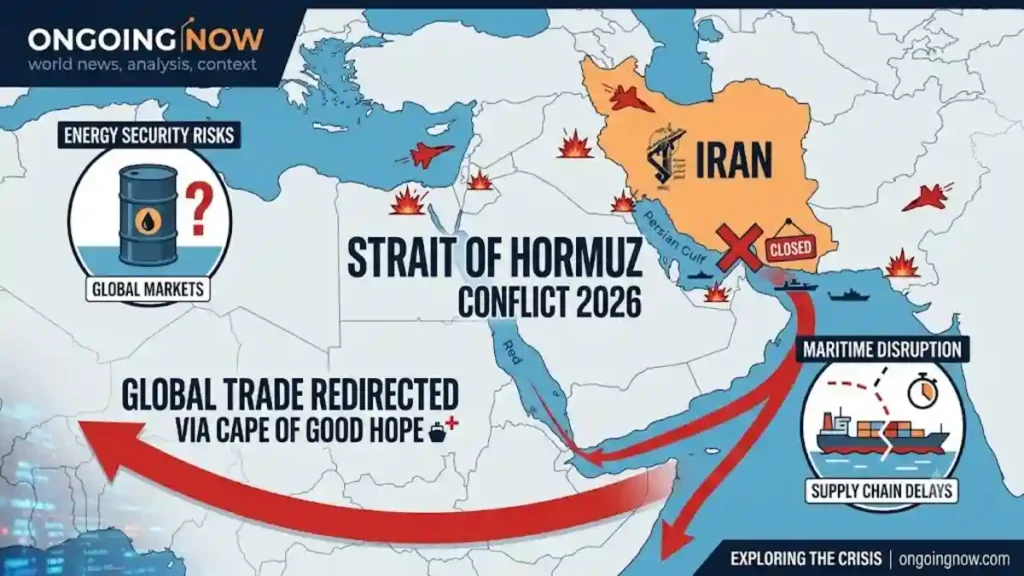
The status of the Strait of Hormuz remains the most volatile variable in the current peace plan. As a passage for approximately one-fifth of the world’s oil and gas exports, its closure or restricted use has immediate global economic implications.
| Date | Event | Impact on Shipping |
| April 1, 2026 | Initial U.S. ultimatum | Shipping halted; high risk premiums applied |
| April 8, 2026 | Ceasefire implemented | Iran agrees to “open, free, and clear” passage |
| April 16, 2026 | Lebanon truce begins | Iran briefly confirms full open passage |
| April 22, 2026 | IRGC vessel seizures | Renewed restrictions; two commercial ships detained |
The recent seizure of the MSC Francesca—which Iranian authorities linked to Israeli interests—and the Epaminondas—cited for “navigation violations”—indicates that Iran may be using maritime control as leverage in the Islamabad talks. This “tit-for-tat” strategy complicates the U.S. demand for an “unconditional” reopening of the waterway.
Analysis: Why This Peace Plan Differs from Past Efforts
The Middle East truce terms 2026 differ from previous diplomatic attempts, such as the 2015 JCPOA or the 1983 Lebanon Agreement, due to the direct nature of the military conflict that preceded them. Unlike the strategic containment of the past decade, the 2026 crisis involved large-scale kinetic strikes on sovereign territories, creating a higher degree of urgency for a “structured exit.”
The involvement of Pakistan and China as primary mediators adds a new dimension to the negotiations. This shift away from exclusively Western-led diplomacy suggests a broader international consensus on the necessity of regional stability. However, the lack of a formal signatory role for non-state groups like Hezbollah remains a significant structural weakness that could lead to localized “spoilers” undermining the broader peace.
Global Reaction to the Trump Peace Plan
The global reaction to the Trump peace plan has been cautiously optimistic among major world powers, though tempered by the volatility of the situation on the ground.
United Nations: Secretary-General António Guterres described the ceasefires as “desperately needed breakthroughs” for regional humanitarian relief.
European Union: Leaders from France and Germany have welcomed the “prospect of peace” but emphasized the need for a return to international nuclear inspections (IAEA) as a core component of any final deal.
Regional Powers: Egypt and Oman have praised the Islamabad talks as a “triumph of the will for peace over the logic of war,” while Turkey has pledged to monitor the implementation of the Lebanon truce.
Domestically, the Trump ceasefire announcement has triggered a wide spectrum of responses. Supporters point to the reopening of trade routes as a victory for “peace through strength,” while critics in the U.S. Congress have raised concerns regarding the rhetoric used during the initial stages of the conflict and the long-term sustainability of the concessions offered to Tehran.
Community and Humanitarian Impact
The human cost of the 2026 conflict has been substantial. In Lebanon alone, over 2,000 fatalities were reported by mid-April, with approximately one million people displaced. The Middle East truce terms 2026 prioritize the establishment of “safe zones” to allow these populations to return, yet unexploded ordnance and damaged infrastructure remain significant barriers.
In Iran, the brief cessation of strikes has allowed for a preliminary assessment of damage to civil infrastructure, including gas production plants and transport networks. Humanitarian organizations emphasize that while the ceasefire stops the immediate violence, the restoration of essential services like water and electricity will require months of sustained peace and international cooperation.
What the Data Shows: Conflict and De-escalation Timeline
The 2026 conflict and subsequent negotiation rounds followed a rapid escalation cycle:
February 28, 2026: Launch of large-scale military operations (“Operation Rising Lion”).
March 30 – April 7, 2026: Round 3 of clandestine negotiations in Muscat.
April 8, 2026: Implementation of the initial 14-day U.S.-Iran ceasefire.
April 11–12, 2026: Direct “Islamabad Talks” involving Vice President JD Vance.
April 16, 2026: Announcement of the 10-day Israel-Lebanon truce.
April 22, 2026: Deadline for the initial U.S.-Iran ceasefire; extension requested.
This timeline illustrates a shift from military dominance to a “diplomatic stalemate” where both sides are currently testing the limits of the other’s resolve through controlled escalations and conditional compliance.
Evidence-Based Implications for Regional Stability
The success of the Middle East truce terms 2026 depends on three primary factors: the consistent neutrality of the Strait of Hormuz, the integration of non-state actors into the de-escalation framework, and the verification of nuclear constraints.
If the Islamabad talks fail to move into “Phase 2” of the peace plan, the region faces the risk of a return to high-intensity conflict. Conversely, if the current ceasefires hold, they could serve as the foundation for a “New Middle East” characterized by direct diplomatic engagement and shared economic interests in maritime security. For now, the global community remains in a state of “cautious observation,” as the formal proposals from Tehran and the subsequent U.S. response will determine the trajectory of international affairs for the remainder of 2026.
Stay sharp with Ongoing Now!
Source and Data Limitations: This report is based on verified news dispatches from major international outlets including Al Jazeera, Reuters, and the Associated Press, along with official government statements from the White House, the Lebanese Presidency, and the Israeli Prime Minister’s Office. Data regarding maritime seizures in the Strait of Hormuz is current as of April 22, 2026. While ceasefire terms have been publicly outlined, specific annexes regarding nuclear constraints and asset unfreezing remain classified. Delays in verification may occur due to restricted access in active conflict zones and the reliance on state-run media for specific Iranian leadership statements. Information regarding Hezbollah’s movements is based on IDF situational reports and local Lebanese news agencies.