IDF Lebanon Invasion Expands Amid Regional Escalation
Hezbollah rocket attacks Israel as the IDF Lebanon invasion intensifies following the March 2 outbreak of hostilities.
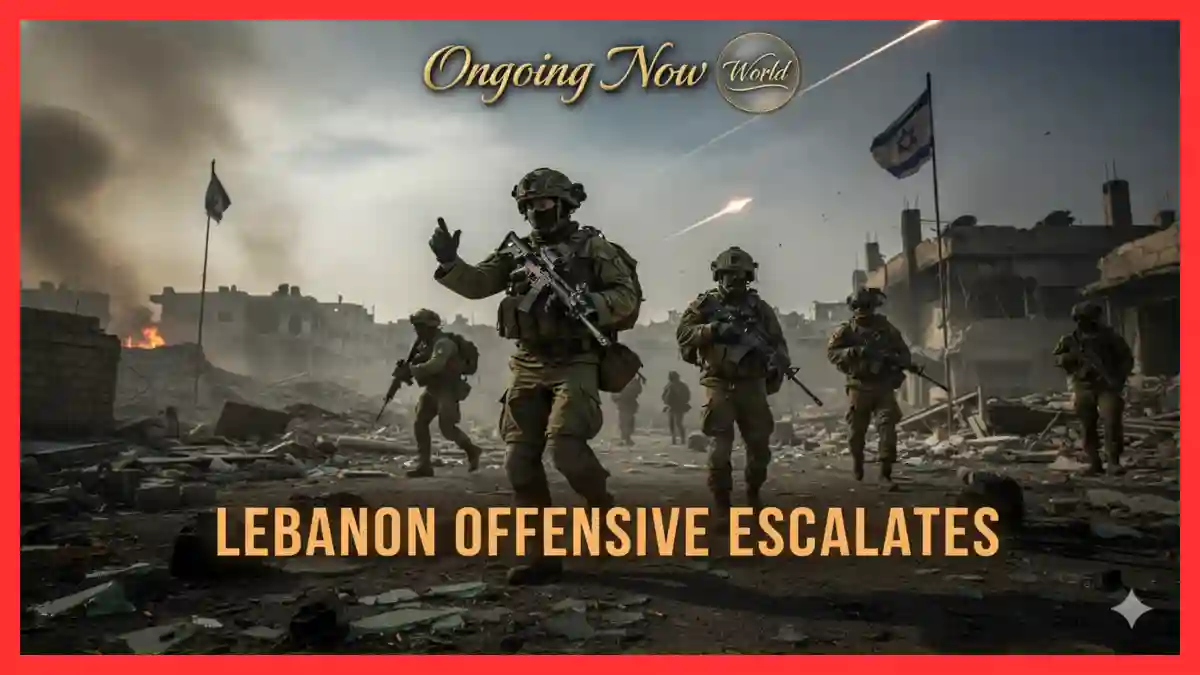
The Israeli military has intensified its terrestrial and aerial operations in southern Lebanon, marking a significant escalation in the regional conflict that began on March 2, 2026. This development, characterized by the IDF Lebanon invasion, follows a surge in Hezbollah rocket attacks Israel targets, including central regions and northern border communities. The Beirut airstrike campaigns have targeted command centers in Dahiyeh, while the Israel northern border evacuation orders now extend to the Zahrani River, displacing hundreds of thousands. As UN response Iran war discussions continue in New York, the latest Lebanon casualties report indicates a death toll exceeding 800 people. Reports on IDF 98th division movements and Operation Epic Fury updates suggest a broadening of the conflict’s geographical and strategic scope.
Within the first two weeks of the campaign, the United Nations (UN) and the World Health Organization (WHO) have reported a rapid deterioration of the humanitarian situation in Beirut and southern governorates. Lebanese Prime Minister Nawaf Salam has condemned the unauthorized military actions within his borders, while U.S. Central Command (CENTCOM) continues to monitor the wider Operation Epic Fury involving strikes against Iranian military infrastructure. International bodies, including the UN Security Council, have convened to address the spillover from the Iran-Israel war, which ignited on February 28 following the elimination of Iranian leadership.
IDF Lebanon Invasion: Ground Operations and Strategic Shifts
The Israeli Defense Forces (IDF) have officially moved into a phase of “limited and targeted ground operations” in southern Lebanon. On March 16, military spokespersons confirmed that units from the 91st Division, supported by armored brigades, crossed the border to dismantle Hezbollah infrastructure. The objective, according to Israeli Defense Minister Israel Katz, is to establish a “forward defensive posture” and remove direct threats to northern Israeli residents.
This ground maneuver follows a period of intense aerial preparation. Between March 2 and March 15, the Israeli Air Force conducted over 306 waves of airstrikes. Data indicates that approximately 63% of these strikes were concentrated south of the Litani River, targeting what the IDF describes as rehabilitated Hezbollah military assets. The ground forces have reportedly seized commanding positions to push Hezbollah’s anti-tank and mortar capabilities further from the Blue Line.
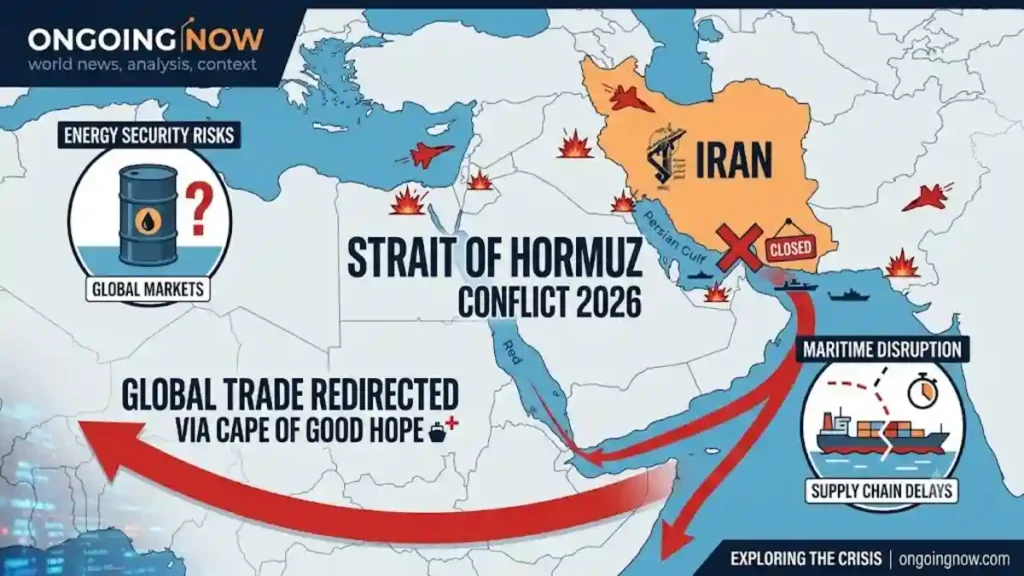
Military analysts note that the current IDF Lebanon invasion differs from the 2024 conflict by its integration with the broader Operation Epic Fury. This overarching operation, led by Israel with U.S. support, aims to degrade the “Axis of Resistance” simultaneously across multiple fronts, including Iran, Yemen, and Iraq.
Hezbollah Rocket Attacks Israel: Patterns and Weaponry
Since the resumption of hostilities on March 2, Hezbollah has maintained a high operational tempo, launching hundreds of attack waves against Israeli territory. The Alma Research and Education Center recorded 485 distinct attack waves as of March 15. The weaponry utilized reflects a mix of traditional short-range rockets and more sophisticated precision-guided munitions.
Rockets and Missiles: 346 attack waves (approx. 71% of total)
Unmanned Aerial Vehicles (UAVs): 139 attack waves
Anti-Tank Missiles: 13 recorded incidents
Target Areas: Nahariya, Kiryat Shmona, Safed, and central Israel
Hezbollah’s Secretary General, Naim Qassem, stated that the organization has shifted to “decentralized fighting” to mitigate the impact of Israeli intelligence and airstrikes. Despite these claims, the IDF reports the elimination of over 350 Hezbollah operatives, including significant losses within the elite Radwan Force.
Lebanon Casualties Report: Humanitarian and Health Impact
The Ministry of Public Health (MoPH) in Lebanon has released a harrowing Lebanon casualties report detailing the human cost of the first 14 days of conflict. As of March 16, verified fatalities have reached 850, with over 2,000 individuals injured. The demographic breakdown shows a disproportionate impact on civilians, including at least 100 children and 52 women.
The healthcare system is under extreme duress. The WHO reports that 18 healthcare workers have been killed and 48 others injured across 26 documented attacks on medical facilities. In the Nabatiyeh and South governorates, hospitals are operating at or above capacity, with 9% of patients requiring intensive care (ICU) for blast-related trauma.
“The rapid pace of displacement continues to outstrip available shelter capacity. Many displaced families remain without adequate accommodation, spending nights in streets and public spaces,” the UN Flash Update #8 noted.
Analysis: The Scope of Israel Northern Border Evacuation
The Israel northern border evacuation has become a dual-sided crisis. In Israel, thousands of residents remain displaced from communities near the Lebanese border due to persistent rocket fire. In Lebanon, the scale of displacement is significantly larger and moving at an “extraordinarily rapid” pace.
| Region | Status | Estimated Displaced |
| South of Litani River | Total Evacuation Ordered | 450,000+ |
| South of Zahrani River | New Orders Issued March 12 | 200,000+ |
| Dahiyeh (Beirut Suburbs) | Targeted Neighborhood Evacuations | 150,000+ |
| Total Lebanon (Internal) | Cumulative Registration | 830,000+ |
Note: Figures are based on Lebanese Government and UN registration data as of March 15, 2026.
The expansion of the evacuation zone to the Zahrani River, located north of the Litani, suggests that the IDF is preparing for a deeper buffer zone than originally anticipated. This move has effectively turned large swaths of southern Lebanon into an active combat zone, severing major transport routes like the bridge in Tarfylsay.
UN Response Iran War: Diplomatic Deadlock and Resolutions
The UN response Iran war has been characterized by sharp divisions within the Security Council. On March 11, the Council adopted Resolution 2817, which condemned Iran’s “egregious attacks” against its neighbors in the Gulf and Jordan. The resolution passed 13-0, with China and the Russian Federation abstaining.
However, a competing resolution proposed by Russia, which sought an immediate ceasefire without naming specific parties, was rejected. UN experts in Geneva have issued statements condemning the “unprovoked” nature of the initial strikes on Iran, warning that the conflict is pushing the region into a “legal abyss.”
In Beirut, UN Secretary-General António Guterres launched a 2026 Flash Appeal to raise emergency funds for the nearly one million displaced Lebanese citizens. The international response remains focused on humanitarian aid, as diplomatic efforts for a ceasefire have yet to gain traction among the primary combatants.
Operation Epic Fury Updates: The Regional Context
The Operation Epic Fury updates provided by the Pentagon highlight the massive scale of the U.S.-Israeli military campaign. As of March 13, over 50,000 military personnel are supporting the operation. While the focus remains on neutralizing Iranian missile and drone capabilities, the Lebanese front is increasingly viewed as the most volatile theater of the war.
The IDF’s 98th Division, traditionally an elite paratrooper and commando formation, has been central to the maneuvers in Lebanon. Their movements, alongside the 91st and 146th Divisions, indicate a multi-pronged approach to degrading Hezbollah’s “Conquer the Galilee” infrastructure. This includes the destruction of underground tunnels and storage facilities that were reportedly rebuilt following the 2024 ceasefire.
Comparative Analysis: 2006, 2024, and 2026
The current conflict shares similarities with the 34-day war of 2006 and the more recent 2024 escalation, yet the intensity and regional integration are unprecedented.
Scope of Targets: Unlike 2006, which focused largely on southern Lebanon, the 2026 campaign includes precision strikes on Iranian assets within Lebanon and simultaneous operations in five other nations.
Technological Integration: Both sides are utilizing AI-guided munitions and advanced UAV swarms, leading to a faster tempo of strikes and a higher density of urban combat.
Governance: The 2026 conflict is notable for the Lebanese government’s vocal opposition to Hezbollah’s actions. Prime Minister Salam’s demand for Hezbollah to surrender its weapons marks a significant shift in domestic political alignment compared to previous conflicts.
Evidence-Based Implications for Regional Stability
The ongoing IDF Lebanon invasion and the resulting Hezbollah rocket attacks Israel have fundamentally altered the security architecture of the Levant. The displacement of 14% of the Lebanese population creates a long-term humanitarian burden that the state, already in economic distress, is ill-equipped to handle.
For Israel, the goal of returning northern residents to their homes remains elusive as long as Hezbollah maintains its decentralized rocket arrays. The “deterrent equation” that held for 15 months following the 2024 ceasefire has collapsed, replaced by a high-intensity war of attrition that now encompasses the entire Iranian proxy network.
Stay sharp with Ongoing Now!
Source and Data Limitations: This report is based on verified briefings from the Israel Defense Forces, the Lebanese Ministry of Public Health, UNIFIL, and UN OCHA as of March 16, 2026. Casualty figures are cumulative and subject to change as search-and-rescue operations continue in Dahiyeh and southern Lebanon. Information regarding Hezbollah’s internal casualties is based on Israeli military estimates and unofficial funeral notices, as the organization has not released a formal toll. Reporting from combat zones is subject to military censorship and delays in communication infrastructure. All geographical data regarding “Operation Epic Fury” and “Operation Roaring Lion” is derived from open-source defense analysis and official government communiqués.