Birthright citizenship ban 2026: Why SCOTUS is key
The Supreme Court is reviewing the Trump case on a birthright citizenship ban 2026, weighing the 14th Amendment against a 2025 executive order.
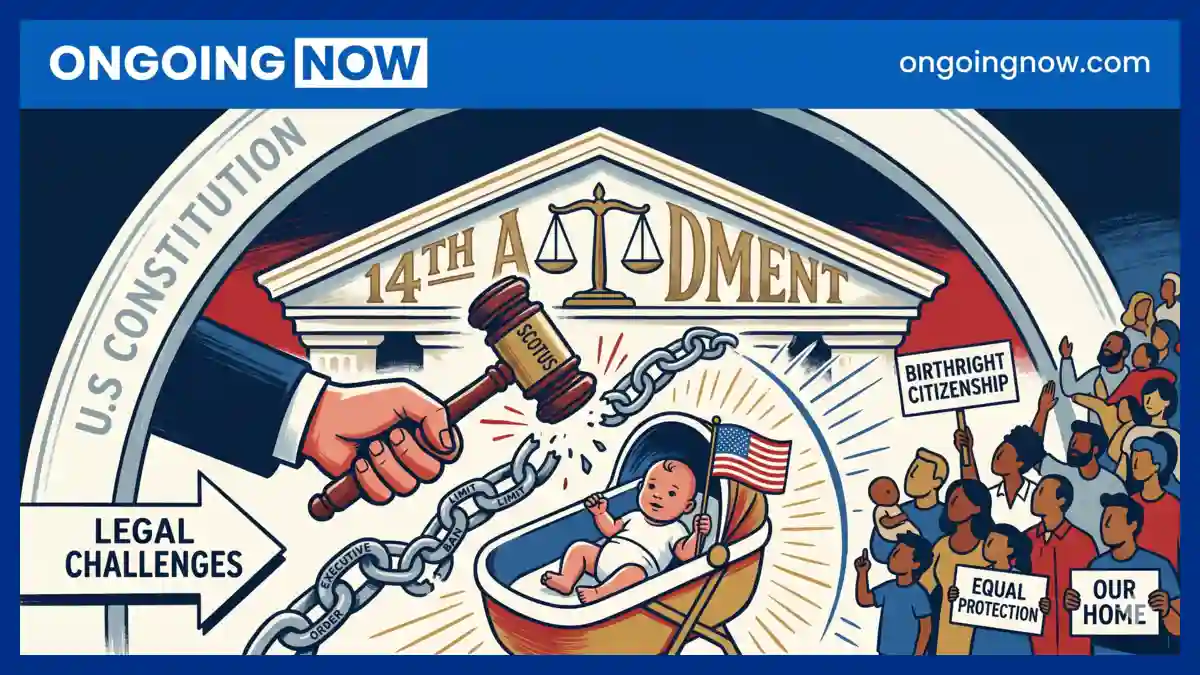
The Supreme Court of the United States (SCOTUS) is currently deliberating on a legal challenge that could fundamentally redefine American national identity: the birthright citizenship ban 2026. At the center of the case, Barbara v. Trump, is a January 20, 2025, executive order that seeks to deny automatic citizenship to children born on U.S. soil if neither parent possesses citizenship or lawful permanent residency. While the administration argues that the Section 1 jurisdiction clause of the 14th Amendment allows for such a restriction, civil rights groups and several states contend that the 1898 precedent of United States v. Wong Kim Ark provides an absolute guarantee. Legal challenges birthright citizenship have reached the high court after multiple lower court injunctions blocked the policy, leaving hundreds of thousands of families in a state of administrative limbo as they await a final ruling expected by July 2026.
The Legal Framework of the Birthright Citizenship Ban 2026
The core of the dispute rests on the interpretation of the Citizenship Clause in the 14th Amendment. The Trump administration’s Justice Department Supreme Court briefs argue that “subject to the jurisdiction thereof” implies a requirement of political allegiance that undocumented immigrants and temporary visa holders cannot fulfill. This theory, championed by Solicitor General John Sauer, suggests that the drafters of the amendment intended to exclude those whose presence in the country is not “domiciled” or permanent.
In contrast, the plaintiffs in Barbara v. Trump assert that “jurisdiction” simply refers to being subject to U.S. laws, a standard that applies to nearly everyone within U.S. borders. This “territorial” view has been the dominant legal standard for over a century. The Supreme Court must now decide if an executive order can override what has long been considered a “constitutional floor” for citizenship.
| Key Legal Milestone | Date | Description |
| Executive Order 14160 | Jan 20, 2025 | President Trump orders agencies to deny citizenship documents to certain children. |
| Preliminary Injunction | Feb 20, 2025 | Federal courts block the order from taking effect nationwide. |
| SCOTUS Grant of Certiorari | Dec 5, 2025 | The Supreme Court agrees to hear the consolidated case Barbara v. Trump. |
| Oral Arguments | Apr 1, 2026 | Justices hear arguments regarding the 14th Amendment’s scope. |
Judicial Scrutiny of Trump Executive Order 2025
During oral arguments held on April 1, 2026, the justices displayed varying degrees of skepticism toward the administration’s “allegiance-based” interpretation. Justice Brett Kavanaugh noted that while there may be policy arguments regarding immigration incentives, the historical understanding of Wong Kim Ark appears to favor a broad application of birthright rights. The administration, however, maintains that a birth tourism crackdown is a necessary exercise of executive power to protect the “value of American citizenship.”
The Justice Department Supreme Court briefs further clarify that the order is intended to be prospective, applying only to children born after February 19, 2025. However, amicus briefs from 216 members of Congress warn that a ruling in favor of the administration could theoretically jeopardize the status of nearly 1.8 million current citizens born to unauthorized parents, creating a risk of retroactive statelessness if the constitutional “floor” is removed.
Comparative Context: Precedents and Global Standards
The United States is one of approximately 30 nations that observe jus soli, or right of the soil. The administration’s legal team has pointed to European and Asian nations that primarily use jus sanguinis (right of blood) to argue that the U.S. model is an outlier. However, legal historians emphasize that the 14th Amendment was specifically designed to move away from the “discretionary” citizenship model seen in the Dred Scott decision.
Historically, the Supreme Court has only recognized very narrow exceptions to birthright citizenship, such as children born to foreign diplomats or “Indians not taxed” (a category since rendered moot by the Indian Citizenship Act of 1924). The current Trump case represents the first major attempt by the executive branch to create a new category of excluded persons—children of “temporary or unlawful” residents—without a formal constitutional amendment or a new Act of Congress.
Analysis: Why the Jurisdiction Clause Matters
The debate over the Section 1 jurisdiction clause is more than a semantic dispute; it is a question of institutional authority. If the Court accepts the administration’s view, it would essentially grant the President the power to define who is “subject to the jurisdiction” of the U.S. through executive action. This would mark a significant shift in the balance of power between the executive branch and the Constitution.
Evidence-Based Insights on Legal Interpretations:
The Territorial Standard: Proponents argue that the 14th Amendment was intended to be “automatic” to prevent a permanent underclass.
The Allegiance Standard: The administration argues that “jurisdiction” requires a mutual consent between the individual and the sovereign state, which they claim is absent in unauthorized entry.
Impact on Citizenship for Children of Immigrants
The practical implications of the birthright citizenship ban 2026 are already being felt in hospitals and social security offices. Although the order is currently blocked by injunctions, the Social Security Administration and USCIS have had to issue clarifying memos. For instance, a July 2025 memo stated that children of asylees and refugees are exempt from the order, as their parents’ presence is considered “lawful and not temporary.”
For other families, the uncertainty has created significant hurdles in obtaining citizenship for children of immigrants. Without a Social Security number or passport, affected infants would lack access to federal programs like Medicaid or CHIP. Public health experts have expressed concern that this administrative “gray zone” could lead to a decline in neonatal care among immigrant communities due to fear of federal scrutiny.
Regional Effects and State-Level Responses
The legal battle has also exposed a sharp divide between state governments. A coalition of states including Illinois, Washington, and Arizona filed suit against the Trump executive order 2025, arguing that it forces state agencies to conduct complex immigration status checks for every birth certificate issued. Conversely, several other states have filed amicus briefs in support of the administration, citing the fiscal costs of providing services to children of undocumented residents.
The SCOTUS citizenship ruling will determine whether states are required to recognize these children as citizens for the purpose of state-funded benefits. In the absence of a clear federal mandate, some states have considered creating “state-level citizenship” categories, though the legality of such a move remains highly suspect under the Supremacy Clause.
National Impact and Long-Term Relevance
Regardless of the final outcome, the birthright citizenship ban 2026 has already fundamentally altered the national discourse on immigration and the 14th Amendment. If the ban is upheld, the U.S. would likely see the emergence of a multi-generational population of “stateless” individuals born within its borders but denied the protections of the law. If it is struck down, the ruling will serve as a modern reaffirmation of the 14th Amendment’s role as a guarantor of equal protection.
The Justice Department Supreme Court briefs acknowledge the “gravity of the question,” yet they insist that the executive branch must have the tools to manage the borders effectively. Critics, including former immigration judges, argue that using citizenship as an enforcement tool is a “radical departure” from American legal tradition.
Stay sharp with Ongoing Now!
Source and Data Limitations: This report is based on official Supreme Court filings in Barbara v. Trump (2026), Department of Justice briefs, and 2025 executive orders. Historical context is derived from the United States v. Wong Kim Ark (1898) decision and the 14th Amendment’s legislative history. Statistical data regarding impacted populations is sourced from the American Immigration Council and USCIS July 2025 memoranda. No speculative leaks or unverified social media claims were used. Data is current as of April 28, 2026.