PC 496 California: New 2026 Retail Theft Laws
New Sentencing Standards for Retail Theft and Property Crimes in 2026
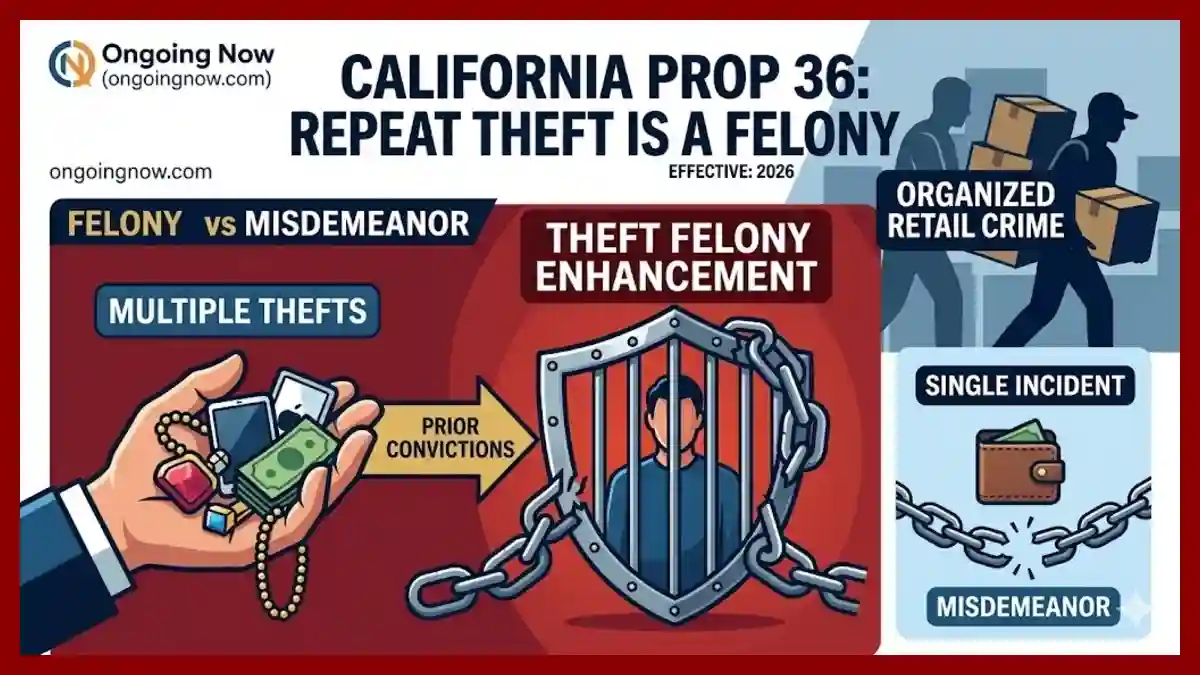
California’s legal landscape for property crimes has undergone a significant transformation as of 2026, driven by the implementation of Proposition 36 and a series of legislative updates to Penal Code sections governing theft and the receipt of stolen goods. Under PC 496, the crime of receiving stolen property is now more frequently prosecuted alongside new sentencing enhancements for organized retail crime. These developments have fundamentally altered the felony vs misdemeanor theft 2026 thresholds, particularly for repeat offenders who now face felony charges regardless of the property’s dollar value.
The Legal Framework of PC 496 in 2026
California Penal Code 496 (PC 496) remains the primary statute for the crime of receiving stolen property. To secure a conviction, the prosecution must establish three specific elements: the property was obtained by theft or extortion; the defendant was in possession or control of said property; and the defendant knew the property was stolen or extorted at the time of receipt.
As of May 2026, the application of PC 496 has been intensified by the passage of Proposition 36, which voters approved in late 2024. While the base threshold for grand theft traditionally sat at $950, the new legal standard allows prosecutors to aggregate values from multiple incidents. Furthermore, the “wobbler” status of PC 496—meaning it can be charged as either a misdemeanor or a felony—is now heavily influenced by the defendant’s prior criminal history rather than just the immediate value of the goods.
Felony vs Misdemeanor Theft 2026 Thresholds
The distinction between a misdemeanor and a felony in California property law is no longer a simple calculation of the $950 limit established by Proposition 47. Under the current 2026 standards, the following criteria determine the severity of the charge:
Misdemeanor: Generally applies if the value of the property is $950 or less and the defendant has no significant prior theft convictions.
Felony (The “Wobbler” Effect): If the property value exceeds $950, the prosecutor has the discretion to charge the case as a felony.
The Repeat Offender Rule: Under Proposition 36, an individual with two or more prior convictions for theft-related offenses can be charged with a felony for a third offense, even if the value of the property in the current case is below the $950 threshold.
| Charge Type | Property Value Threshold | Potential Jail/Prison Time |
| Misdemeanor PC 496 | ≤ $950 (First/Second Offense) | Up to 1 year in county jail |
| Felony PC 496 | > $950 or Repeat Offender | 16 months, 2 years, or 3 years |
| Organized Retail Theft | Aggregated over $950 | Varies based on enhancements |
Sentencing for Organized Retail Crime
A major shift in California’s prosecutorial strategy involves PC 490.4, which covers organized retail theft. This statute targets individuals who act “in concert” with others to steal or receive merchandise with the intent to sell or return it for value.
The 2026 sentencing guidelines for organized retail crime include new enhancements under SB 1416. These enhancements specifically target the resale market. If a person is convicted of receiving or selling stolen property and the value is exceptionally high, additional years are added to the base sentence:
Over $600,000: One additional year.
Over $1.3 million: Two additional years.
Over $3.2 million: Three additional years.
These enhancements reflect a policy shift toward dismantling “fencing” operations—the networks that buy and resell goods stolen during retail “smash-and-grab” incidents. By targeting the economic incentive of the crime, the California Department of Justice aims to reduce the overall frequency of large-scale retail disruptions.
Legal Defense for Retail Theft Charges
In the current climate of increased enforcement, a robust legal defense for retail theft is critical for those accused under PC 496. Criminal defense attorneys in Los Angeles and across the state frequently utilize several standard defenses to challenge the prosecution’s narrative.
The Element of Intent and Knowledge
The most common defense against a PC 496 charge is the lack of knowledge. If the defendant did not know the property was stolen, they cannot be convicted. For instance, if an individual purchased an item from an online marketplace at a reasonable price and had no reason to suspect it was part of a retail theft ring, the “knowledge” requirement is not met.
Innocent Intent
Another viable defense is innocent intent. This applies if the defendant took possession of the stolen property with the specific intent to return it to the rightful owner or to surrender it to law enforcement. However, this intent must have existed at the moment the property was received; a “change of heart” after being caught is not a valid defense.
Rights Violations and Evidence
Defense counsel often scrutinizes the methods used by loss prevention officers and law enforcement. If the evidence was obtained through an illegal search or if the defendant was detained without probable cause, a criminal defense attorney in Los Angeles may file a motion to suppress that evidence, potentially leading to a dismissal of charges.
Civil Recovery for Retail Theft
Beyond the criminal courtroom, retailers in California are increasingly utilizing civil recovery for retail theft under California Penal Code 490.5. This statute allows a merchant to bring a civil action against an individual who has shoplifted or received stolen property from their establishment.
The civil recovery process is separate from the criminal case. Even if criminal charges are dropped or the defendant is acquitted, the retailer can still pursue a civil claim for:
The retail value of the merchandise (if not recovered in merchantable condition).
Damages between $50 and $500.
The costs of bringing the suit.
Legal Note: While retailers frequently send “civil demand letters” requesting payment, these are not court orders. Paying the demand does not guarantee that criminal charges will not be filed, and failure to pay may lead to a formal retail theft lawsuit settlement or a small claims court appearance.
Analysis: Why the 2026 Updates Matter
The 2026 updates represent a pivot from the decarceration trends seen in the mid-2010s toward a more structured, punitive approach for repeat and organized offenders. The legal system is now attempting to balance the protection of civil liberties with the need to address the economic impact of organized crime.
What the Changes Mean for Defendants
For a defendant, the stakes have never been higher. The removal of the “locked door loophole” in auto burglaries (SB 905) and the ability of prosecutors to aggregate theft amounts across multiple jurisdictions means that a series of small misdemeanors can now quickly escalate into a single, high-stakes felony case.
Societal and Public Interest Impact
From a public interest perspective, these laws aim to restore order to retail environments that have seen an uptick in coordinated thefts. However, critics argue that the return to harsher sentencing may disproportionately affect low-level offenders and those suffering from substance abuse or economic hardship, potentially leading to increased prison populations without addressing the root causes of theft.
Criminal Defense Attorney Los Angeles: Navigating the New Laws
For individuals facing charges in Southern California, the role of a criminal defense attorney in Los Angeles has shifted toward navigating the complexities of Proposition 36. Because Los Angeles County has historically seen high volumes of both retail commerce and property crime, the District Attorney’s office has established specialized units to handle organized retail theft cases.
Current defense strategies in 2026 often focus on diversion programs. For first-time offenders or those where mental health issues played a role, attorneys may seek “judicial diversion” under PC 1001.95, allowing the defendant to complete a program and have the charges dismissed, thereby avoiding the “prior conviction” trap that triggers felony status under the new laws.
Key Facts: California Property Crime Enforcement (2026)
Arrest Trends: Since the 2024-2025 crackdown, retail theft-related arrests have increased by approximately 19% statewide.
Prosecution Rate: Over 85% of cases involving organized retail crime task forces resulted in felony convictions in the last fiscal year.
Restitution: Courts are more frequently ordering full restitution to small business owners as a condition of probation.
Human and Societal Impact
The human impact of these legal shifts is felt most acutely in the small business community and by those within the justice system. Small business owners often report that the previous $950 threshold made them feel “unprotected,” leading to higher insurance premiums and, in some cases, business closures. The 2026 laws provide these owners with more leverage through civil recovery and the threat of felony prosecution for repeat offenders.
Conversely, for those accused, the “three strikes” style approach of Proposition 36 for theft can lead to life-altering consequences for relatively low-value incidents. The legal community continues to debate whether the 2026 framework provides a “just” balance or if it represents a regression in criminal justice reform.
Broader Legal Significance
The evolution of California penal code theft updates serves as a bellwether for other states facing similar retail crime challenges. By redefining how “value” is calculated and focusing on the “concerted” nature of modern theft, California is setting a precedent for how the law treats the intersection of technology, resale markets, and property rights.
The legal system’s move toward aggregation—allowing multiple smaller crimes to be treated as one large felony—is perhaps the most significant procedural change in decades. It forces a more holistic view of criminal activity, looking at a defendant’s behavior over a two-year window rather than viewing each incident in isolation.
Evidence-Based Legal Insights
The data provided by the California Governor’s Office and the Board of State and Community Corrections (BSCC) indicates that the “vertical prosecution” model—where the same prosecutor handles a case from filing to sentencing—has led to more consistent outcomes. In 2026, the success of these programs is often measured by the reduction in “smash-and-grab” incidents, which have reportedly declined in major metropolitan areas since the implementation of SB 1416.
However, the long-term effectiveness of these sentencing enhancements remains to be seen. Legal analysts point out that while arrests and felony filings are up, the strain on the court system has also increased, leading to longer wait times for trials and a heightened reliance on plea bargaining.
This is informational only and not legal advice. Consult a licensed attorney for your situation.
Stay sharp with Ongoing Now!
Source and Data Limitations: This report is based on California Penal Code statutes (PC 496, 490.4, 490.5), Senate Bills 905 and 1416, and the provisions of Proposition 36 as implemented through May 2026. Data regarding arrest records and conviction rates were sourced from official 2026 press releases from the Office of the Governor of California and the California Department of Justice. Sources include the Los Angeles County Sheriff’s Department and the BSCC vertical prosecution grant reports. Excluded from this report are speculative interpretations of future judicial rulings and unverified claims from advocacy groups not supported by public record. All sentencing durations are subject to judicial discretion and individual case facts.