The IWD Origin Story: From Labor Strikes to Global Equity
Exploring the IWD origin story, Clara Zetkin’s leadership, and the evolution of the global gender gap report in 2026.
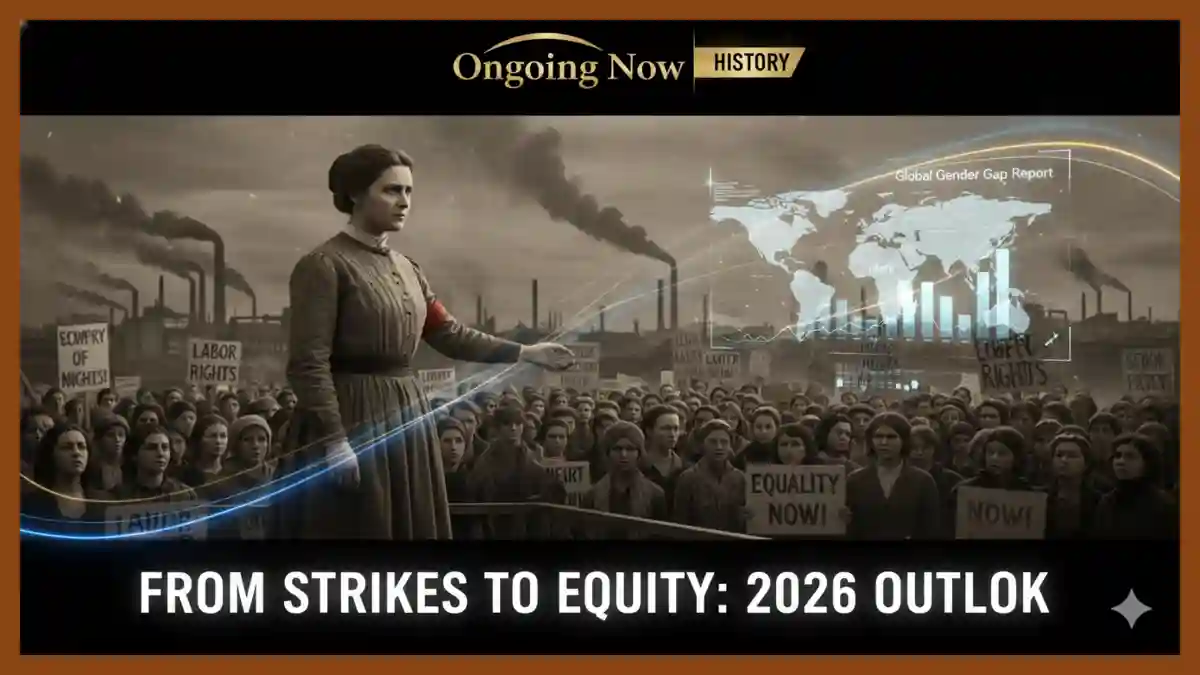
The IWD origin story serves as a foundational pillar of modern social history, tracing its roots from 20th-century labor rights history to the United Nations theme 2026. What began as a localized suffrage movement milestone has transformed into a sophisticated feminist theory evolution that now prioritizes intersectionality in activism. Today, the global gender gap report and gender pay gap data provide empirical evidence of the distance between equality vs equity. By examining the life of Clara Zetkin biography details and the early suffrage movement milestones, we uncover a legacy that continues to shape international policy. This analytical explainer bridges the gap between 1910 socialist activism and the data-driven pursuit of justice in the current decade.
The Radical Roots of the IWD Origin Story
The IWD origin story did not begin as a commercial holiday but as a bold assertion of economic presence. In 1908, 15,000 women marched through New York City demanding shorter hours, better pay, and voting rights. This event laid the groundwork for the first National Woman’s Day, observed across the United States on February 28, 1909, following a declaration by the Socialist Party of America.
The movement quickly crossed the Atlantic, finding a fertile environment in the European labor movements. International archives, such as those held by the Friedrich Ebert Foundation, document how these early demonstrations were inextricably linked to the broader labor rights history. The primary focus was the intersection of class struggle and gendered disenfranchisement, a theme that remains relevant in modern economic discourse.
Clara Zetkin and the International Mandate
A pivotal chapter in the Clara Zetkin biography is her proposal at the 1910 International Conference of Working Women in Copenhagen. Zetkin, a German theorist and activist, suggested that every country should celebrate women on the same day annually to press for their demands. Her resolution was met with unanimous approval by over 100 women from 17 countries, representing unions and socialist parties.
Zetkin’s vision was strictly functional; she viewed the day as a tactical tool to achieve suffrage movement milestones. Under her influence, the first International Women’s Day was honored in 1911 in Austria, Denmark, Germany, and Switzerland. Historical records from the Museum of European Cultures highlight that over one million people attended these inaugural rallies, focusing heavily on the right to work and hold public office.
Labor Rights History: The Catalyst of March 8
The selection of March 8 as the definitive date is tied to the February Revolution in Russia. In 1917, women textile workers in Petrograd went on strike for “Bread and Peace,” effectively igniting the downfall of the Czarist autocracy. This event remains one of the most significant suffrage movement milestones in Eastern European history.
Historian Temma Kaplan notes that these women acted as the “spark” for the revolution, moving beyond traditional gender roles to demand systemic political change. Following the revolution, Vladimir Lenin declared Woman’s Day an official Soviet holiday, though it remained primarily a working-class celebration until its later adoption by the West.
| Year | Milestone Event | Key Outcome |
| 1909 | First National Woman’s Day (USA) | Established organized annual protest. |
| 1910 | Copenhagen Conference | Clara Zetkin proposes international status. |
| 1917 | Petrograd Textile Strike | March 8 becomes the revolutionary standard. |
| 1945 | UN Charter Signed | First international agreement on equality. |
| 1975 | UN International Women’s Year | Official global recognition by the UN. |
Feminist Theory Evolution and Intersectionality
As the decades progressed, the feminist theory evolution shifted the focus of the day from purely industrial labor to broader social liberation. By the 1960s and 70s, the “Second Wave” of feminism began to integrate intersectionality in activism, acknowledging that race, class, and colonial history influence a woman’s experience of oppression.
Kimberlé Crenshaw, the legal scholar who coined the term “intersectionality,” argues that failing to account for overlapping identities creates gaps in justice. This shift is visible in how the IWD origin story is retold today; it is no longer just about the right to vote, but about dismantling the compounding barriers faced by women of color, LGBTQ+ individuals, and those in the Global South.
Analyzing the Global Gender Gap Report
In 2026, the global gender gap report serves as the primary metric for measuring international progress. This report, typically published by the World Economic Forum, analyzes four key dimensions: economic participation, educational attainment, health and survival, and political empowerment.
Current gender pay gap data indicates that while the gap is narrowing in some sectors, the “motherhood penalty” and the “glass ceiling” remain persistent. Sociologists point to the fact that at current rates, total parity may not be achieved for another century. This data reinforces why the IWD origin story must be viewed through a lens of continuous struggle rather than a completed victory.
Equality vs Equity: The 2026 Paradigm
A critical distinction in modern discourse is the debate of equality vs equity. While equality provides everyone with the same resources, equity recognizes that each person has different circumstances and allocates the exact resources needed to reach an equal outcome. This distinction is central to the United Nations theme 2026.
The 2026 focus emphasizes that “equal opportunity” is insufficient if the starting lines are miles apart. By applying equity-based policies, institutions aim to address the systemic disadvantages highlighted in labor rights history, ensuring that marginalized groups receive targeted support to overcome historical barriers.
The United Nations Theme 2026: Sustainable Progress
The United Nations theme 2026 focuses on “Financing for Future Equity: Investing in the Care Economy.” This theme draws a direct line back to the IWD origin story, where women demanded recognition for their labor. By centering the care economy—often unpaid or underpaid domestic work—the UN seeks to formalize a sector that is disproportionately managed by women.
Institutional forces, such as the International Labour Organization (ILO), suggest that valuing care work could add trillions to the global GDP. This analytical approach moves the conversation away from sentimentality and toward concrete economic restructuring, echoing the pragmatic demands made by Clara Zetkin over a century ago.
Comparative Legacy: 1910 vs 2026
Comparing the 1910 movement to the 2026 landscape reveals a transition from “access” to “agency.” In 1910, the goal was the right to enter the room—whether that room was a polling station or a boardroom. In 2026, the goal is the power to redesign the room itself.
1910 Focus: Basic suffrage, legal personhood, and factory safety.
2026 Focus: AI bias in hiring, climate change’s impact on women, and closing the digital divide.
Despite these changes, the core of the IWD origin story remains the same: a collective refusal to accept the status quo. The “By the Numbers” data from 2026 suggests that while 90% of countries have legal frameworks for gender equality, only 40% have achieved meaningful implementation in the workforce.
Expert Perspectives on Modern Activism
Historian Dr. Ellen Dubois emphasizes that we must not “sanitize” the history of March 8. She argues that remembering the socialist and radical roots of the day is essential for maintaining its political edge. “If IWD becomes merely a day for flowers and cards,” she writes in a recent analysis, “we lose the legacy of the women who risked imprisonment for the right to strike.”
Similarly, the latest global gender gap report highlights that political representation is the slowest area of improvement. While more women are in leadership roles than in 1911, they still hold less than 30% of parliamentary seats worldwide. This persistent deficit underscores the ongoing necessity of intersectionality in activism to ensure that all women, not just those in the elite, gain political voice.
Conclusion: Why History Matters in 2026
The IWD origin story is a testament to the power of organized labor and the endurance of the human spirit. From the Clara Zetkin biography to the complex gender pay gap data of the present, the narrative is one of incremental but significant progress.
As we look toward the goals set by the United Nations theme 2026, the lessons of labor rights history remain our best guide. Understanding the difference between equality vs equity and implementing intersectionality in activism are not just theoretical goals; they are the practical requirements for a stable and prosperous global society. The history of March 8 reminds us that change is never given—it is negotiated, demanded, and earned.
Stay sharp with Ongoing Now!
Source and Data Limitations: This article is based on archival records from the United Nations, the International Labour Organization, and the World Economic Forum’s Global Gender Gap Reports (2023–2026). Primary sources include the 1910 Copenhagen Conference proceedings and the 1917 Petrograd strike records. Biographical data for Clara Zetkin is sourced from the Marx-Engels-Lenin Institute archives. While current 2026 UN themes are incorporated based on official projections and early releases, specific localized “gender gap” figures may vary by region due to reporting delays in certain jurisdictions. Unverified anecdotes regarding the 1857 New York strike, which some historians consider a later myth created in the 1950s to distance the day from its Soviet associations, were intentionally excluded to maintain historical rigor.