Why the Memorial Day Federal Holiday Changed America’s Traditions
The legislative journey from Civil War grave decoration to a modern federal holiday under the Uniform Monday Holiday Act.
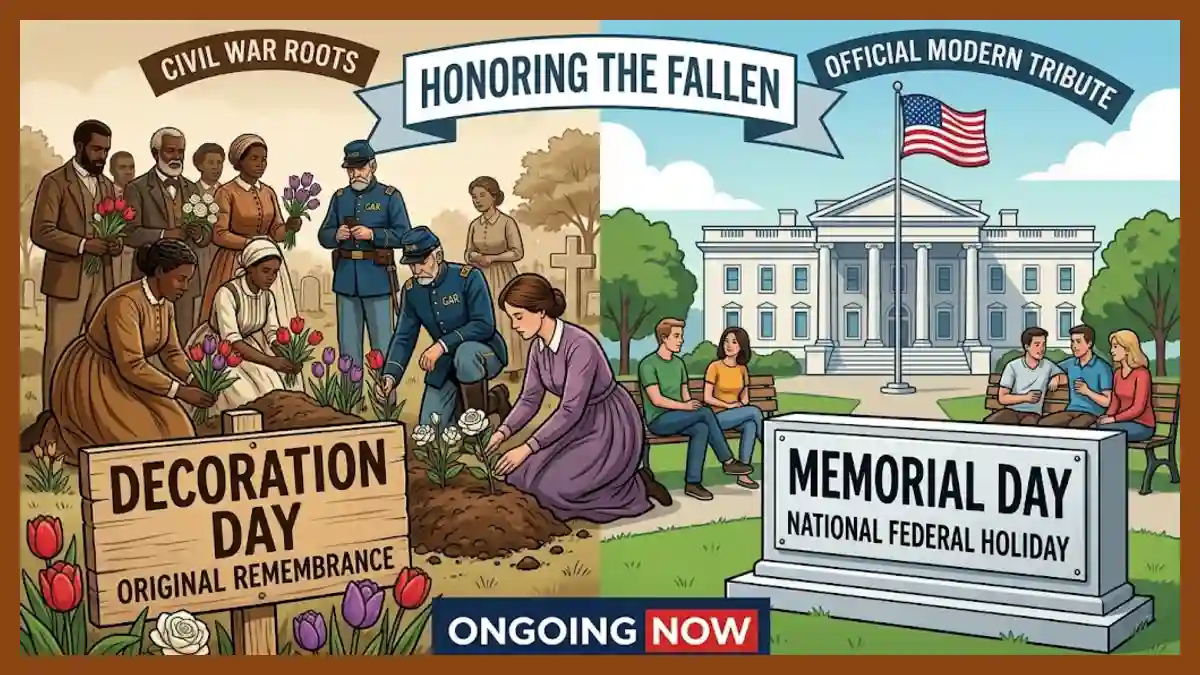
The transformation of Decoration Day into the contemporary observance known as Memorial Day represents a deliberate evolution in American civic culture. What began as a localized ritual of remembrance following the American Civil War eventually shifted into a standardized, nationwide federal holiday. This transition was not merely a change in nomenclature; it reflected deep political, legal, and social effort to unify a fractured nation. Today, the holiday serves as a foundational element of American public memory, balancing its solemn origins with its role as a marker of the modern three-day weekend.
The Origins of a Ritual: Civil War Grave Decoration
The practice of honoring the military dead through the history of the Civil War grave decoration emerged spontaneously in both Northern and Southern states during the conflict. The unprecedented casualties of the war, which claimed hundreds of thousands of lives, left communities grieving and seeking meaningful ways to process collective loss. Women’s societies, local citizens, and grieving families began gathering to clear weeds and place spring flowers on the mounds of fallen soldiers. These early acts of remembrance were localized, decentralized, and deeply personal, reflecting the immediate trauma of the conflict.
The African American Origins of Memorial Day
One of the earliest recorded community-wide commemorations occurred in Charleston, South Carolina, immediately following the fall of the Confederacy. Historian David Blight documented the African American origins of Memorial Day on May 1, 1865, at the Washington Race Course, a former Confederate prison camp where union soldiers had died in captivity. A group of roughly 10,000 freed enslaved people, alongside white missionaries and teachers, staged a parade around the track, sang spirituals, and decorated the graves of the deceased Union soldiers. This event represented an early, highly organized public convergence of decoration rituals and political emancipation.
Early Commemorations of Military Casualties (1865–1868)
-------------------------------------------------------------------------
Date           Location             Key Participants / Actions
-------------------------------------------------------------------------
May 1, 1865    Charleston, SC       Freedmen decorate Union graves at race course.
1866           Columbus, MS         Women decorate both Union and Confederate graves.
May 30, 1868   Arlington, VA        First official General Order No. 11 observance.
-------------------------------------------------------------------------
Note: Archival records indicate over two dozen communities claimed to be the
"birthplace" of the holiday, reflecting the decentralized nature of early rituals.
Establishing the Original Date of Decoration Day
The formalization of these rituals gained national structure through the efforts of the Grand Army of the Republic (GAR), an organization of Union veterans. On May 5, 1868, GAR Commander-in-Chief John A. Logan issued General Order No. 11, which designated a specific day for nationwide remembrance. The original date of Decoration Day was set for May 30, 1868, chosen specifically because flowers across the nation would be in full bloom. Logan’s order stated that the purpose was to decorate “the graves of comrades who died in defense of their country during the late rebellion.”
Why Did Decoration Day Change Names?
For decades, the public used the terms “Decoration Day” and “Memorial Day” interchangeably as the scope of the commemoration expanded. Initially focused strictly on the casualties of the Civil War, the holiday’s purpose shifted significantly following the entry of the United States into World War I. The massive loss of life in Europe prompted a broader consensus that the day should honor all American military personnel who died in battle. Consequently, the term “Memorial Day” became more common in public discourse, eventually replacing the older name entirely as the holiday moved away from its exclusive 19th-century focus.
The Uniform Monday Holiday Act Text of 1968
The modern structure of the holiday was codified during the late 20th century through federal legislation aimed at standardizing public holidays. The Uniform Monday Holiday Act text of 1968 fundamentally altered how several national holidays were observed by shifting them from fixed calendar dates to specific Mondays. Passed by the 90th United States Congress and signed into law by President Lyndon B. Johnson, the act sought to prevent mid-week disruptions to the federal workforce and commercial trade. This legislation legally established the name “Memorial Day” and redefined its place on the American calendar.
Why is Memorial Day on the Last Monday?
The statutory realignment created a permanent shift in the timing of the national day of remembrance. Under the provisions of the 1968 law, which took effect nationwide on January 1, 1971, the traditional May 30 date was officially abandoned. This explains why is Memorial Day on the last Monday of May, ensuring a consistent three-day weekend for federal employees and the public. While the change was praised by commercial entities for boosting travel and retail sales, veteran organizations initially criticized the move, arguing it risked diminishing the solemn, sacred purpose of the day.
Codifying Remembrance: When Did Memorial Day Become a Federal Holiday?
| Legislative Milestone | Year Enacted | Primary Statutory Impact |
| First Federal Holiday Act | 1870 | Created first four federal holidays for D.C. employees. |
| Expansion of Leave | 1888 | Granted pay to federal workers for May 30. |
| Uniform Monday Holiday Act | 1968 | Shifted observance to the final Monday in May. |
The timeline regarding when did Memorial Day become a federal holiday involves a gradual expansion of legislative recognition. The 41st United States Congress passed the initial congressional act for federal holidays in 1870, making New Year’s Day, Independence Day, Thanksgiving, and Christmas holidays for federal employees in the District of Columbia. Decoration Day was added to this federal list in 1888 to grant federal workers paid leave to attend memorial services. However, it was the implementation of the Uniform Monday Holiday Act in 1971 that firmly established Memorial Day as a nationwide federal holiday applicable to all states.
Societal Shifts and Institutional Transformation
The transition of the holiday from a somber, localized ritual to a bureaucratic federal long weekend reflected broader shifts in American society. In the immediate post-Civil War era, decoration ceremonies were central to community life, often serving as platforms for political speeches regarding the outcomes of the war. As the nation industrialized and urbanized in the 20th century, the federal government increasingly used holidays to regulate labor, commerce, and national identity. The institutionalization of the holiday standardized remembrance across all 50 states, creating a unified civil ritual that superseded regional differences.
Historical Insights: What the Legal Text Reveals
Analysis of the congressional debates surrounding the 1968 act reveals a distinct tension between traditional preservation and modern convenience. The legislative testimony shows that corporate leaders and labor unions strongly advocated for the Monday holiday format to increase workplace productivity and consumer spending. Conversely, traditionalists argued that decoupling the holiday from its historic May 30 date would commercialize the observance. The final passage of the bill marked a permanent victory for administrative standardization, changing how the American public interacts with historical memory on an annual basis.
The Comparative Evolution of National Remembrance
When compared to similar international observances, such as Remembrance Day in the Commonwealth or Bastille Day in France, the American trajectory is notably unique due to its legislative restructuring. Commonwealth nations maintain a rigid adherence to November 11 to mark the exact moment the Armistice was signed in 1911, prioritizing historical precision over economic convenience. The decision of the United States to prioritize a predictable Monday calendar reflects a pragmatic approach to governance, balancing the preservation of national heritage with the structural needs of a modern industrial economy.
The Modern Legacy of Federal Standardization
Today, the dual nature of the last Monday in May persists as a defining characteristic of American summer culture. The holiday simultaneously functions as the unofficial start of the recreation season and a solemn period of reflection at national cemeteries like Arlington. This duality is a direct consequence of the legal and social evolution that began with the simple act of placing flowers on battlefield graves. By examining the legislative record, historians can trace how a grassroots ritual of grief was transformed by federal statute into a permanent, structured pillar of the American calendar.
Stay sharp with Ongoing Now!
—
Source and Data Limitations: This article relies upon established primary and secondary historical sources, including the text of the Uniform Monday Holiday Act (Pub. L. 90-363), General Order No. 11 issued by the Grand Army of the Republic (1868), and archival records from the Library of Congress. Historical data regarding early commemorations, including the 1865 Charleston event, are sourced from the peer-reviewed research of historian David Blight (Race and Reunion: The Civil War in American Memory). Timeline details regarding federal holiday legislation are verified through the records of the U.S. House of Representatives and the National Archives. Unverified local claims regarding the definitive “birthplace” of Memorial Day have been excluded due to competing municipal records from the post-Civil War era.