The Fallout of Omission: A Detailed N-400 Question 15a explanation for Applicants
A detailed look at the disclosure requirements for criminal history and the impact on naturalization.
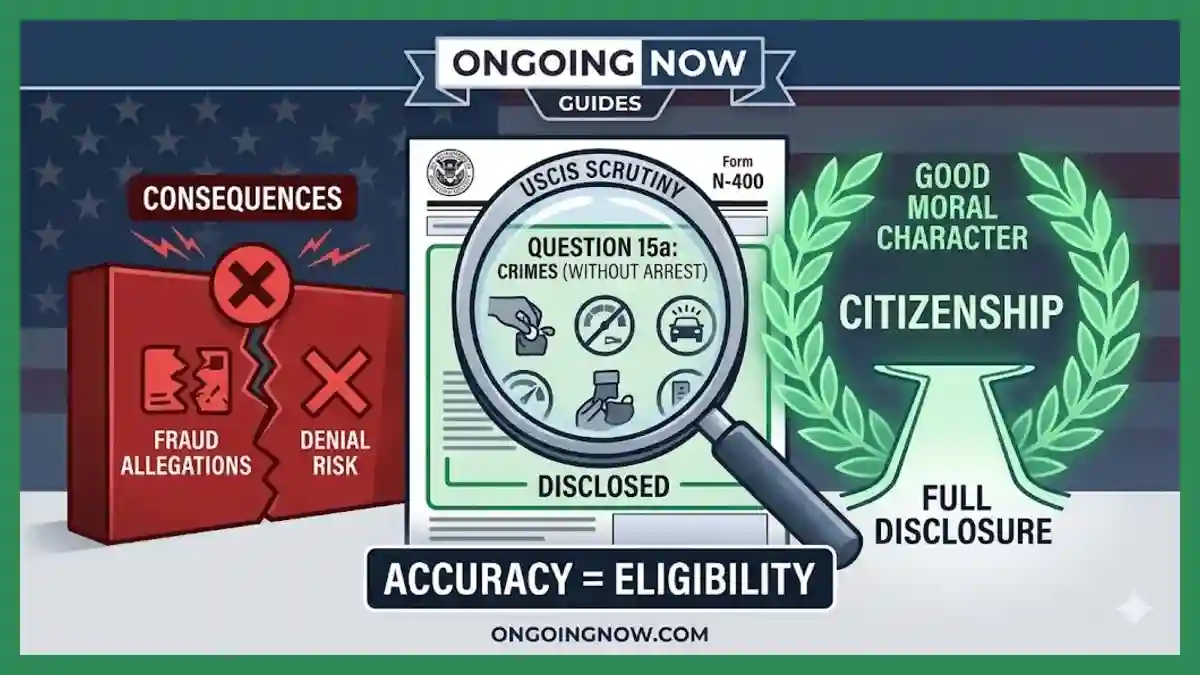
The Form N-400, Application for Naturalization, serves as the final formal step for a Lawful Permanent Resident to become a United States citizen. One of the most critical sections of this application involves Part 12, which asks about an applicant’s background, conduct, and legal history. Specifically, N-400 Question 15a explanation centers on whether an applicant has ever committed a crime or offense for which they were not arrested. Understanding the scope of this question is essential for maintaining transparency during the immigration process.
Quick Answer
Full Disclosure: Question 15a requires applicants to report any crimes or offenses committed, even if no law enforcement officer was present or an arrest never occurred.
Good Moral Character: USCIS evaluates an applicant’s conduct during the statutory period to determine if they meet the legal requirements for citizenship.
Accuracy Matters: Failing to provide truthful information can lead to allegations of immigration fraud or the denial of the application.
Understanding N-400 Question 15a
The N-400 application is designed to help United States Citizenship and Immigration Services (USCIS) determine if an individual possesses “Good Moral Character” (GMC). Question 15a asks: “Have you EVER committed, assisted in committing, or attempted to commit a crime or offense for which you were NOT arrested?”
This question often creates confusion because it asks for self-reporting of incidents that are not on a public record or a police report. However, USCIS views the naturalization process as a test of honesty. Providing a thorough N-400 Question 15a explanation involves understanding that “ever” means your entire lifetime, not just the time you have lived in the United States.
Why This Question Exists
USCIS uses this question to identify behaviors that might disqualify an applicant based on statutory bars to GMC. These behaviors can include anything from shoplifting that went unnoticed to more serious regulatory or tax-related offenses. The goal is to ensure that new citizens have followed the laws of the country and are truthful about their history.
The Naturalization Good Moral Character Period
To qualify for citizenship, an applicant must demonstrate GMC during a specific window of time known as the statutory period. While the length of this period can vary, it is generally defined by the applicant’s filing category.
Statutory Period Lengths
| Applicant Category | Required GMC Period |
| General Permanent Resident (5-year rule) | 5 years prior to filing |
| Spouse of a U.S. Citizen (3-year rule) | 3 years prior to filing |
| Military Personnel | Varies (often 1 year or less) |
Even though the naturalization good moral character period focuses on recent years, USCIS has the authority to look at an applicant’s entire history. If an incident occurred outside the statutory period but shows a pattern of behavior or a lack of reform, it may still be considered during the review process.
Defining and Identifying Immigration Fraud
Providing false information on an immigration form is a serious matter. What counts as immigration fraud in the context of the N-400 includes any willful misrepresentation of a material fact. A material fact is information that, if known, would have influenced the decision of the USCIS officer.
Common Examples of Misrepresentation
Claiming a single marital status when actually married.
Using a false address to meet residency requirements.
Failing to disclose a prior name or alias.
Omission of criminal activity (even if not arrested).
Intentional omissions are treated with the same severity as active lies. If USCIS determines that an applicant provided false testimony under oath during the interview to obtain an immigration benefit, it can result in a permanent bar to citizenship.
The Risks of Failing to Disclose Crimes on N-400
Many applicants worry that admitting to a minor mistake from the past will lead to an immediate denial. However, failing to disclose crimes on N-400 is often viewed as a more significant character flaw than the crime itself.
Consequences of Omission
Application Denial: If the background check reveals information not disclosed on the form, the officer may deny the application for lack of GMC due to “false testimony.”
Permanent Record: Once an omission is caught, it remains on the applicant’s A-File (Alien File), complicating future immigration attempts.
Deportation Proceedings: In extreme cases, if the undisclosed crime is an “aggravated felony” or a “crime involving moral turpitude” (CIMT), USCIS may refer the case to immigration court for removal proceedings.
How the Immigration Background Check Works
Every N-400 applicant undergoes a rigorous immigration background check for naturalization. This process is not limited to a simple local police check. It involves multiple federal and international databases.
Key Components of the Check
FBI Fingerprint Check: Screens for any arrests or convictions within the United States.
FBI Name Check: Cross-references the applicant’s name against various law enforcement records.
Interagency Border Inspection System (IBIS): Checks for alerts related to border crossings and international issues.
Biometrics Appointment: Applicants must provide fingerprints, photographs, and signatures to facilitate these searches.
Because these checks are thorough, inconsistencies between the background report and the written N-400 application are easily identified by USCIS officers.
USCIS Policy Manual and Denaturalization
The USCIS Policy Manual denaturalization sections outline what happens if fraud is discovered after an individual has already taken the Oath of Allegiance. While naturalization is intended to be permanent, it can be revoked through a legal process if it was obtained illegally or through concealment of a material fact.
Civil and Criminal Denaturalization
Civil Denaturalization: Occurs in federal court when the government proves the person was not eligible for citizenship at the time they naturalized.
Criminal Denaturalization: Occurs when an individual is convicted of knowingly procuring naturalization contrary to law.
There is often a misunderstanding regarding a statute of limitations on citizenship fraud. In civil denaturalization cases, there is generally no statute of limitations. This means the government can initiate proceedings years or even decades after the person became a citizen if evidence of fraud comes to light.
Handling Errors: How to Correct Naturalization Applications
If an applicant realizes they made a mistake on their form after it has been submitted, it is vital to address it as soon as possible. Knowing how to correct naturalization applications can help preserve an applicant’s credibility.
Steps to Rectify Mistakes
Bring Written Corrections: If you discover an error, prepare a written statement explaining the correction.
Disclose at the Interview: At the start of the naturalization interview, the officer will usually ask if there are any changes to the application. This is the time to provide the updated information.
Explain the Error: Clearly state why the original answer was incorrect (e.g., a misunderstanding of the question or a forgotten date).
Being proactive about corrections shows a commitment to the truth, which supports a finding of Good Moral Character.
Consequences of Lying to USCIS
The consequences of lying to USCIS extend beyond the N-400. Because naturalization involves taking an oath to tell the truth, any lie told during the interview is considered “false testimony.”
Under the law, providing false testimony for the purpose of obtaining an immigration benefit is a mandatory bar to showing Good Moral Character. Even if the underlying incident was minor, the act of lying about it creates a legal hurdle that can prevent citizenship for at least the duration of the statutory period.
Seeking Professional Assistance
The naturalization process is complex, particularly for individuals with any history of legal encounters. Many people seek legal help for naturalization interviews to ensure they are interpreting the questions correctly.
When to Consult a Professional
If you have ever been arrested, even if the charges were dropped or expunged.
If you have committed an act that could be considered a crime, even without an arrest.
If you have previously provided inconsistent information to immigration officials.
If you have spent significant time outside the United States.
An immigration attorney or an accredited representative can help review an applicant’s history and provide guidance on how to accurately complete the N-400 while adhering to all legal requirements.
Key Takeaways
Question 15a is broad: It covers all offenses, regardless of whether an arrest occurred.
Honesty is a requirement: GMC is evaluated based on the truthfulness of your application and interview.
Background checks are deep: USCIS has access to multiple databases that track criminal and civil history.
No time limit on fraud: Citizenship can be revoked later if it is found to have been obtained through misrepresentation.
Corrections are possible: Errors should be disclosed to the USCIS officer during the interview to demonstrate transparency.
Summary Table: Disclosure Guidelines
| Scenario | Should You Disclose on N-400? | Why? |
| Arrested but charges dropped | Yes | Shows transparency; arrest record will appear. |
| Traffic ticket over $500 | Yes | Meets the USCIS reporting threshold. |
| Committed a crime, never caught | Yes (Question 15a) | Honesty is key to Good Moral Character. |
| Expunged record | Yes | USCIS requires disclosure of all records, even if expunged. |
By approaching the N-400 with a commitment to total accuracy, applicants can navigate the naturalization process with greater confidence. While admitting to past mistakes may feel daunting, it is generally the most reliable path toward a successful outcome.
Stay sharp with Ongoing Now!
Source and Data Limitations: This guide is based on the official USCIS Policy Manual, the instructions for Form N-400, and established federal immigration statutes regarding Good Moral Character (GMC) and denaturalization. Information regarding background check procedures is derived from standard USCIS operational protocols. While every effort has been made to ensure accuracy, immigration policies are subject to change by legislative action or administrative updates. This content is for informational purposes only and not personalized advice. The details provided are general in nature and do not account for individual legal complexities or specific case histories. Consult a qualified immigration attorney or a Department of Justice (DOJ) accredited representative for your specific situation. Ongoing Now does not provide legal services or official representation before USCIS.