Financial Fallout Behind Chapter 11 Filings 2026 as Smoking Monkey Pizza Restructures
Smoking Monkey Pizza Restructuring: Market Analysis Wood-Fired Pizza Chain Reorganizes Under Chapter 11
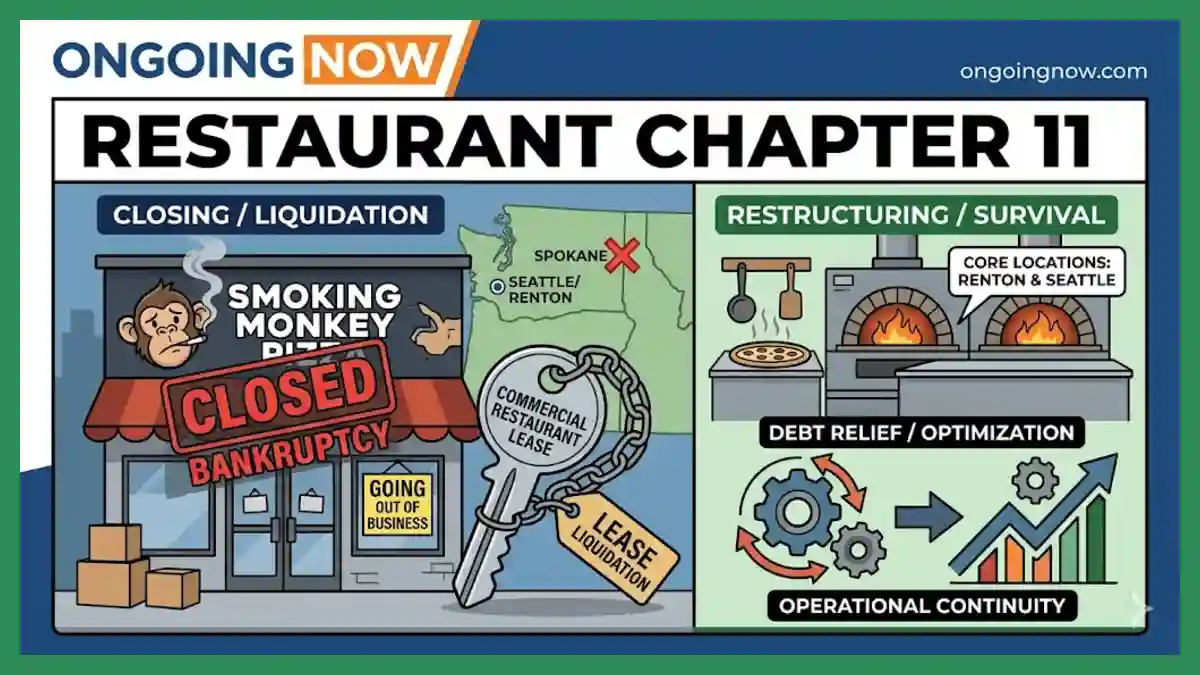
The hospitality industry is navigating a difficult economic stretch as independent and regional food service concepts struggle to balance persistent operational headwinds against shifting consumer habits. On May 12, 2026, TB Enterprises LLC — the corporate operator of regional wood-fired pizza chain Smoking Monkey Pizza — officially filed a petition for Chapter 11 bankruptcy protection in the U.S. Bankruptcy Court for the Western District of Washington in Seattle. The filing underscores a broader industry pattern in which rising input costs, heavy commercial lease obligations, and weakening urban foot traffic are squeezing localized restaurant operations.
The petition outlines a targeted restructuring strategy aimed at stabilizing the brand’s balance sheet while keeping its surviving locations open and operational. According to court documents, the Chapter 11 filing follows the strategic closure of the company’s Spokane location at 816 W. Sprague Ave., which shuttered approximately two months before the legal filing. By pulling back to its core Western Washington footprint, the company aims to optimize cash flow and address immediate unsecured debts. The original Renton location at 613 South 3rd St. and the Seattle store at 3111 W. McGraw St. continue to serve customers without interruption, insulating day-to-day operations from the ongoing legal proceedings.
A Broader Industry Trend
The Smoking Monkey Pizza restructuring is not an isolated event. Throughout the past year, macroeconomic pressures — including persistent food-at-home inflation, elevated commercial lease costs, and rising labor expenses — have accelerated restaurant bankruptcy filings across both major national franchises and smaller regional players.
| Brand / Operator | Legal / Strategic Action | Footprint Impact |
|---|---|---|
| Papa John’s Inc. | Strategic Corporate Closures | 300 Units Underperforming |
| Yum! Brands (Pizza Hut) | Hut Forward Restructuring Plan | 250 Units Downsized |
| Fiorella | Chapter 11 Reorganization | 4 Corporate Filings |
| TB Enterprises LLC | Chapter 11 Court Reorganization | 1 Unit Closed; 2 Active |
Data compiled from individual court dockets and Q1 2026 corporate reports.
Papa John’s International announced plans to close up to 300 underperforming stores, targeting 200 shutdowns by the end of 2026. Yum! Brands’ Pizza Hut subsidiary similarly outlined the closure of roughly 250 locations under its “Hut Forward” efficiency initiative.
Smaller artisanal chains face the same pressures but carry far less capital cushion to absorb prolonged margin compression. San Francisco-based wood-fired pizza brand Fiorella filed its fourth distinct Chapter 11 petition on March 6, 2026, targeting its Noe Valley unit. This followed three previous filings by subsidiary entities in 2025 — further evidence that rigid urban real estate costs combined with heightened consumer price sensitivity are actively challenging the viability of premium fast-casual business models.
The Numbers Behind the Filing
A review of TB Enterprises LLC court records reveals the fiscal pressures that precipitated the distress. The company reported estimated assets capped at $50,000, set against total liabilities ranging between $100,000 and $500,000 — a gap that illustrates how quickly an underperforming expansion unit can exhaust a small operator’s working capital.
| Creditor Entity | Type of Obligation | Unsecured Debt Amount |
|---|---|---|
| Washington Department of Revenue | Regulatory / State Tax | Over $52,000 |
| Sysco Corporation | Broadline Food Distribution | Over $42,000 |
| Chase Card Services | Corporate Financial Credit | Over $39,000 |
| Gravity Payments | Merchant Processing | Over $37,000 |
| Greco | Specialty Food Logistics | Over $35,000 |
| Puget Sound Energy | Municipal Utility Provider | Over $34,000 |
The largest single unsecured obligation is owed to the Washington Department of Revenue at over $52,000 in deferred statutory obligations. National food distributor Sysco Corporation holds a claim exceeding $42,000, while regional specialty vendor Greco is listed at over $35,000. Chase Card Services holds over $39,000 in credit liabilities, merchant processor Gravity Payments carries a claim exceeding $37,000, and Puget Sound Energy — a critical utility for wood-fired commercial operations — carries an unpaid balance of more than $34,000. The profile reflects a systemic cash shortfall simultaneously affecting regulatory compliance, supply lines, and basic facility costs.
The Mechanics of Chapter 11
For small and mid-sized operators in the consumer discretionary space, a Chapter 11 filing offers critical protections — primarily the automatic stay, which halts collection actions by vendors and landlords — but it also imposes significant administrative costs. Restructuring professionals note that the financial outlays required to complete a successful reorganization force businesses to make hard decisions about which assets to preserve and which to shed.
Hospitality bankruptcy attorneys point out that under Section 365 of the Bankruptcy Code, a debtor can reject commercial leases, converting future rent obligations into general unsecured claims. When an expansion market like Spokane fails to generate sufficient margins to cover underlying real estate costs, this mechanism provides meaningful relief — though it requires upfront capital to cover legal fees, court filing expenses, and mandatory quarterly U.S. Trustee fees.
Macroeconomic Pressures on the Sector
The difficulties facing Smoking Monkey Pizza reflect conditions affecting the broader restaurant industry. Three interconnected forces are driving the current wave of distress:
| Metric | Current Impact on Hospitality |
|---|---|
| Food-at-Home vs. Away Inflation | Margin compression due to rising wholesale ingredient costs and limited consumer pricing flexibility |
| Commercial Real Estate Rents | Fixed lease obligations remain rigid in urban centers, driving lease rejections under Chapter 11 |
| Labor Availability & Cost | Upward pressure on baseline operational costs requires elevated localized optimization |
Local and Regional Impact
The permanent exit from the Spokane market resulted in immediate job losses for kitchen staff, front-of-house workers, and local delivery personnel. The contraction of a recognized regional brand also reduces aggregate demand for local services and diminishes foot traffic in the surrounding commercial district.
Financial analysts note, however, that proactive downsizing is often the only path to preserving jobs at remaining locations. By consolidating around the historically stable Renton and Seattle storefronts, the operator aims to protect its core workforce — avoiding the total liquidation that would result from a conversion to Chapter 7.
Can the Brand Recover?
The long-term outcome will depend on the company’s ability to leverage its regional reputation while bringing its cost structure in line with current market realities. Prior to its financial difficulties, Smoking Monkey Pizza earned a quality rating above 95% from the Quality Business Awards in 2025 and the distinction of “Best Pizza in Renton.” The brand maintains deep ties to the local economy through its service to the Boeing aerospace workforce and official catering partnerships with the Renton Chamber of Commerce.
Restructuring professionals frequently recommend menu simplification for distressed hospitality operators as a way to reduce food waste, streamline inventory, and lower outstanding balances with major distributors. With 35 distinct pizza varieties alongside multiple pasta, sandwich, and calzone options, there is meaningful room to tighten operations.
By deploying the debt-relief tools available under federal bankruptcy law, stabilizing its relationship with state tax authorities, and focusing resources on its two high-performing Western Washington locations, TB Enterprises LLC is working to build a leaner, more resilient operation. The coming months will determine whether that approach is enough to carry the brand through its debt obligations and back toward long-term viability.
Source note: This analysis is based on public legal filings from the U.S. Bankruptcy Court for the Western District of Washington, recorded under debtor TB Enterprises LLC on May 12, 2026. Financial figures and creditor schedules were drawn from the official Chapter 11 petition and verified via Bankruptcy Observer and TheStreet. Store operational statuses were confirmed through direct company communications. Comparative industry data were sourced from Q4 2025 and Q1 2026 public earnings call transcripts from Papa John’s International and Yum! Brands. Fiorella bankruptcy data were sourced from California Northern District court records via PacerMonitor.