California DMV Data Privacy and the Real ID Controversy
California's DMV faces scrutiny over Real ID data sharing and the privacy of AB 60 driver licenses in 2026.
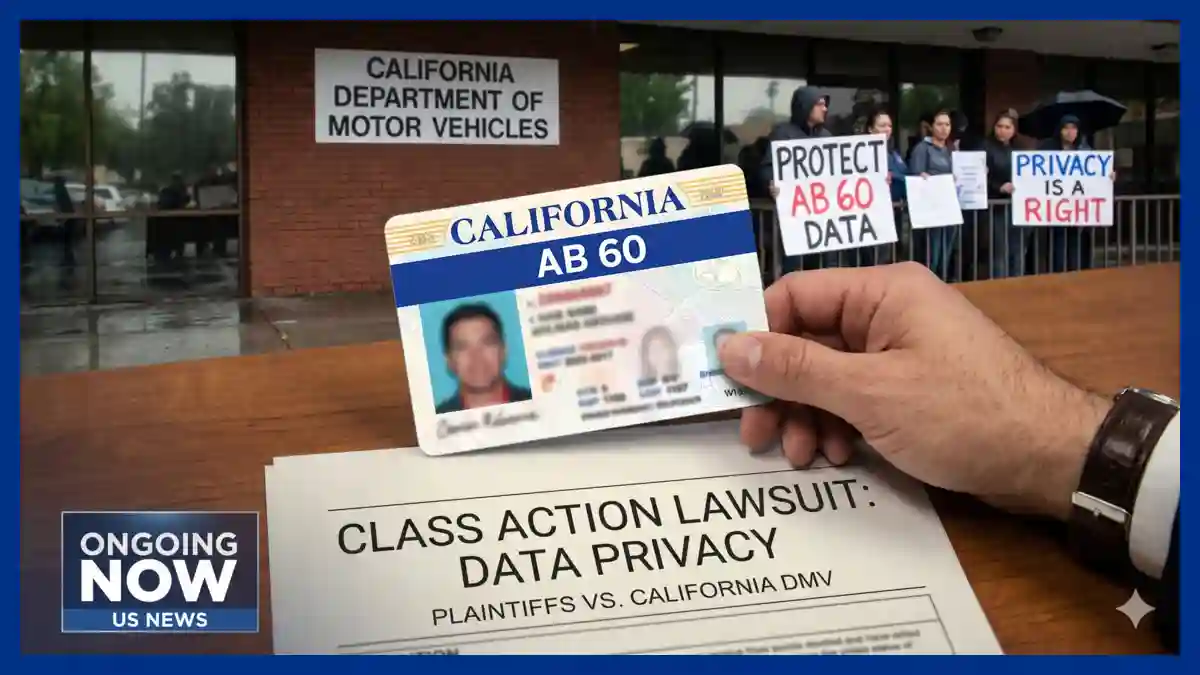
The California DMV national database integration has sparked a significant legal and ethical debate regarding AB 60 driver license privacy. At the heart of the issue is whether the state’s $55 million data project to modernize records inadvertently creates an immigrant data deportation risk by facilitating federal access. Current reports indicate that the California Real ID data sharing controversy stems from efforts to align state records with the American Association of Motor Vehicle Administrators (AAMVA) standards.
This technical alignment has raised fears of a California DMV betrayal 2026 among advocacy groups, who argue that undocumented immigrant license protection is being eroded. As federal agencies seek broader driver record sharing, the tension between state law vs Real ID compliance has reached a critical juncture. Governor Gavin Newsom’s DMV data policy now faces a high-stakes immigrant rights lawsuit DMV challenge, while calls for a comprehensive AAMVA data privacy audit grow louder to ensure that driver record sharing federal agencies can access does not violate state-level privacy mandates.
The $55 Million Digital Overhaul and Privacy Concerns
The California Department of Motor Vehicles (DMV) recently initiated a massive $55 million technological modernization project intended to streamline licensing. While the primary goal was to improve efficiency and user experience, the infrastructure required for this update has drawn intense scrutiny from privacy advocates.
The integration into a more centralized, national-style framework is seen by some as a necessary step for federal compliance. However, critics argue this move creates a “backdoor” for federal immigration authorities to access sensitive personal data that was previously shielded under state law.
The shift toward a more interconnected system means that data traditionally held solely by the state may now be more accessible through shared networks. This has led to concerns that the technical architecture itself is a threat to the privacy promises made to license holders.
Understanding AB 60 Protections in a Federal Context
Enacted in 2013, Assembly Bill 60 (AB 60) allowed undocumented residents to obtain driver’s licenses, provided they met all other requirements. A cornerstone of this legislation was the promise that this data would not be used for immigration enforcement purposes.
The current controversy centers on whether the DMV’s participation in national data-sharing compacts overrides these state-level protections. If California’s data becomes part of a searchable national database, the specific “firewalls” established by AB 60 may become technically obsolete.
Legal experts are currently debating the hierarchy of laws, questioning if a state’s privacy mandate can truly hold up against federal information-sharing requirements under the Real ID Act. This tension creates a precarious situation for hundreds of thousands of drivers.
The Role of AAMVA and the National Data Network
The American Association of Motor Vehicle Administrators (AAMVA) plays a pivotal role in how states exchange driver information. By joining AAMVA-led initiatives, California aims to prevent identity fraud and ensure that drivers do not hold licenses in multiple jurisdictions simultaneously.
However, the AAMVA data privacy audit requested by legislators highlights a lack of transparency in how this data is routed. There is a growing concern that once data enters the AAMVA network, the state of California loses its ability to dictate who can and cannot see it.
The technical protocols used by AAMVA allow for rapid queries across state lines. While useful for law enforcement tracking traffic violations, this same system could theoretically be utilized for civil immigration investigations, a use case California law explicitly forbids.
Legislative and Executive Response to Data Risks
Gavin Newsom’s DMV data policy has attempted to balance federal mandates with the state’s role as a “sanctuary” for immigrants. The administration maintains that no data is being “handed over” to federal authorities for the purpose of deportation.
Despite these assurances, the legislative branch is under pressure to pass stricter guardrails. Proposed bills aim to mandate that any data shared with national entities must be anonymized or stripped of indicators that suggest a driver’s immigration status.
The Governor’s office has emphasized that the $55 million project is about “modernizing a legacy system” and not about “expanding surveillance.” However, the lack of explicit technical blocks in the new system has left many community leaders unconvinced.
By the Numbers: The Scale of California Licensing
| Category | Estimated Figure | Impact Level |
| AB 60 Licenses Issued | Over 1.2 Million | High |
| Modernization Budget | $55 Million | Institutional |
| National Database States | 50 States (various levels) | Federal |
| Pending Legal Filings | 3 Major Lawsuits | Judicial |
Analysis: Why the 2026 Audit Matters
The demand for a 2026 audit is not merely a bureaucratic hurdle; it is a fundamental test of state sovereignty in the digital age. As states become more reliant on shared federal infrastructure, their ability to protect their own residents’ data diminishes.
If the audit reveals that federal agencies have been conducting “bulk queries” or “fishing expeditions” through the California DMV’s portal, it would represent a significant breach of public trust. This would likely lead to a mass withdrawal from the AB 60 program, potentially increasing the number of uninsured and unlicensed drivers on the road.
Furthermore, the outcome of this controversy will set a precedent for other states with similar licensing laws. If California cannot protect its data, it is unlikely that smaller states with fewer resources will be able to do so, effectively creating a de facto national ID system.
Societal and Human Impact of Data Exposure
For many families, the immigrant data deportation risk is a daily reality that influences their participation in public life. The fear that a routine traffic stop or a license renewal could lead to federal detention has a chilling effect on community cooperation with local law enforcement.
Social workers and community advocates report that applications for AB 60 licenses have slowed as news of the California DMV national database integration spread. This trend suggests that the “betrayal” felt by the community is already impacting public safety and trust.
When individuals move into the “shadows” due to data fears, the entire state suffers. Unlicensed drivers are less likely to have insurance, and they are less likely to report crimes or stay at the scene of an accident, creating a broader societal risk that extends beyond the immigrant community.
Historical Context: The Evolution of Real ID
The Real ID Act was passed by Congress in 2005 in response to the 9/11 Commission’s recommendations. Its primary goal was to set higher security standards for sources of identification, such as driver’s licenses, to be accepted for federal purposes.
California resisted full compliance for years, citing privacy concerns and the cost of implementation. The eventual move toward compliance was a pragmatic decision to ensure California residents could still board domestic flights using their state IDs.
However, the intersection of Real ID security and AB 60 privacy was always a looming conflict. The current “data sharing controversy” is the culmination of twenty years of tension between federal national security goals and state-level civil rights protections.
Institutional Perspectives and Expert Quotes
The debate is characterized by a sharp divide between federal necessity and state protectionism.
“The goal of our modernization project is to bring the DMV into the 21st century, ensuring security and efficiency for all Californians, regardless of their status.” — Official Statement, California DMV Spokesperson
“A license was a promise of safety, not a map for deportation. If the data is shared, that promise is broken.” — Statement from the Immigrant Rights Lawsuit DMV Coalition
“We need a full AAMVA data privacy audit to understand exactly where this information goes once it leaves Sacramento. Transparency is non-negotiable.” — California State Legislator, Privacy Committee
Evidence-Based Political Insights
The political fallout of this controversy could be significant for the Democratic party in California. As the state moves toward the 2026 election cycle, the Governor’s handling of this “data betrayal” will be a key talking point for both his supporters and his detractors.
From an analytical standpoint, the DMV’s situation highlights a “technology trap.” By choosing to upgrade to modern, interconnected systems, the state inadvertently adopted the vulnerabilities and data-sharing requirements inherent in those systems.
The primary lesson for other jurisdictions is that policy intentions (like AB 60) must be backed by technical architecture. Without “privacy by design” in the $55 million project, the legal protections offered by the state remain vulnerable to federal overreach.
Stay sharp with Ongoing Now!
Source and Data Limitations: This report is based on California Department of Motor Vehicles (DMV) budget documents, California State Assembly legislative records regarding AB 60, and official statements from the Office of Governor Gavin Newsom. Technical details regarding the American Association of Motor Vehicle Administrators (AAMVA) were sourced from their public compliance guidelines and recent state audit requests. Legal context was derived from active court filings related to data privacy and the Real ID Act. Excluded from this report are speculative claims regarding specific deportation numbers or unverified leaks from internal DMV communications. All data reflects the status of state and federal law as of April 2026.