NYC Emergency Travel Ban Updates: Why Roads Closed
Mayor Zohran Mamdani has implemented a mandatory travel ban across the five boroughs as a historic blizzard brings regional transit to a standstill.
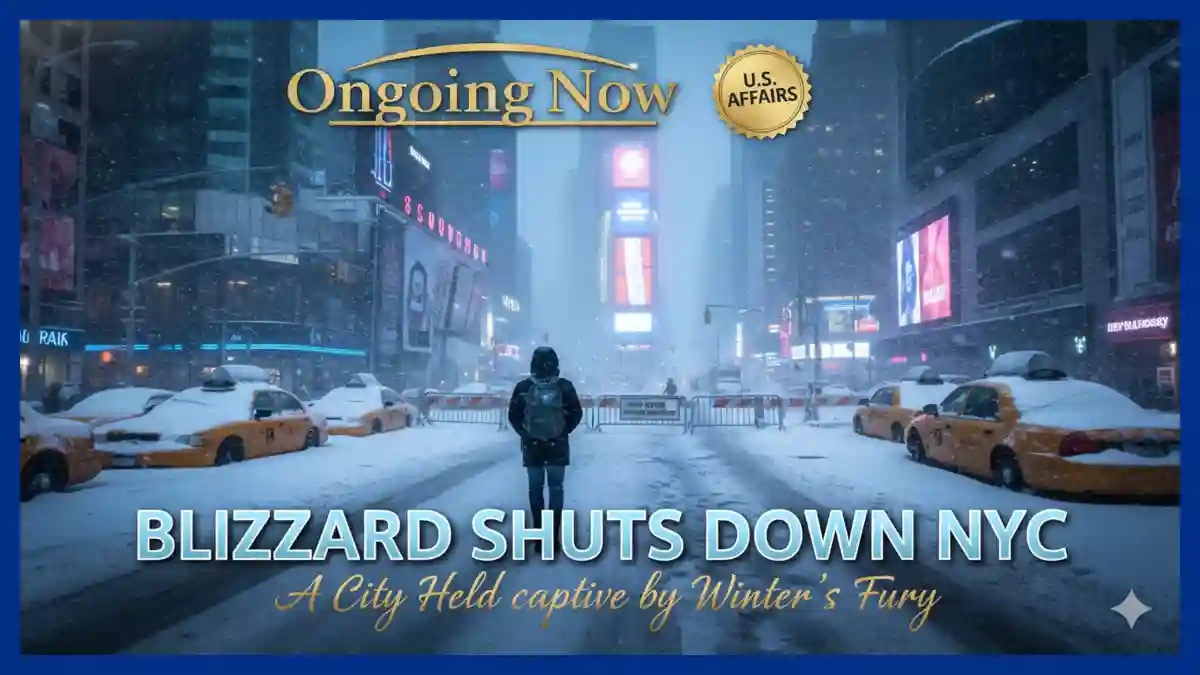
New York City is currently navigating a city-wide state of emergency as a powerful blizzard, described by officials as the most significant winter event in a decade, continues to drop 18 to 24 inches of snow across the tri-state area. Mayor Zohran Mamdani announced the NYC emergency travel ban updates during a Monday morning press conference, confirming that all non-essential vehicular traffic is prohibited on city streets, highways, and bridges until at least noon on Monday, February 23, 2026. This emergency declaration, which coincides with a winter storm warning NY, has triggered a full suspension of the LIRR, significant NJ Transit alternatives being shuttered, and widespread FlightAware JFK cancellations.
Regional Transit Disruptions and the Travel Ban
The current blizzard has fundamentally altered regional mobility, moving from standard winter storm warning NY protocols to a full-scale suspension of key corridors. Under the executive order signed by Mayor Mamdani, the NYC emergency travel ban updates specify that only emergency responders, utility workers, and essential service providers are authorized to use the road network. Violations of these NYC non-essential travel rules are being treated as Class B misdemeanors.
The Long Island Rail Road (LIRR) remains fully suspended, with MTA officials citing dangerous “drifting” and the need to clear the third rail. In New Jersey, Governor Mikie Sherrill has coordinated with the New York state of emergency 2026 efforts, suspending NJ Transit rail, bus, and light rail services until further notice. For those seeking NJ Transit alternatives, options are virtually non-existent during the peak of the storm, as the regional goal remains keeping residents off the roads to allow the Department of Sanitation (DSNY) to operate its fleet of over 5,000 plow trucks.
NYC Transit Status at a Glance
| Service | Current Status | Notes |
| NYC Subway | Running with Delays | Some lines (C, Staten Island Railway) suspended |
| LIRR | Fully Suspended | No estimated time for restoration |
| Metro-North | Reduced Service | Operating on an hourly/weekend schedule |
| NJ Transit | Fully Suspended | Includes Rail, Bus, and Light Rail |
| MTA Buses | Limited Service | Articulated buses removed; standard buses chained |
Impacts on Aviation and Airport Access
Air travel across the Northeast has entered a state of near-total cessation. NYC emergency travel ban updates have coincided with a total of over 8,800 flight cancellations nationwide, with the bulk concentrated at John F. Kennedy International (JFK), Newark Liberty (EWR), and LaGuardia (LGA) airports.
At JFK, 82% of Monday’s flights were scrapped by the morning rush, according to FlightAware data. While the JFK AirTrain shuttle map usually indicates a 24-hour loop, service is currently restricted to inter-terminal transfers, as the connecting LIRR and subway lines are experiencing severe interruptions. For those checking the Newark airport flight tracker, United Airlines Newark delays are widespread, and the Port Authority has urged passengers not to travel to any airport unless they have a confirmed, rebooked flight.
Municipal Response and Public Safety
Mayor Mamdani’s administration has taken an aggressive stance on public safety, opting for a “full classic snow day” for New York City public schools. Unlike previous years where remote learning was utilized, the Mayor stated that the severity of the New York blizzard 2026 news warranted a total break to ensure student and teacher safety.
“New York City has not faced a storm of this scale in the last decade,” Mayor Zohran Mamdani stated during his Monday 1010 WINS interview. “We are asking everyone to stay indoors. Staying home means you are staying safe.”
The city has mobilized outreach teams to assist unhoused New Yorkers, directing them to warming centers and shelters. Meanwhile, the DSNY has reported that while 99% of city streets had been touched by a plow by 5:30 a.m., the high snowfall rates—up to 3 inches per hour—frequently recover roads minutes after they are cleared.
Navigating the Tri-State Blizzard Alerts
The National Weather Service (NWS) maintains that the “nearly impossible travel conditions” will persist through Monday afternoon. The combination of heavy accumulation and wind gusts reaching 60 mph has created whiteout conditions, particularly on the Long Island peninsula and coastal New Jersey.
For those requiring essential movement, the following resources are recommended:
NYC Subway Delay Options: Use the MYmta app for real-time tracking, though outdoor lines (A, N, Q) are most prone to ice-related delays.
Car Service New York Storm: Uber during NYC blizzard and Lyft surge pricing NYC are active, but most drivers are adhering to the travel ban, resulting in extremely low availability.
Alternate Transit to Newark Airport: Limited to the PATH train to Newark Penn Station, followed by restricted shuttle service, though travelers are strongly advised against this route.
Analysis: Institutional Coordination in 2026
The 2026 response marks a shift in municipal policy toward preemptive shutdowns. By declaring a state of emergency nearly 24 hours before the heaviest snowfall, the Mamdani administration aimed to prevent the “gridlock trapping” seen in prior storms. This coordination extends to the state level, where Governor Kathy Hochul activated the National Guard to support local partners in the Hudson Valley and Long Island.
The economic impact of the NYC emergency travel ban updates is significant. Major delivery platforms, including DoorDash, have suspended operations in the city, and federal and state courts are closed for all but emergency applications. This temporary freeze on commerce is a calculated trade-off to minimize life-threatening incidents on the road network.
What the Data Shows: Storm Severity
| Metric | Recorded/Forecast Value | Comparison to Historical Norms |
| Max Snowfall Rate | 3 inches per hour | Top 5% of regional storm events |
| Peak Wind Gusts | 60–70 mph | Blizzard-strength threshold met |
| Flight Cancellations | 14,000+ (Regional) | Higher than the 2016 “Jonas” storm |
| DSNY Resources | 5,000+ Vehicles | Full mobilization of city fleet |
Why This Matters
The current blizzard is not merely a weather event but a stress test for NYC’s aging infrastructure and its new 2026 emergency protocols. The decision to enforce a hard travel ban rather than a “travel advisory” suggests a lower tolerance for risk in the city’s executive branch. For residents, this means that while the NYC emergency travel ban updates may be lifted by midday, the “ripple effect” on transit—particularly the suspended LIRR and NJ Transit—will likely last through the Tuesday morning commute.
Human and Societal Impact
The “classic snow day” policy has been met with mixed reactions. While families have welcomed the break from the screen-fatigue of remote learning, hourly workers and those in the service industry face lost wages as a result of the mandatory closures. The city’s recruitment of per diem snow shovelers at $15–$22 per hour represents one of the few active labor opportunities during the storm, highlighting the reliance on manual labor to clear essential pathways like fire hydrants and step streets.
Stay sharp with Ongoing Now!
Related Coverage:
Source and Data Limitations: This report is based on official briefings from the Office of the Mayor of New York City, the New York Governor’s Press Office, and the MTA (Metropolitan Transportation Authority) as of February 23, 2026. Weather data is sourced from the National Weather Service (NWS) New York office. Flight cancellation statistics are derived from FlightAware and the Port Authority of New York and New Jersey. No speculative forecasts beyond the immediate 24-hour period have been included. All transit status updates are subject to rapid change based on real-time clearing operations and equipment availability.