Securing Mobile Tracking Consent: How SCOTUS Blocked Secret Location Sales
The Supreme Court delivers an 8-1 victory for consumer privacy, affirming massive federal penalties against major wireless network providers.

The U.S. Supreme Court delivered a decisive ruling on June 4, 2026, affirming the Federal Communications Commission’s authority to penalize major wireless carriers for unauthorized consumer data sharing. In an 8-1 decision authored by Chief Justice John Roberts, the high court held that internal administrative enforcement proceedings do not violate a corporation’s Seventh Amendment right to a jury trial. The ruling solidifies nearly $200 million in federal penalties issued against major providers, clarifying the regulatory boundaries governing cellular network location sharing laws and consumer proprietary network information compliance.
The legal battle originated from a multi-year federal investigation revealing that wireless carriers permitted downstream entities to access subscriber cell tower records without obtaining direct consumer authorization. Regulators determined that carriers systemic failed to enforce opt out mobile carrier tracking measures, allowing sensitive location data to flow into commercial markets. By upholding the commission’s enforcement structure, the Supreme Court has re-established the federal government’s capacity to monitor and police the commercial data pipeline running from cell towers to private brokers.
+-----------------------------------------------------------------------+
|                       FEDERAL ENFORCEMENT SUMMARY                     |
+-----------------------------------------------------------------------+
| Total Penalties Upheld: Approx. $200 Million                          |
| Primary Legal Basis: Section 222, Communications Act of 1934          |
| Core Violation: Unauthorized sale of real-time cell site location data|
| Ruling Alignment: 8-1 Majority (Chief Justice Roberts delivering)    |
+-----------------------------------------------------------------------+
High Court Affirms Legality of Federal Communications Commission Forfeitures
The Supreme Court’s decision directly addresses an appeal stemming from the att verizon wireless privacy fine levied by the commission in April 2024. The telecommunications corporations argued that the agency’s in-house adjudication process was unconstitutional, maintaining that financial penalties of this magnitude must be decided by a jury in a federal court. This argument drew on recent legal precedents that limited the administrative powers of other federal entities, such as the Securities and Exchange Commission.
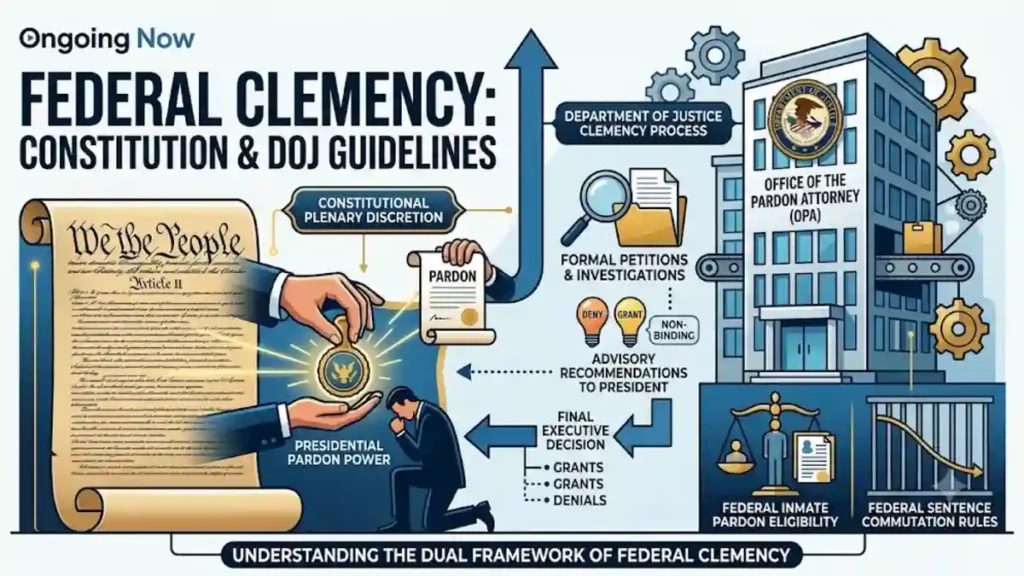
Chief Justice Roberts rejected the carriers’ constitutional arguments by distinguishing the commission’s unique regulatory framework under the Communications Act. The majority opinion clarified that because the agency’s initial forfeiture orders are not automatically binding and must be enforced through a collection lawsuit if contested, the standard due process requirements are preserved. “The Commission’s factual findings are not conclusive,” Chief Justice Roberts wrote. “It thus does not offend the Constitution for the Commission to issue forfeiture orders without the involvement of a jury.”
Justice Clarence Thomas was the lone dissenting voice, expressing concern over the expanding scope of administrative agency powers. Justice Thomas argued that forcing companies to pay penalties under protest before seeking judicial review creates a practical barrier to exercising their constitutional rights. Despite the dissent, the ruling establishes a firm legal precedent, ensuring that federal oversight bodies maintain the operational capacity to penalize corporations that breach statutory consumer privacy protections.
Section 222 and the Mechanics of Subscriber Location Exposure
At the heart of the regulatory enforcement action is Section 222 of the Communications Act of 1934, which governs consumer proprietary network information compliance. The statute mandates that telecommunications carriers protect the confidentiality of data obtained solely by virtue of the customer-carrier relationship. This data includes call duration, numbers dialed, and the precise physical location of an active or idle mobile device tracking against nearby network infrastructure.
Federal investigators discovered that carriers routinely bypassed these statutory protections by selling real-time geolocation logs to third-party entities known as location information aggregators. These aggregators subsequently resold access to downstream location-based service providers, commercial data brokers, and private investigators. The data broker aggregation cell logs collected did not rely on active device usage or GPS; instead, they captured the continuous background “pinging” of mobile devices attempting to maintain a connection with cellular base stations.
+-----------------------------------------------------------------------+
|                    THE COMMERCIAL DATA LOG PIPELINE                   |
+-----------------------------------------------------------------------+
|  [ Mobile Device ]  --> Continuous background pinging of cell tower   |
|         │                                                             |
|         ▼                                                             |
|  [ Wireless Carrier ] --> Logged as Customer Proprietary Network Info |
|         │                                                             |
|         ▼                                                             |
|  [ Data Aggregator ] --> Bulk acquisition via commercial contracts    |
|         │                                                             |
|         ▼                                                             |
|  [ Downstream Buyer ] --> Available for commercial search platforms    |
+-----------------------------------------------------------------------+
The commission’s formal forfeiture orders noted that wireless carriers effectively tried to offload their statutory obligation to obtain customer consent onto these downstream commercial buyers. Because the downstream entities operated without direct consumer oversight, tens of millions of mobile users were subjected to location tracking without their knowledge or explicit opt-in authorization. The agency classified this structural failure as a severe telecommunications act cpni data breach, noting that each day an unauthorized party retained access to consumer logs constituted a separate, continuing violation of federal law.
Federal Penalties Dissected Across Major Mobile Providers
The financial penalties affirmed by the Supreme Court reflect the varying scale of data exposure documented by federal regulators across the major wireless networks. T-Mobile faced the largest single penalty, followed by significant assessments against AT&T and Verizon Wireless.
Clean Newsroom Grid: FCC Forfeiture Breakdown
| Carrier Entity | Assessed Federal Fine | Primary Regulatory Violation Listed |
| T-Mobile USA | $80.1 Million | Failure to safeguard location CPNI; reliance on unverified third-party consent mechanisms. |
| AT&T Mobility | $57.3 Million | Unauthorized disclosure of cell-site location data to commercial aggregators. |
| Verizon Wireless | $46.9 Million | Inadequate administrative safeguards protecting real-time subscriber tracking logs. |
| Sprint Spectrum (Acquired by T-Mobile) | $12.2 Million | Historical location data exposure via legacy location-based service programs. |
Note on Data Currency: The listed fines represent the baseline statutory forfeitures finalized by the commission in 24 Corporate Enforcement Records. All four carriers paid the assessments under protest to clear administrative hurdles prior to launching their respective federal court appeals.
Following the initial 2024 orders, the carriers mounted distinct legal challenges in various regional appellate circuits, resulting in conflicting rulings. The Second Circuit Court of Appeals in New York ruled in favor of federal regulators regarding Verizon’s petition, while the Fifth Circuit Court of Appeals in New Orleans sided with AT&T, finding the internal process unconstitutional. The Supreme Court’s 2026 decision effectively resolves this circuit split, reversing the Fifth Circuit’s decision and solidifying the federal government’s authority to collect and retain the combined penalties.
Legislative Background and Congressional Investigations into Network Tracking
The federal crackdown on unauthorized cellular network location sharing laws gained significant momentum following a congressional investigation led by Senator Ron Wyden (D-OR). The inquiry revealed that a government contractor purchasing bulk commercial tracking data had established a digital portal. This portal allowed law enforcement agencies to track nearly any mobile device across the United States without a judicial warrant or formal court order, bypassing standard constitutional protections.
“No one who signed up for a cell plan thought they were giving permission for their phone company to sell a detailed record of their movements to anyone with a credit card,” Senator Wyden stated following the disclosure of the tracking network. The investigation exposed systemic flaws in how the telecom industry interpreted fcc mobile tracking consent rules, demonstrating that commercial contracts were regularly prioritized over statutory privacy mandates.
In response to these findings, the commission updated its administrative guidelines to clarify that subscriber location data remains protected under federal law regardless of whether a device is making an active call. The agency emphasized that network operators have an absolute obligation to maintain explicit, verifiable customer consent before allowing any external entity to access cell tower connection history.
Analysis: Why the Administrative Enforcement Model Matters for Consumer Privacy
The Supreme Court’s decision carries broad implications for the enforcement of consumer privacy protections across the entire technology and telecommunications sectors. Had the court ruled that the commission could not issue fines internally without a jury trial, federal regulatory agencies would have faced severe operational slowdowns, forced to litigate every corporate penalty within an already strained federal court system.
By validating the administrative process, the ruling preserves a critical tool for enforcing fcc mobile tracking consent rules. Corporate compliance officers must now assume that data management failures will result in enforceable financial penalties that cannot be easily delayed through protracted constitutional litigation. Legal experts anticipate this outcome will prompt a structural shift in how telecommunications companies handle user location records, forcing a re-evaluation of data monetization strategies.
+-----------------------------------------------------------------------+
|                    REGULATORY COMPLIANCE ATTRIBUTES                   |
+-----------------------------------------------------------------------+
| Affirmative Opt-In: Required prior to any third-party data transfers  |
| Downstream Auditing: Operators must actively verify buyer compliance  |
| Breach Notification: Mandatory reporting to FBI and Secret Service    |
| Retention Window: Records of authorized access must be held 2 years   |
+-----------------------------------------------------------------------+
Furthermore, the decision clarifies that carriers cannot legally delegate their privacy obligations to third parties via private contracts. If a wireless provider fails to verify that valid customer consent has been obtained before transferring data, the provider remains directly liable for the resulting statutory violation. This clear boundary is expected to significantly reduce the volume of bulk location data available to commercial aggregators.
Domestic Impact: How Corporate Data Exposure Reshapes Community Security
The commercial availability of bulk cell tower data directly affects public safety, community security, and individual privacy. When corporate network operators fail to secure customer records, the resulting data pools can be exploited by unauthorized entities, creating distinct risks for vulnerable populations, law enforcement personnel, and corporate workers.
Refined location logs can reveal highly sensitive patterns of life, including a person’s home address, workplace, medical appointments, and daily routines. Privacy advocates have repeatedly warned that when data brokers aggregate these logs, the information can be accessed by bad actors to circumvent standard legal protections. For instance, domestic abusers and stalkers have historically utilized commercial location services to track victims, highlighting the real-world dangers of unregulated data commercialization.
       [ Cell Site Pings ] ---> [ Pattern of Life Mapping ]
                                        │
       ┌────────────────────────────────┴────────────────────────┐
       ▼                                                         ▼
[ Personal Security Risks ]                         [ Institutional Vulnerabilities ]
- Stalking and domestic abuse                       - Exposure of undercover operations
- Target identification for theft                   - Tracking of sensitive federal staff
- Compromised individual movements                  - Corporate espionage targeting tech sites
The societal impact also extends to national security and institutional integrity. Public records indicate that tracking aggregators have inadvertently exposed the movements of military personnel and plainclothes law enforcement officers tracking criminal networks. By affirming the federal government’s authority to impose heavy financial penalties, the Supreme Court’s ruling establishes a stronger regulatory shield, protecting communities from the unchecked collection and sale of their physical movements.
Technical Safeguards: How Consumers Can Limit Mobile Device Tracking
While the Supreme Court’s ruling strengthens federal regulatory oversight, it does not completely eliminate the collection of location data required for standard network operations. To maintain phone service, a mobile device must constantly connect to nearby cell towers, meaning network operators will always possess basic location logs. However, consumers can take explicit steps to block phone location tracking from extending into commercial data markets and app ecosystems.
Practical Steps to Protect Device Patterns of Life
Access Carrier Privacy Dashboards: Mobile users should log into their network provider’s online account portal to review CPNI settings. Consumers must explicitly opt out mobile carrier tracking and revoke permissions allowing the sale or sharing of data for “marketing” or “external service” purposes.
Audit Application Location Access: Modern mobile operating systems allow users to restrict location access on an app-by-app basis. Setting permissions to “Never” or “Only While Using the App” prevents third-party software from gathering GPS data and uploading it to commercial data brokers.
Disable Unnecessary Wireless Features: Turning off Bluetooth and Wi-Fi scanning when public networks are not in use prevents local beacons from tracking a device’s movements within commercial spaces and retail environments.
Utilize Privacy-Focused Network Routing: Implementing an encrypted Virtual Private Network (VPN) helps mask data traffic from local network operators, though it does not hide the baseline cell tower connections required for voice calls.
While individual configurations provide an important layer of defense, federal regulators maintain that individual consumer action cannot replace systemic corporate compliance. The commission continues to mandate that network operators implement strict internal controls, ensuring that personal data is protected by default rather than requiring consumers to navigate complex opt-out menus.
Stay sharp with Ongoing Now!
Source and Data Limitations: This policy analysis is based directly on official federal legal records, including the 8-1 Supreme Court opinion in Federal Communications Commission v. AT&T Mobility LLC, et al. issued on June 4, 2026. Additional primary source material includes the Federal Communications Commission Forfeiture Orders from April 2024, statutory text from Section 222 of the Communications Act of 1934, and the public record of the Senate Commerce Committee investigation into location data aggregators. This reporting excludes all unverified third-party speculations regarding corporate financial projections, pending internal carrier restructuring, or unconfirmed settlement discussions. All information presented reflects verified institutional facts up to the current date.