D.C. Circuit Court Appeals Ruling: Why Asylum Law Won
Federal appeals court strikes down 212(f) proclamation, reaffirming asylum seeker rights 2026.
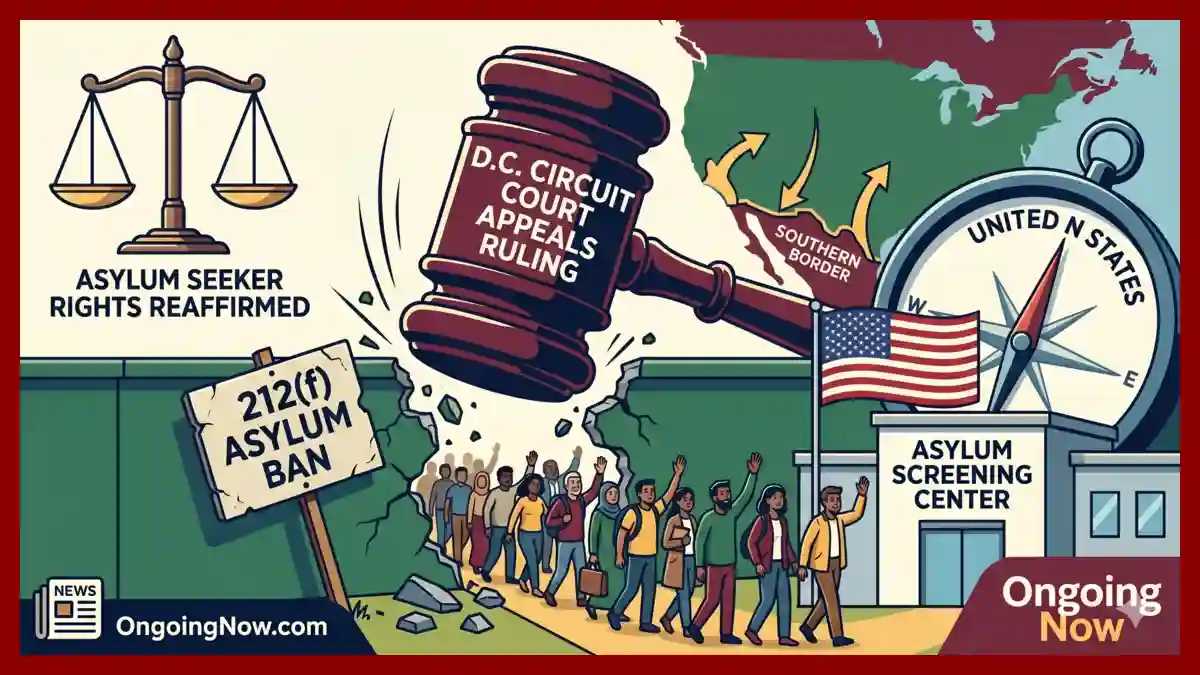
The D.C. Circuit Court appeals ruling issued on April 24, 2026, has struck down a central pillar of executive border policy, declaring the 212(f) proclamation legal challenge successful for advocates. In the case of RAICES v Noem, the court held that the administration’s attempt to halt asylum processing exceeded presidential authority. This significant ACLU immigration lawsuit updates 2026 report confirms that the Trump asylum ban struck down by the court will immediately impact federal court immigration decisions regarding the border closure legal fight. The 2026 immigration litigation highlights a critical tension between executive enforcement and asylum seeker rights 2026, marking a pivotal moment in the ongoing Trump administration border policy lawsuits.
The D.C. Circuit Court Appeals Ruling
The United States Court of Appeals for the District of Columbia Circuit ruled that the executive branch cannot unilaterally override the asylum procedures established by Congress. The court’s decision focused on the administration’s use of Section 212(f) of the Immigration and Nationality Act (INA), which provides the president broad authority to suspend the entry of noncitizens. However, the three-judge panel determined that this authority does not grant the power to “summarily deport” individuals without providing the screening interviews mandated by existing federal law.
The ruling specifically addressed the “Day 1” proclamation of the current administration, which had effectively closed the southern border to asylum seekers. The court found that the administration’s justification—citing a national “invasion”—did not provide a legal basis to subvert statutory asylum protections. By affirming the lower court’s decision, the D.C. Circuit reaffirmed that presidential proclamations must remain consistent with the legislative framework of the INA.
RAICES v Noem Case Summary
The litigation, titled RAICES v Noem (and often referenced in related filings as RAICES v Mullin), was brought by a coalition of advocacy groups, including the American Civil Liberties Union (ACLU), the National Immigrant Justice Center (NIJC), and the Refugee and Immigrant Center for Education and Legal Services (RAICES). The plaintiffs argued that the administration’s near-total shutdown of asylum processing at the southern border was both a violation of domestic law and a breach of international treaty obligations.
The case centered on whether the president could use the 212(f) “suspension of entry” power to create a “permanent bar” to asylum. The court’s analysis suggests that while the president can restrict entry, those who are already on U.S. soil or at a port of entry must be afforded the legal process defined by Congress. This includes the right to a “credible fear” interview to determine if they face persecution or torture in their home countries.
212(f) Proclamation Legal Challenge: Key Legal Findings
The court’s 62-page opinion provided a detailed breakdown of why the executive proclamation failed the test of statutory compliance. The judges noted that the administration’s policy did not merely manage the border but fundamentally altered the legal rights of individuals seeking protection.
| Legal Issue | Court Determination | Statutory Basis |
| Executive Overreach | President cannot override specific procedures passed by Congress. | Separation of Powers Doctrine |
| Asylum Eligibility | Any noncitizen “physically present” may apply for asylum. | 8 U.S.C. § 1158 |
| 212(f) Scope | Suspension of entry does not equate to a suspension of asylum law. | 8 U.S.C. § 1182(f) |
| “Invasion” Clause | Term cannot be used as a legal pretext to bypass domestic statutes. | U.S. Constitution Art. IV |
The court emphasized that for more than 40 years, the government’s own stance held that Section 212(f) did not affect a noncitizen’s ability to apply for asylum once they reached U.S. territory. The 2026 ruling brings the executive branch back in line with this historical interpretation.
Analysis: Why the Trump Asylum Ban Struck Down Matters
This decision is viewed by legal analysts as a major rebuke to the administration’s “zero-tolerance” approach to border management. By ruling the Trump asylum ban struck down, the D.C. Circuit has essentially restored the legal status quo that existed prior to the 2025 executive orders. This means the Department of Homeland Security (DHS) must immediately resume processing asylum claims for those arriving at both official ports of entry and between those ports.
Furthermore, the court’s rejection of the “invasion” rhetoric is a significant legal milestone. The ruling clarifies that migration, regardless of scale, does not constitute a military invasion under the Constitution that would allow the executive to suspend the “Rule of Law.” This finding may serve as a barrier against future executive attempts to invoke emergency powers to bypass civil immigration statutes.
Public and Human Rights Impact
The asylum seeker rights 2026 landscape has been dramatically reshaped by this ruling. For the thousands of families currently waiting in hazardous conditions in northern Mexico, the decision offers a path back to the legal system. Advocacy groups have reported that the prior policy forced children and survivors of human trafficking into dangerous situations without any legal recourse.
Lee Gelernt, the lead ACLU attorney who argued the appeal, stated that the decision “puts an end to the inhumane policy of sending people back to horrific danger without even a hearing.” The ruling ensures that the United States continues to uphold its commitment to non-refoulement—the international legal principle that prohibits returning a refugee to a country where they face serious threats to their life or freedom.
Border Closure Legal Fight: Looking Ahead
While this is a victory for proponents of asylum seeker rights 2026, the border closure legal fight is likely to continue. The administration is expected to seek a stay of the ruling or appeal the case to the U.S. Supreme Court. However, the D.C. Circuit’s decision is remarkably thorough, addressing both the procedural and constitutional arguments raised by the government.
The ongoing 2026 immigration litigation also includes separate challenges to “metering” policies and the use of mass detention. The RAICES v Noem ruling sets a powerful precedent that will likely influence these concurrent federal court immigration decisions. As the legal community awaits the government’s next move, the immediate focus remains on the implementation of the court’s order at the southern border.
Comparative Legal Significance
The April 2026 ruling draws parallels to previous legal battles during the first Trump administration, such as those involving the “Remain in Mexico” policy and the initial 2018 asylum ban. In those instances, courts similarly found that executive authority under Section 212(f) is not a “blank check” to rewrite the INA.
The 2026 decision is distinct, however, because it addresses an even broader attempt to shut down the asylum system entirely. By finding that the president cannot use a “pretext” of an invasion to ignore life-or-death rights, the D.C. Circuit has reinforced the judiciary’s role as a check on executive power during times of perceived national crisis.
What the Ruling Means for Future Policy
This ruling serves as a reminder that major shifts in immigration policy must come through the legislative process rather than executive fiat. While the administration may disagree with the current asylum laws, the court has made it clear that those laws remain the “supreme law of the land” until Congress chooses to change them.
For the legal system, this case underscores the importance of the Administrative Procedure Act (APA) and the requirement that the government provide a reasoned, fact-based justification for its actions. The court’s dismissal of the administration’s “invasion” claims suggests a lower tolerance for political rhetoric in federal courtrooms.
“The court made clear that the president does not have the unilateral power to wipe away all of the asylum laws enacted by Congress.” — Lee Gelernt, ACLU Attorney
By the Numbers: Border Litigation 2026
62: Pages in the D.C. Circuit’s unanimous or majority opinion.
15: Months the challenged proclamation was in effect before this ruling.
40+: Years of legal precedent cited regarding Section 212(f) limitations.
10,000s: Estimated number of asylum seekers affected by the immediate resumption of processing.
This decision is a cornerstone of 2026 immigration litigation, signaling that the courts will continue to play a decisive role in defining the limits of executive power at the border.
This is informational only and not legal advice. Consult a licensed attorney for your situation.
Stay sharp with Ongoing Now!
Source and Data Limitations: This article is based on the D.C. Circuit Court of Appeals ruling issued on April 24, 2026, in the case of RAICES v. Noem (No. 25-5120). Sources include official press releases from the ACLU, the National Immigrant Justice Center (NIJC), and the Center for Gender & Refugee Studies (CGRS). Data regarding the 212(f) proclamation and the “invasion” pretext are derived from court documents and verified legal summaries. This report excludes unverified claims regarding future Supreme Court outcomes and speculative political commentary. All legal interpretations are based on the written opinion of the court and do not constitute personal legal advice.