NASA Sets Artemis II Liftoff Schedule for April 1
NASA prepares to launch the Artemis II mission on a 10-day lunar journey with four astronauts.
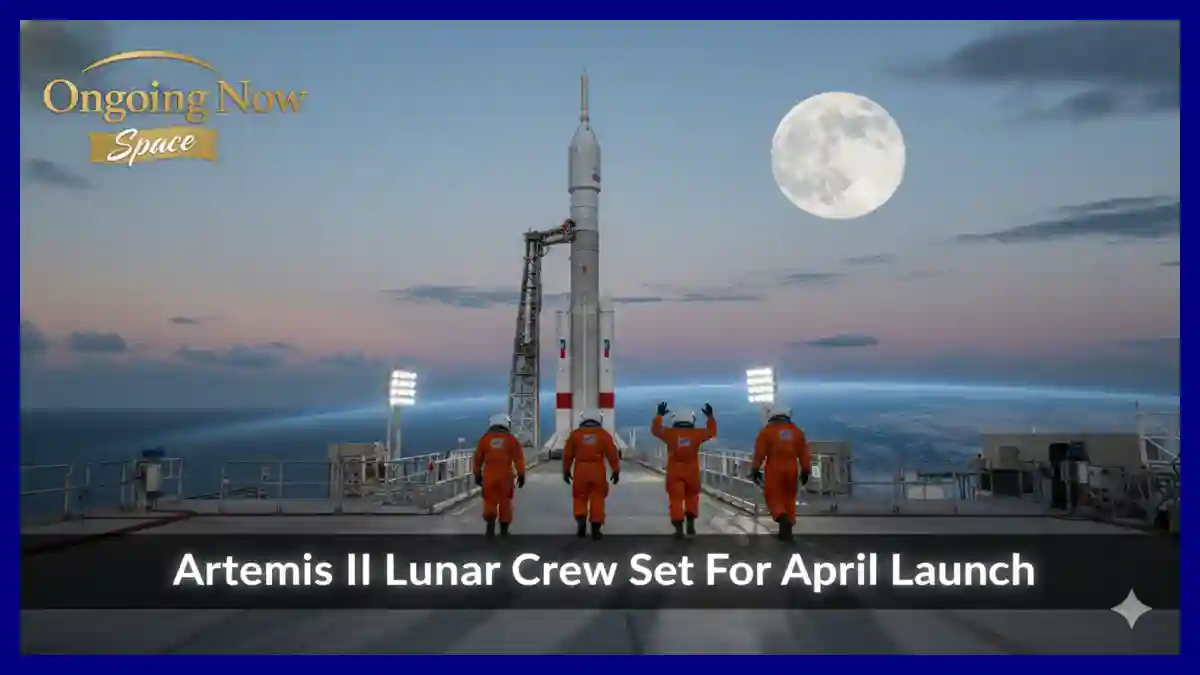
The Artemis II liftoff schedule is currently centered on a launch window opening at 6:24 p.m. EDT on Wednesday, April 1, 2026. This mission represents the first crewed flight of the Space Launch System (SLS) rocket and the Orion spacecraft, marking a pivotal step in the NASA Moon mission countdown. The agency is targeting a 10-day mission duration that will send a crew of four on a lunar flyby, the first such flight since the Apollo era. Currently, the Orion spacecraft launch status is confirmed as “Go” for the primary window, with Kennedy Space Center LC-39B updates indicating that ground systems are fully prepared. The SLS rocket launch window is supported by an 80% favorable space launch weather forecast Florida. NASA will provide a live stream April 2026 starting at 12:50 p.m. EDT on launch day to document the crewed lunar flyby date and subsequent orbital maneuvers.
Countdown Milestones at Kennedy Space Center
The final phase of the NASA Moon mission countdown officially commenced at 4:44 p.m. EDT on Monday, March 30. Engineers at the Rocco Petrone Launch Control Center have spent the intervening 48 hours powering up flight hardware and verifying communication links between the Orion spacecraft and the Deep Space Network. At Launch Complex 39B, technical teams have completed the preparation of the sound suppression system, which will deploy a massive water deluge to protect the SLS rocket from acoustic energy during ignition.
The “Go/No-Go” poll for tanking, led by Launch Director Charlie Blackwell-Thompson, is the next critical milestone. This process involves loading approximately 700,000 gallons of super-cooled liquid oxygen and liquid hydrogen into the SLS core stage and the interim cryogenic propulsion stage. Given the precision required for cryogenic operations, any technical deviation during this window could lead to a tactical scrub.
Crew Readiness and Mission Objectives
The Artemis II crew—Commander Reid Wiseman, Pilot Victor Glover, Mission Specialist Christina Koch (NASA), and Mission Specialist Jeremy Hansen (CSA)—remains in quarantine at the Neil A. Armstrong Operations and Checkout Building. Their final pre-launch preparations include medical evaluations and specialized nutrition plans designed for the high-G forces of ascent.
This 10-day mission is not a lunar landing but a comprehensive flight test of the Orion spacecraft life support systems. The crew will perform a “free-return trajectory,” using the Moon’s gravity to swing the spacecraft back toward Earth without a major engine burn. This trajectory is similar to the one utilized during the Apollo 13 mission to ensure a safe return in the event of system failures.
Key Mission Parameters
| Parameter | Value/Target |
| Launch Window | April 1, 2026 (6:24 p.m. – 8:24 p.m. EDT) |
| Mission Duration | Approximately 10 Days |
| Maximum Distance from Earth | 248,655 Miles (400,171 km) |
| Lunar Flyby Altitude | 4,700 Miles (7,600 km) |
| Reentry Speed | ~25,000 mph (40,000 km/h) |
| Primary Landing Site | Pacific Ocean (U.S. Navy Recovery) |
Technical Analysis of the SLS Rocket Launch Window
The SLS rocket launch window is constrained by the relative positions of the Earth and Moon to ensure the Orion spacecraft can enter the correct lunar flyby path. Unlike uncrewed missions, the Artemis II liftoff schedule must also account for solar illumination during the Pacific Ocean splashdown, ensuring recovery teams have optimal visibility for the U.S. Navy’s San Antonio-class transport dock.
If the April 1 attempt is postponed, NASA has identified backup windows daily through April 6. A subsequent window would not open until late April, specifically April 30, due to the “skip reentry” profile Orion must execute. This maneuver allows the capsule to dip into the atmosphere, skip back out briefly to shed heat and velocity, and then make a final descent to a precise landing zone.
Weather Constraints and Environmental Factors
The current space launch weather forecast Florida indicates an 80% chance of favorable conditions at the opening of the window. Meteorologists from the U.S. Space Force’s 45th Weather Squadron are primarily monitoring the Cumulus Cloud Rule and the Thick Cloud Rule. These regulations prevent launches through clouds that could trigger “triggered lightning”—an electrical discharge caused by the rocket’s plume passing through a high-electric-field environment.
Ground-level winds at Kennedy Space Center are another primary concern. The SLS rocket has a peak liftoff wind limit between 29 and 39 knots, depending on the specific wind direction and the aerodynamic load on the vehicle’s structural joints. While the forecast is optimistic, isolated sea breeze showers common to the Florida coast in April remain a variable that could impact the final minutes of the countdown.
Comparative Impact and Historical Context
Artemis II marks the first time humans will leave low-Earth orbit (LEO) since the Apollo 17 mission in December 1972. While the Apollo missions focused on landing as quickly as possible, the Artemis program is designed for long-term sustainability. The technical achievements of this mission—specifically the testing of the high-bandwidth laser communication system—are intended to build the infrastructure required for the Artemis III lunar landing, currently targeted for 2028.
| Mission | Year | Crew Size | Maximum Distance (Miles) |
| Apollo 13 | 1970 | 3 | 248,655 |
| Artemis I | 2022 | 0 | 268,563 |
| Artemis II | 2026 | 4 | ~248,655 |
The mission is also notable for its demographic milestones. Victor Glover will be the first person of color to travel to the Moon’s vicinity, Christina Koch will be the first woman, and Jeremy Hansen will be the first non-U.S. citizen to depart LEO. These “firsts” represent a shift toward international and inclusive cooperation in deep space exploration.
Why This Matters: The Path to Artemis III
The data gathered during the Artemis II mission duration is critical for validating the Orion spacecraft’s heat shield performance. After the uncrewed Artemis I flight in 2022, NASA engineers noted unexpected charring patterns on the Avcoat thermal protection system. Extensive testing throughout 2024 and 2025 confirmed that the shield remains safe for crewed flight, but the Artemis II data will provide the definitive proof needed for the lunar landing phase of the program.
Beyond technical validation, this mission serves as a “shakedown” for the Ground Exploration Systems. The successful execution of the countdown, tanking, and launch from Pad 39B demonstrates that the Kennedy Space Center is capable of maintaining a regular cadence of heavy-lift launches. This operational readiness is essential for the eventual construction of the Lunar Gateway—a planned small space station in orbit around the Moon.
Stay sharp with Ongoing Now!
Source and Data Limitations: This report is based on official NASA mission briefings, Kennedy Space Center countdown status reports (March 30–April 1, 2026), and data from the U.S. Space Force 45th Weather Squadron. Information regarding the Artemis II liftoff schedule and Orion spacecraft launch status reflects the most current telemetry and agency statements. This article excludes unverified social media claims regarding potential technical anomalies not confirmed by NASA’s Mission Management Team. All orbital parameters and historical comparisons are sourced from established NASA and CSA mission archives. Future mission dates (e.g., Artemis III) are based on the current official manifest and remain subject to the successful completion of the Artemis II flight test.