The Fallout of Health Insurance Settlements: What to Know About Your BCBS Payout Estimation 2026
Analyzing the timing, tax implications, and consumer behavior shifts surrounding national health insurance settlements.
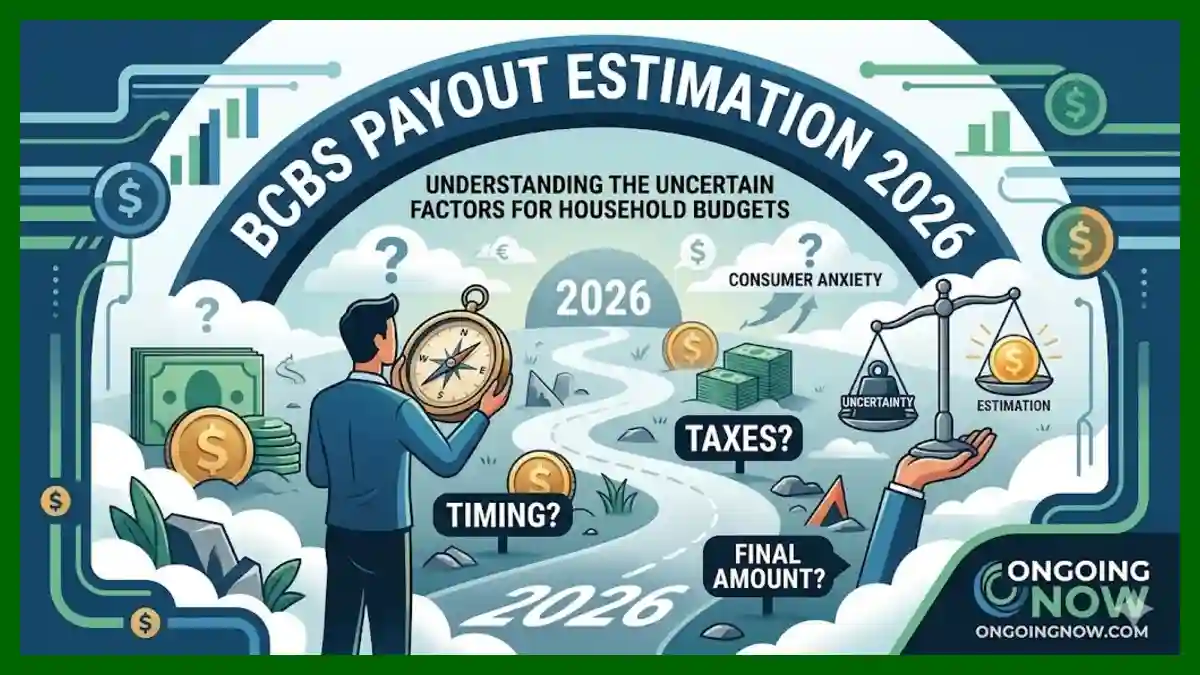
For many households, the arrival of a notification regarding a class action settlement feels like a sudden variable in an otherwise tightly controlled budget. In 2026, as families navigate the complexities of evolving healthcare costs and persistent inflationary pressures, the anticipation of a BCBS payout estimation 2026 has become a point of significant discussion for millions of policyholders. This interest is not merely about the dollar amount, but about how such non-recurring income fits into a modern financial strategy focused on stability and long-term resilience.
The Blue Cross Blue Shield (BCBS) antitrust settlement represents one of the largest consumer distributions in recent history, impacting individuals and businesses alike. As the legal proceedings move through the final stages of administration and potential appeals, the focus for the average consumer has shifted from eligibility to the practicalities of timing and impact. Understanding the BCBS payout estimation requires looking at the intersection of legal timelines, historical settlement patterns, and the way modern households manage unexpected windfalls.
The Reality of Settlement Timelines in 2026
The journey from filing a claim to receiving a physical check or digital deposit is rarely a swift one. For those monitoring a BCBS payout estimation 2026, the primary factor in timing remains the judicial system’s pace and the sheer scale of the class involved. Unlike smaller, localized settlements, national cases involving millions of claimants require extensive verification processes to ensure that the distribution is equitable and accurate.
Recent data from the Administrative Office of the U.S. Courts suggests that complex class actions often face “distribution lag,” where the time between a final fairness hearing and the actual mailing of checks can span several years. For BCBS claimants, 2026 represents a critical window where many anticipate the resolution of administrative audits. This period of waiting often shapes consumer behavior, as individuals balance the hope of a payout with the necessity of maintaining their current financial obligations.
Why Verification Takes Time
The complexity of health insurance records contributes significantly to the timeline. Third-party administrators must reconcile decades of policy data across various independent BCBS entities. This ensures that the BCBS payout estimation 2026 reflects actual premiums paid by the individuals rather than a flat, arbitrary figure. For the consumer, this means that patience is a prerequisite for accuracy in the final disbursement.
Factors Influencing a BCBS Payout Estimation 2026
One of the most frequent questions in personal finance circles involves the specific value of a settlement check. When exploring a BCBS payout estimation 2026, it is essential to consider the “pro-rata” nature of these distributions. Because the total settlement fund is a fixed amount, the individual payout is determined by the total number of valid claims filed against that fund.
If a higher-than-expected number of policyholders submit valid claims, the amount per person naturally decreases. Conversely, if participation rates are lower, the individual shares may be more substantial. Financial analysts often point to the “dilution effect” in national settlements, where the broad eligibility criteria mean that while the total fund is in the billions, the individual BCBS payout estimation 2026 may be more modest for the average subscriber compared to a small-business owner who paid significantly higher premiums.
Historical Comparison of Settlement Scales
To provide context, one can look at previous large-scale consumer settlements. In many instances, the average class action check amount for general consumers tends to fall into a range that covers a few months of utility bills or a significant grocery trip, rather than a life-altering sum. Recognizing this helps consumers maintain a grounded perspective on their BCBS payout estimation 2026 and prevents the “lottery effect,” where one spends anticipated money before it arrives.
Budgeting for Class Action Money in a Volatile Economy
The way a household integrates a settlement check into their finances often reflects their broader economic health. In 2026, a “windfall mindset” is increasingly being replaced by a “stability mindset.” Rather than viewing a BCBS payout estimation 2026 as “fun money,” many consumers are looking at these funds as a way to bolster emergency savings or offset the rising costs of insurance premiums themselves.
Financial behaviorists note that when people receive unexpected payments, they often categorize them differently than regular salary—a concept known as mental accounting. However, in the current economic climate, there is a trend toward using these funds for “unseen” financial needs. This includes replenishing a high-yield savings account or making a one-time payment toward a high-interest debt, which provides a more lasting impact than immediate consumption.
The Consideration of Opportunity Cost
When evaluating a BCBS payout estimation 2026, thoughtful financial thinking involves the consideration of opportunity cost. If the payout is utilized for an immediate purchase, it loses the potential to earn interest or provide a safety net. For families dealing with the 2026 cost of living, even a modest settlement check can serve as a vital buffer against unexpected automotive repairs or medical co-pays that fall outside their standard monthly budget.
Tax Implications and BCBS Settlement Taxability
A critical but often overlooked aspect of receiving a settlement is the potential for tax liability. The question of BCBS settlement taxability depends largely on the nature of the original payments. Generally, the Internal Revenue Service (IRS) views settlements as taxable unless they are specifically for physical injury or sickness. Since the BCBS settlement stems from antitrust allegations regarding premiums, the tax treatment can be nuanced.
If a consumer paid their premiums with after-tax dollars (which is the case for most individual policyholders), the settlement might be viewed as a “purchase price adjustment” or a refund of overcharged costs. In these cases, the refund itself may not be taxable. However, for business owners who deducted their premium payments as a business expense, a BCBS payout estimation 2026 could be considered taxable income because it represents the recovery of a previously deducted amount.
Reporting Settlement Income to the IRS
It is vital for recipients to monitor their mail for Form 1099-MISC. The IRS requires settlement administrators to issue this form if a payment exceeds $600. Even if a form is not received, the taxpayer is responsible for determining if the BCBS payout estimation 2026 constitutes reportable income. Misunderstanding these rules can lead to unexpected tax bills or interest penalties, reinforcing the importance of consulting with a tax professional once the funds are actually received.
Consumer Behavior and the “Settlement Effect”
The anticipation of a BCBS payout estimation 2026 reveals a lot about modern consumer psychology. There is an observed trend where the mere knowledge of an upcoming payment changes spending habits months in advance. This “settlement effect” can lead to increased confidence, which, while positive for the economy, can be risky for individual liquidity if the payout is delayed or is smaller than anticipated.
In 2026, consumer advocacy groups have noted that more individuals are using digital tools to track their claims. This increased transparency allows for better planning, but it also requires a level of digital literacy to avoid phishing scams. Scammers often capitalize on the news of a BCBS payout estimation 2026 by sending fraudulent emails asking for “verification fees” or bank details. A key financial consideration is that legitimate settlement administrators will never ask for payment to release a check.
Shifting Priorities Across Demographics
The impact of a settlement check varies by demographic. For retirees on a fixed income, a BCBS payout estimation 2026 might represent a welcome supplement to Social Security. For younger families, it may be the catalyst to finally start a dedicated 529 college savings plan. Observing these patterns shows that while the settlement is a single legal event, its financial life is lived in millions of different ways across the country.
Why This Matters: The Broader Financial Context
The BCBS settlement is more than just a legal resolution; it is a reflection of the ongoing tension between large-scale institutional structures and individual consumer costs. As we move through 2026, the focus on a BCBS payout estimation 2026 highlights a growing awareness among the public regarding their rights as consumers in the healthcare marketplace.
What matters most for the average reader is not the specific date the check arrives, but the awareness of how such events impact their overall financial picture. A settlement check is a rare occurrence, and treating it with the same rigor as a paycheck or a tax refund ensures that it serves its purpose: as a recovery of costs that can help fortify a household’s financial future.
Key Takeaways
Timeline Awareness: A BCBS payout estimation 2026 is subject to legal and administrative delays; funds should not be considered “guaranteed” until they are in hand.
Pro-Rata Realities: Payout amounts are determined by the total number of claimants and the individual’s history of premium payments.
Tax Considerations: The taxability of a settlement depends on whether the original premiums were deducted; businesses and individuals face different reporting requirements.
Scam Prevention: Legitimate payouts do not require upfront fees; consumers should rely on official settlement websites for updates.
Strategic Use: Modern behavior trends suggest using settlement windfalls for emergency funds or debt reduction rather than immediate discretionary spending.
The arrival of a settlement check is a moment for recalibration. By understanding the factors behind a BCBS payout estimation 2026, consumers can move from passive waiting to active, informed financial management.
This is for informational purposes only and not personalized financial advice. Consult a licensed professional for your specific situation.
Stay sharp with Ongoing Now!
Source and Data Limitations: This article is based on publicly available legal filings from the BCBS Antitrust Settlement (In re: Blue Cross Blue Shield Antitrust Litigation), historical class action distribution data from the U.S. Federal Judiciary, and general IRS guidelines regarding settlement taxability. Payout estimations are analytical projections and not guaranteed figures. Administrative timelines are subject to change based on court orders, appeals, and verification complexities. Information regarding consumer behavior is derived from established personal finance psychological principles and observed economic trends as of 2026.