Tricare Prime vs Select 2026: New Costs and Rules
Updated premium rates, pharmacy copayments, and benefit regulations for the 2026 Tricare plan year.
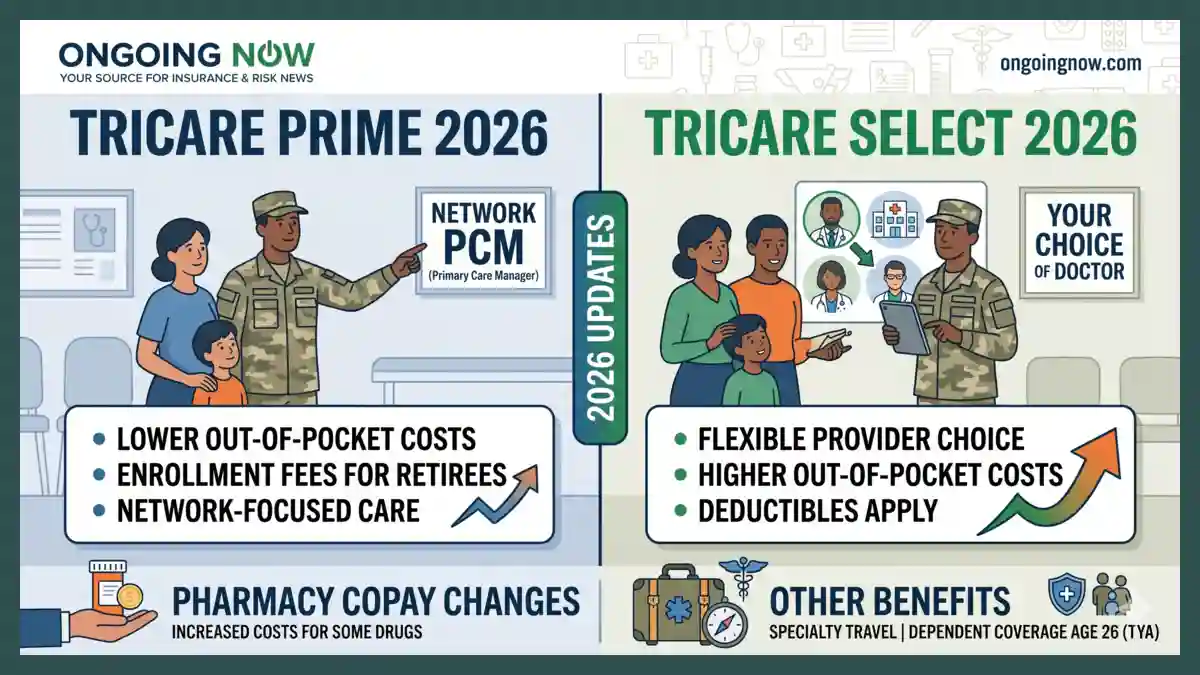
The Defense Health Agency (DHA) has finalized the Tricare Prime vs Select 2026 cost structures, introducing adjusted enrollment fees, pharmacy copayments, and specific prior authorization requirements for high-demand medications. These updates, effective January 1, 2026, reflect statutory adjustments and the evolving landscape of military medical benefit updates. Key changes include a revised fee schedule for Group A and Group B retirees, a streamlined Tricare specialty care travel benefit, and the maintenance of SGLI premium rates 2026 at established levels.
Furthermore, the Tricare open enrollment dates 2026—running from November 10 to December 9, 2025—remain the primary window for beneficiaries to transition between Prime and Select. While military insurance for dependents age 26 continues to be managed under the premium-based Tricare Young Adult (TYA) program, the DHA has tightened clinical criteria for Tricare weight loss drug coverage, particularly for GLP-1 agonists. For Navy veterans and other retired personnel, understanding the military health insurance cost increase is essential for maintaining comprehensive coverage without unexpected out-of-pocket expenses.
Regulatory Framework for 2026 Military Health Benefits
Military health benefits are governed by federal law and managed by the Defense Health Agency (DHA), a joint integrated combat support agency that enables the Army, Navy, and Air Force medical services. The National Association of Insurance Commissioners (NAIC) often monitors these federal shifts as they influence the broader health insurance market, though Tricare operates under Title 10 of the U.S. Code.
For the 2026 calendar year, the DHA has emphasized fiscal sustainability. This is evidenced by the Tricare pharmacy copay changes, which apply to most beneficiaries except active-duty service members (ADSMs). The Department of Defense (DoD) and the Department of Veterans Affairs (VA) coordinate to ensure that health insurance for Navy veterans and other branches integrates seamlessly between active service and retirement.
Tricare Prime vs Select 2026: Cost and Fee Analysis
The distinction between Tricare Prime (a managed care option) and Tricare Select (a self-managed, preferred provider organization option) remains centered on the trade-off between lower out-of-pocket costs and provider flexibility. In 2026, military health insurance cost increase trends are most visible in the enrollment fees for retirees and their families.
2026 Enrollment Fees and Deductibles
The following table outlines the finalized enrollment fees for retirees and their family members, categorized by the sponsor’s initial enlistment date (Group A vs. Group B).
| Plan Type | Group A (Sponsor enlisted before Jan 1, 2018) | Group B (Sponsor enlisted on/after Jan 1, 2018) |
| Tricare Prime (Individual) | $391.92 / year | $471.00 / year |
| Tricare Prime (Family) | $783.84 / year | $942.00 / year |
| Tricare Select (Individual) | $186.96 / year | $594.96 / year |
| Tricare Select (Family) | $375.00 / year | $1,191.00 / year |
| Catastrophic Cap (Retirees) | $3,000.00 / year | $4,381.00 / year (Prime) / $4,635.00 (Select) |
Note: Active-duty family members (ADFMs) pay $0 in enrollment fees for both Prime and Select.
Tricare Pharmacy Copay Changes
Prescription drug costs are a significant component of the 2026 updates. Most beneficiaries will see a slight increase in copays at retail network pharmacies and through the Tricare Home Delivery (mail-order) system.
Generic (Tier 1): $16 (Retail) / $14 (Mail-order)
Brand-Name (Tier 2): $48 (Retail) / $44 (Mail-order)
Non-formulary (Tier 3): $85 (Retail) / $85 (Mail-order)
Weight Loss Medications and Specialty Care Adjustments
A major point of clinical focus for 2026 is Tricare weight loss drug coverage. As medications like Wegovy and Mounjaro (GLP-1 agonists) gain popularity, the DHA has implemented a rigorous prior authorization process. Coverage is generally limited to patients with a Body Mass Index (BMI) of 30 or higher, or 27 with at least one weight-related comorbidity such as hypertension or Type 2 diabetes.
The Tricare Specialty Care Travel Benefit
For beneficiaries living in remote areas, the Tricare specialty care travel benefit remains a critical safety net. If a Prime enrollee is referred to a specialist more than 100 miles (one way) from their primary care manager’s office, and no other suitable specialist is available closer, they may be eligible for reimbursement of travel expenses. This benefit also extends to certain retirees with combat-related disabilities who are seeking care for those specific conditions.
“Our mission covers the full array of military and dependent health care, and delivering for warfighters is the DHA’s primary objective,” stated Dr. David J. Smith, Deputy Director of the Defense Health Agency, during a recent leadership transition announcement.
Life Insurance and Survivor Benefits: SGLI Rates
While health insurance costs fluctuate, the SGLI premium rates 2026 have stabilized following the 2023 increase in maximum coverage. Servicemembers’ Group Life Insurance (SGLI) continues to offer up to $500,000 in coverage at a rate of $0.05 per $1,000 of insurance.
Monthly Premium for $500,000: $25.00
TSGLI (Traumatic Injury Protection): Add $1.00 monthly
Total Monthly Cost: $26.00
This stability provides a predictable baseline for financial planning among active-duty personnel and their dependents.
Dependents and Transitioning Veterans
A recurring concern for military families is military insurance for dependents age 26. Unlike the Affordable Care Act (ACA), which mandates coverage for adult children on a parent’s plan until age 26 at no extra “plan cost” beyond the family premium, Tricare requires a separate premium-based plan called Tricare Young Adult (TYA).
For 2026, the Tricare Young Adult-Prime monthly premium is $794, while the TYA-Select monthly premium is $348. This distinction is vital for Navy veterans and other retirees whose children are transitioning out of standard eligibility (age 21, or 23 if a full-time student).
Analysis: Why the 2026 Shifts Matter
The 2026 updates represent a shift toward value-based care and fiscal responsibility. By increasing pharmacy copays and tightening GLP-1 drug authorizations, the DHA aims to manage the rising costs of pharmaceuticals while maintaining low enrollment fees relative to the private sector.
What the Data Shows:
Data from recent CMS reports indicates that Marketplace enrollees in the civilian sector saw average out-of-pocket premium increases of $65 per month in 2026. In contrast, the military health insurance cost increase for Tricare Group A retirees remained significantly more modest, reflecting the federal commitment to subsidizing military healthcare.
Key Terms to Know
Group A: Sponsors who entered service before January 1, 2018.
Group B: Sponsors who entered service on or after January 1, 2018.
Prior Authorization: A requirement for a healthcare provider to obtain approval from Tricare before a specific service or drug is covered.
Catastrophic Cap: The maximum out-of-pocket amount a family pays for covered Tricare services per year.
Consumer Impact and Risk Mitigation
For the military community, these changes necessitate a proactive approach to the Tricare open enrollment dates 2026. Choosing between Prime and Select is no longer just a matter of provider choice, but a strategic financial decision. Prime offers lower out-of-pocket costs but requires referrals for specialty care. Select offers more freedom but comes with deductibles and higher cost-shares for outpatient visits.
For Navy veterans and retirees, the 2026 fee structure reinforces the importance of the catastrophic cap. Once this cap is reached, Tricare pays 100% of the allowable charge for all covered services for the remainder of the year. This remains one of the strongest consumer protections in the American insurance landscape.
Stay sharp with Ongoing Now!
Source and Data Limitations:
The data in this report is derived from the Defense Health Agency (DHA) 2026 Costs and Fees Fact Sheet (Updated February 2026), the TRICARE Manuals (Change 19, December 2025), and official releases from MyArmyBenefits. Figures regarding SGLI rates are sourced from the Department of Veterans Affairs (VA) life insurance schedules effective through 2026. Information on weight loss drug coverage reflects current DHA clinical policy as of April 2026. Limitations include potential mid-year legislative changes by Congress via the National Defense Authorization Act (NDAA), which can override existing fee schedules. This article is for informational purposes only and does not constitute personalized financial or insurance advice. Beneficiaries should consult their regional contractor (Humana Military, TriWest, or International SOS) for specific case determinations.