Professional Liability Insurance for Mapmakers: Why It Matters
How Professional Liability Insurance for Mapmakers and Legal Experts Protects Against High-Stakes Election Law Disputes
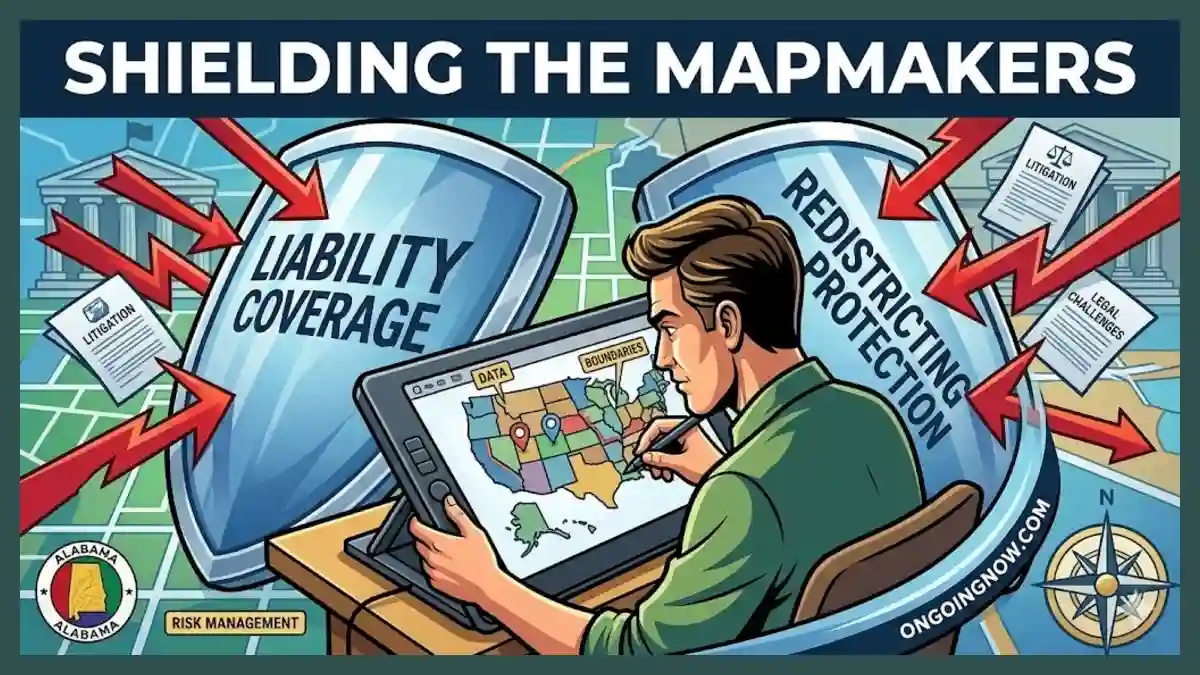
Professional liability insurance for mapmakers has emerged as a critical safeguard as states face increased legal scrutiny over electoral boundaries. This specialized coverage addresses the financial and professional risks associated with redistricting litigation coverage, providing a buffer for consultants, cartographers, and legal teams. In states like Alabama, where redistricting remains a focal point of legislative debate, legal malpractice insurance Alabama standards and public official liability insurance are essential components of a robust risk management strategy. This article examines the mechanics of these policies, the regulatory environment governing them, and the broader implications for those providing redistricting expertise.
Understanding Redistricting Litigation Coverage and Professional Liability
At its core, professional liability insurance for mapmakers—often categorized under Errors and Omissions (E&O) insurance—protects against claims of negligence, inaccuracy, or failure to perform professional duties. In the context of redistricting, these claims typically arise from allegations that a mapmaker’s data analysis or boundary drawing violated statutory requirements or constitutional standards. Unlike general liability, which covers physical injuries or property damage, E&O coverage focuses on the financial harm caused by professional errors.
For individuals serving as redistricting experts, redistricting litigation coverage is a subset of professional liability designed to handle the specific costs of defending a map in court. This includes the high fees for expert witnesses, data forensics, and specialized legal counsel. In many jurisdictions, the Alabama Division of Risk Management (DORM) or similar state-level bodies oversee the risk pooling for state-employed experts, but independent consultants must secure private E&O insurance for political consultants to remain compliant with contract requirements.
The scope of these policies often extends to “legal malpractice insurance Alabama” requirements for the attorneys who work alongside mapmakers. While Alabama law does not mandate legal malpractice insurance for all private practitioners, the Alabama State Bar’s Lawyer Referral Service requires members to maintain coverage of at least $100,000/$300,000. For firms involved in high-stakes redistricting cases, these limits are often significantly higher to account for the complexity of federal court challenges.
Key Terms in Political Risk and Mapmaking Insurance
The insurance landscape for political consulting is defined by several specific policy types and endorsements.
Errors and Omissions (E&O): The primary vehicle for lawsuit protection for map designers, covering defense costs and settlements related to technical errors in data modeling.
Public Official Liability Insurance: A policy typically held by state entities to protect legislators and staff from personal liability arising from official acts, including the approval of redistricting plans.
Duty to Defend: A policy provision where the insurer has the right and obligation to provide a legal defense for a claim, a crucial feature in redistricting litigation coverage.
Political Consulting Risk Coverage: A broader umbrella that may include cyber liability (to protect sensitive census and voter data) and general liability alongside professional components.
Regulatory Framework and the Alabama Insurance Landscape
The regulation of professional liability for redistricting experts is primarily managed at the state level. In Alabama, the Department of Insurance (ALDOI) oversees the licensing of carriers that provide Alabama insurance for legal fees and specialized E&O products. While the state does not have a specific “Redistricting Insurance Act,” the general statutes governing professional liability insurance apply to all experts hired by the state legislature.
According to the Alabama Division of Risk Management (DORM), the state provides certain liability protections for employees through the State Employee Liability Program. However, when the legislature hires outside redistricting experts, those individuals are typically required by contract to provide their own professional liability insurance for mapmakers. These contracts often specify a minimum “Rating” for the insurance carrier (e.g., A.M. Best rating of A- or higher) to ensure the insurer has the financial strength to pay out long-term litigation claims.
| Policy Type | Typical Coverage | Relevant Keyword |
| Professional Liability | Technical errors in map data | professional liability insurance for mapmakers |
| Legal Malpractice | Errors in legal strategy/filings | legal malpractice insurance Alabama |
| Public Official | Legislative decisions/votes | public official liability insurance |
| E&O (General) | Misrepresentation or negligence | E&O insurance for political consultants |
Analyzing the Claims Process for Redistricting Disputes
When a lawsuit is filed challenging a map—such as a challenge under Section 2 of the Voting Rights Act—the “trigger” for redistricting litigation coverage is usually the service of a complaint. For mapmakers, the claims process begins with a “Notice of Claim” sent to their E&O carrier. The insurer then evaluates whether the allegations fall within the “professional services” definition in the policy.
“A lawyer owes no duty to a client unless such duty arises from a contract or an undertaking,” according to the Alabama Supreme Court (as cited by Starnes Davis Florie). This principle underscores the importance of clearly defined scopes of work in redistricting contracts. If a mapmaker exceeds their scope—for example, by providing legal advice they are not licensed to give—the insurer may deny the claim under an “unlicensed activity” exclusion.
Furthermore, Alabama insurance for legal fees often operates on a “reimbursement” or “pay-on-behalf” basis. In pay-on-behalf policies, the insurer pays the law firm directly, which is the preferred structure for experts who may not have the liquid capital to fund a multi-million dollar defense upfront.
Industry Trends: The Rising Cost of Redistricting Expertise
The market for insuring redistricting experts is hardening. This means premiums are rising, and underwriting standards are becoming more stringent. Data from Precedence Research indicates that the global liability insurance market is projected to reach $524.66 billion by 2034, with professional liability being the fastest-growing segment.
This growth is fueled by “nuclear verdicts” and the increasing length of litigation. In the redistricting space, a single map can be litigated for an entire decade. Insurers are responding by:
Lowering Sub-limits: Restricting the amount available for specific types of “political risk.”
Adding Cyber Exclusions: Requiring mapmakers to purchase separate cyber policies to cover the loss of proprietary voter databases.
Enhanced Vetting: Reviewing the mapmaker’s previous legal history and “methodology” before issuing lawsuit protection for map designers.
Human and Societal Impact of Insurance Safeguards
The availability of professional liability insurance for mapmakers has a direct impact on the democratic process. Without adequate coverage, many highly qualified data scientists and cartographers might refuse to participate in the redistricting process due to the threat of personal financial ruin from lawsuits. This would leave state legislatures with fewer expert options, potentially leading to lower-quality maps that are more prone to error.
Furthermore, risk management for state legislatures involves balancing the cost of insurance with the duty to the taxpayer. When the state hires experts with robust political consulting risk coverage, it essentially transfers the financial risk of litigation from the taxpayer to a private insurance company. This allows for a more stable budgeting process for the state, as legal defense costs are capped by the insurance premiums and deductibles rather than being open-ended.
Evidence-Based Insurance Insights
Analysis of recent filings from the National Association of Insurance Commissioners (NAIC) suggests that professional liability lines are increasingly sensitive to “social inflation”—the trend of rising litigation costs and jury awards. For the specialized niche of redistricting litigation coverage, this translates to a narrower pool of insurers willing to write policies.
“Through the NAIC, state insurance regulators establish standards and best practices… to ensure fair and healthy insurance markets,” the NAIC notes. For Alabama mapmakers, this means that while policies are available, they are often tailored with specific “hammer clauses” (which limit the insurer’s liability if the insured refuses a recommended settlement) and “prior acts” exclusions that require careful scrutiny by a broker.
Analysis: Why Coverage Specificity Matters
The distinction between E&O insurance for political consultants and public official liability insurance is often misunderstood by those entering the redistricting field. Public official insurance protects the decision-makers (the legislators), while E&O protects the technicians (the mapmakers). If a consultant relies solely on the state’s sovereign immunity or the legislature’s internal protections, they may find themselves “bare” if they are sued individually for professional negligence.
Evidence from the Alabama State Bar’s requirements for the Lawyer Referral Service highlights that even “low-risk” legal consultations require $100,000 in coverage. For redistricting, where the “cost of error” involves the potential for a complete redraw of a state’s political landscape, coverage of $1 million to $5 million per occurrence is becoming the baseline for professional contracts.
Maintaining Professional Resilience
The intersection of insurance and election law is a complex but necessary frontier for risk management. By securing appropriate professional liability insurance for mapmakers and understanding the nuances of redistricting litigation coverage, professionals in this field can focus on the technical accuracy of their work while remaining protected from the financial volatility of the courtroom. As regulatory oversight from the NAIC and state departments continues to evolve, staying informed on policy changes remains the best defense for any redistricting expert.
Stay sharp with Ongoing Now!
Source and Data Limitations: This article is based on professional liability insurance standards as outlined by the Alabama Department of Insurance (ALDOI) and the Alabama State Bar. Statistical market data was sourced from Precedence Research (2025-2034 projections) and NAIC Auto and Liability Database Reports (2022/2023). Information regarding state employee liability was retrieved from the Alabama Division of Risk Management (DORM). While this article provides a comprehensive overview of insurance mechanics, it does not constitute legal or financial advice. Policy terms vary by carrier and individual contract; users should consult a licensed insurance broker for specific quotes and coverage details. Verified data on redistricting-specific premium rates is limited due to the private nature of commercial insurance contracts for independent consultants.