Management Risk Protection: Why Oversight is Rising
A comprehensive guide to how management risk protection safeguards corporate leadership and organizational stability.
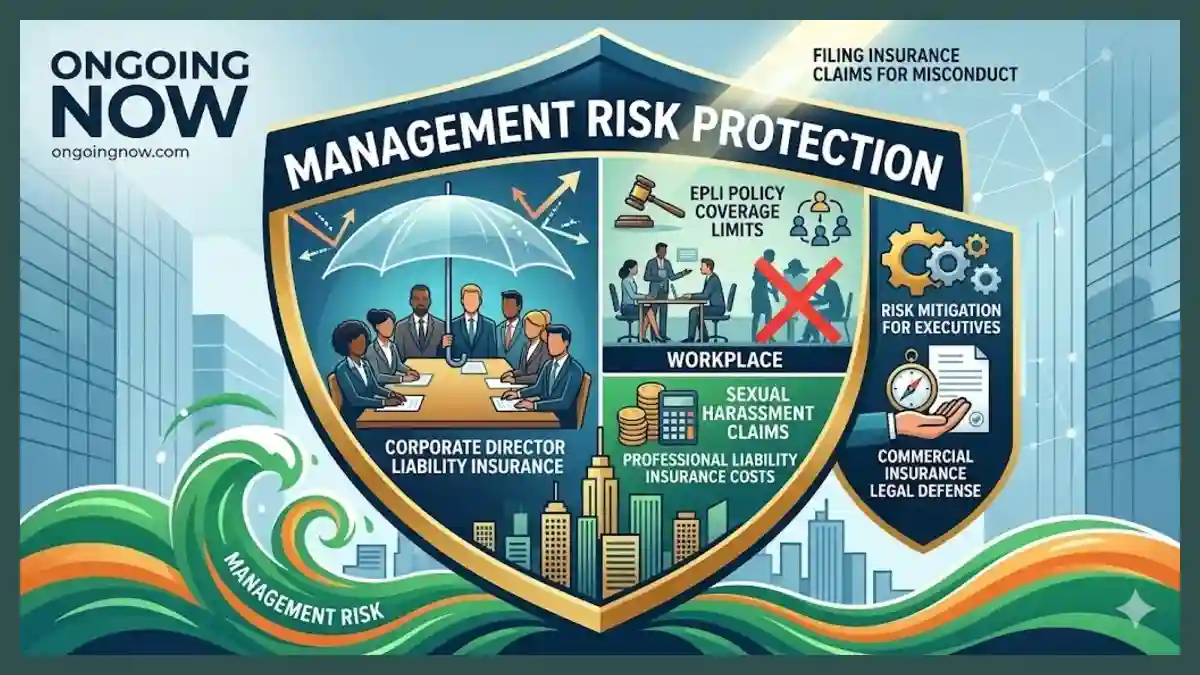
The landscape of corporate governance is increasingly defined by management risk protection, a suite of specialized coverages designed to shield leadership from the financial consequences of administrative and legal challenges. This framework integrates corporate director liability insurance with EPLI policy coverage limits to address a broad spectrum of risks, ranging from insurance for sexual harassment claims to shareholder derivative suits. For modern organizations, understanding professional liability insurance costs and the nuances of commercial insurance legal defense is essential for maintaining risk mitigation for executives. As regulators like the Securities and Exchange Commission (SEC) and the Equal Employment Opportunity Commission (EEOC) tighten oversight, filing insurance claims for misconduct requires a precise understanding of policy triggers and exclusionary language.
The Foundational Architecture of Management Risk Protection
Management risk protection is not a single policy but a modular insurance strategy. At its core, it addresses the “wrongful acts” allegedly committed by individuals in their capacity as leaders. These acts can include omissions, misstatements, or neglect that result in financial loss to the company or third parties. By bundling various professional lines, an organization creates a safety net that prevents a single lawsuit from destabilizing the corporate balance sheet.
The National Association of Insurance Commissioners (NAIC) notes that management liability has become more complex as digital transformation and social movements shift the definition of corporate responsibility. In this environment, the policy serves as a critical tool for talent acquisition, as high-level executives often refuse positions that do not offer robust indemnification and insurance.
Analyzing Corporate Director Liability Insurance Triggers
Corporate director liability insurance, commonly known as Directors and Officers (D&O) insurance, is bifurcated into distinct “sides” to handle different loss scenarios. Side A coverage protects the personal assets of directors when the corporation is legally or financially unable to indemnify them. Side B covers the corporation when it pays for the defense or settlement on behalf of the directors. Finally, Side C, or “Entity Coverage,” protects the corporation itself when it is named as a defendant.
Recent data from the American Bar Association (ABA) suggests that the frequency of litigation against directors remains high, particularly concerning fiduciary duties during mergers and acquisitions. Without this specific layer of management risk protection, an individual’s personal savings, real estate, and investments could be vulnerable to court-ordered judgments.
Navigating EPLI Policy Coverage Limits and Harassment
Employment Practices Liability Insurance (EPLI) has evolved from an optional add-on to a mandatory component of management risk protection. EPLI policy coverage limits determine the maximum amount an insurer will pay for claims related to wrongful termination, discrimination, and retaliation. A critical subset of this is insurance for sexual harassment claims, which has seen increased scrutiny following the global shift in workplace standards and legislative changes such as the Ending Forced Arbitration of Sexual Assault and Sexual Harassment Act.
EPLI policies generally operate on a “claims-made” basis, meaning the policy in effect when the claim is filed is the one that responds, regardless of when the incident occurred. “The surge in workplace conduct awareness has necessitated a more granular approach to policy limits,” states a report from the Insurance Information Institute (III). “Organizations must balance their limits against the rising costs of legal settlements and the potential for class-action litigation.”
Calculating Professional Liability Insurance Costs
Determining professional liability insurance costs involves a multi-factored actuarial process. Insurers evaluate the company’s industry, historical claims data, employee headcount, and the strength of internal HR protocols. For example, a technology firm with high employee turnover may face higher premiums for management risk protection than a stable manufacturing entity.
| Factor | Impact on Premium | Regulatory Consideration |
| Industry Sector | High-volatility sectors (Finance, Tech) pay more. | SEC oversight levels. |
| Claims History | Frequent past filings increase costs significantly. | State Department of Insurance (DOI) filings. |
| Revenue Size | Larger assets equate to higher “Side C” exposure. | Financial transparency requirements. |
| HR Protocols | Formalized training can earn premium credits. | EEOC compliance benchmarks. |
These costs are also influenced by the “reinsurance” market, where primary insurers offload a portion of their risk. When global reinsurance rates rise due to systemic economic shifts, the cost of management risk protection for individual companies typically follows suit.
The Mechanics of Commercial Insurance Legal Defense
One of the most valuable aspects of management risk protection is the provision for commercial insurance legal defense. In many corporate lawsuits, the cost of hiring specialized legal counsel can exceed the eventual settlement or judgment. Most policies are “duty to defend,” meaning the insurer has the right and obligation to select counsel and manage the litigation strategy.
However, high-level executives often prefer “reimbursement” policies, which allow the company to choose its own legal team, subject to insurer approval. “The selection of defense counsel is often as critical as the policy limit itself,” notes the Professional Liability Underwriting Society (PLUS). “In complex management risk protection cases, the intersection of specialized law and insurance nuances requires a defense team that understands both the courtroom and the contract.”
Protocol for Filing Insurance Claims for Misconduct
Filing insurance claims for misconduct is a time-sensitive process governed by strict notice requirements. Most management risk protection policies require “notice as soon as practicable.” Failure to report a potential claim or a “circumstance that may lead to a claim” during the policy period can lead to a denial of coverage.
Identify the Trigger: Determine if the incident falls under D&O, EPLI, or Fiduciary liability.
Internal Investigation: Document the facts while maintaining attorney-client privilege.
Prompt Notification: Submit a formal notice to the carrier, including all relevant legal documents.
Cooperation: Comply with the insurer’s requests for information as per the “Cooperation Clause” in the policy.
The EEOC reported that in recent fiscal years, retaliation remained the most frequently cited claim in workplace misconduct filings, emphasizing the need for companies to have clear protocols for filing insurance claims for misconduct to avoid compounding legal errors.
Strategic Risk Mitigation for Executives
Effective risk mitigation for executives extends beyond purchasing an insurance policy. It involves creating a culture of compliance and transparency. This includes regular board education on fiduciary duties, implementing robust anti-harassment training, and ensuring that financial reporting meets the highest standards of the Sarbanes-Oxley Act.
Risk mitigation also involves “policy auditing.” Executives should ensure that their management risk protection includes “Severability” clauses. This ensures that if one director commits intentional fraud, the innocent directors do not lose their coverage. Without such protections, the misconduct of a single individual could jeopardize the entire board’s safety net.
Analysis: The Shift Toward Transparency
The insurance industry is currently witnessing a transition from reactive coverage to proactive risk management. Insurers are increasingly offering lower premiums to companies that adopt AI-driven monitoring tools for compliance or third-party HR auditing. This shift indicates that management risk protection is becoming an integrated part of corporate operations rather than just a financial backstop.
Why This Matters: Stability and Ethics
From a societal perspective, management risk protection ensures that corporate entities remain viable even when facing significant legal challenges. It provides a mechanism for victims of corporate misconduct to receive compensation while preventing the total collapse of an employer. By tying professional liability insurance costs to the quality of a firm’s governance, the insurance market creates a financial incentive for ethical leadership and rigorous oversight.
Comparative Insight: Management Liability vs. General Liability
While General Liability (GL) insurance covers bodily injury and property damage, it rarely addresses the financial or “economic” losses associated with management decisions. Management risk protection fills this gap. For instance, if a faulty product injures a customer, GL responds. If a shareholder sues the board for failing to oversee the product’s safety testing, the management risk protection framework—specifically D&O—is triggered.
Expert Perspectives on Management Risk
“The complexity of the modern regulatory environment means that management risk protection is no longer a luxury for the Fortune 500; it is a necessity for any entity with a board of directors,” says Howard Mills, former Superintendent of the New York State Insurance Department. “We are seeing a move toward more bespoke policies that address specific industry risks, such as cyber-governance liability.”
The NAIC’s Management Liability Insurance Subgroup continues to monitor how these policies adapt to emerging risks. Their recent updates emphasize the importance of clarity in EPLI policy coverage limits, particularly regarding remote work disputes and digital privacy.
Conclusion: Strengthening the Corporate Veil
Management risk protection remains the primary defense against the personal and organizational volatility inherent in leadership roles. By balancing corporate director liability insurance with targeted risk mitigation for executives, companies can navigate the complexities of modern regulation and litigation. As the costs of commercial insurance legal defense continue to climb, the strategic selection of coverage limits and a thorough understanding of the claims process are vital for long-term institutional resilience.
Stay sharp with Ongoing Now!
Source and Data Limitations: This article is based on public regulatory filings from the National Association of Insurance Commissioners (NAIC), the Equal Employment Opportunity Commission (EEOC) 2024-2025 enforcement data, and the Securities and Exchange Commission (SEC) guidelines on corporate disclosure. Policy structures and “Side A/B/C” definitions are sourced from standard ISO (Insurance Services Office) forms and industry-standard management liability contracts. Quote from Howard Mills is attributed to his public testimony and industry commentary regarding insurance regulation. Data regarding professional liability insurance costs is derived from aggregate industry reports from the Insurance Information Institute (III) and Council of Insurance Agents & Brokers (CIAB). This information is for educational and journalistic purposes only and does not constitute legal or financial advice. Policyholders should consult with a licensed broker or legal counsel for specific coverage determinations.