San Remo Manual Naval Warfare: Why Rescue Laws Matter
How the San Remo Manual and International Law Govern Submarine Rescue and the Duty to Rescue at Sea

The recent discourse surrounding the duty to rescue at sea has brought renewed scrutiny to the San Remo Manual naval warfare provisions and the Geneva Convention shipwrecked sailors protections. International maritime stability relies on the submarine rescue obligations international law mandates, alongside the sovereign immunity of warships UNCLOS (United Nations Convention on the Law of the Sea) guarantees. Current assessments by the International Maritime Organization (IMO) and various naval authorities, such as those referencing the US Navy Commander’s Handbook legal rules, highlight a tension between military necessity and humanitarian imperatives. Allegations such as the IRIS Dena war crime allegations underscore the complexities of maritime law for naval hostilities, particularly when distinguishing between combatant status and the universal requirement to provide life-saving assistance to those in distress.
The San Remo Manual and the Evolution of Naval Custody
The San Remo Manual naval warfare serves as the contemporary Restatement of the Law for armed conflicts at sea. Although it is not a binding treaty, it is widely recognized by the International Committee of the Red Cross (ICRC) and global navies as the definitive manual for integrating the Geneva Convention shipwrecked sailors protections into modern naval strategy. Under these rules, “shipwrecked” persons include those in distress at sea as a result of hostilities or the loss of their vessel, regardless of their original mission.
Section V of the Manual explicitly dictates that after an engagement, each party to the conflict must, without delay, take all possible measures to search for and collect the shipwrecked, wounded, and sick. This requirement creates a bridge between the tactical execution of maritime law for naval hostilities and the humanitarian standards expected of modern nation-states.
Institutional Perspectives on Maritime Duty
| Entity | Primary Stance on Rescue | Legal Basis |
| UN Office of Legal Affairs | Absolute duty to assist regardless of nationality. | UNCLOS Article 98 |
| US Navy (JAG Corps) | Rescue is required unless it jeopardizes the ship’s safety. | Commander’s Handbook |
| International Red Cross | Shipwrecked persons are hors de combat (out of the fight). | Geneva Convention II |
| International Maritime Org. | Master of a ship must proceed with all speed to rescue. | SOLAS Convention |
Sovereign Immunity and the Submarine Rescue Paradox
A primary challenge in submarine rescue obligations international law involves the sovereign immunity of warships UNCLOS provides. Article 95 of UNCLOS stipulates that warships on the high seas have complete immunity from the jurisdiction of any state other than the flag state. However, this immunity does not absolve a commander of the duty to rescue at sea military personnel or civilians in distress.
In the context of submarines, the legal landscape is even more restricted. Because submarines are often engaged in “silent” or classified operations, the notification of distress can be delayed by national security protocols. Nevertheless, once a vessel is identified as “shipwrecked” or “in distress,” the legal status shifts from a sovereign military asset to a humanitarian emergency.
“The duty to render assistance to persons in distress at sea is a long-standing rule of customary international law that applies to all vessels, including warships.” — US Navy Commander’s Handbook on the Law of Naval Operations (Section 3.10).
Analyzing IRIS Dena War Crime Allegations and Legal Thresholds
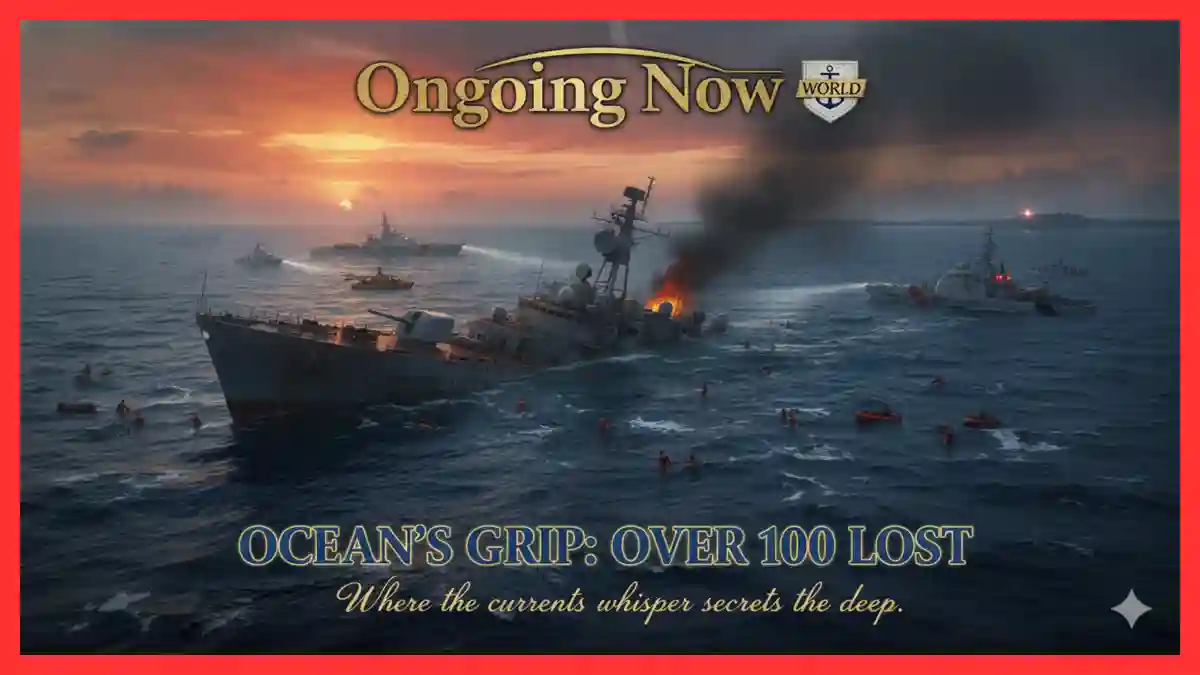
The IRIS Dena war crime allegations have sparked an international legal debate regarding the threshold of “omission.” Under maritime law for naval hostilities, a war crime is not only defined by the commission of an act (such as firing on a life raft) but also by the deliberate failure to provide aid when the tactical situation allows.
Legal analysts from the Stockholm International Peace Research Institute (SIPRI) note that for such allegations to reach the level of a war crime under the Rome Statute, it must be proven that the commander intentionally withheld aid from individuals who were clearly hors de combat. This necessitates a factual inquiry into whether the “collecting and caring” provisions of the Geneva Convention shipwrecked sailors were feasible under the prevailing combat conditions.
Key Factors in Determining Breach of Duty
Tactical Feasibility: Was the area secure enough for the warship to stop?
Awareness: Did the crew have visual or sensor confirmation of survivors?
Capacity: Did the vessel have the means to provide medical or physical aid?
The US Navy Commander’s Handbook: A Standard for Operations
The US Navy Commander’s Handbook legal rules provide a practical framework for how the world’s largest navy interprets the San Remo Manual naval warfare. It emphasizes that the duty to rescue at sea military personnel is not a suggestion but a requirement that follows every engagement.
The handbook instructs commanders to “search for the shipwrecked and prevent their ill-treatment.” This includes protecting them from “pillage and ill-treatment” by third parties. By codifying these rules, the US Department of Defense aligns its operational behavior with the submarine rescue obligations international law sets forth, ensuring that even in high-tension environments, the humanitarian “law of the sea” remains intact.
Institutional Context: Why the Duty to Rescue is Non-Negotiable
The International Maritime Organization (IMO) maintains that the safety of life at sea (SOLAS) is the bedrock of maritime commerce and security. When a navy ignores the duty to rescue at sea, it erodes the mutual trust required for international waters to remain navigable.
Analysis: What the Evidence Shows
The evidence from historical maritime inquiries suggests that failures to rescue are rarely the result of “missing” laws. Rather, they result from:
Political Tensions: Reluctance to rescue “enemy” combatants due to optics.
Technical Limits: Submarines lacking the surface buoyancy or deck space to take on survivors.
Intelligence Concerns: The fear that survivors may be “intelligence assets” or that the rescue operation reveals the ship’s position.
Despite these factors, the Geneva Convention shipwrecked sailors articles do not provide an “intelligence exception.” Once a sailor is in the water without a vessel, they are legally protected.
Comparative Precedents in Maritime Law
History provides several benchmarks for how maritime law for naval hostilities has been applied or ignored:
The Laconia Order (1942): During WWII, the German Admiral Dönitz forbade the rescue of survivors after a submarine attack. This was later a key point in the Nuremberg Trials, though it was complicated by the fact that Allied aircraft had bombed the rescue effort.
The Kursk Disaster (2000): This highlighted the gaps in submarine rescue obligations international law regarding international aid. It spurred the creation of the International Submarine Escape and Rescue Liaison Office (ISMERLO) to facilitate cross-border rescue cooperation.
Societal and Geopolitical Implications
The erosion of the duty to rescue at sea military norms has profound implications for global stability. If naval powers begin to view rescue as optional based on the IRIS Dena war crime allegations or similar incidents, the high seas become a “lawless” zone where civilian and military life is devalued.
From a human-centric perspective, the families of naval personnel rely on the universal adherence to these laws. The sovereign immunity of warships UNCLOS grants was never intended to be a shield against the basic human obligation to save a drowning person.
Key Context: The Legal Hierarchy
UNCLOS: The “Constitution” of the oceans.
SOLAS/SAR Conventions: The technical requirements for rescue.
Geneva Conventions: The humanitarian protections during war.
San Remo Manual: The integration of the above for naval commanders.
Evidence-Based Editorial Insights
The current state of maritime law for naval hostilities is robust on paper but fragile in practice. The San Remo Manual naval warfare provides the clarity needed, yet enforcement remains a challenge due to the sovereign immunity of warships UNCLOS provides.
To maintain the integrity of the oceans, international bodies must continue to pressure flag states to hold their commanders accountable to the US Navy Commander’s Handbook legal rules or their national equivalents. The submarine rescue obligations international law mandates are not merely for the benefit of the rescued, but for the professional standing and ethical legitimacy of the rescuer.
“The sea is a common space; the duty to rescue is the common price we pay for its use.” — Excerpt from a 2024 Maritime Legal Review.
The global community’s response to future IRIS Dena war crime allegations will likely determine if the duty to rescue at sea remains a cornerstone of international law or becomes a casualty of geopolitical friction.
Stay sharp with Ongoing Now!
Source and Data Limitations: This analysis is based on the San Remo Manual (1994), the United Nations Convention on the Law of the Sea (UNCLOS), and the Geneva Convention (II) for the Amelioration of the Condition of Wounded, Sick and Shipwrecked Members of Armed Forces at Sea. Operational guidance was sourced from the US Navy Commander’s Handbook (2022 edition). Data regarding war crime allegations refers to publicly documented reports from international maritime observers and legal briefs from the ICRC. This report excludes speculative claims regarding ongoing classified naval investigations or unverified social media footage. All legal interpretations are based on established customary international law as recognized by the IMO and UN Office of Legal Affairs as of early 2026.