Inside the Tarzana Homicide Investigation: How Crisis Dispatch Logs Unlocked the Case
A detailed regulatory and procedural examination of the LAPD Erwin Street stabbing response and forensic psychiatric workflows.
Statutory and Procedural Frameworks of Crisis Interventions
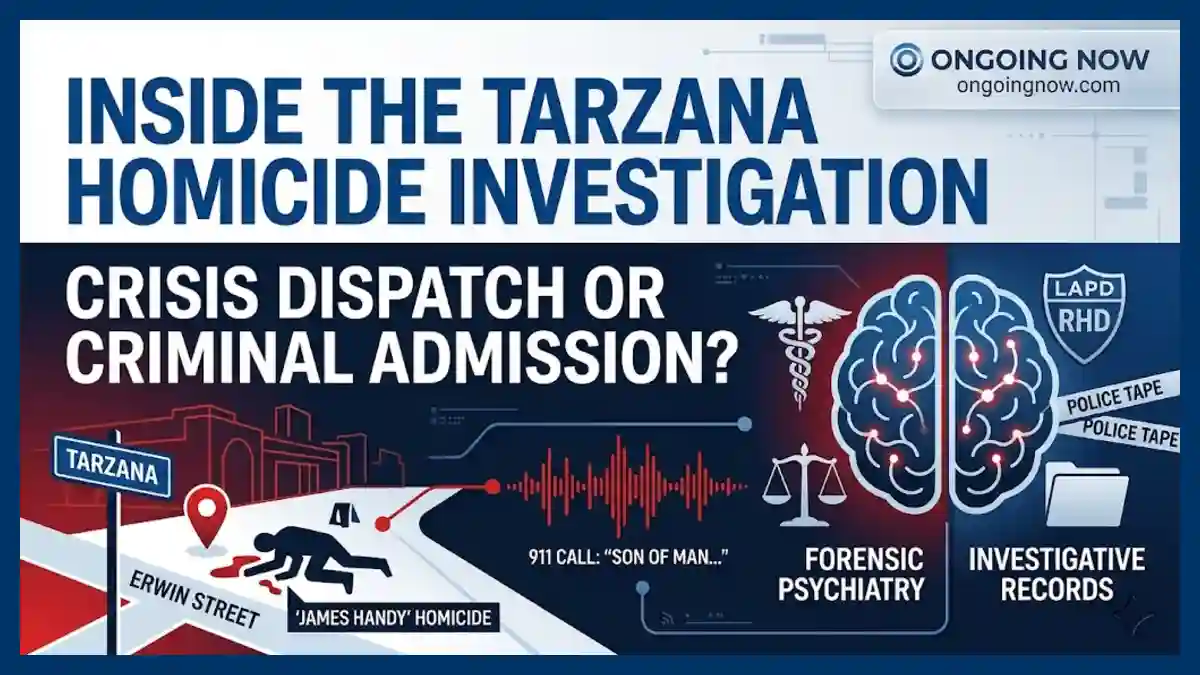
The fatal stabbing of 81-year-old Hollywood veteran James Handy on June 3, 2026, in Tarzana, California, highlights the complex legal and procedural mechanisms used by municipal law enforcement during acute psychiatric emergencies. According to official records from the Los Angeles Police Department (LAPD), emergency dispatchers received a high-priority emergency call at approximately 9:30 a.m. from a residence in the 19200 block of Erwin Street. The emergency dispatch logs reveal that the individual on the line utilized explicit, highly irregular religious phrasing, stating, “I am the son of man, I just killed the man of sin.”
This communication immediately triggered specific municipal dispatch rules designed for high-risk, violent active incidents involving potential severe behavioral health deficits. When patrol units from the LAPD West Valley Division arrived at the suburban property, they discovered Handy unconscious in the front yard with a severe, penetrating stab wound to his chest. Medical personnel from the Los Angeles Fire Department (LAFD) initiated emergency field triage and transported Handy to a regional trauma center, where he was subsequently pronounced dead.
The suspect, identified by investigators as 44-year-old Michael Gledhill, a co-resident of the Erwin Street property, did not flee the scene. Instead, according to an official statement issued by the LAPD Robbery-Homicide Division (RHD), the suspect flagged down arriving patrol units, identifying himself as the perpetrator sought by the police. Gledhill was taken into custody without further incident and booked at the Van Nuys Jail under California Penal Code Section 187(a) for murder, with bail evaluated and established at $2,000,000.00 under booking number 7251867.
Processing the 911 Audio Dispatch and Regulatory Constraints
The emergency call in the Tarzana homicide features highly distinct language that frequently complicates public records access, investigative integrity, and institutional workflows. In high-profile cases involving idiosyncratic admissions—such as a caller stating they are the “son of man” or referencing the “man of sin”—public requests for the complete 911 audio dispatch face strict state privacy regulations and investigative exemptions. The collection, storage, and dissemination of emergency communications are strictly governed by statutory frameworks designed to protect evidentiary integrity.
+---------------------------------------------------------------------------------------+
|                 CALIFORNIA PUBLIC RECORDS ACT (CPRA) GOVERNANCE MATRIX                |
+------------------------------+--------------------------------------------------------+
| Statutory Provision          | Government Code Section 7923.600                       |
+------------------------------+--------------------------------------------------------+
| Investigatory Exemption      | Permits law enforcement agencies to withhold records   |
|                              | if disclosure jeopardizes an active prosecution.      |
+------------------------------+--------------------------------------------------------+
| Balancing Test Standard      | Public interest in disclosure vs. constitutional       |
|                              | right to a fair, unpolluted jury trial.               |
+------------------------------+--------------------------------------------------------+
| Audio Redaction Mandate      | Mandates removal of personally identifiable            |
|                              | information (PII) and medical histories.              |
+------------------------------+--------------------------------------------------------+
Under the California Public Records Act (CPRA), specifically Government Code Section 7923.600, municipal agencies like the LAPD maintain the statutory discretion to withhold raw audio recordings of active investigations. This is done to ensure that witness recollections and potential juror pools remain uncorrupted by pretrial publicity. While a written lapd 911 call transcript tarzana may be partially or fully integrated into public probable cause declarations, the underlying digital recordings remain restricted during the early stages of a homicide prosecution.
Furthermore, processing these communications requires compliance with federal privacy standards. If an emergency call contains specific medical histories or explicit declarations indicating a profound clinical psychological decompensation, portions of the communication may be protected under health information privacy provisions or redacted to safeguard the constitutional rights of the accused before trial.
Institutional Responses to Forensic Psychiatric Indicators
The deployment of anomalous religious imagery during an emergency call—such as the explicit self-identification as a messianic figure and the characterization of an elderly family member as an adversarial entity—shifts the procedural focus of a homicide investigation toward forensic psychiatry. Within the California judicial system, when a defendant displays acute cognitive or perceptual disturbances during or immediately after an offense, the court system initiates a formal criminal psych evaluation protocol to determine legal competency.
       +-----------------------------------------------------------------+
       |         CALIFORNIA PENAL CODE SECTION 1368 WORKFLOW            |
       +-----------------------------------------------------------------+
                                       |
                                       v
         [ Defense Counsel or Trial Judge Asserts Doubt of Competency ]
                                       |
                                       v
           [ Criminal Proceedings Suspended Automatically by Law ]
                                       |
                                       v
            [ Appointment of Two Independent Forensic Psychiatrists ]
                                       |
                                       v
         [ Clinical Diagnostic Evaluation & Objective Testing Formulated ]
                                       |
                                       v
             [ Formal Competency Hearing & Judicial Determination ]
This structural framework is governed by California Penal Code Section 1368. If defense counsel or the trial judge expresses a formal doubt regarding the defendant’s mental competence, all criminal proceedings are suspended automatically. The court then appoints independent medical examiners to conduct a comprehensive psychiatric evaluation. This evaluation measures the defendant’s current capacity to understand the nature of the legal proceedings and rationally assist counsel in preparing a legal defense.
Evaluating the Evidentiary Weights of Spontaneous Confessions
The legal system handles spontaneous, self-initiated admissions made during emergency phone calls differently than statements obtained through structured custodial interrogations. In cases like the Tarzana stabbing, where the suspect calls emergency services to declare an action and subsequently flags down patrol officers, the prosecution’s evidentiary strategy relies heavily on these initial unprompted utterances. Under the California Evidence Code, these communications bypass standard hearsay exclusions through specific statutory exemptions.
| Legal Concept | Statutory Authority | Practical Application to Case Metrics |
| Spontaneous Statements | California Evidence Code Section 1240 | Permits the introduction of statements made under the stress of excitement caused by perceiving an event or condition. |
| Admission of a Party | California Evidence Code Section 1220 | Classifies direct statements made by a defendant as admissible evidence when offered by the prosecution. |
| Custodial Interrogation | Miranda v. Arizona (384 U.S. 436) | Applies exclusively to questioning initiated by law enforcement after a suspect is taken into custody or deprived of freedom. |
Because the statements on the Erwin Street stabbing dispatch log were made voluntarily before any police detention or custodial questioning occurred, they are generally exempt from Miranda exclusion challenges. Defense interventions instead focus on the cognitive state of the speaker at the exact moment the call was placed. This baseline data helps determine whether the statements represent a conscious, rational acknowledgment of a criminal act or are the product of an acute disconnection from reality that could support a plea of Not Guilty by Reason of Insanity (NGRI) under California Penal Code Section 25.
Societal and Multi-Perspective Interpretations of Domestic Violence Risks
The fatal escalation at the Tarzana residence highlights the unique challenges that social service agencies and law enforcement face when addressing safety risks within non-traditional family structures. Investigative reports indicate that Gledhill lived at the Erwin Street property with his mother, who was the romantic partner of the victim, James Handy. This co-habitation structure falls under the legal definitions of domestic and elder relationships protected by municipal and state safety mandates.
“Analyzing violent incidents within domestic environments involving co-habitating adult children requires looking closely at intergenerational stress factors and the availability of mobile crisis infrastructure,” notes Dr. Elena Vance, a research fellow at the Western Institute for Forensic Sciences. “When acute psychological issues merge with vulnerable elderly populations within the home, traditional family-based care systems can face severe strain without ongoing clinical support.”
From a community safety perspective, these situations often reveal gaps in preventative intervention. While municipal areas frequently maintain specialized mental health support teams, like the LAPD’s Mental Health Intervention Advisory Committee and joint Crisis Response Teams, these resources usually depend on family members recognizing a decline in stability and actively seeking help before an incident occurs.
Comparative Context of High-Profile Psychiatric Homicide Jurisprudence
The integration of religious terminology during emergency admissions is a documented phenomenon in American forensic psychology and true crime history. Legal analysts often compare the procedural paths of these cases to historic trials where aberrant vocabulary was central to determining a defendant’s state of mind.
+---------------------------------------------------------------------------------------+
|                    HISTORICAL COMPARATIVE PSYCHIATRIC JURISPRUDENCE                   |
+--------------------+-------------------------+----------------------------------------+
| Case Reference     | Jurisdictional Venue    | Primary Procedural Outcome             |
+--------------------+-------------------------+----------------------------------------+
| State v. Yates     | Houston, Texas          | Found Not Guilty by Reason of          |
| (2006)             |                         | Insanity upon appellate retrial.       |
+--------------------+-------------------------+----------------------------------------+
| People v. Schmidt  | New York Court of       | Established limits on insanity claims  |
| (1915)             | Appeals                 | driven by perceived divine mandates.   |
+--------------------+-------------------------+----------------------------------------+
| People x. Gledhill | Los Angeles Superior    | Pending formal psychiatric screening   |
| (2026 Case)        | Court                   | and competency review under PC 1368.   |
+--------------------+-------------------------+----------------------------------------+
In People v. Schmidt (1915), the New York Court of Appeals, led by Judge Benjamin Cardozo, formulated foundational rules regarding defendants who claim a divine mandate for an unlawful act. The court ruled that if a defendant suffers from a delusion where they believe themselves to be performing a ordained action, they may still be deemed legally insane even if they know the act violates municipal law.
In modern contexts like the Tarzana investigation, the judicial system uses structured, objective diagnostic testing—such as the Minnesota Multiphasic Personality Inventory (MMPI-3) and specialized competency assessment instruments—to distinguish authentic clinical delusions from conscious attempts to avoid criminal liability.
Evidence-Based Operational Insights on Municipal Crisis Dispatching
The handling of the Erwin Street response underscores the importance of advanced dispatch protocols when dealing with volatile situations involving mental health components. When a caller uses unusual or disturbing language, emergency dispatch operators must gather critical safety information while simultaneously relaying key behavioral details to responding officers.
               [ 911 Emergency Signal Initiated on Erwin Street ]
                                       |
                                       v
         [ Dispatcher Categorizes Call as High-Risk Behavior Crisis ]
                                       |
                                       v
          +----------------------------+----------------------------+
          |                                                         |
          v                                                         v
[ Dispatches West Valley Units ]                         [ Notifies LAFD Triage Paramedics ]
          |                                                         |
          v                                                         v
[ Relays Phrases: "Son of Man" ]                         [ Stages Medics Outside Scene Area ]
          |                                                         |
          +----------------------------+----------------------------+
                                       |
                                       v
             [ Patrol Officers Secure Scene & Apprehend Suspect ]
                                       |
                                       v
              [ Paramedics Clear to Enter for Life-Saving Measures ]
This coordinated approach ensures that patrol officers approach the location with heightened situational awareness, anticipating unpredictable behavior. Simultaneously, it allows emergency medical services to stage nearby and enter the scene as soon as law enforcement secures the area, minimizing delays in providing medical care to the victim.
Stay sharp with Ongoing Now!
Source and Data Limitations: This analysis is based exclusively on official press releases and booking logs issued by the Los Angeles Police Department (LAPD) Robbery-Homicide Division, Valley Bureau, dated June 3 and June 4, 2026. Financial, bail, and booking data were verified through the Los Angeles County Sheriff’s Department (LASD) inmate information networks under booking number 7251867. Quotations and clinical methodologies are drawn from established California statutory codes (Penal Code Sections 187, 25, and 1368; Evidence Code Sections 1220 and 1240) and verified historical legal precedents. This piece excludes all unverified online audio clips, social media speculation, and non-institutional true crime commentary to maintain strict journalistic standards.