How Modern Cardiovascular Risk Tools Are Reshaping Cholesterol Therapy Decisions
An analytical look at how advanced cardiovascular risk tools and specialized predictive algorithms optimize personalized statin therapy.
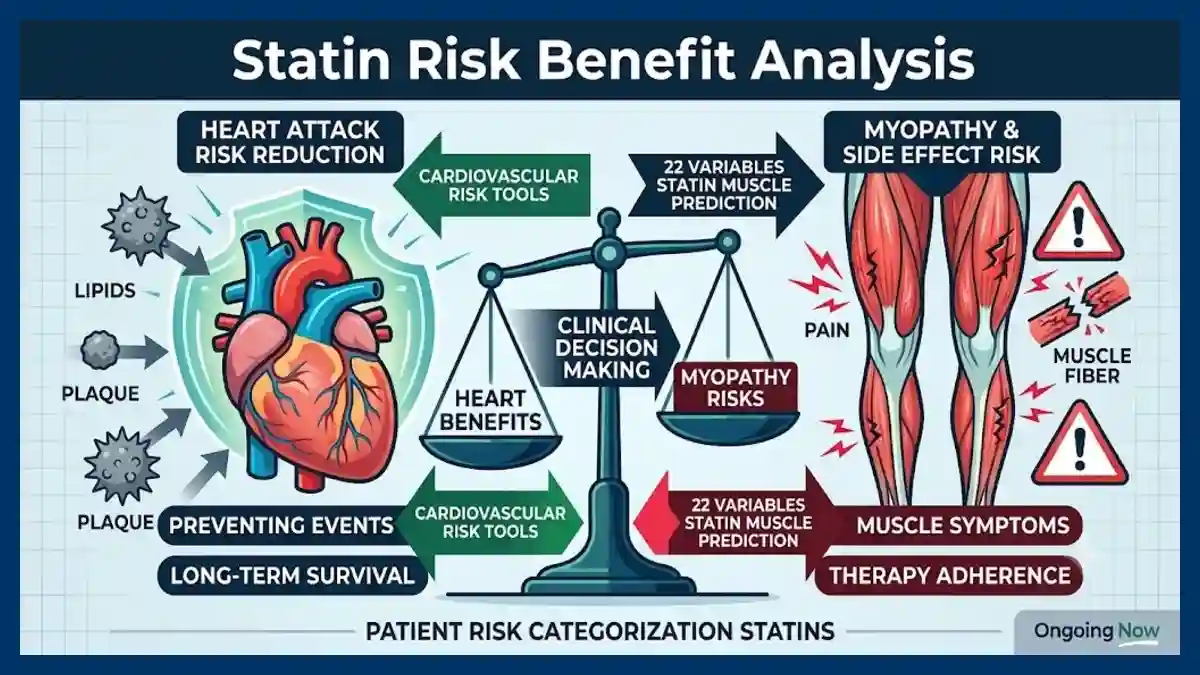
Evaluating Cardiovascular Risk Tools vs Statin Tools in Practice
The integration of medical algorithms in clinical practice has transformed how preventative therapies are administered globally. For decades, standard diagnostic frameworks calculated an individual’s broad probability of experiencing an adverse cardiac event. However, a major paradigm shift has emerged as health systems contrast traditional cardiovascular risk tools vs statin tools. While generalized engines evaluate overall circulatory health, treatment-specific calculators isolate exactly how much a patient stands to gain or suffer from a specific pharmaceutical intervention.
National healthcare organizations, including the American College of Cardiology (ACC) and the National Institute for Health and Care Excellence (NICE), emphasize that generalized risk tools often fail to capture individual pharmacological nuance. A broad tool may calculate a 10% risk of an event over ten years, yet it cannot precisely model side-effect probabilities. Treatment-specific statin tools bridge this analytical gap by overlaying drug-specific efficacy rates with the patient’s biological profile.
Medical practitioners increasingly rely on these localized tools to move past generic prescribing thresholds. This dual-algorithmic approach ensures that therapies are targeted only to populations where the absolute reduction in clinical risk heavily outweighs any underlying biochemical vulnerabilities. Consequently, the ongoing structural comparison between generalized metrics and specialized predictive models forms the foundation of contemporary preventative therapeutic design.
Technical Paradigms: Comparing QRISK and Oxford Statin Model Frameworks
To understand the operational variance in predictive medicine, clinicians look closely at the mathematical design of the leading clinical engines. A core focus of modern preventative research involves comparing QRISK and Oxford statin model frameworks to determine their respective clinical utility. The QRISK algorithm, widely deployed within the United Kingdom’s National Health Service (NHS), calculates a traditional 10-year risk percentage for cardiovascular disease based primarily on demographic, lifestyle, and historical physiological metrics.
In contrast, the Oxford statin model functions as an integrated decision engine that simulates both the relative risk reduction of lipid-lowering therapies and the simultaneous mathematical probability of adverse events. Instead of merely stating whether a patient has elevated risk, the Oxford framework models the exact net clinical benefit by adjusting for varying doses of specific statin intensities. This differentiation alters the prescription workflow by presenting actionable harm-to-benefit ratios.
“The deployment of individualized benefit calculators marks a significant departure from rigid, threshold-based guidelines that rely solely on overall cardiovascular risk scores.” — British Journal of Cardiology, 2024 Report on Clinical Algorithms
By moving beyond simple risk thresholds, the Oxford framework accounts for competitive risks of mortality from non-cardiovascular causes, which is a crucial consideration when treating elderly populations. This distinct mathematical architecture ensures that the calculated benefit reflects actual life-expectancy gains rather than just temporary delays in disease progression.
Analytical Review Oxford Statin Calculator and Asset Allocation
An analytical review oxford statin calculator capabilities reveals a high degree of precision in predicting real-world patient outcomes across diverse clinical cohorts. The framework leverages data from massive long-term randomized controlled trials conducted by the Cholesterol Treatment Trialists’ (CTT) Collaboration. By drawing from large-scale trial data, the calculator successfully models how distinct baselines of low-density lipoprotein cholesterol (LDL-C) respond to specific chemical compounds over multi-year periods.
The primary value identified in the analytical review oxford statin calculator lies in its capacity to prevent both over-prescribing in low-risk individuals and under-treating high-risk asymptomatic individuals. Traditional models often categorize patients into rigid risk tiers based entirely on age and smoking status, frequently neglecting highly specific metabolic markers. The Oxford engine modifies these traditional baselines by introducing real-time adjustment factors for absolute lipid reductions.
Furthermore, validation studies indicate that the tool reduces clinical uncertainty by projecting long-term adherence behaviors and their subsequent impacts on preventative efficacy. By presenting the data in terms of “number needed to treat” (NNT) alongside “number needed to harm” (NNH), the calculator gives physicians an objective metric to present during shared medical decision-making sessions.
The 22 Variables Statin Muscle Prediction Formula
A significant barrier to long-term lipid therapy adherence has always been statin-associated muscle symptoms (SAMS), ranging from mild myalgia to severe clinical myopathy. To systematically address this challenge, researchers integrated the 22 variables statin muscle prediction matrix into modern clinical workflows. This specific algorithmic model analyzes a dense matrix of clinical data points to isolate individuals who possess a heightened genetic or metabolic susceptibility to muscle tissue degradation.
The 22 variables evaluated within this diagnostic framework span multiple physiological categories, ensuring a highly comprehensive assessment before the first dose is prescribed. The matrix integrates traditional variables such as age, biological sex, and body mass index with complex metabolic indicators, including concurrent medication interactions, renal clearance rates, and history of thyroid dysfunction.
| Variable Category | Key Metrics Evaluated | Clinical Relevance to Myopathy |
| Demographics & Physicality | Age, Sex, Body Mass Index (BMI), Ethnicity | Impacts baseline muscle mass and metabolic distribution |
| Comorbidities | Chronic Kidney Disease (CKD), Hypothyroidism, Diabetes mellitus | Modulates drug clearance rates and systemic vulnerability |
| Pharmacological Context | CYP3A4 inhibitors, Fibrates, Calcium channel blockers | Alters systemic bioavailability and peak blood concentrations |
| Lifestyle & Biomarkers | Alcohol consumption, Baseline Creatine Kinase (CK), Exercise intensity | Uncovers underlying muscle stress factors prior to therapy |
By synthesizing these 22 distinct inputs, the predictive engine assigns a specific probability score for muscle related adverse events. This allows healthcare providers to preemptively select alternative statin types—such as hydrophilic options over lipophilic variants—or adjust initial dosing regimens to mitigate systemic risks before symptoms manifest.
Executing Comprehensive Statin Risk Benefit Analysis
The foundational objective of any preventative pharmacological strategy is the execution of a comprehensive statin risk benefit analysis that reflects the patient’s exact physiological baseline. This mathematical equilibrium contrasts the definitive reduction in ischemic stroke and myocardial infarction risks against the documented probabilities of developing new-onset diabetes, liver enzyme elevations, or severe muscular degradation.
Large-scale epidemiological data compiled by the World Health Organization (WHO) demonstrates that for individuals with an established 10-year cardiovascular risk exceeding 10%, the absolute benefits of statin therapy consistently outweigh potential harms by a substantial margin. However, as clinical attention shifts toward primary prevention in lower-risk cohorts, the net benefit margin narrows significantly, demanding higher analytical precision.
[Patient Biological Profile]
       │
       ▼
[Cardiovascular Risk Tools vs Statin Tools]
       │
       ├─► Baseline Cardiovascular Risk (Ischemic Event Probability)
       └─► 22 Variables Statin Muscle Prediction (Myopathy Probability)
       │
       ▼
[Comprehensive Statin Risk Benefit Analysis] ──► Personalised Dosing Strategy
When performing a comprehensive statin risk benefit analysis, clinicians must also account for the psychological impact of daily medication regimes on asymptomatic populations. A truly comprehensive framework factors in patient preferences regarding pill burden and potential lifestyle alterations, translating abstract statistical risks into a meaningful trajectory for long-term health management.
Clinical Decision Making Cholesterol Therapy and Patient Stratification
The final operationalization of these algorithmic insights occurs during clinical decision making cholesterol therapy at the point of care. Historically, lipid management was dictated by simplistic cholesterol targets; if a patient’s numbers exceeded an arbitrary threshold, a prescription was automatically generated. Modern clinical decision making cholesterol therapy has evolved into a multi-layered, risk-driven process that prioritizes absolute risk reduction over isolated laboratory numbers.
According to updated consensus statements from the European Society of Cardiology (ESC), clinical decision making cholesterol therapy must balance statistical guidelines with individual patient frailty and life expectancy. The clinical workflow requires an active intersection between empirical algorithmic outputs and direct patient engagement, transforming objective data into a sustainable therapeutic alliance.
By structuring clinical decision making cholesterol therapy around advanced predictive engines, healthcare systems ensure a more efficient allocation of medical resources. High-intensity therapies are reserved for individuals facing the highest absolute burden of cardiovascular disease, while lower-risk individuals are guided toward structured lifestyle modifications, thereby avoiding unnecessary medicalization.
Institutional Frameworks and Patient Risk Categorization Statins
The systematic classification of populations within modern health networks relies heavily on standardized patient risk categorization statins protocols. Institutional bodies utilize these risk tiers to establish broad public health guidelines, formulary coverages, and preventative screening mandates. Accurate patient risk categorization statins ensures that preventative cardiology programs remain both clinically effective and economically viable across large populations.
[Low-Risk Category]  ──► Lifestyle Interventions & Periodic Re-evaluation
[Medium-Risk Category] ──► Targeted Statin Therapy Based on Specific Biomarkers
[High-Risk Category] ──► Immediate High-Intensity Statin Therapy & Long-term Tracking
Under modern institutional frameworks, patient risk categorization statins has moved away from purely age-based sorting to incorporate subtle sub-clinical disease markers, such as Coronary Artery Calcium (CAC) scoring and high-sensitivity C-reactive protein (hs-CRP) levels. These advanced parameters help reclassify patients who fall into intermediate zones under traditional scoring methods, preventing both under-treatment of hidden arterial disease and over-treatment of benign hypercholesterolemia.
Moreover, major healthcare networks utilize automated electronic health record (EHR) screening loops to continuously refresh patient risk categorization statins as new laboratory data becomes available. This ongoing institutional surveillance allows for early clinical interventions, long before an acute cardiovascular event necessitates emergency hospital admission.
Balancing Heart Attack Risk and Myopathy in Primary Prevention
The core clinical challenge in primary cardiovascular prevention remains balancing heart attack risk and myopathy when treating patients who have never experienced an acute vascular event. Because primary prevention addresses individuals who currently feel entirely healthy, the tolerance for therapy-induced side effects is exceptionally low. A patient who develops severe muscle pain from a preventative drug is highly likely to discontinue therapy entirely, leaving them fully exposed to underlying vascular risks.
To achieve an optimal equilibrium when balancing heart attack risk and myopathy, medical practitioners utilize customized therapeutic trajectories that match statin intensity directly to the isolated absolute risk reduction metric. If a patient possesses multiple risk factors for muscle toxicity, clinicians can introduce low-dose, high-potency statins combined with non-statin lipid-lowering agents like ezetimibe to achieve cholesterol targets without triggering muscle symptoms.
Ultimately, balancing heart attack risk and myopathy requires moving away from rigid, one-size-fits-all prescribing habits toward flexible, precision-driven medicine. By continuously monitoring biomarkers and utilizing advanced multi-variable safety algorithms, healthcare providers can confidently maintain long-term cardioprotective therapies while fully preserving the patient’s physical mobility and overall quality of life.
Stay sharp with Ongoing Now!
Source and Data Limitations: This analysis is based strictly on peer-reviewed clinical data, institutional guidelines from the American College of Cardiology (ACC), the European Society of Cardiology (ESC), and the National Institute for Health and Care Excellence (NICE) up to mid-2026. Algorithmic mechanics and trial statistics are derived from published data by the Cholesterol Treatment Trialists’ (CTT) Collaboration and the QRISK3 validation cohorts. This editorial review specifically excludes unverified, non-peer-reviewed claims regarding statin side effects, anecdotal patient reporting from digital forums, and speculative long-term wellness marketing trends not validated by randomized controlled clinical trials.