UAE Energy Diversification: Why the OPEC Exit Matters
The United Arab Emirates formally departs the oil cartel to pursue independent production goals and domestic economic expansion.

The United Arab Emirates (UAE) officially announced its decision to exit the Organization of the Petroleum Exporting Countries (OPEC) and the wider OPEC+ alliance, effective May 1, 2026. This landmark policy shift marks the end of nearly six decades of membership for the Gulf nation, which originally joined the bloc via Abu Dhabi in 1967. According to the state-run Emirates News Agency (WAM), the move is a strategic evolution designed to grant the UAE greater autonomy over its production capacity and support a massive internal investment program in its energy sector.
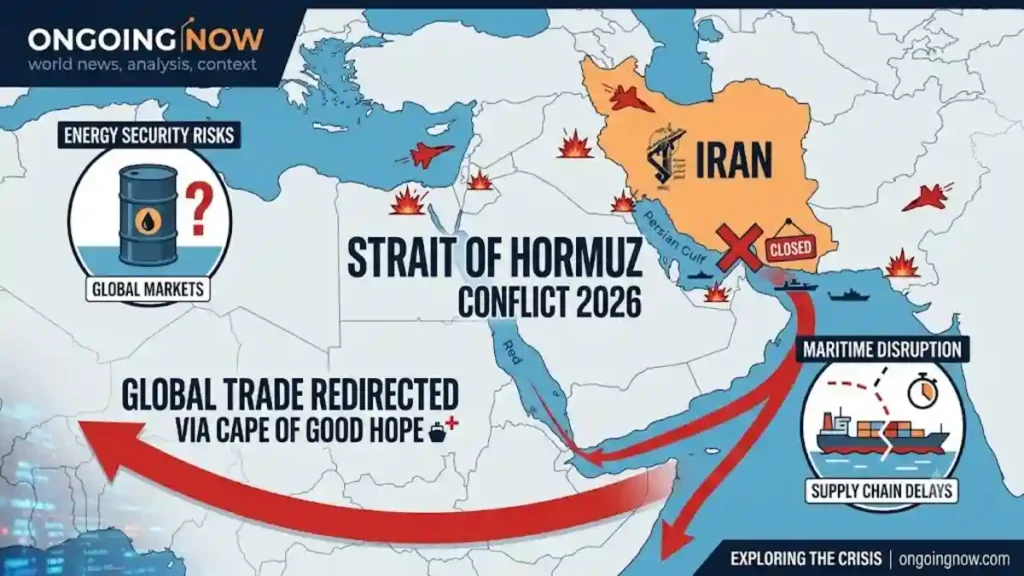
The withdrawal comes at a critical juncture for the global energy market, as ongoing regional disruptions in the Middle East—specifically involving maritime security in the Strait of Hormuz—have created a tightened supply environment. By reclaiming sovereign control over its oil output, the UAE aims to utilize its expanded production capacity to meet rising global demand that was previously restricted by collective OPEC+ production cuts. This transition reflects a broader national vision to prioritize economic flexibility and accelerate UAE energy diversification through the Abu Dhabi National Oil Company (ADNOC).
Strategic Shifts in the OPEC Membership List 2026
The UAE’s departure is the latest in a series of exits that have altered the composition of the world’s most influential oil cartel. Following the departures of Qatar (2019), Ecuador (2020), and Angola (2024), the OPEC membership list 2026 now faces a significant reduction in its collective market share. The UAE was the group’s third-largest producer, contributing approximately 12% of its total output before this policy change.
The decision was formalized following a “comprehensive review” of the UAE’s long-term energy profile. Minister of Energy and Infrastructure Suhail Al Mazrouei stated that the exit allows the nation to respond to an “undersupplied market” with greater agility. This maneuver effectively decouples Abu Dhabi’s export strategy from the centralized decision-making process in Vienna, which has historically prioritized price stability through supply constraints.
Analysis: The Impact of UAE Leaving OPEC
The impact of UAE leaving OPEC extends beyond mere production numbers; it signals a fundamental change in how Middle Eastern powers balance regional cooperation with national economic interests. Historically, the UAE and Saudi Arabia have been core pillars of the alliance, but diverging views on production quotas have created friction in recent years. While Riyadh has advocated for strict limits to keep prices high, Abu Dhabi has invested billions into boosting its maximum sustainable capacity to 5 million barrels per day (mbpd).
| Feature | Pre-Exit Status (2025) | Post-Exit Strategy (2026+) |
| Production Target | Subject to OPEC+ Quotas | Market-driven National Interest |
| Output Flexibility | Low (Bound by Alliance) | High (Independent Adjustments) |
| Focus Area | Price Stability via Cuts | Volume Expansion and Refined Products |
| Regional Alliance | Centralized (OPEC+) | Sovereign & Strategic Partnerships |
Caveat: Market impacts are subject to geopolitical stability in the Strait of Hormuz and regional conflict dynamics.
Abu Dhabi Oil Exports and Domestic Infrastructure
A primary driver for this exit is the protection of domestic capital expenditures. Through ADNOC, the UAE has committed over $150 billion to expand its upstream and downstream capabilities. By exiting the cartel, the UAE ensures that its Abu Dhabi oil exports can grow in tandem with these investments. Furthermore, the nation has significantly increased its refining capacity, reaching a milestone of 1.2 million barrels per day in 2026, aimed at capturing value across the full energy supply chain.
Geopolitically, the move allows the UAE to bypass the restrictions that have occasionally led to a Middle East oil conflict regarding market share. Analysts suggest that the UAE is positioning itself as a “reliable and responsible” partner that can provide lower-carbon, cost-competitive barrels to a world hungry for energy security. This is particularly relevant as regional conflicts have forced the UAE to diversify its export routes, including a 20-fold increase in capacity at its eastern ports to bypass the volatile Strait of Hormuz.
The Middle East Oil Conflict: Saudi Arabia vs UAE OPEC
The departure highlights an intensifying economic rivalry between two of the region’s largest economies. The Saudi Arabia vs UAE OPEC dynamic has shifted from quiet disagreement to an open divergence of national strategies. As Saudi Arabia pursues its “Vision 2030” and seeks to maintain its status as the global oil stabilizer, the UAE is prioritizing a “first-mover” advantage in the energy transition.
“This decision follows decades of constructive cooperation,” the UAE government noted in its official statement, though it emphasized that the “national interest” now requires a different path. This sentiment reflects a growing trend where Gulf nations are increasingly assertive in their foreign and economic policies, even when they clash with traditional regional blocs. The departure is viewed by some international observers as a “major setback” for the OPEC+ alliance stability, as it removes one of the few members with the financial and technical capacity to significantly swing global supply.
UAE Energy Diversification and the Net-Zero Goal
While oil remains a cornerstone of the economy, the exit from OPEC is ironically linked to UAE energy diversification goals. By maximizing oil revenue now, the UAE is funding its transition to a post-hydrocarbon future. The nation’s “Energy Strategy 2050” aims for a diverse energy mix, with installed renewable capacity surpassing 7.7 gigawatts in April 2026.
Renewable Growth: Masdar has increased its capacity from 20 GW in 2022 to 65 GW by early 2026.
Nuclear Energy: The Barakah Nuclear Energy Plant now provides approximately 25% of the country’s electricity.
Hydrogen and Solar: Massive investments in green corridors and solar-powered desalination are central to the nation’s industrial roadmap.
Global Oil Market Disruption and Future Volatility
Investors and global energy consumers are closely monitoring for global oil market disruption following this announcement. Historically, when a major producer leaves OPEC, it leads to a period of price adjustments as the market recalibrates. The UAE has pledged to bring additional production to the market in a “gradual and measured manner” to avoid triggering extreme oil price volatility reports.
However, the departure essentially ends the UAE’s participation in the OPEC+ production cuts that have been a fixture of the market since 2016. Without the UAE’s cooperation, the burden of managing global supply falls more heavily on Saudi Arabia and Russia. This shift could potentially lead to a more fragmented market where individual national interests supersede collective price-fixing efforts.
“The UAE possesses both the incentive and ability to increase production, raising broad questions about Saudi Arabia’s future role as the central stabilizer of the global market.” — Jorge Leon, Head of Geopolitical Analysis, Rystad Energy.
What the Data Shows: Market Consequences
Data from the first quarter of 2026 indicated that the global market was already facing a supply deficit due to regional tensions. The UAE’s move to exit the cartel at this moment allows it to capture high market prices while increasing its volume—a “double win” for the national treasury.
Supply Reliability: UAE barrels are among the least carbon-intensive in the world, making them attractive to European and Asian markets with strict ESG requirements.
Infrastructure Resilience: The expansion of the Fujairah export hub provides a vital alternative to the Persian Gulf routes, ensuring that even during regional escalations, the UAE can maintain flow.
Economic Autonomy: The move terminates the requirement for the UAE to seek permission from other member states before increasing its national production capacity.
The UAE’s exit from OPEC is not merely a change in membership; it is a declaration of economic independence. As the world navigates a complex transition between fossil fuels and green energy, the UAE has chosen a path that prioritizes national flexibility and infrastructure growth over the collective—and often restrictive—security of the traditional oil cartel.
Stay sharp with Ongoing Now!
Source and Data Limitations: This report is based on official statements from the Emirates News Agency (WAM), the UAE Ministry of Energy and Infrastructure, and recent meeting minutes from the OPEC Secretariat (March-April 2026). Data regarding production capacity and refining milestones are sourced from ADNOC’s 2026 operational reports. While this analysis uses the most current verified data available as of April 29, 2026, global oil markets remain highly sensitive to real-time geopolitical developments in the Middle East. Some specifics regarding internal OPEC+ negotiations remain confidential, and market reactions are based on current supply-demand fundamentals which may be subject to rapid change due to external security factors in the Strait of Hormuz.