The Surprising Legacy of Bahamas Election Day Laws: Why May 12 is Going Dry
Legislative frameworks and public notices define the May 12 alcohol prohibition to ensure orderly national voting.
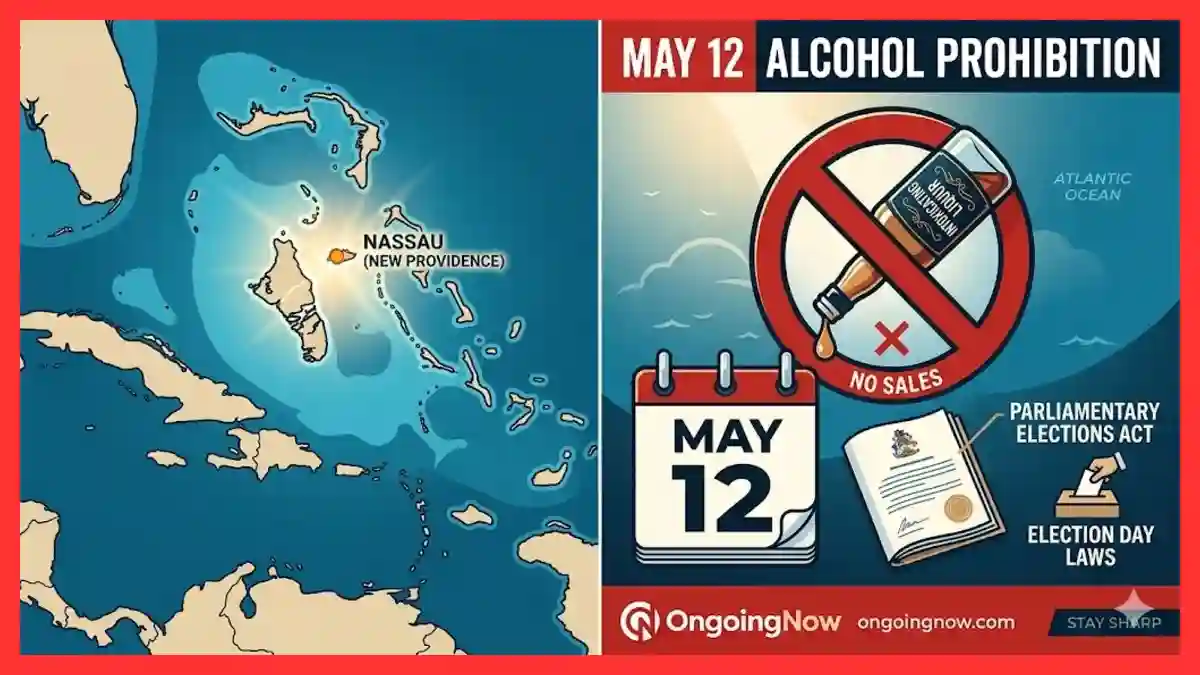
The Parliamentary Elections Act Bahamas serves as the primary legal foundation for the conduct of national polls, including the upcoming general election on May 12, 2026. This legislative framework mandates a nationwide suspension of intoxicating liquor sales to maintain public order and ensure the integrity of the democratic process while polls remain open from 8 a.m. to 6 p.m. local time. Globally, the measure highlights the intersection of local governance and international tourism, as the Ministry of National Security Bahamas enforces these Caribbean voting day restrictions across all territories, including Nassau, Grand Bahama, and private cruise destinations such as CocoCay.
As the 2026 general election approaches, international stakeholders—ranging from diplomatic observers like the Organization of American States (OAS) to global cruise operators—are adjusting to the statutory requirements. The government of Prime Minister Philip Davis, the Parliamentary Registration Department led by Commissioner Harrison Thompson, and the Ministry of National Security have collaborated to issue official public notices regarding the intoxicating liquor ban notice. These measures are designed to support a safe environment for more than 209,000 registered voters to cast ballots across 41 constituencies, including newly established seats in Bimini and the Berry Islands.
Legislative Foundation of the Parliamentary Elections Act Bahamas
The governance of Bahamian elections is rooted in the Parliamentary Elections Act, a robust piece of legislation that dictates everything from voter registration to the conduct of individuals on polling day. A critical, yet often overlooked, provision of this act is the restriction on the sale and distribution of alcohol during the hours when the polls are active. According to a government notice issued by the Parliamentary Commissioner, the sale of “intoxicating liquor” is strictly prohibited on May 12, 2026, between the hours of 8 a.m. and 6 p.m.
This legal requirement is not merely a custom but a statutory obligation enforced by the Ministry of National Security. Under the provisions of the Business License Act, any individual or establishment found selling, exposing, or offering for sale any intoxicating liquor during these hours is deemed to be operating without a valid license for that duration. This nationwide mandate ensures that the focus remains on the electoral process, minimizing potential disturbances in high-traffic areas such as Nassau and the various Family Islands.
Administrative Execution and Public Notice Protocols
The Ministry of National Security and the Parliamentary Registration Department have utilized a multi-channel approach to disseminate the intoxicating liquor ban notice. This transparency is vital for a nation whose economy is deeply intertwined with international travel and tourism. By providing advanced notice, the government aims to mitigate friction between local law enforcement and international visitors who may be unfamiliar with the “dry” status of election day.
The administrative timeline for the 2026 election began with the dissolution of Parliament on April 8, followed by the issuance of the Writs of Election on April 9. The Parliamentary Registration Department has confirmed that about 130 candidates were nominated across 41 constituencies. To manage this scale, the government has emphasized that the alcohol prohibition is a non-negotiable aspect of the public notice protocol, applying equally to local bars in downtown Nassau and luxury resorts on the outer islands.
Economic and Tourism Impact of Election Day Restrictions
The intersection of national law and the global cruise industry has become a focal point for the 2026 election. Major cruise lines, including Royal Caribbean, Carnival, and Norwegian Cruise Line, have had to issue urgent advisories to passengers regarding the Bahamas public notice alcohol restrictions. For many travelers, the realization that private islands like CocoCay or Great Stirrup Cay are subject to Bahamian national law has necessitated a shift in expectations.
| Entity Impacted | Nature of Restriction | Operational Adjustment |
| Local Businesses | Complete ban on alcohol sales | Temporary closure or shift to food-only service |
| Private Islands | Suspension of onshore liquor service | Continued access to waterparks and food amenities |
| Cruise Ships | Onshore sales prohibited | Maintenance of alcohol service while aboard the vessel |
| Airlines/Nassau Airport | Restricted sales in public lounges | Adherence to Ministry of National Security guidelines |
While the ban is limited to a ten-hour window on May 12, its reach is comprehensive. Royal Caribbean confirmed to international media that while alcohol service continues aboard their vessels, guests visiting the “Perfect Day at CocoCay” destination will not be able to purchase or consume alcohol on land. Some operators have even adjusted their itineraries to avoid Bahamian ports entirely on May 12 to maintain their standard guest experience.
Analysis: Why the Alcohol Prohibition Matters for Global News
From an international perspective, the Bahamas’ adherence to election day alcohol bans reflects a broader regional tradition in the Caribbean and parts of Latin America. These “Ley Seca” (Dry Law) policies are viewed by regional governments as essential tools for public safety. By analyzing the 2026 election, it becomes clear that the government prioritizes the “dignity of the vote” over short-term commercial interests.
The international community, including observers from the United States and the OAS, monitors these logistical details as proxies for a country’s ability to manage a peaceful transition of power. The successful enforcement of the Parliamentary Elections Act Bahamas signifies a stable regulatory environment. For the digital news sector and platforms like Ongoing Now, this story highlights how localized legal shifts can trigger significant logistical ripples across the global travel and hospitality industries.
Impact and Community Resilience in the Electoral Process
Beyond the headlines of disappointed tourists, the alcohol ban has a tangible impact on the daily lives of Bahamian citizens. For the 209,000 registered voters, election day is a moment of significant national importance. The quietude brought about by the closure of bars and liquor stores is often described by locals as a necessary backdrop for a day of civic reflection and community engagement.
In neighborhoods like Bain Town or Grants Town, the suspension of alcohol sales is met with a mix of traditional acceptance and practical adjustment. Community leaders often emphasize that the measure helps prevent heated political arguments from escalating into physical altercations. This focus on community safety ensures that underrepresented groups and elderly voters feel secure when traveling to polling stations. The Ministry of National Security has reiterated that the police force will be out in high numbers to ensure the intoxicating liquor ban notice is respected, prioritizing the protection of all residents and visitors.
Comparative Context: Caribbean Voting Day Restrictions
The Bahamas is not alone in its use of alcohol bans during national elections. Similar Caribbean voting day restrictions are found in nations such as Jamaica, Barbados, and Trinidad and Tobago, although the duration and strictness vary. In some jurisdictions, the ban extends for 48 hours, while in the Bahamas, it is strictly tied to the hours of the poll.
Comparisons can also be drawn to the 2021 Bahamian general election, where similar restrictions were in place. However, the 2026 cycle is unique due to the expanded number of constituencies (from 39 to 41) and the increased volume of international cruise traffic. The growth of the cruise industry has turned what was once a local administrative rule into a topic of global news Bahamas election coverage, requiring a higher degree of coordination between the Bahamian government and international corporations.
What the Data Shows: Electoral Participation and Public Order
Data from the Parliamentary Registration Department suggests a steady increase in voter engagement. In early 2026, registration stood at 196,000, eventually climbing to over 209,000 by the April 8 deadline. This surge in participation makes the enforcement of the Parliamentary Elections Act Bahamas even more critical to avoid overcrowding and disorder at the 410+ polling divisions across the archipelago.
“The safety and security of our citizens during the exercise of their democratic rights is our highest priority. The restrictions in place on election day are designed to ensure that every Bahamian can cast their ballot in an atmosphere of peace and mutual respect.” — Ministry of National Security Representative (Official Statement, April 2026)
As the polls close at 6 p.m. on May 12, the prohibition on alcohol sales will be lifted, signaling the end of the restricted period. This transition marks the shift from the act of voting to the anticipation of results, which will determine the leadership of the House of Assembly for the next five years.
Stay sharp with Ongoing Now!
Source and Data Limitations: This report is based on official proclamations from the Bahamas Information Services (BIS), the Ministry of National Security, and the Parliamentary Registration Department as of May 10, 2026. Data regarding cruise ship itineraries and passenger reactions were gathered from verified statements by Royal Caribbean and Norwegian Cruise Line. While historical precedents for alcohol bans in the Bahamas are well-documented, specific local enforcement levels on smaller Family Islands may vary based on local police resources. The article excludes unverified social media claims regarding potential exceptions for non-residents, as official government notices state the ban applies nationwide without exemption.