Ali Larijani Death: Why the Tehran Strike Shocks Iran
Subtitle: Senior Iranian security chief Ali Larijani and Basij commander Gholamreza Soleimani targeted in major Tehran airstrike

In a significant escalation of the ongoing regional conflict, Israeli Defense Minister Israel Katz announced on Tuesday, March 17, 2026, that a precision airstrike in Tehran has killed Ali Larijani, the Secretary of Iran’s Supreme National Security Council. The strike, which occurred overnight, also reportedly claimed the life of Gholamreza Soleimani, the commander of the Basij paramilitary force. While Israeli officials have confirmed the “elimination” of these high-ranking figures, Iranian state media has maintained a complex silence, neither confirming the deaths nor providing definitive “proof of life.”
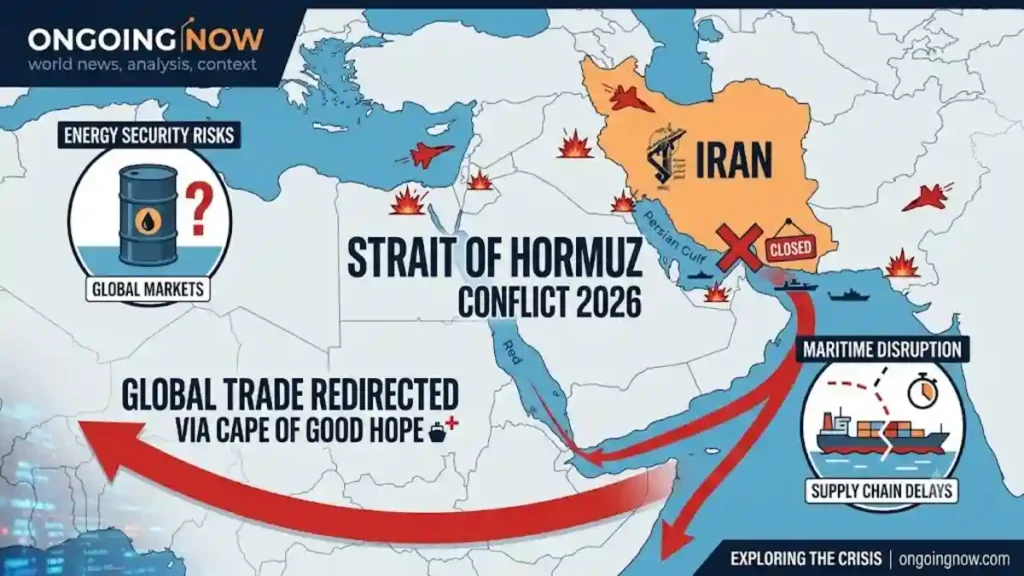
The reported removal of Larijani represents a pivotal moment in the current hostilities, as he was widely considered the de facto political lead of Iran’s war effort following the death of Supreme Leader Ayatollah Ali Khamenei on February 28. Geopolitically, the loss of such a senior strategist—who previously served as a chief nuclear negotiator and parliamentary speaker—could fundamentally alter Iran’s command structure and its approach to indirect negotiations with Western powers. Internationally, the strike has already triggered immediate economic repercussions, with global oil prices rising over 5% as maritime security concerns intensify in the Strait of Hormuz.
The Targeted Strike on Tehran’s Security Leadership
The Israel Defense Forces (IDF) confirmed that the operation involved a “wide-scale wave of strikes” across the Iranian capital, specifically targeting command centers, missile launch sites, and air defense systems. According to military statements, the strike that targeted Ali Larijani was the result of a long-term intelligence operation tracking senior official movement. An Israeli official noted that the attack had been postponed for 24 hours until intelligence confirmed Larijani’s arrival at a specific residential hideout in central Tehran.
Simultaneously, a separate strike focused on a makeshift tent area used by the Basij paramilitary leadership. The IDF reported that Gholamreza Soleimani, the head of the IRGC’s Basij militia, was killed alongside his deputy, Seyyed Karishi, and several other senior figures. The use of temporary structures was an apparent attempt by the Iranian leadership to evade detection, a tactic that the IDF spokesperson’s unit suggests has been compromised by superior intelligence gathering and near-complete control of Iranian airspace.
Verified Entities and Figures Involved
Israel: Defense Minister Israel Katz, IDF Spokesperson’s Unit.
Iran: Supreme National Security Council (SNSC), Islamic Revolutionary Guard Corps (IRGC), Basij Militia.
International: United Nations (UN), U.S. Treasury (regarding sanctions on Soleimani).
Key Officials: Ali Larijani (SNSC Secretary), Gholamreza Soleimani (Basij Commander), Israel Katz (Israeli Defense Minister).
Human and Community Impact in the Iranian Capital
The overnight bombardment of Tehran, described by witnesses as a mixture of heavy explosions, thunder, and rain, has caused significant damage to the city’s urban fabric. Beyond the military objectives, the Iranian Heritage Ministry reported that the strikes have damaged over 50 historical and cultural sites, including 19 locations in or near the capital. These developments have placed immense strain on the civilian population, who are navigating both the physical dangers of the airstrikes and a tightening of internal security by remaining Basij elements.
The conflict has also extended beyond Iran’s borders. In the United Arab Emirates, a major international transit hub, a civilian was killed by falling debris from an intercepted missile over Abu Dhabi. This has led to brief closures of airspace in Dubai and significant disruptions to global travel. Humanitarian organizations have expressed concern over the rising toll of the “12-day war,” noting that the displacement of millions in the region and the destruction of civilian infrastructure are creating a burgeoning humanitarian crisis that lacks a clear diplomatic resolution.
Geopolitical Analysis: The Role of Ali Larijani
Ali Larijani occupied a unique position within the Iranian establishment, bridging the gap between the military’s strategic needs and the country’s diplomatic requirements. As a member of one of Iran’s most prominent political families, his career spanned decades of high-level service.
| Period | Role | Significance |
| 2005–2007 | Chief Nuclear Negotiator | Led early talks with Britain, France, and Germany. |
| 2008–2020 | Speaker of Parliament | Managed domestic legislative support for the 2015 Nuclear Deal. |
| 2025–2026 | Secretary of the SNSC | Appointed to lead wartime strategy and indirect U.S. talks. |
Analysis of Larijani’s recent trajectory shows a shift from his traditional “pragmatist” stance toward a hardened defensive posture. Since his reappointment in August 2025, he had emerged as the central figure in Tehran’s wartime leadership. His reported death leaves a vacuum in the Supreme National Security Council at a time when Iran is facing its most existential security threat in decades. Without his seasoned diplomatic hand, analysts suggest the IRGC may take a more direct and potentially more aggressive role in shaping Iran’s foreign policy.
Evidence-Based Verification and Intelligence Analysis
A point of significant contention remains the “proof of life” for Ali Larijani. Following the Israeli announcement, Iranian state media published a handwritten note attributed to Larijani. The note commemorated Iranian sailors killed in a U.S. attack on the frigate IRIS Dena earlier in March. However, forensic strike analysis and independent intelligence experts suggest the note does not provide definitive proof that Larijani survived the strike.
The timing of the note’s publication—shortly after the Israeli claim—suggests a coordinated effort by the Iranian state to maintain stability and prevent a collapse of morale. Military analysts point out that the note could have been written days prior to the funeral scheduled for Tuesday. Furthermore, Larijani’s X account activity has been scrutinized; while a message was posted after the strike, it lacked the real-time indicators necessary to confirm his current status. This “intelligence fog” is characteristic of high-stakes targeted killings, where confirmation often lags behind the event by several days.
Comparative Context: A Pattern of Leadership Attrition
The reported deaths of Larijani and Soleimani follow a pattern of high-level attrition within the Iranian leadership. If confirmed, Larijani would be the tenth senior official killed since the start of the current conflict in late February 2026. This rate of leadership loss is unprecedented in modern Middle Eastern history and bears comparison to the 2020 assassination of Qasem Soleimani, though the current scale is significantly larger.
Feb 28, 2026: Death of Supreme Leader Ayatollah Ali Khamenei.
Early March 2026: Deaths of five senior military commanders, including Ali Shamkhani.
March 17, 2026: Reported deaths of Ali Larijani and Gholamreza Soleimani.
This systematic removal of the “old guard” has forced a rapid transition to a younger, less experienced leadership tier, including Mojtaba Khamenei, whose own status remains the subject of intense international speculation. The lack of a clear, visible successor to Larijani’s strategic role could lead to internal power struggles among the remaining Iranian elite.
Measured Outcomes and Regional Repercussions
The immediate outcome of the Tehran strike is a heightened state of emergency across the Middle East. Iran has responded to the pressure with missile and drone salvos directed toward Israel and neighboring Gulf states, claiming these nations are aiding the US-Israeli campaign. These counter-attacks have led to direct repercussions for international commerce and safety:
Energy Markets: Crude oil prices surged as the Strait of Hormuz became a focal point of naval tensions.
Civil Aviation: Major airlines, including Air India, have added thousands of extra seats to routes bypassing West Asian airspace to accommodate stranded passengers.
Diplomatic Stasis: Indirect negotiations that were previously facilitated by Larijani in capitals like Muscat and Doha have effectively stalled.
As the situation evolves, the international community remains focused on whether Iran will provide verifiable evidence of Larijani’s status. Until such proof is offered, the regional security environment remains in a state of extreme volatility, with the potential for further escalatory cycles as both sides navigate this new reality of high-level targeted warfare.
Stay sharp with Ongoing Now!
Source and Data Limitations: This report is based on official statements from the Israeli Ministry of Defense and the IDF, as well as reporting from Reuters, AFP, and The Guardian. Information regarding the death of Ali Larijani is currently “Israeli-confirmed” but “Iranian-unconfirmed.” Verification is complicated by the wartime environment in Tehran, which limits the access of independent journalists and international observers. Claims regarding the “handwritten note” are treated as unverified propaganda until forensic authentication is possible. Historical context regarding Larijani’s career is drawn from established diplomatic records. All casualty figures and site damage reports are subject to revision as more data becomes available from humanitarian agencies on the ground.