After a White House Shooting, Investigators Uncover Chilling Perimeter Trajectory
Multi-Agency Forensic Probe Initiated After Fatal Armed Confrontation Outside Executive Mansion Highlights Perimeter Vulnerabilities
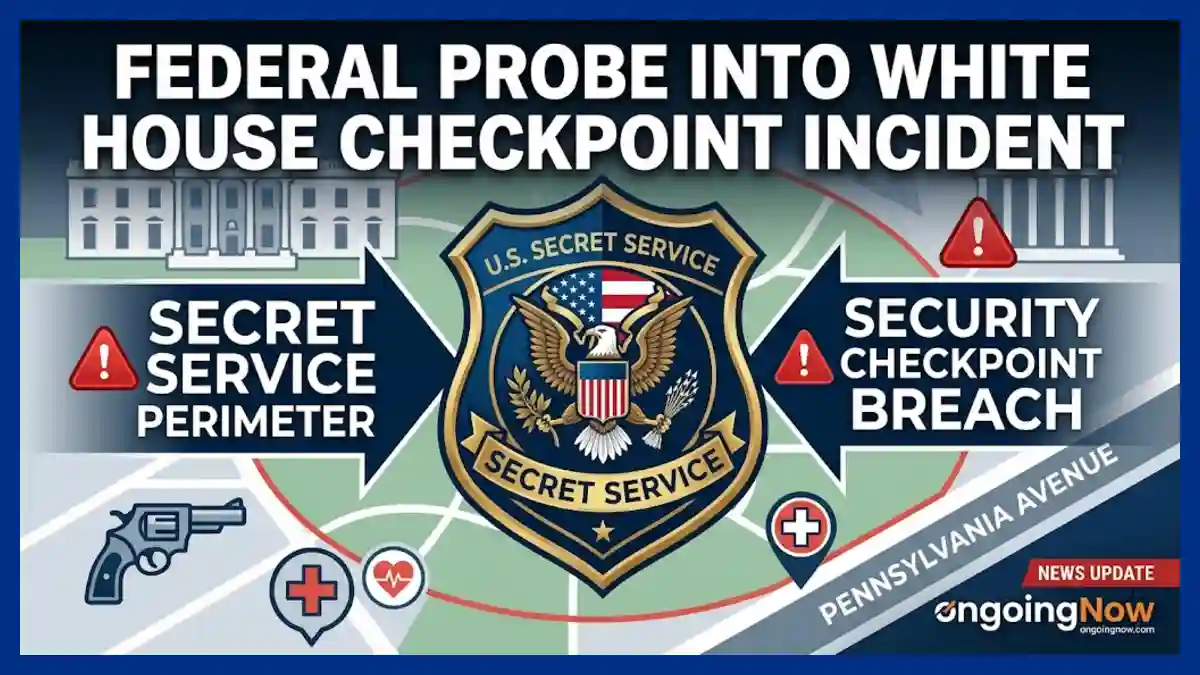
A multi-agency federal investigation is underway following a fatal armed confrontation on May 23, 2026, outside a secure perimeter of the executive mansion. The U.S. Secret Service confirmed that officers fatally shot 21-year-old Nasire Best of Maryland after he approached a security checkpoint at 17th Street and Pennsylvania Avenue NW and opened fire. The intersection, a vital security node regulating access to the West Wing, became the site of a rapid exchange of gunfire that resulted in the death of the suspect and critical injuries to an unidentified bystander.
The security breach prompted an immediate White House lockdown updates protocol, forcing journalists, staff, and federal personnel inside the briefing room and secure subterranean structures. President Donald Trump was inside the Oval Office during the active shooter event but was unhurt and unaffected by the security response. Preliminary law enforcement reports indicate that between 15 and 30 rounds were discharged during the encounter, which represents the third public safety incident involving firearm discharges near the executive branch within a 30-day period.
Secret Service Checkpoint Incident Interrupted by Armed Engagement
The security encounter began shortly after 6:00 p.m. EDT when uniform division officers observed a man pacing along the western edge of the presidential perimeter. According to institutional statements and local law enforcement logs, the individual approached the pedestrian access portal and pulled a handgun from a personal bag. The suspect fired approximately three rounds directly toward the security post, drawing an immediate armed response from nearby tactical units and checkpoint personnel.
White House gunshots heard across the North Lawn caused immediate operational shifts for protection details and media personnel stationed in outdoor tents. Secret Service agents armed with automatic rifles immediately established defensive perimeters on the grass, while journalists were instructed to abandon equipment and seek shelter. Federal investigators recovered a revolver at the scene, and forensic teams deployed dozens of orange evidence markers across the bloodied pavement to map the ballistics trajectory.
The Operational Timeline of the Washington DC Security Breach
The executive complex followed a standardized protocol for active perimeter threats, executing a sequence of steps designed to isolate the president and secure federal staff. The following data charts the chronological progression of the security breach based on official agency logs, emergency dispatch recordings, and correspondent field reports.
Legal and Detention Records Review of Nasire Best
A review of District of Columbia court records reveals a protracted history of security encounters between federal law enforcement and the deceased suspect. In June 2025, Nasire Best was detained after he obstructed a vehicle entry point at the White House, verbally threatened personnel, and expressed delusions regarding divine identity. Following that encounter, authorities involuntarily committed him to the Psychiatric Institute of Washington for a comprehensive clinical assessment.
The administrative trail extended into the mid-summer period of the previous year when federal officers executed a nasire best white house arrest. On July 10, 2025, Best bypassed an outer pedestrian checkpoint and entered a restricted driveway, disregarding direct verbal commands from uniform division officers. Court records indicate that he stated a desire to be arrested and repeated claims of religious personification, prompting judges to implement strict administrative barriers.
District of Columbia Superior Court
Case File: 2025-CMD-008941
Defendant: Nasire Best

[PROCEEDINGS & ORDERS]
- July 11, 2025: Arraignment on Unlawful Entry (Restricted Federal Grounds)
- July 11, 2025: Issuance of Pretrial Stay-Away Order (White House Perimeter)
- August 14, 2025: Notice of Noncompliance Filed by Pretrial Services Agency
- August 18, 2025: Bench Warrant Issued for Failure to Appear (Judge E. Phillips)
Institutional Analysis: The Intersection of Mental Health and Executive Protection
The white house shooting highlights a persistent systemic vulnerability for federal protection agencies: managing individuals with a documented nasire best mental health history who exhibit fixations on federal properties. The U.S. Secret Service National Threat Assessment Center (NTAC) has long studied behavioral indicators associated with illegal perimeter crossings, noting that a high percentage of individuals attempting unauthorized entries experience profound psychological delusions.
Federal tracking systems are designed to flag non-compliance with judicial restrictions, such as the stay-away orders issued against Best in 2025. However, local law enforcement agencies face severe capacity limits when attempting to enforce outstanding bench warrants for non-violent misdemeanors across state lines, particularly when individuals migrate between Maryland and the District of Columbia.
“The challenge for protective intelligence is not merely identifying a threat, but managing a chronic perimeter fixator once they enter a cycle of legal non-compliance and psychiatric instability.”
— Dr. Marcus Vance, Center for Judicial and Protective Studies
Comparative Context of Modern White House Security Incidents
The armed confrontation on May 23 represents an escalation in frequency for weapon-related incidents near the executive branch. To contextualize the scale and response protocols of the recent engagement, the table below outlines verified security breaches involving firearms or severe perimeter penetrations at the White House complex over the past year.
Clean Newsroom Grid: Executive Perimeter Vulnerability Matrix
| Incident Date | Primary Suspect / Mechanism | Specific Breach Location | Operational Response Outcome |
| Nov 14, 2025 | National Guard Vehicle Impound | Outer Gate Perimeter | Vehicles disabled via automated hydraulic bollards; suspect detained. |
| Apr 25, 2026 | White House Correspondents’ Dinner | External Hotel Perimeter | Multiple firearm discharges; secret service security radius expanded. |
| May 09, 2026 | Unidentified Handgun Discharge | Washington Monument Grounds | Park Police response; regional lockdown of southern park zones. |
| May 23, 2026 | Nasire Best / Revolver Engagement | 17th St & Pennsylvania Ave NW | Suspect neutralized; dual casualties; multi-agency forensic probe launched. |
Regional Impact and Safety Considerations for the District of Columbia
The secret service open fire dc response has wide-ranging implications for the thousands of municipal workers, journalists, and residents who traverse the downtown corridor daily. The intersection of 17th Street and Pennsylvania Avenue serves as an essential civilian thoroughfare connecting commercial offices with federal departments. The presence of crossfire that critically injured a civilian bystander has renewed municipal debates regarding the footprint of federal security barriers and public exposure during active defense measures.
Downtown business coalitions and municipal leaders have consistently expressed concerns regarding the economic impact of sudden, unpredictable security closures. While the Metropolitan Police Department works alongside federal agents to restore transit access, local infrastructure feels the immediate strain of multi-block cordons that halt public transport and disrupt commercial enterprises.
          [WEST WING PERIMETER]
                   |
     (Secret Service Checkpoint) <-- 3 Rounds Fired by Suspect
                   |
 [17th St & Pennsylvania Ave NW Intersection] <-- Crossfire Zone
                   |
          (Bystander Location) <-- Civilian Critically Wounded
Evidence-Based Insights Into Protective Strategy Reform
Following the incident, FBI Director Kash Patel announced that the bureau would lead the secondary investigation into the suspect’s digital footprints and domestic background to rule out broader conspiratorial networks. Preliminary searches of social media accounts associated with the suspect revealed erratic manifestos containing contradictory statements, referencing both radical political figures and religious claims.
The political and legislative aftermath of this event is expected to center on the coordination between state mental health registries and federal protective databases. Members of the House Committee on Homeland Security have already signaled intentions to request briefing documents detailing why a suspect with an active bench warrant and a history of federal stay-away violations was able to approach the western perimeter undetected while carrying a concealed weapon.
Key Institutional Figures from the Security Matrix
3 — The number of handgun rounds allegedly discharged by the suspect before federal agents initiated counter-fire protocols.
11 Months — The duration of time between the suspect’s initial psychiatric detention near the executive compound and the fatal engagement.
15 to 30 — The estimated total volume of ballistics materials recovered from the sidewalk by forensic units on May 23.
Zero — The number of injuries sustained by U.S. Secret Service personnel or protectees during the execution of defensive maneuvers.
The focus shifts now toward the medical status of the injured bystander at George Washington University Hospital and the systemic adjustments the Secret Service will deploy to mitigate future checkpoint approach vulnerabilities.
Stay sharp with Ongoing Now!
Source and Data Limitations: This analysis relies strictly on public statements issued by the U.S. Secret Service Press Office, emergency dispatch transcripts from the District of Columbia Fire and EMS Department, and verified federal court records from the U.S. District Court for the District of Columbia dating from June 2025 to May 24, 2026. Data excludes all unverified social media footage, speculative claims regarding suspect motives not confirmed by the FBI, and anonymous political commentary. Bulletins are current as of May 24, 2026.