USS Iwo Jima Mission Reveals US Maritime Strategy Shift
Amphibious Ready Group shifts focus following Operation Southern Spear and recent Western Hemisphere maritime interdiction operations.
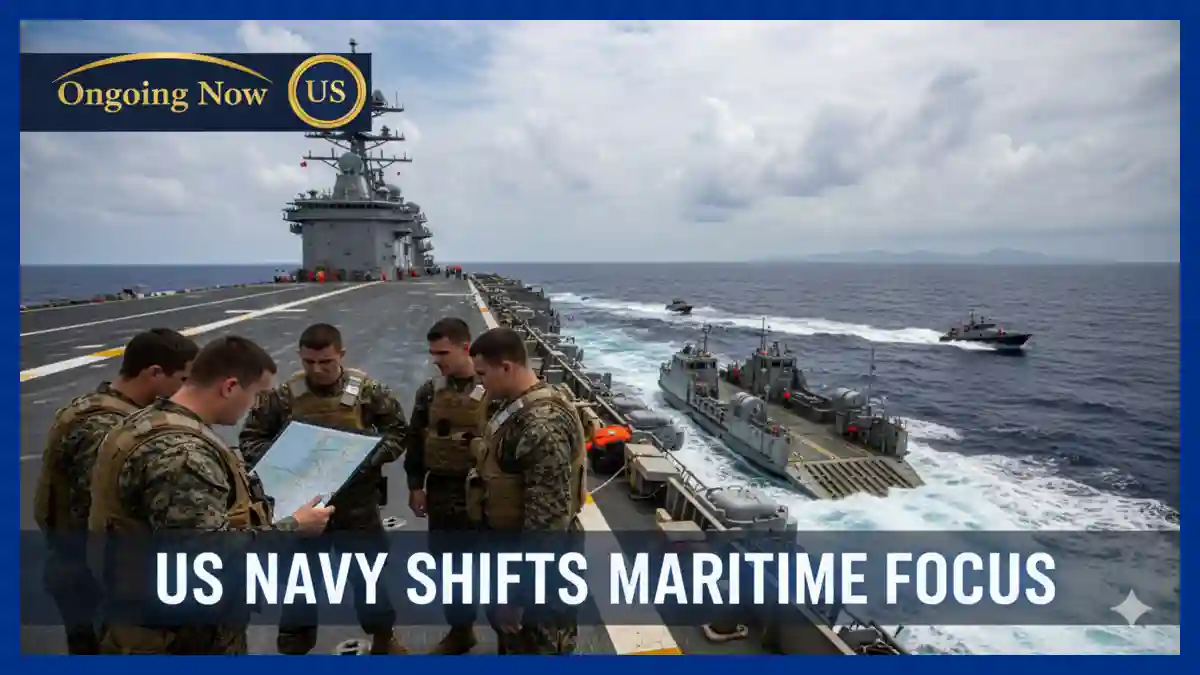
The USS Iwo Jima, a Wasp-class amphibious assault ship, remains a central pillar of U.S. maritime strategy in 2026, serving as the flagship for the 22nd Marine Expeditionary Unit deployment. Since late 2025, the vessel and its embarked Marines have been integral to Operation Southern Spear, a Department of War-directed campaign aimed at disrupting illicit maritime networks and enforcing energy sanctions in the Caribbean. Most notably, the 22nd Marine Expeditionary Unit (Special Operations Capable) provided the critical transport and logistical framework for the January 3, 2026, Marine raid Venezuela details regarding the apprehension of Nicolás Maduro. While the Middle East naval buildup 2026 has seen other amphibious units like the USS Boxer and USS Tripoli transition toward the Gulf of Oman, the Iwo Jima continues to maintain stability and enforcement protocols in the Southern Command (SOUTHCOM) area of responsibility.
Operational Shift: From the Caribbean to Global Readiness
The mission profile of the USS Iwo Jima has evolved rapidly over the first quarter of 2026. Initially deployed to the Caribbean Sea, the ship functioned as the primary staging platform for Operation Southern Spear, which targeted sanctioned oil tankers and transnational criminal organizations. This operation saw the 22nd MEU(SOC) engage in high-stakes maritime interdiction, including the boarding and seizure of vessels like the Motor/Tanker Veronica and the Sagitta in early January.
Following these successes, the USS Iwo Jima mission updates indicate a period of sustained readiness and forward maintenance. In February 2026, the Mid-Atlantic Regional Maintenance Center (MARMC) completed essential structural repairs while the ship was pier-side in St. Croix, U.S. Virgin Islands. This “forward maintenance” capability allowed the Amphibious Ready Group (ARG) to remain operational without returning to continental U.S. ports, a necessity given the escalating requirement for amphibious assault ship movements across multiple theaters.
Strategic Impact of Operation Southern Spear
Operation Southern Spear represents a significant shift in how the U.S. Navy utilizes its “Hybrid Fleet”—a mix of traditional manned warships and autonomous robotic systems. The 22nd MEU has utilized these systems to monitor vast swaths of the Caribbean and Pacific, specifically targeting “dark” vessels operating in defiance of presidential maritime quarantines.
Key Naval Assets in Southern Spear (Q1 2026)
| Vessel Name | Type | Primary Role in 2026 |
| USS Iwo Jima (LHD 7) | Amphibious Assault Ship | Flagship, 22nd MEU(SOC) Command |
| USS Gerald R. Ford (CVN 78) | Aircraft Carrier | Primary Air Cover and Interdiction Support |
| USS San Antonio (LPD 17) | Transport Dock | Troop Transport and Maintenance Forward Base |
| USS Fort Lauderdale (LPD 28) | Transport Dock | Live-fire Training and Special Purpose Launch |
The operation has not been without cost. On February 7, 2026, the Iwo Jima ARG reported the loss of Lance Cpl. Chukwuemeka E. Oforah, an infantry rifleman with Battalion Landing Team 3/6, who fell overboard during night operations. Despite a 72-hour multi-branch search involving ten aircraft and five ships, the Marine was declared deceased on February 10, underscoring the inherent risks of sustained high-tempo maritime deployments.
The 2026 Middle East Naval Buildup and Regional Context
While the USS Iwo Jima maintains its presence in the Western Hemisphere, the broader U.S. naval strategy has seen a massive “accelerated deployment” toward the Middle East. As of March 20, 2026, the Pentagon has dispatched the USS Boxer and USS Tripoli ARGs to the region. This Middle East naval buildup 2026 is a direct response to the closure of the Strait of Hormuz and escalating tensions with Iran.
Currently, several Navy ships in Gulf of Oman are preparing for potential landing operations or to escort commercial tankers. The 11th and 31st MEUs are now the primary units assigned to the Central Command (CENTCOM) theater, while the 22nd MEU remains the designated “ready force” for the Atlantic and Caribbean. Analysts suggest that the success of the 22nd MEU’s specialized tactics in Venezuela has served as a blueprint for the current buildup in the Persian Gulf.
Analysis: The Role of the 22nd MEU(SOC) in Domestic Policy
The deployment of the 22nd MEU is not merely a military exercise; it is a tool of domestic economic policy. By enforcing the oil blockade in the Caribbean, the U.S. government aims to stabilize energy markets by ensuring only “coordinated and lawful” oil enters the global supply chain. This mission aligns with the administration’s priority to protect the American economy from the volatility caused by illicit energy trades.
The 22nd MEU’s capability to perform “Special Operations Capable” (SOC) missions means they are trained for more than just traditional warfare. Their 2026 training cycle has included:
Maritime Special Purpose Force (MSPF) ranges: Focusing on precision crew-served weapon engagement.
Visit, Board, Search, and Seizure (VBSS): Essential for enforcing the current maritime quarantine.
Aerial Sniper and Night Flight Ops: Utilizing the MV-22B Osprey and AH-1Z Viper to maintain 24-hour surveillance.
Regional Effects and Societal Impact
The presence of the Iwo Jima ARG in the Caribbean has had a profound impact on regional stability. In Puerto Rico, the 22nd MEU has engaged in strategic investments and training exercises at Camp Garcia, which officials claim bolsters local security and provides disaster-relief readiness. Conversely, the “surgical strikes” and raids associated with Operation Absolute Resolve in January have led to significant diplomatic friction.
While the U.S. military reported no American combat fatalities during the capture of Maduro, the humanitarian impact in Caracas included damage to civilian infrastructure and approximately 75 reported deaths, including foreign security details. This has led to a complex regional dynamic where countries like Brazil and Mexico have urged a return to diplomacy, even as the U.S. military presence remains at a historic high.
Historical Comparison: 2026 vs. Past Deployments
The 2026 deployment of the USS Iwo Jima differs from previous cycles due to the integration of “Operation Absolute Resolve” and “Operation Southern Spear.” Historically, MEUs focused on peacekeeping or localized counter-terrorism. Today, the 22nd MEU operates as a primary instrument for regime change and large-scale economic blockades.
“The 22nd Marine Expeditionary Unit provides strategic speed and agility, ensuring our Marines are forward deployed and prepared to respond to national security interests,” stated Col. Tom Trimble, Commanding Officer of the 22nd MEU(SOC).
Comparatively, the scale of the current amphibious assault ship movements is the largest seen since the early 2000s, reflecting a “multi-front” naval strategy that simultaneously manages Western Hemisphere security and Middle Eastern energy corridors.
Why This Matters: The Future of Maritime Power
The ongoing mission of the USS Iwo Jima illustrates the U.S. Navy’s transition into a more flexible, hybrid force. By utilizing the 22nd MEU for both high-intensity raids and long-term maritime interdiction, the Department of War is testing a model of “persistent presence.”
For the American public, these deployments are directly linked to:
Energy Security: The blockade and escort missions aim to prevent price spikes at the pump.
National Security: Disrupting drug trafficking networks that utilize the same maritime routes as sanctioned tankers.
Global Leadership: Demonstrating the ability to project power in two hemispheres simultaneously.
As the second quarter of 2026 approaches, the movement of these “big deck” amphibious ships will remain the primary indicator of U.S. strategic intent globally.
Stay sharp with Ongoing Now!
Source and Data Limitations: This report is based on official U.S. Southern Command (SOUTHCOM) and II Marine Expeditionary Force press releases from January to March 2026. Data regarding the 22nd MEU’s training and the loss of Lance Cpl. Oforah are sourced from DVIDS and official Navy casualty reports. Information on the Middle East buildup and the USS Boxer/Tripoli movements is based on March 2026 reporting from Reuters and Xinhua. Satellite imagery analysis of the January 3 Caracas raid was provided by CSIS and Britannica. Excluded are unverified social media reports regarding “secret weapons” or speculative casualty counts not confirmed by at least two independent international agencies.