Robert Mueller Obituary: The Special Counsel Legacy
Robert Mueller obituary marks the passing of the former FBI Director and Special Counsel whose career defined modern federal law enforcement.
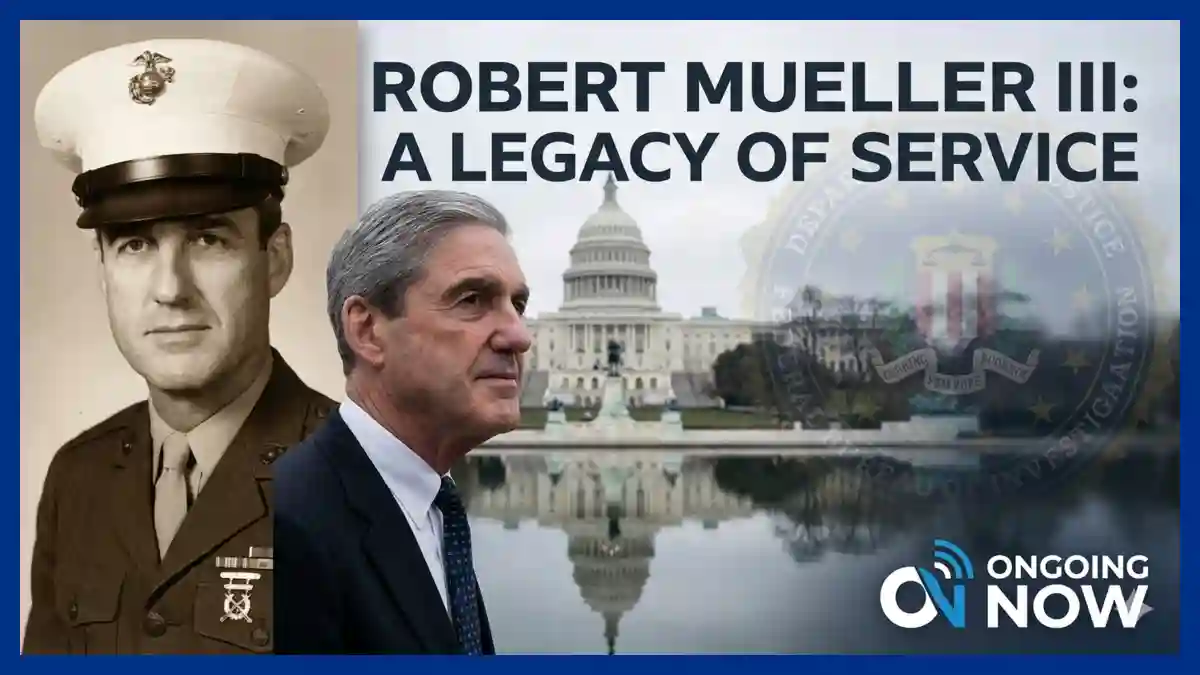
Robert Mueller, the former Director of the Federal Bureau of Investigation (FBI) and Department of Justice Special Counsel, died Friday, March 20, 2026, at the age of 81. His family confirmed his passing in a Saturday morning statement, noting that he died “with deep sadness” while surrounded by loved ones. Mueller’s death follows a public disclosure in August 2025 regarding his diagnosis with Parkinson’s disease, a condition that reportedly limited his public appearances in his final months.
Across nearly five decades of public service, Mueller occupied a singular role in American civic life. He was appointed by President George W. Bush to lead the FBI just one week before the September 11 attacks, a tenure that saw the bureau’s transition from a traditional domestic law enforcement agency into a global counterterrorism force. Later, his 2017 appointment as Special Counsel to investigate 2016 election interference became a focal point of intense national debate, testing the structural limits of executive oversight and the independence of the Department of Justice.
Robert Mueller Obituary and Early Public Service
Born in New York City and raised in Pennsylvania, Robert S. Mueller III’s career was rooted in a distinct era of institutionalism and military tradition. After graduating from Princeton University in 1966, where he majored in politics, he pursued a Master’s degree before enlisting in the United States Marine Corps. His Vietnam War service record is often cited by biographers as the formative period for his famously rigid adherence to chain of command and procedural discipline.
While serving as a rifle platoon commander with the 3rd Marine Division, Mueller led troops through several high-intensity engagements. In April 1969, he was shot in the thigh during a battle but continued to direct his platoon’s fire, an act for which he was later awarded the Bronze Star with “V” device for valor. He also received a Purple Heart and two Navy Commendation Medals, returning to the United States to earn a law degree from the University of Virginia.
Transforming the FBI in a Post-9/11 Era
Mueller’s most enduring institutional contribution remains his 12-year tenure as the head of the FBI. Sworn in on September 4, 2001, he had been in office for only seven days when the 9/11 terrorist attacks occurred. This crisis fundamentally reshaped the FBI Director funeral service discussions that began circulating upon his passing, as colleagues recalled his efforts to modernize the bureau’s intelligence-gathering capabilities.
Under his leadership, the FBI shifted resources away from traditional “street” crimes toward global counter-intelligence and anti-terror operations. In 2011, recognizing the stability his leadership provided, the U.S. Senate took the rare step of passing a specific law to extend his 10-year term by an additional two years at the request of President Barack Obama. He remains the second-longest-serving director in the agency’s history, eclipsed only by J. Edgar Hoover.
The Special Counsel Legacy and 2016 Election Interference
In May 2017, Mueller was pulled from private life when Deputy Attorney General Rod Rosenstein appointed him to oversee the investigation into Russian efforts to influence the 2016 presidential election. The resulting Mueller report summary and the investigation itself would lead to the indictment of 34 individuals, including several high-ranking members of the Trump campaign, and three Russian companies.
| Key Outcome | Statistical Data/Figure |
| Total Indictments | 34 Individuals |
| Guilty Pleas/Convictions | 8 |
| Subpoenas Issued | Over 2,800 |
| Investigation Duration | 22 Months |
| Estimated Cost | $32 Million (largely offset by asset forfeitures) |
The investigation concluded that while the Russian government interfered in the election in a “sweeping and systematic fashion,” there was insufficient evidence to establish a criminal conspiracy between the Trump campaign and Russia. However, the report famously declined to exonerate the president on the issue of obstruction of justice, stating, “If we had confidence… that the President clearly did not commit a crime, we would so state.”
Partisan Response to Death and Truth Social Political Reaction
The news of Mueller’s passing immediately highlighted the deep ideological fractures that defined his later career. On his social media platform, Truth Social political reaction from Donald Trump was swift and pointed. Trump posted, “Robert Mueller just died. Good, I’m glad he’s dead. He can no longer hurt innocent people!” The statement reflects the Trump reaction that has remained consistent since 2017, frequently labeling Mueller’s work as a “witch hunt.”
In contrast, many members of the legal and intelligence communities offered a different public reaction to Mueller. Former colleagues characterized him as a “straight shooter” who prioritized the law over political expediency. The partisan response to death seen in Washington reflects the broader Mueller investigation controversy, where the Special Counsel’s findings became a Rorschach test for American voters’ views on executive power and the rule of law.
Analysis: The Institutional Impact of the Mueller Era
Evidence-based analysis suggests that Mueller’s legacy will be defined not just by what he found, but by the precedents he set for the Department of Justice. His decision to follow the Office of Legal Counsel (OLC) guidance that a sitting president cannot be indicted established a high-water mark for executive protection, while simultaneously providing a roadmap for congressional oversight.
Rule of Law: Mueller’s refusal to speak outside of his written reports or formal testimony emphasized a traditional, some say outdated, view of the prosecutor as a silent institutionalist.
Congressional Authority: The report explicitly noted that Congress has the constitutional authority to investigate and check a president’s actions, a point that led to subsequent impeachment proceedings.
Intelligence Awareness: The investigation brought the mechanics of foreign disinformation campaigns into the public consciousness, permanently altering how the U.S. secures its electoral infrastructure.
What the Data Shows: Public Perception and Health
The Mueller health history became a subject of quiet discussion following his July 2019 congressional testimony, where some observers noted he appeared less agile under questioning than in years past. The subsequent diagnosis of Parkinson’s disease in 2021 provided context for those observations.
Despite the polarized environment, Mueller maintained a reputation for personal austerity and professional discipline. He rarely attended Washington social functions and was known for a “no-frills” management style that favored early morning meetings and exhaustive documentation.
Comparative Insight: Special Counsels Through History
Compared to previous independent counsel investigations, such as Ken Starr’s probe into the Clinton administration or Lawrence Walsh’s Iran-Contra investigation, the Mueller probe was noted for its speed and lack of leaks. While Starr’s investigation lasted over four years and frequently leaked details to the press, Mueller’s team operated in near-total silence for 22 months, a feat rarely seen in the modern media environment.
Human and Societal Impact of a Life in Service
Beyond the headlines of the Special Counsel legacy, Mueller’s life had a profound impact on the culture of the Department of Justice. He mentored a generation of prosecutors who now occupy senior roles in federal and state courts. For his family—his wife Ann Standish and their two daughters—he was a man of private faith and quiet hobbies, a stark contrast to the public lightning rod he became.
His death marks the end of an era for a specific type of American civil servant: the “institutionalist” who believed that the process of the law is as important as the outcome. Whether one viewed him as a defender of democracy or a participant in partisan overreach, his influence on the structure of the American government and the FBI’s role in the 21st century is undeniable.
Verifiable Quotes on the Passing of Robert Mueller
“Bob Mueller was a patriot who served his country with honor in the Marine Corps and with great distinction at the Department of Justice. His life was a testament to the idea that the law is a shield for the republic.” — Former Attorney General Eric Holder
“While we had our disagreements over the scope of his investigation, no one can question Robert Mueller’s devotion to the FBI and the men and women who serve in it.” — Senator Lindsey Graham
“With deep sadness, we are sharing the news that Bob passed away last night. He was a devoted husband, father, and grandfather who loved his country.” — Mueller Family Statement
The Princeton University tribute expected in the coming days will likely focus on his 1966 graduation and his lifelong ties to the institution, where he was often cited as a model for the university’s motto: “In the Nation’s Service and the Service of Humanity.”
Stay sharp with Ongoing Now!
Source and Data Limitations: This report is based on official family statements, Department of Justice records, and verified journalistic accounts as of March 21, 2026. Data regarding the 2016 election interference investigation is drawn from the 448-page “Report on the Investigation into Russian Interference in the 2016 Presidential Election.” Military service records are sourced from the U.S. Marine Corps historical archives. Health information regarding Parkinson’s disease was confirmed via family disclosures to the New York Times in 2025 and 2026. Claims regarding “leaks” or “partisan motives” are categorized as political reactions and are not presented as established legal facts.