Minneapolis Federal Deployment Sparks Legal and Policy Debate
Federal enforcement actions in Minnesota lead to intensified scrutiny of Operation Metro Surge and DHS use of force guidelines.
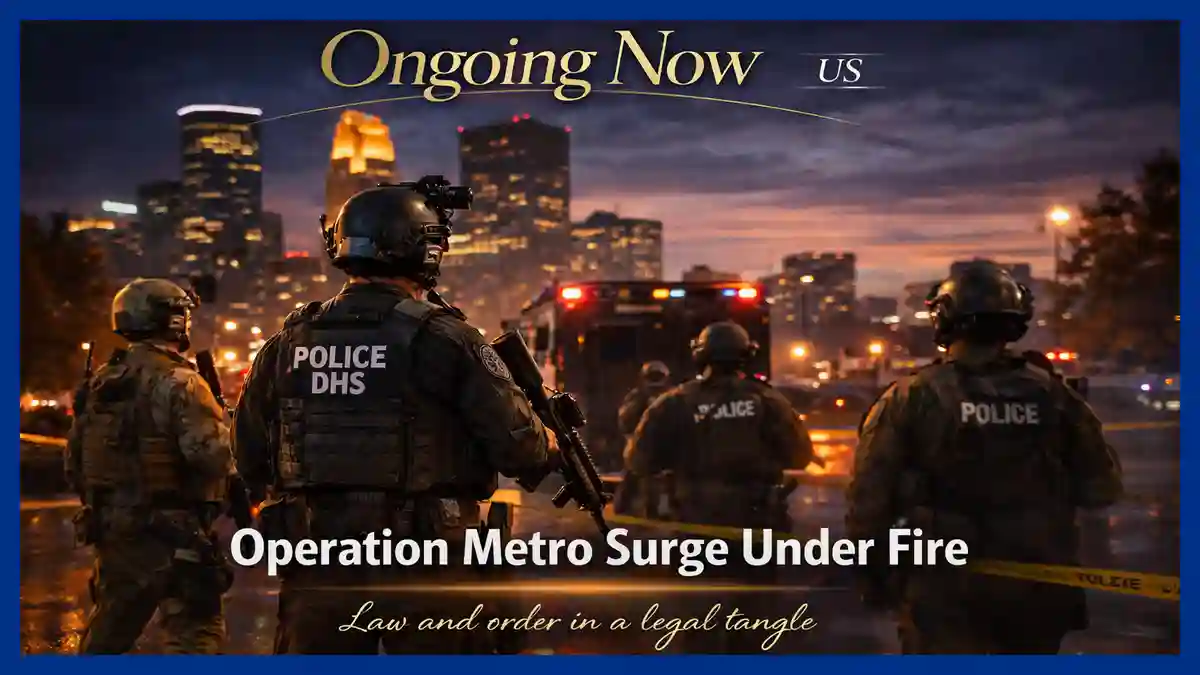
On January 24, 2026, the city of Minneapolis recorded a third fatal shooting involving federal agents in as many weeks, an event that has catalyzed national debate over federal law enforcement standards and the scope of executive authority. The incident, occurring near Nicollet Avenue and 27th Street, followed the January 7 killing of 37-year-old Renee Nicole Good, a U.S. citizen, during a high-stakes immigration enforcement campaign known as Operation Metro Surge. These developments have prompted Governor Tim Walz to call for a cessation of federal activities in the state, while civil rights organizations emphasize the importance of an ACLU know your rights guide for residents navigating increased federal presence.
The rapid escalation of federal enforcement has created a complex legal landscape involving federal agent immunity laws and the DHS use of force guidelines. As local officials like Mayor Jacob Frey challenge the necessity of the federal surge, legal experts are examining the qualified immunity abolition act 2026 and the federal law enforcement standards act as potential legislative responses to the ongoing friction between state residents and federal authorities.
Federal Enforcement and the Launch of Operation Metro Surge
The Department of Homeland Security (DHS) initiated Operation Metro Surge in December 2025, deploying approximately 2,000 agents to the Twin Cities. According to official DHS statements, the operation is the largest of its kind, intended to execute mass deportation orders and apprehend individuals with prior criminal records. However, the operation’s scale and the arrival of an additional 1,000 agents in mid-January have transformed Minneapolis into a focal point for national immigration policy.
Reports from the Minnesota Bureau of Criminal Apprehension (BCA) and city leaders indicate that the surge has affected daily civic life, with federal agents establishing documentation checkpoints and conducting residential raids. The intensity of these actions has led to a rise in community-led surveillance and the frequent use of filming police rights Minnesota by legal observers attempting to document interactions.
| Key Date | Event Description | Primary Entities Involved |
| Dec 1, 2025 | Launch of Operation Metro Surge | DHS, ICE |
| Jan 7, 2026 | Fatal shooting of Renee Nicole Good | ICE Agent Jonathan Ross |
| Jan 15, 2026 | Introduction of DHS Use of Force Oversight Act | Rep. Delia Ramirez, Rep. Seth Magaziner |
| Jan 24, 2026 | Third fatal shooting on Nicollet Avenue | CBP Agents, Minneapolis Mayor |
The Death of Renee Good and the Nicollet Avenue Shooting
The January 7 killing of Renee Nicole Good on Portland Avenue South serves as a primary driver of the current civil unrest. Good, a local writer and mother, was shot by ICE Agent Jonathan Ross. While federal officials claimed the agent acted in self-defense, witness accounts and video footage appeared to show the agent stepping in front of her vehicle as she attempted to drive away.
The subsequent ICE shooting autopsy Renee Good has been a point of contention, as the FBI reportedly reclassified the initial civil rights investigation into an “assault on a federal officer” inquiry. This change in classification led to the resignation of multiple federal prosecutors and a lead FBI agent in Minnesota. The January 24 shooting at Nicollet Avenue further exacerbated tensions, with video showing federal agents wrestling a suspect to the ground before multiple gunshots were heard.
Institutional Conflict: Governor Walz and Federal Authorities
The relationship between Minnesota state leadership and the federal government has reached a point of public discord. Following the January 24 incident, Governor Walz issued a direct statement to the White House demanding the removal of “violent, untrained officers” from the state.
“Minnesota has had it. This is sickening,” Walz stated in a social media address. His call for a joint investigation between the Minnesota BCA and the FBI highlights the jurisdictional struggles occurring as federal agents operate independently of local police departments. U.S. Senator Amy Klobuchar and Representative Ilhan Omar have also joined calls for greater transparency regarding law enforcement tactical protocols used during these high-density operations.
Analysis: The Legal Framework of Federal Immunity
A central point of the ongoing controversy is the application of federal agent immunity laws. Under current precedents, federal agents often benefit from qualified immunity, which shields them from personal liability in civil lawsuits unless their actions violate “clearly established” statutory or constitutional rights.
However, legal analysts note that federal agents are not immune from state criminal prosecution if they act outside the scope of their lawful duties. The Supremacy Clause of the U.S. Constitution provides some protection, but as the American Immigration Council and other legal bodies have noted, agents can still face charges if their use of force is deemed unreasonable or malicious.
Why This Matters: Accountability and Oversight
The absence of a statutory federal use-of-force mandate has led to significant variations in how different administrations apply internal DHS policies. While the Biden administration aligned DHS protocols with Department of Justice standards in 2023, current reports suggest those internal safeguards have been deprioritized. The DHS Use of Force Oversight Act, currently before Congress, seeks to codify these requirements into law to ensure a uniform standard of accountability.
Societal and Community Impact in the Twin Cities
The presence of thousands of federal agents has fundamentally altered the social fabric of Minneapolis neighborhoods. Schools have occasionally transitioned to remote learning due to nearby enforcement activity, and local businesses have reported decreased foot traffic during “ICE Out” protest days.
For many residents, the primary response has been the development of an emergency plan for immigration raids. Legal aid organizations are providing legal aid Minneapolis for immigrants and U.S. citizens alike, emphasizing the necessity of an ICE raid preparedness checklist. These resources are designed to help families understand their Fourth Amendment protections against unreasonable searches and seizures.
Community Response: Rapid-response networks alert neighbors to ICE activity via encrypted apps.
Documentation: Observers emphasize documenting federal agent misconduct through high-quality video and time-stamped logs.
Legal Protections: Awareness campaigns focus on the right to remain silent and the requirement of judicial warrants for home entries.
Historical Context and Comparative Precedents
The current situation in Minneapolis draws comparisons to the 2020 civil unrest following the murder of George Floyd. While the 2020 protests focused on local police reform, the 2026 demonstrations are centered on federal overreach and the militarization of immigration enforcement.
Historically, federal agents have been deployed to cities during times of civil strife, such as during the 1992 Los Angeles riots or the 2020 deployment to Portland, Oregon. However, Operation Metro Surge represents a departure from these reactive deployments, as it is a proactive, long-term enforcement strategy. The scale of the deployment—3,000 agents in a single metropolitan area—surpasses historical benchmarks for domestic federal law enforcement operations.
Data Trends: Use of Force and Public Safety
Since the intensification of Operation Metro Surge in December 2025, the Twin Cities have seen a measurable shift in public safety metrics. While DHS maintains that the operation targets dangerous individuals, community groups argue that the aggressive tactics have increased the risk of accidental harm to bystanders and U.S. citizens.
By the Numbers: Operation Metro Surge (Estimated)
Agents Deployed: 3,000+
Total Detentions: 2,400+
Fatal Shootings (since Jan 1): 3
Protest Related Arrests: 150+
The data suggests a high-frequency engagement model that prioritizes volume over surgical enforcement. This has led to the Minneapolis ICE shooting investigation becoming a litmus test for federal-state cooperation in the modern era.
Moving Forward: Legislative and Judicial Pathways
As the Minneapolis protest locations today continue to draw crowds, the path toward resolution remains unclear. Legislative efforts like the federal law enforcement standards act face a divided Congress, while the judiciary must grapple with new challenges to federal immunity.
The American Civil Liberties Union (ACLU) and other advocacy groups are currently seeking injunctions to limit federal activity near schools and hospitals. These legal filings argue that the current scope of Operation Metro Surge violates the Tenth Amendment rights of the state of Minnesota to manage its own public safety without undue federal interference.
Summary of Resident Rights and Resources
In response to the surge, local advocacy groups have consolidated advice on how to report ICE abuse. Residents are encouraged to maintain a “know your rights” card and to understand that federal agents, like local police, generally require a warrant signed by a judge to enter a private residence without consent.
Documenting Encounters:
Stay Calm: Do not run or resist physically, as this can escalate the use of force.
Record Video: In Minnesota, you have a right to film law enforcement in public spaces as long as you do not interfere with their duties.
Ask for Identification: Request the names and agency affiliations of the officers involved.
Seek Legal Counsel: Immediately contact legal aid Minneapolis for immigrants or civil rights attorneys if a detention occurs.
The situation in Minneapolis remains a developing story with national implications for civil liberties, federalism, and the future of American immigration enforcement.
Stay sharp with Ongoing Now!
Source and Data Limitations: This report is based on verified news dispatches from the Associated Press, CBS News Minnesota (WCCO), and KARE-TV as of January 24, 2026. Official statements were sourced from the Minnesota Governor’s office, the Minneapolis Mayor’s office, and the U.S. Department of Homeland Security. Investigative details regarding Renee Good’s death were corroborated through public court records and Wikipedia’s documented timeline of Operation Metro Surge. Specific use-of-force policy details refer to the 2023 DOJ-aligned standards and subsequent 2026 legislative proposals (Ramirez-Magaziner Bill). Unverified social media claims regarding casualty counts or specific agent identities not confirmed by official records were excluded to ensure editorial integrity.