Hegseth Impeachment: Why Rep Ansari Reveals New Charges
Representative Yassamin Ansari (D-AZ) has announced plans to introduce articles of impeachment against Secretary of Defense Pete Hegseth, citing the administration’s military strategy in Iran.
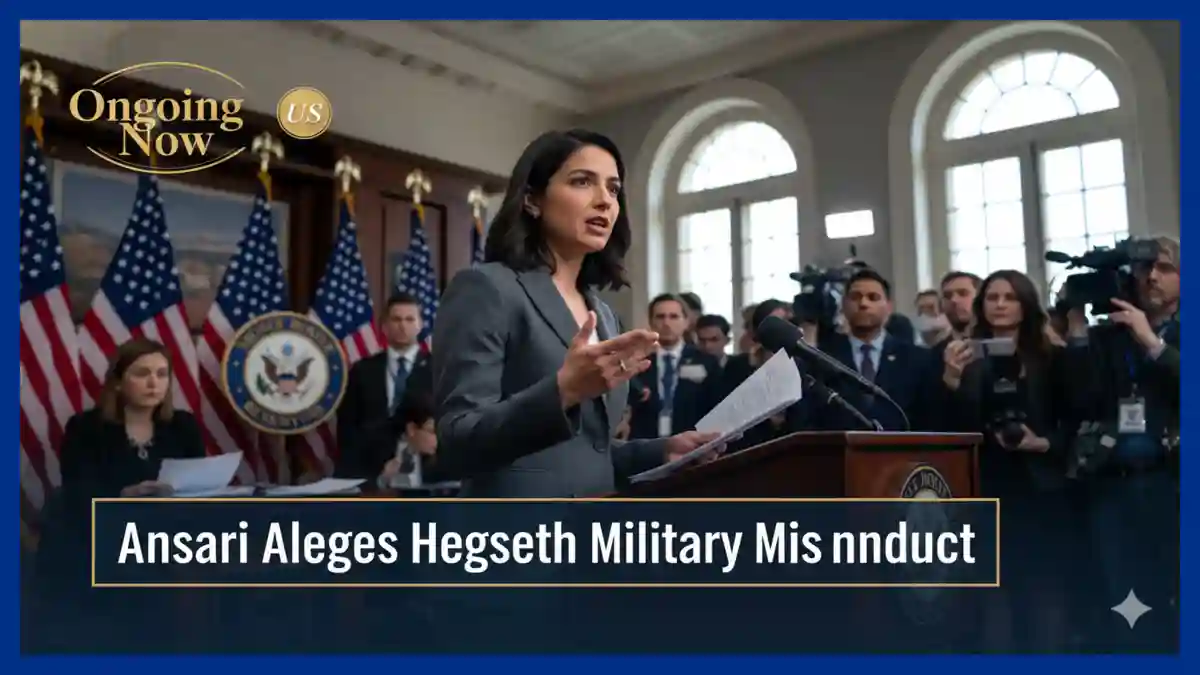
The move to impeach Secretary Pete Hegseth marks a significant escalation in the legislative oversight of the current conflict in the Middle East. Representative Yassamin Ansari announced on April 6, 2026, her intent to formally introduce the articles, accusing the Defense Secretary of violating his oath of office and overseeing actions that may constitute war crimes. The legislative effort focuses on three primary areas: the bypass of Congressional war powers, the reported targeting of civilian infrastructure in Iran, and the internal stability of the Pentagon following a series of high-level dismissals. While the Republican-controlled House makes the passage of these articles unlikely, the move has reignited a national debate over the 25th Amendment and the limits of executive military authority during active hostilities.
Legislative Basis for Rep Yassamin Ansari Hegseth Impeachment
The proposed articles of impeachment against Pete Hegseth are centered on the constitutional requirement that only Congress has the power to declare war. Representative Ansari, the daughter of Iranian immigrants, has argued that the current joint offensive—which began on February 28, 2026—lacks the necessary legislative authorization. The impeachment resolution specifically cites “reckless endangerment of U.S. servicemembers” and the alleged “willful targeting of civilian infrastructure,” including schools and hospitals in regions such as Minab, Iran.
Legal experts monitoring the situation on Capitol Hill note that the “Hegseth impeachment status today” remains in the preparatory phase. Ansari is scheduled to formally file the documents on April 13, 2026. This follows a previous, unsuccessful attempt by Representative Shri Thanedar to impeach Hegseth in 2025, which never reached a floor vote. The current effort, however, is bolstered by a growing coalition of House Democrats who point to a preliminary military investigation. That report suggested U.S. responsibility for a missile strike on an Iranian elementary school in February that resulted in 175 casualties.
Comparative Impeachment Precedents
| Subject | Year | Primary Allegation | Outcome |
| William Belknap | 1876 | Corruption/Kickbacks | Acquitted by Senate |
| Alejandro Mayorkas | 2024 | Breach of Public Trust | Dismissed by Senate |
| Pete Hegseth | 2026 | Unconstitutional War/War Crimes | Pending Introduction |
Pete Hegseth War Crimes Allegations and International Law
The term “Pete Hegseth war crimes allegations” has become a focal point of international legal scrutiny following recent strikes on Iranian soil. Under the Geneva Convention, the intentional targeting of civilian objects—including power plants, water systems, and educational facilities—is strictly prohibited. Critics of the administration point to social media statements from the executive branch threatening to “obliterate” critical infrastructure as evidence of intent.
The Defense Department has consistently maintained that all targets are of military significance or are being used by Iranian forces to facilitate drone and missile production. However, Human Rights Watch and other international observers have raised alarms regarding the proportionality of the strikes. The controversy was further intensified when Secretary Hegseth claimed at a Pentagon briefing that the American press emphasizes U.S. casualties merely to “make the president look bad,” a statement that drew sharp rebukes from veteran journalists and military historians.
Military Social Media Reactions and Pentagon Stability
Inside the Department of Defense, the atmosphere has been described as increasingly volatile. Reports of “military social media reactions” suggest a divide among the rank-and-file regarding the Secretary’s leadership. While some personnel express support for a more aggressive posture against Tehran, others have voiced concerns over the sudden dismissal of senior leadership.
The recent removal of U.S. Army Chief of Staff General Randy George and the Army’s Chief of Chaplains, Major General William Green Jr., has led to accusations of a “Pentagon purge.” Major General Green, a 30-year veteran, was reportedly dismissed during Holy Week without a public explanation. These leadership changes have sparked significant “public reaction to Pentagon purges,” with lawmakers like Representative Rosa DeLauro suggesting that the administration is prioritizing ideological loyalty over professional military expertise.
“At the moment of our greatest moral peril, President Trump and Secretary Hegseth are silencing our voices of conscience. That should alarm every American.”
— Rep. Rosa DeLauro (D-CT)
The Hegseth 25th Amendment Discussion
Beyond impeachment, a parallel “Hegseth 25th amendment discussion” has emerged among House and Senate Democrats. This constitutional mechanism, typically reserved for instances of presidential incapacitation, is being invoked by lawmakers like Representative Ro Khanna and Representative Ansari. They argue that the current rhetoric regarding the “destruction of a civilization” in Iran demonstrates a lack of fitness to lead.
The 25th Amendment requires the Vice President and a majority of the Cabinet to declare the President “unable to discharge the powers and duties of his office.” Given that Vice President JD Vance and the current Cabinet remain staunch allies of the administration, constitutional scholars agree that the likelihood of this occurring is virtually zero. However, the frequent mention of the amendment in Congressional speeches serves as a formal marker of the depth of the current political divide.
Iran War Leadership Controversy and Strategic Shifts
The “Iran war leadership controversy” is not limited to legal or ethical concerns; it also encompasses fundamental disagreements over military strategy. Secretary Hegseth has stated that the goal of the U.S. mission is to ensure Iran has “no ability to build more” missiles and to secure the Strait of Hormuz. This objective has led to a request for a $1.5 trillion defense budget for fiscal year 2027—the highest in modern history.
Despite the high spending, concerns persist regarding the exhaustion of U.S. weapon stocks. Hegseth himself acknowledged that certain munitions inventories have been significantly depleted due to ongoing support for global conflicts. This logistical strain, combined with the “calls to fire Pete Hegseth” from nearly 30 members of Congress, has created a high-pressure environment for the Pentagon’s senior leadership.
Analysis: The Institutional Impact of Congressional Oversight
The current move toward impeachment and 25th Amendment discussions represents a stress test for U.S. institutional checks and balances. While these legislative maneuvers are unlikely to result in a removal from office, they force a public record of dissent and compel the administration to justify its actions within a legal framework.
Key Figures in the Current Debate
Pete Hegseth: Secretary of Defense, facing allegations of war crimes and unconstitutional war-making.
Yassamin Ansari: Lead proponent of impeachment, focusing on civilian casualties and lack of Congressional authorization.
JD Vance: Vice President, whose support is critical to any 25th Amendment discussions.
Dan Driscoll: Secretary of the Army and a rumored successor to Hegseth, contributing to reported internal Pentagon friction.
The outcome of this legislative push will likely depend on the trajectory of the war in Iran. If civilian casualties continue to mount or if the conflict expands further into regional infrastructure, the pressure for formal inquiries—even from within the majority party—may increase. For now, the Department of War remains focused on its “maximum pressure” campaign, while the House prepares for a contentious week of debate.
Stay sharp with Ongoing Now!
Source and Data Limitations: This report is based on official press releases from the Office of Representative Yassamin Ansari (April 6, 2026), statements from the House Appropriations Committee (April 7, 2026), and verified reporting from the Associated Press and PBS NewsHour regarding Pentagon briefings. Data regarding military casualties and civilian infrastructure strikes in Iran were drawn from preliminary Department of Defense investigations and international monitoring groups. Information regarding the 25th Amendment and impeachment procedures is based on established U.S. Constitutional law and Congressional records. Unverified social media rumors regarding specific troop movements or “Signalgate” details were excluded unless confirmed by multiple institutional sources.