Massive spending spike tests federal contract transparency guidelines
Capital landmark infrastructure costs trigger congressional inquiries into non-competitive agency awards.
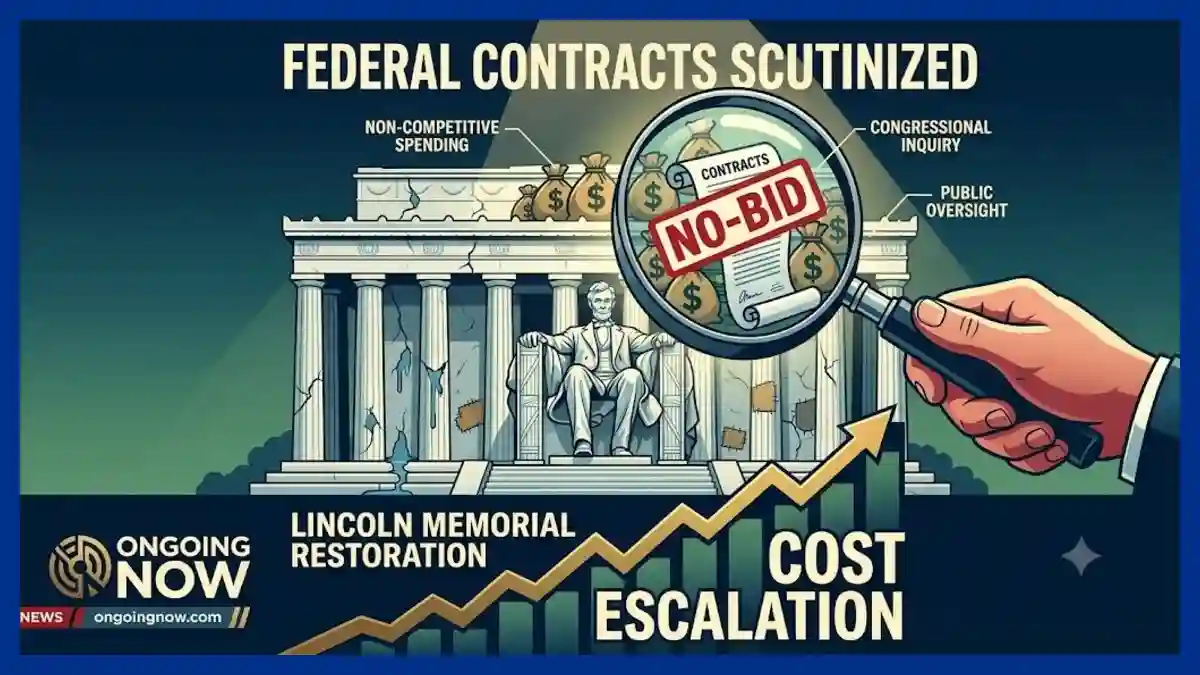
The implementation of federal contract transparency guidelines has emerged as a central focus of congressional oversight following the non-competitive procurement of maintenance agreements for the National Mall. The Department of the Interior and the National Park Service bypassed traditional competitive-bidding procedures to authorize millions of dollars in infrastructure spending. This decision, aimed at completing the physical remediation of a prominent national monument ahead of upcoming civic celebrations, has drawn formal inquiries from legislative subcommittees. Investigators are examining whether the regulatory parameters governing urgent or specialized awards were appropriately applied to the commercial entities involved in the physical upkeep of the site.
The administrative decision to expedite the project has elevated debate over public infrastructure oversight investigations within federal agencies. While executive departments retain the legal authority to waive full and open competition under strict statutory conditions, the escalation of the Lincoln Memorial restoration budget breakdown has intensified scrutiny from fiscal watchdogs. The deployment of specialized municipal water treatments and commercial structural sealants has encountered unexpected technical setbacks, including localized peeling and rapid biological growth in the basin. Consequently, federal lawmakers are demanding comprehensive documentation regarding how these non-competitive awards align with long-term procurement accountability standards.
Technical Performance and Capital Allocations for Public Monument Restoration
The physical execution of the project involved distinct tasks allocated to specialized contractors under emergency procurement exemptions. Atlantic Industrial Coatings was awarded a contract to apply an industrial-grade, protective waterproofing material across the 300,000-square-foot concrete basin, which was finished in an unconventional “American Flag Blue” color. Concurrently, Green Water Solutions received an independent allocation to install a proprietary “Nano Bubble” filtration system designed to mitigate chronic organic accumulation without relying on conventional large-scale chemical additives.
| Contractor | Assigned Operational Scope | Initial Contract Value | Current Outlay / Obligation | Procurement Basis Cited |
| Atlantic Industrial Coatings | Basin waterproofing and protective blue sealant application | $1.8 Million (Public Estimate) | $14.65 Million | Unusual and compelling urgency |
| Green Water Solutions | Nano Bubble Ozone water remediation system installation | $1.7 Million | $1.7 Million | Highly specialized niche technology |
Note: Financial data compiled from official agency updates and federal award recipient profiles via USAspending.gov. Current obligations reflect total authorized funding as of mid-2026.
Soon after the basin was refilled, localized areas of the newly installed sealant began detaching and floating to the surface. Furthermore, an unexpected surge of organic material turned parts of the water green, which department representatives attributed to residual material within older supply lines. While the water treatment vendor stated that its ozone technology functions by neutralizing subsurface bacteria before surface collection occurs, the visual condition of the landmark has intensified institutional concern over how the project was vetted.
Regulatory Frameworks for Urgent Executive Procurement Actions
The legal mechanism utilized by the Department of the Interior relies on specific exemptions within federal acquisition regulations that permit agencies to bypass full and open competition. Under standard procedures, a Department of the Interior request for proposals would be issued publicly, allowing qualified commercial firms to submit competitive bids to minimize costs. However, agencies may invoke exceptions under circumstances of “unusual and compelling urgency” or when a single source possesses a “highly specialized and niche technology.”
In this instance, administrative documentation cited the necessity of completing the monument repairs prior to the nation’s 250th anniversary celebration on July 4. Legal analysts note that while the justification of an impending national milestone can legally expedite procurement, it requires rigorous administrative documentation to ensure the scope of work remains strictly proportional to the immediate need. Congressional investigators are auditing these files to determine if the technical challenges encountered on-site indicate that the compressed timeline compromised necessary engineering reviews.
Congressional Investigations Target Non-Competitive Infrastructure Expenditures
The escalation of expenditures from initial public projections has prompted parallel investigations in both the House and Senate. U.S. Senator Richard Blumenthal, Ranking Member of the Senate Permanent Subcommittee on Investigations, initiated a formal inquiry into the ballooning costs of the basin restoration project. Concurrently, Representative Robert Garcia, Ranking Member of the House Committee on Oversight and Accountability, issued formal letters to the corporate headers of the participating firms demanding internal communications and structural agreements.
“The ballooning payments to Atlantic Industrial and Atlantic Industrial’s lack of any obvious qualifications for the Reflecting Pool project raise troubling questions about whether excess taxpayer dollars are diverted,” stated Senator Richard Blumenthal in an official inquiry.
The legislative focus extends beyond the physical landmark to broader administrative patterns regarding Trump administration no-bid infrastructure spending. Lawmakers are investigating whether standard design reviews by oversight bodies, such as the Commission of Fine Arts, were bypassed. These committees are requesting all correspondence between executive officials, procurement officers, and the private contractors to verify that financial compliance protocols were fully observed.
Corporate Qualifications and Compliance History Under Audit
A significant aspect of the ongoing public infrastructure oversight investigations involves the past performance history of the selected commercial partners. Federal procurement databases indicate that Atlantic Industrial Coatings had not previously been awarded a prime federal contract, with its corporate portfolio primarily consisting of regional highway culvert waterproofing, roofing, and piping assignments. Similarly, Green Water Solutions had recorded only one prior federal agreement: a $1.08 million pilot project evaluating bacteria reduction within municipal sewage flows along the Tijuana River.
Oversight committees are reviewing these corporate profiles to determine how the technical demands of a historic seven-acre public monument were matched with these specific firms. Because both companies had previously performed commercial property maintenance within the private hospitality and recreation sectors, investigators are examining the selection process to ensure that personal associations did not influence the distribution of public funds. The contractors have maintained that their respective technologies are sound and that any localized physical anomalies are covered under standard service warranties.
Broader Policy Implications for Taxpayer-Funded Landmark Maintenance
The physical maintenance of national monuments presents distinct engineering challenges due to their scale, age, and continuous public exposure. Historically, major overhauls of the capital’s water basins have required significant capital investments, with past administrative efforts to resolve organic growth exceeding $35 million. The reliance on non-competitive contracting to address these systemic issues highlights a recurring tension between rapid executive action and systematic fiscal oversight.
Procurement Inception (April-May)
  │  Exemptions invoked for upcoming national milestone.
  ▼
Contract Execution (May-June)
  │  $14.65M allocated for waterproofing; $1.7M allocated for filtration.
  ▼
Physical Deployment (June)
  │  Sealant peeling observed; localized organic growth recurs.
  ▼
Oversight Activation (Late June)
  │  House and Senate subcommittees issue formal inquiries.
The financial structure of the current project has also drawn scrutiny because funding adjustments are drawn from the Recreation Enhancement Fee Program, utilizing revenue collected from national park visitors. Moving forward, the outcomes of these congressional inquiries will likely influence how federal contract transparency guidelines are enforced for high-profile civil engineering projects. By establishing clear boundaries for emergency procurement exemptions, lawmakers aim to ensure that taxpayer-funded monument repairs remain fully transparent and structurally sound.
Stay sharp with Ongoing Now!
Source and Data Limitations: This analysis is compiled exclusively from verified public records, including formal letters from the Senate Permanent Subcommittee on Investigations and the House Committee on Oversight and Accountability dated May and June 2026. Financial allocations and corporate histories were verified using official federal award profiles on USAspending.gov and HigherGov database registries. This text excludes all partisan commentary, speculative reporting regarding unreleased documents, and unverified statements concerning personal or corporate motivations.