Federal Agency Funding Deadline Stirs National Debate
The Senate acts on partial spending as strikes and a looming shutdown deadline impact federal operations and public sentiment.
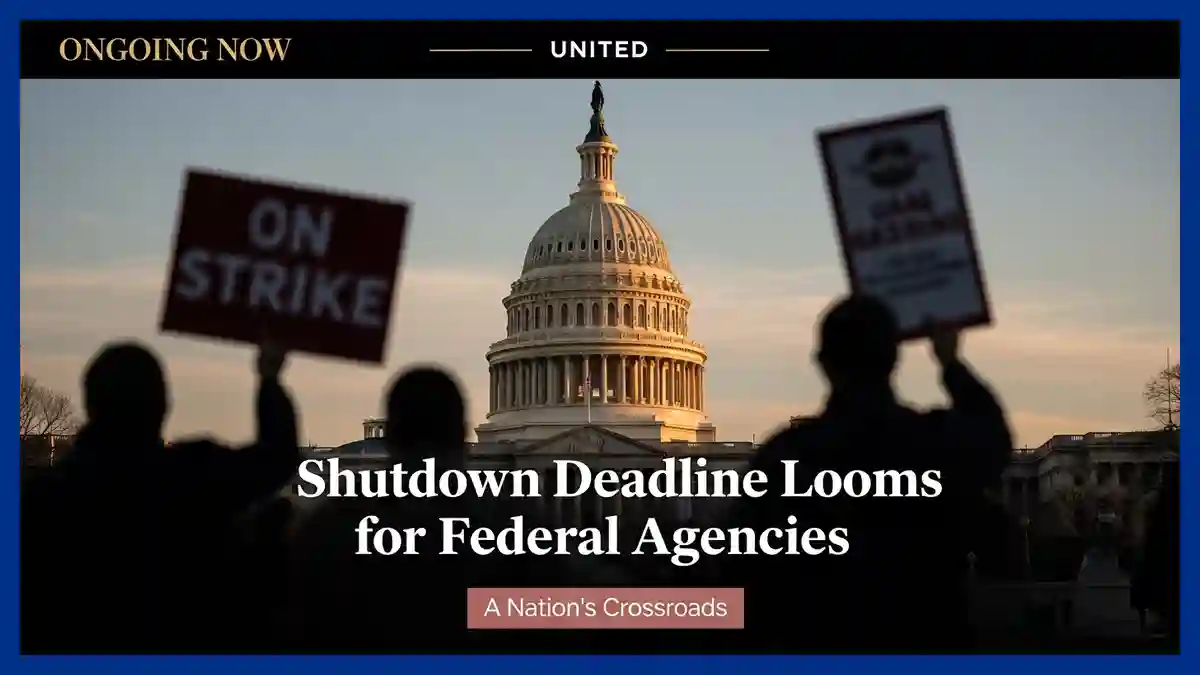
The federal government faces a significant federal agency funding deadline at midnight on January 30, 2026, as Congress balances a partial spending deal against a backdrop of civil unrest. While the Senate has reached a tentative agreement to fund five major appropriations bills, a standoff over the DHS appropriation bill status remains the primary obstacle to avoiding a lapse in funding for the Department of Homeland Security. This legislative friction is compounded by a coordinated “National Shutdown” strike, where participants are observing a national day of no shopping and widespread school walkout updates to protest federal immigration enforcement actions.
Legislative Gridlock and the DHS Appropriation Bill Status
The current fiscal impasse centers on the DHS appropriation bill status, which has become a lightning rod for broader debates over border policy and agency oversight. Senate Minority Leader Chuck Schumer ICE demands have stalled the passage of a comprehensive “minibus” package, as Democrats call for statutory limits on field operations and increased accountability for federal agents. The Senate recently rejected a six-bill package in a 45-55 procedural vote, falling short of the 60 votes required to overcome a filibuster.
In response, Senate leadership has pivoted to a dual-track strategy. Under a new agreement, five appropriations bills—covering sectors such as Defense, Labor, and Health and Human Services—will proceed toward a vote. However, the Department of Homeland Security will likely be moved to a separate two-week continuing resolution vs shutdown measure. This temporary “patch” is intended to keep frontline agencies operating while negotiations continue, though the House of Representatives’ current recess until February 2 makes a brief weekend shutdown statistically probable.
Key Legislative Figures and Terms
Antideficiency Act Explained: Under this 1884 law (amended in 1950), federal agencies are prohibited from spending or obligating funds without an explicit appropriation from Congress. This act necessitates the furlough of “non-essential” personnel during a funding gap.
Senate Spending Deal Details: The emerging deal aims to provide full-year funding for most agencies through September 2026, while carving out DHS for further debate.
Continuing Resolution (CR): A stopgap measure that maintains existing funding levels to prevent a total cessation of government services.
| Appropriations Category | Funding Status (as of Jan 30, 2026) | Legislative Vehicle |
| Agriculture & VA | Funded (Full Year) | Public Law 119-X |
| Defense & Labor/HHS | Pending Vote | Five-Bill Minibus |
| Homeland Security | At Risk | Two-Week CR Proposed |
| State & Treasury | Pending Vote | Five-Bill Minibus |
National Shutdown: Strike Participation and Regional Impact
Parallel to the tension in Washington, a wave of civil demonstrations has disrupted commercial and educational sectors across the country. The January 30 strike list includes major metropolitan areas where local organizers have called for a total economic blackout. In Denver, the Denver national shutdown news highlights the closure of dozens of local businesses, including high-profile restaurants and retail boutiques, in a show of solidarity with the families of individuals recently killed in federal enforcement actions.
In California, business closures today Los Angeles reflect a similar trend, with many small business owners opting to shutter their doors to avoid individual liability for employees who wish to participate in the protests. These actions are part of a broader “National Shutdown” movement, which advocates for a national day of no shopping to register public dissatisfaction with current federal immigration policies, specifically “Operation Metro Surge.”
Celebrity Advocacy and Solidarity Strike Participation
The movement has gained significant cultural momentum through solidarity strike participation from high-profile figures. Actor Pedro Pascal strike support has been particularly visible, as he used his social media platforms to amplify the “No work. No school. No shopping” message. Pascal, alongside other celebrities like Jamie Lee Curtis, has urged followers to support the school walkout updates and community vigils being held in cities like New Haven and Minneapolis.
Advocates argue that these strikes are necessary to force a shift in the government shutdown reasons 2026, moving the conversation from purely fiscal constraints to the human impact of federal agency funding. However, the economic reality for many workers remains a point of contention. While organizers have urged businesses to provide a paid day of solidarity, many hourly employees face the difficult choice between political participation and the loss of essential wages.
Analysis: Why the Antideficiency Act Matters Now
The Antideficiency Act explained provides the legal framework that transforms a political disagreement into an operational crisis. Because the act forbids federal managers from incurring obligations in excess of their appropriations, a failure to pass the DHS budget by the federal agency funding deadline triggers immediate contingency plans.
“The Antideficiency Act ensures that the ‘power of the purse’ remains with the people’s representatives, but it also creates a binary ‘on-off’ switch for government services that can be highly disruptive to the national economy,” notes a policy brief from the Committee for a Responsible Federal Budget.
While “essential” personnel—such as Border Patrol agents and TSA officers—are required to work without pay during a shutdown, “non-essential” functions like visa processing and E-Verify maintenance are suspended. This distinction often leads to a “slow-down” effect in national commerce, as seen during the 43-day shutdown in late 2025.
Regional Variations in Protest Schedules
The city protest schedules 2026 show a diverse array of actions planned throughout the day:
Minneapolis: Large-scale marches originating from the Nicollet Avenue site of recent federal law enforcement incidents.
Los Angeles: A coordinated “retail blackout” across major shopping districts in Santa Monica and downtown.
Denver: Community vigils and a total shutdown of the “Five Points” business district.
New York City: Rallies at federal plazas and a significant drop in public school attendance following the school walkout updates.
These regional actions serve to maintain pressure on the Senate as they finalize the Senate spending deal details. The intersection of local activism and federal policy highlights a growing trend where domestic policy debates are no longer confined to the halls of Congress but are actively contested in the streets and the marketplace.
Economic Implications of the 2026 Fiscal Standoff
The economic impact of a partial shutdown, even if brief, is measurable. Data from the Congressional Budget Office (CBO) suggests that previous shutdowns have shaved small but significant percentages off quarterly GDP growth. While the primary effect is a delay in federal spending rather than a permanent loss, the uncertainty affects business investment and consumer confidence.
The national day of no shopping adds a layer of private-sector volatility. If a significant percentage of the population adheres to the boycott, retail sectors in major cities could see a one-day revenue drop of up to 15-20%. For small businesses already navigating the “Operation Metro Surge” environment, this presents a challenging fiscal hurdle, regardless of their political alignment.
What the Data Shows: Public Opinion and Policy
Recent surveys indicate a sharp divide in how the public perceives the government shutdown reasons 2026. While a majority of Americans favor avoiding a shutdown, there is significant regional support for the Chuck Schumer ICE demands in areas most affected by federal enforcement surges.
As the federal agency funding deadline approaches, the question remains whether the Senate’s partial deal will be enough to satisfy a restive public or if the “National Shutdown” represents a new era of labor and civil coordination in American politics.
Stay sharp with Ongoing Now!
Source and Data Limitations: This article is based on legislative records from the 119th Congress, official statements from the Office of Senate Minority Leader Chuck Schumer, and public contingency plans from the Department of Homeland Security (DHS). Economic projections are sourced from the Committee for a Responsible Federal Budget and the Congressional Budget Office (CBO). Information regarding the “National Shutdown” and city-specific protest schedules was verified through local news reports (e.g., KAXE, Bring Me The News) and organizer announcements as of January 29-30, 2026. This report excludes speculative claims regarding long-term election outcomes or unverified social media rumors about specific business closures not confirmed by local reporting.