Daylight Saving 2026: Why the March 8 Shift Persists
Federal standards and state laws govern the March 8 clock change 2026, marking the start of later sunsets across the United States.
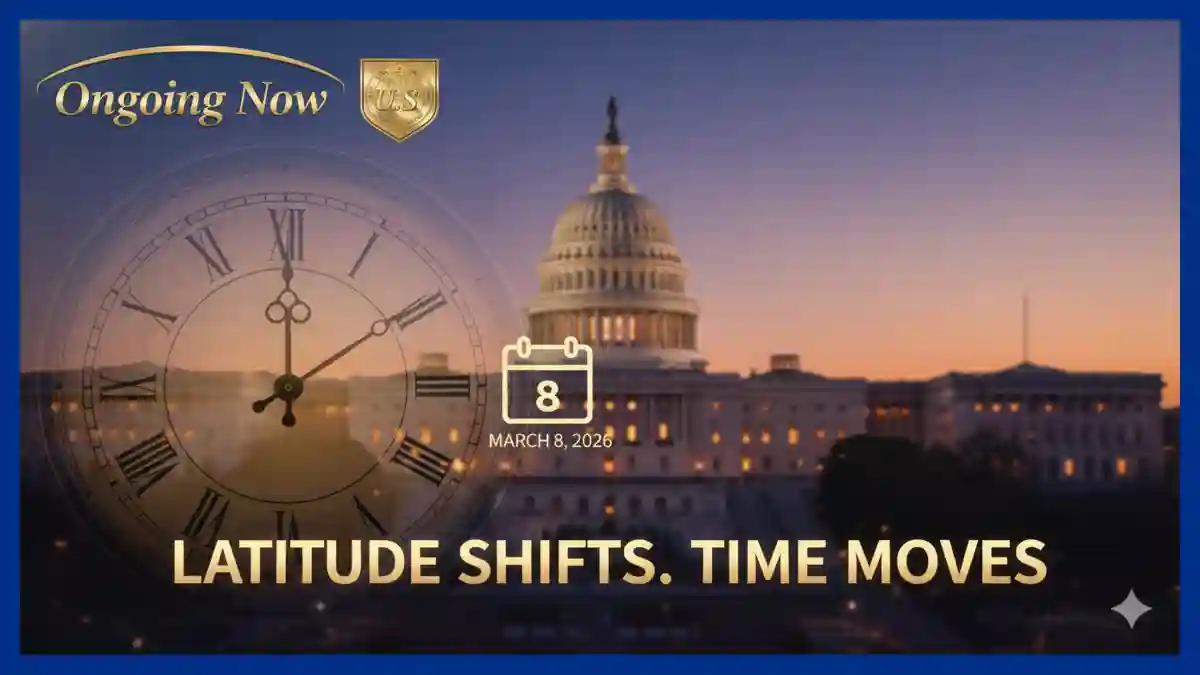
Most Americans will adjust their timepieces this weekend as the March 8 clock change 2026 officially transitions the country into Daylight Saving Time (DST). At 2:00 a.m. local time on Sunday, clocks across the majority of the United States will move forward by one hour, a shift colloquially known as the “spring forward.” This annual adjustment, mandated by the Uniform Time Act of 1966, results in the loss of one hour of overnight sleep but provides an extra hour of evening daylight for the next 238 days. While the shift is a standard seasonal occurrence, it remains a subject of active legislative debate in Congress and state capitals, where many lawmakers are seeking to end the biannual practice entirely.
National Standards and the Uniform Time Act
The practice of shifting time is not merely a tradition but a strictly regulated federal process overseen by the U.S. Department of Transportation (DOT). Under current federal law, the March 8 clock change 2026 occurs on the second Sunday of March, a schedule established by the Energy Policy Act of 2005. The primary intent behind the policy has historically been to reduce energy consumption by aligning daylight hours with the times when people are most active, although modern research from the National Institute of Standards and Technology (NIST) suggests these savings are now minimal.
The DOT maintains that DST serves several public interests, including:
Reduced Traffic Accidents: Increased visibility during the evening commute can lead to fewer vehicle-to-pedestrian incidents.
Crime Prevention: More daylight in the early evening has been statistically linked to lower rates of certain outdoor crimes.
Economic Stimulus: Longer daylight hours encourage consumer spending at retail outlets and outdoor recreation venues.
Where Clocks Stay Still: Arizona and Hawaii Schedules
While the majority of the country participates in the “spring forward” ritual, the DST 2026 Arizona schedule remains an outlier. With the exception of the Navajo Nation, the state of Arizona does not observe Daylight Saving Time. This exemption is permitted under the Uniform Time Act, which allows states to opt out of DST but does not currently allow them to remain on DST permanently without a change in federal law.
The Hawaii time change 2026 is similarly non-existent. Due to its tropical latitude, Hawaii experiences relatively consistent daylight hours throughout the year, making the seasonal shift unnecessary for its residents. Consequently, Hawaii has remained on Standard Time since 1967. Several U.S. territories, including Puerto Rico, Guam, American Samoa, and the U.S. Virgin Islands, also do not change their clocks tonight.
2026 Time Change Calendar and Key Dates
For those planning their year, the 2026 time change calendar updates provide two critical dates for the seasonal transition. Following the March 8 start, Daylight Saving Time will remain in effect for nearly eight months.
| Event | Date | Action | Local Time |
| Spring Forward | March 8, 2026 | Clocks move forward 1 hour | 2:00 a.m. becomes 3:00 a.m. |
| Fall Back | November 1, 2026 | Clocks move back 1 hour | 2:00 a.m. becomes 1:00 a.m. |
The U.S. Naval Observatory, which serves as the official timekeeper for the Department of Defense, notes that most digital devices—including smartphones, computers, and smart home systems—will update automatically. However, manual adjustments will still be required for analog watches, older vehicle clocks, and some household appliances.
Legislative Efforts: The Sunshine Protection Act
As the daylight savings 2026 countdown concluded this weekend, the legislative push for a permanent solution regained momentum on Capitol Hill. Senator Rick Scott of Florida recently reintroduced the Sunshine Protection Act, a bipartisan bill aimed at making Daylight Saving Time the permanent year-round standard for the nation.
While the Senate passed a version of this bill in 2022, it has historically stalled in the House of Representatives. Proponents argue that “locking the clock” would eliminate the health and safety risks associated with the biannual shift. Currently, 19 states—including South Carolina, Alabama, and Colorado—have passed their own laws to observe permanent DST, but these measures cannot take effect until the federal government amends the Uniform Time Act.
Health and Productivity: What the Data Shows
Medical experts and sleep scientists have raised concerns regarding the physiological impact of the spring forward 2026 USA transition. Research published by Stanford Medicine and the American Academy of Sleep Medicine (AASM) indicates that the abrupt loss of one hour of sleep can disrupt the body’s circadian rhythm.
Analysis: The “Social Jet Lag” Effect
The transition to DST creates a period of “social jet lag,” where the body’s internal biological clock is out of sync with the social clock (the time on the wall). According to a 2025 study in the Proceedings of the National Academy of Sciences:
Cardiac Risks: There is a documented increase in the rate of heart attacks and strokes in the week immediately following the spring time change.
Workplace Safety: Workplace injuries tend to spike on the Monday following the transition as employees suffer from sleep deprivation.
Public Safety: Fatal traffic accidents have been shown to increase by approximately 6% in the days following the start of DST.
The AASM has officially advocated for a transition to permanent Standard Time—rather than permanent Daylight Saving Time—arguing that morning light is more beneficial for human health and sleep-wake cycles.
Economic and Societal Implications
The March 8 clock change 2026 also has significant economic ramifications. Organizations such as the Chamber of Commerce often support DST because longer evenings correlate with higher revenue for the tourism and golf industries. Conversely, some economists estimate that the annual time shift costs the U.S. economy hundreds of millions of dollars in lost productivity and healthcare costs related to sleep disruption.
For families, the transition often impacts morning routines, particularly for school-aged children. As the sun rises later in the morning after the change, many students may find themselves waiting for school buses in the dark during the initial weeks of the shift.
Practical Steps for the Transition
Knowing what time to change clocks tonight is only the first step in a smooth transition. To mitigate the health effects of the time change, the National Sleep Foundation suggests:
Gradually adjusting sleep schedules by 15 minutes each night in the days leading up to the change.
Prioritizing exposure to natural sunlight on Sunday morning to help reset the internal clock.
Checking and replacing batteries in smoke detectors and carbon monoxide alarms, a safety check traditionally paired with the time change.
As the nation enters this new phase of the 2026 calendar, the debate over the utility of Daylight Saving Time continues to evolve. While the benefits of evening light remain popular with the public, the institutional and health-related costs ensure that the March 8 clock change 2026 will likely remain a topic of legislative scrutiny for the foreseeable future.
Stay sharp with Ongoing Now!
Related Coverage:
Source and Data Limitations: This report is based on official schedules provided by the U.S. Naval Observatory and the National Institute of Standards and Technology (NIST) for the 2026 calendar year. Legislative status updates regarding the Sunshine Protection Act and the Uniform Time Act of 1966 were sourced from the Congressional Research Service and the National Conference of State Legislatures (NCSL). Health impact data was derived from peer-reviewed studies published in the Journal of Clinical Sleep Medicine and the Proceedings of the National Academy of Sciences (2025). This article excludes speculative claims regarding the future passage of permanent time legislation and focuses solely on currently enacted federal and state laws.