Behind the Tensions: Decoding the Active Turks and Caicos Level 2 Travel Advisory
A structural security analysis of local statutory laws, airport screening mandates, and vacation safety ratings.
The active turks and caicos level 2 travel advisory remains a critical reference for global mobility, prompting many to ask: is providenciales safe for tourists 2026? Acquiring travel insurance covering state department warnings is increasingly vital, alongside implementing specific grace bay beach safety guidelines and studying regional caribbean vacation safety ratings 2026. Those evaluating a cancel trip to turks and caicos refund policy face distinct financial timelines, occasionally navigating circumstances requiring us embassy nassau travel assistance. Simultaneously, established physical infrastructure across verified safe hotels in turks and caicos islands supports a consistent influx of international arrivals booking daily commercial flights from miami to providenciales airport.
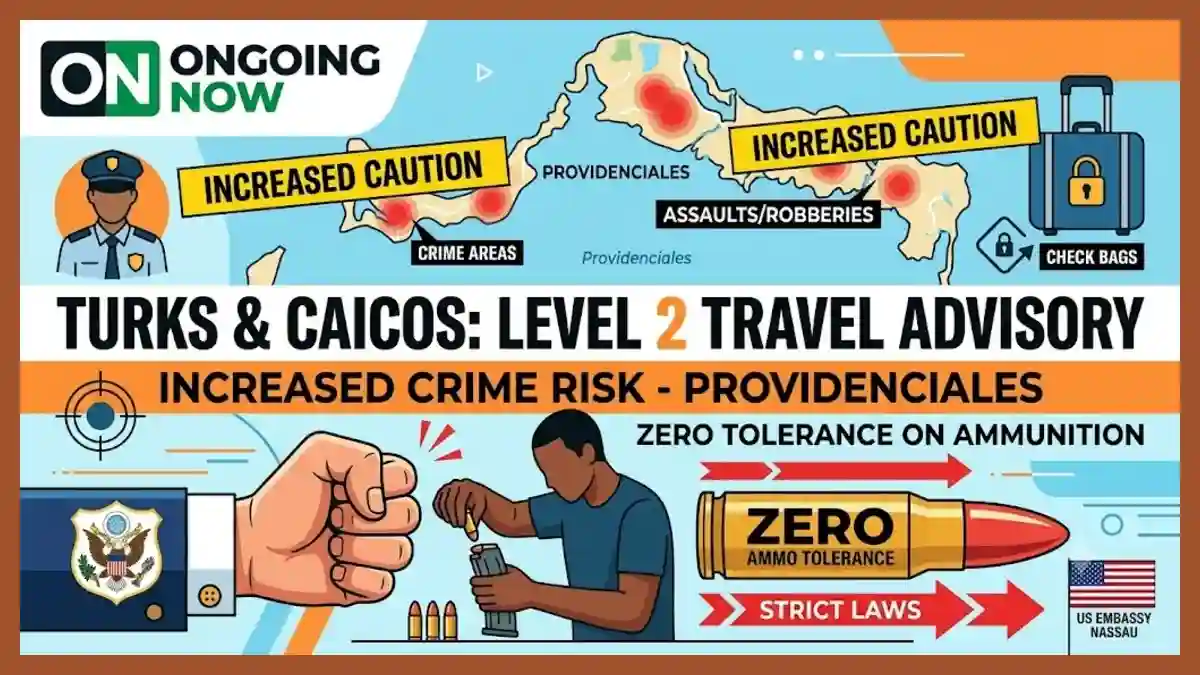
Understanding the components of these safety parameters requires an objective look at both security metrics and territory-specific legislation. In recent updates from the U.S. State Department, the territory’s classification has been maintained at “Level 2: Exercise Increased Caution.” This places the archipelago in the same advisory tier as several major European destinations, reflecting a dual reality of localized crime risks paired with strict statutory enforcement. For incoming visitors, understanding the specific regional boundaries of these policies is the foundation of modern, responsible travel planning.
Evaluating Security on the Ground in Providenciales
When assessing the primary commercial hub of the islands, analysts must differentiate between localized incidents and tourist-heavy corridors. The question of whether the primary tourist zone remains secure is a dominant theme in regional data. Statistical reporting indicates that the vast majority of violent criminal incidents are non-random, localized events that occur outside major resort areas. However, multi-agency documentation underlines that opportunistic petty crime remains a persistent factor across high-traffic zones.
The Royal Turks and Caicos Islands Police Force has expanded patrols across key coastal areas to mitigate risks associated with thefts from unattended belongings on public shorelines. Security professionals emphasize that maintaining situational awareness is the most critical preventative tool for visitors. Travelers are advised to avoid isolated stretches of coastline after dusk and to utilize dedicated resort security resources when moving between properties.
====================================================================
                        CLEAN NEWSROOM GRID
====================================================================
Safety Tier           Advisory Status        Primary Local Risk
--------------------------------------------------------------------
Level 1               Normal Precautions     Minimal/Baseline
Level 2 (Active)      Increased Caution      Localized Crime/Laws
Level 3               Reconsider Travel      Widespread Instability
Level 4               Do Not Travel          Severe Systemic Threat
====================================================================
Note: Classification tiers are subject to review by the U.S. State Department
based on evolving local law enforcement and legislative updates.
Analysis: The Strict Enforcement of National Firearm Statutes
The most distinctive risk profile for international travelers in the territory does not stem from street-level crime, but from strict local statutory laws regarding ammunition. Under the firearms ordinances of the territory, the possession of even a single loose bullet or empty casing without a local permit carries an immediate mandatory minimum prison sentence. The U.S. State Department emphasizes that foreign licenses, concealed carry permits, or accidental placement inside luggage do not provide exemption from local prosecution.
“It is illegal to have firearms and ammunition in the Turks and Caicos Islands. This includes single bullets and cartridges brought by mistake in carry-on bags or luggage,” notes the official U.S. State Department advisory. “Travelers face arrest, jail time, and heavy fines. We cannot get U.S. citizens out of detention.”
This legal environment underscores the necessity of a rigorous luggage audit prior to departure from any domestic airport. Bags previously utilized for hunting, sport shooting, or defensive storage should be thoroughly cleared or entirely substituted. Local courts enforce these measures at security checkpoints during outbound customs screenings, leading to prolonged legal detentions for those found in violation.
Technical Frameworks for Travel Protection and Insurance Policies
Navigating the financial implications of an international travel advisory requires a meticulous understanding of modern insurance frameworks. Traditional comprehensive policies typically exclude coverage for cancellations driven by existing state-level warnings unless specific auxiliary riders are explicitly attached. To secure financial protection against shifting regional conditions, travelers are increasingly relying on specialized policy variants.
Cancel For Any Reason (CFAR) Protective Riders
Standard trip cancellation insurance provides reimbursement exclusively for a tightly defined list of covered reasons, such as medical emergencies or documented operator insolvency. For disruptions tied to changing security perceptions, a Cancel For Any Reason rider is the primary mechanism available to recoup non-refundable deposits. These provisions typically require activation within a narrow window following the initial trip payment and generally return between 50% and 75% of total prepaid costs.
Medical Evacuation and Regional Health Infrastructure
Given the localized nature of the territory’s specialized medical facilities, medical evacuation insurance is heavily recommended by international safety agencies. In the event of critical injury or acute illness, transfer to a mainland metropolitan medical center can incur substantial capital costs. Ensuring that an insurance package covers emergency medical transport minimizes exposure to infrastructure limitations.
What the Data Shows: Comparative Regional Safety Metrics
An empirical analysis of regional crime data reveals that the territory exhibits crime trends comparable to, or lower than, many other prominent Caribbean destinations. According to local governmental data, overall violent crime rates experienced a notable downward trend heading into the current year, following targeted law enforcement interventions. This statistical reality indicates that while risks exist, they are concentrated geographically within specific residential zones away from commercial developments.
| Destination Comparison | Active Advisory Level | Primary Driver of Advisory |
| Turks and Caicos Islands | Level 2: Exercise Increased Caution | Localized Crime & Firearm Laws |
| The Bahamas | Level 2: Exercise Increased Caution | Localized Violent Crime |
| Jamaica | Level 3: Reconsider Travel | High Crime & Medical Infrastructure |
| Dominican Republic | Level 2: Exercise Increased Caution | Urban Petty Crime & Safety |
The preservation of the Level 2 status highlights a standardized approach to tracking tourist destinations where specialized local laws intersect with urban development challenges. For travelers, understanding this context prevents overreaction while reinforcing the importance of standard preventative safety protocols.
Societal and Economic Impacts of Shifting Tourism Dynamics
The intersection of international travel warnings and strict legal frameworks has a direct, measurable impact on the domestic economy of the islands. Because tourism serves as the primary driver of gross domestic product, fluctuations in arrival data immediately register across local businesses, hospitality personnel, and infrastructural investments. The local government continues to balance the preservation of public order with the economic necessity of welcoming international visitors.
Community leaders and local business associations have actively campaigned to increase cross-border awareness of the territory’s strict laws to protect both visitors and the destination’s reputation. By implementing clearer signage at major ports of entry and collaborating with international air carriers, the territory aims to eliminate inadvertent legal infractions. This collaborative approach underscores the mutual interest shared by local citizens and global travelers in maintaining a transparent, predictable, and secure ecosystem.
Stay sharp with Ongoing Now!
Source and Data Limitations: This analysis is compiled using official circulars from the U.S. Department of State Bureau of Consular Affairs, the Royal Turks and Caicos Islands Police Force statistical updates, and consular data from the U.S. Embassy Nassau. Data points reflect verified advisory levels and regional conditions current as of July 2026. Insurance criteria are generalized based on standard industry underwriting guidelines; individual policy terms may vary significantly by carrier. Unverified local reports and speculative economic forecasts have been intentionally omitted to ensure analytical accuracy.