Disruptions hit transit lines: Navigating the London travel advisory safely
Elizabeth Line and Express services maintain essential airport corridors during rolling 24-hour network industrial actions.
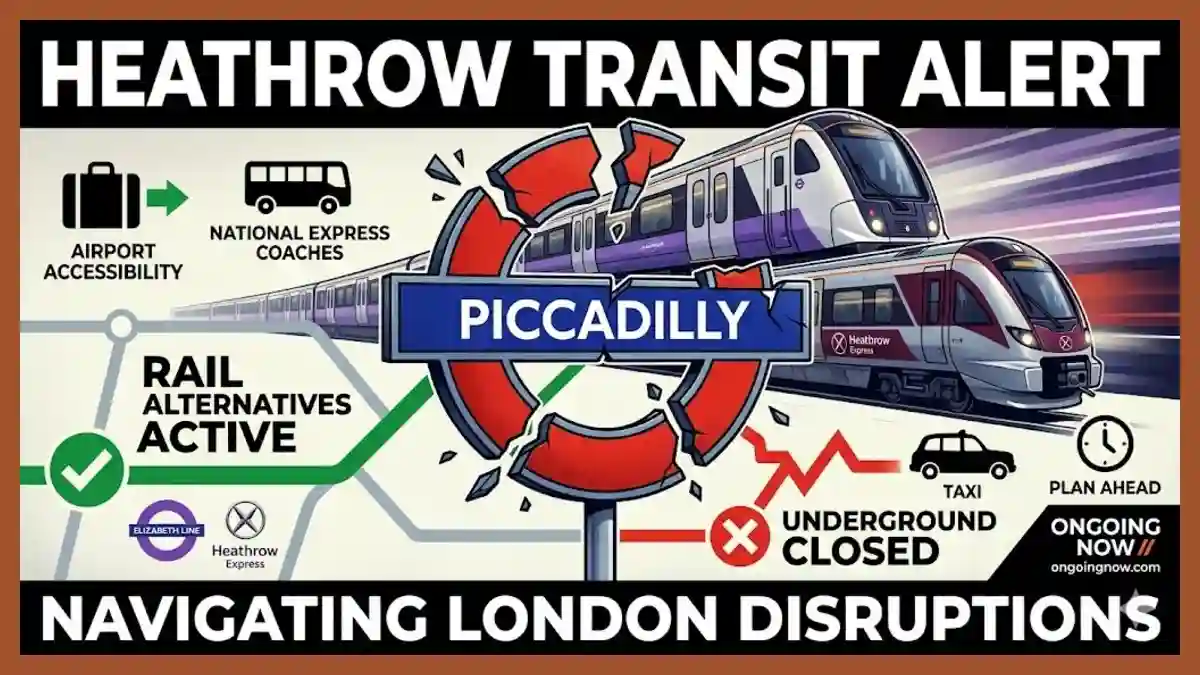
The London transport network faces concentrated operational adjustments this week as members of the Rail, Maritime and Transport (RMT) union execute rolling 24-hour industrial actions. Transport for London (TfL) has confirmed that the Underground network will experience severe service reductions on Tuesday, June 2, and Thursday, June 4, 2026. While several critical subterranean routes will close entirely, mainline rail infrastructure and designated airport links remain functional to preserve international transit capability.
For travelers navigating the capital, a comprehensive London travel advisory for tourists indicates that the primary arterial routes to the UK’s busiest aviation hub are operating under distinct service models. The Piccadilly line is completely suspended during the strike periods, forcing passengers to redirect to alternative rail, coach, or regional highway options. Officials advise that all journeys to the airport should be completed before 21:00 on strike days, as service levels drop sharply during the evening hours.
Technical Performance and Operational Parameters of Rail Alternatives
Elizabeth Line to Heathrow Schedule Consistency
The Elizabeth line continues to run a full timetable across its core central section, serving as a critical Piccadilly Line airport closure alternative during the industrial action. Because the line operates under a separate administrative framework from the standard London Underground network, its drivers are not participating in the current RMT walkout. Trains connect London Paddington directly to Heathrow Central (Terminals 2 and 3), Terminal 4, and Terminal 5.
+-------------------------------------------------------------------+
|               CLEAN NEWSROOM GRID: RAIL LINK STATUS               |
+----------------------+--------------------+-----------------------+
| Transit Mode         | Operational Status | Service Frequency     |
+----------------------+--------------------+-----------------------+
| Elizabeth line       | Fully Operational  | 4-6 trains per hour   |
| Heathrow Express     | Fully Operational  | Every 15 minutes      |
| Piccadilly Line      | Suspended          | No Service            |
+----------------------+--------------------+-----------------------+
| Caveat: Core lines remain open, but passenger volumes are         |
| projected to increase by 45% during peak morning hours.           |
+-------------------------------------------------------------------+
TfL data notes that while the Elizabeth Line to Heathrow schedule remains intact, travelers will experience a reduced service after 22:00 between Paddington and Maidenhead, alongside early infrastructure closures at Terminal 4. Minor local adjustments mean trains will bypass Acton Main Line, Hanwell, and West Ealing after 22:30 on the nights of June 1 and June 3.
Heathrow Express Timetable June 2026 Resilience
Operating from platforms 6 and 7 at London Paddington, the dedicated non-stop premium rail link remains completely unaffected by the industrial actions. The Heathrow Express timetable June 2026 confirms that trains will maintain their standard 15-minute departure frequency throughout the week. The journey time persists at 15 minutes to Terminals 2 and 3, with an additional six minutes required to reach the Terminal 5 platform.
“There is currently no industrial action planned that will affect Heathrow Express services. If such action is announced, detailed contingency schedules will be published immediately.”
— Heathrow Express Passenger Operations Report, June 1, 2026
Surface Transport Mechanics: Road-Based Mitigation Frameworks
National Express Coaches to Heathrow Capacity Allocation
Surface-level mass transit presents a stable backup system for passengers located outside the immediate catchment area of Paddington Station. Long-distance and regional coach networks operate completely separate workforces from the urban rail unions. High-capacity national express coaches to Heathrow depart continuously from Victoria Coach Station, providing direct highway transfers to the central terminal area and outer buildings.
Due to the total suspension of urban rail options like the Circle and Piccadilly lines, highway passenger volumes have grown substantially. National Express has positioned extra vehicles along the M4 motorway corridor to accommodate the displaced subterranean passenger base. Travelers using coach options must factor in localized urban traffic congestion, which adds an estimated 30 to 45 minutes to standard cross-city travel times.
+-------------------------------------------------------------------+
|             SURFACE COACH AND TERMINAL TRANSFER METRICS           |
+----------------------+--------------------+-----------------------+
| Route Sector         | Average Duration   | Capacity Status       |
+----------------------+--------------------+-----------------------+
| Victoria to LHR      | 65 - 90 Minutes    | High Demand           |
| Inter-Terminal Bus   | 10 - 15 Minutes    | Normal Flow           |
+----------------------+--------------------+-----------------------+
| Caveat: Road times are subject to peak traffic extensions between |
| 07:30 and 09:30.                                                  |
+-------------------------------------------------------------------+
Airport Taxi Cost London Strike Realities
Private vehicle hire remains an accessible point-to-point option, though it is subject to standard municipal tariff structures and market-driven pressure. The official airport taxi cost London strike analysis shows that standard metered Black Cabs operating under Transport for London Tariff 1 and Tariff 2 charge between £70.00 and £120.00 for a typical journey from Central London to the airport terminals.
+-------------------------------------------------------------------+
|               ESTIMATED HIGHWAY AND TAXI TARIFF RATES             |
+----------------------+--------------------+-----------------------+
| Metric Type          | Standard Base Cost | Strike Window Impact  |
+----------------------+--------------------+-----------------------+
| Licensed Black Cab   | £70.00 - £120.00   | Metered (Traffic Dep) |
| Private Hire/Minicab | £75.00 Base Rate   | Fixed (Advance Only)  |
| Terminal Drop-Off Fee| £5.00 Flat Rate    | Mandatory             |
+----------------------+--------------------+-----------------------+
Private hire minicabs offer fixed-rate alternatives, but these must be arranged and confirmed via digital dispatch apps or telephone bookings prior to departure. Unregulated street hails for private vehicles are illegal. During peak strike windows, app-based platforms utilize surge pricing models, which can elevate base costs by more than 50% when local rail infrastructure halts.
Inside the Terminals: Carrier Processing and Infrastructure Status
London Underground Airport Connections Open for Inter-Terminal Transit
While long-distance travel on the Piccadilly line is unavailable from the city center, localized internal infrastructure remains active. The London Underground airport connections open for internal terminal circulation continue to function under automated systems. Passengers can use the underground platforms to transit free of charge between Heathrow Central (Terminals 2 and 3), Terminal 4, and Terminal 5.
+-------------------------------------------------------------------+
|              INTERNAL TERMINAL TRANSIT AVAILABILITY               |
+----------------------+--------------------+-----------------------+
| Sector Segment       | Transfer Method    | Operational Cost      |
+----------------------+--------------------+-----------------------+
| Terminal 2 to 3      | Pedestrian Walkway | Free                  |
| Terminal 4 to Central| Shuttle Train      | Free (Requires Oyster)|
| Terminal 5 to Central| Express Rail / Tube| Free (Requires Oyster)|
+----------------------+--------------------+-----------------------+
To utilize these internal rail links without incurring a fare, passengers must tap a contactless payment card or an Oyster card at the ticket barriers. The system applies a net-zero calculation to the transaction, provided the journey starts and ends within the perimeter of the airport boundary.
Airline Baggage Drop Delays London Mitigation
The disruptions on the transport network have a compounding impact on airport terminal check-in halls. Ground handling agents report that erratic passenger arrival patterns cause sudden surges at check-in desks. The airline baggage drop delays London advisory urges international passengers to adjust their physical arrival windows at the terminal buildings.
“Please arrive at the airport 2.5 hours before your flight’s departure to allow enough time for document validation, checked bags, and check-in.”
— WestJet Operational Update, Issued June 1, 2026
Airlines emphasize that checking in via mobile applications and using automated self-service bag drops can save up to 40 minutes during peak congestion periods. Ground teams remain fully staffed, but processing queues lengthen when large groups arrive simultaneously via high-capacity rail lines like the Elizabeth line.
Comparative Structural Analysis: Modernizing Urban Rail Connections
The current disruption highlights the structural differences between London’s historic deep-tube lines and its modern regional express railways. The Piccadilly line, which dates its airport connection back to 1977, relies on older infrastructure that is currently undergoing a multi-billion-pound modernization program. This includes track replacement, power grid upgrades, and platform modifications to support a new fleet of walk-through trains scheduled to enter passenger service between late 2026 and mid-2027.
In contrast, modern systems like the Elizabeth line feature independent power distribution networks, automated signaling systems, and spacious platform screen doors. This layout minimizes systemic vulnerabilities and allows the line to remain open even when central tube routes are down. The table below outlines how these structural differences affect transport availability for travelers during network disruptions.
+-------------------------------------------------------------------+
|              STRUCTURAL COMPARISON OF AIRPORT RAIL LINKS          |
+----------------------+--------------------+-----------------------+
| Operational Vector   | Piccadilly Line    | Elizabeth Line        |
+----------------------+--------------------+-----------------------+
| Infrastructure Era   | Victorian / 1970s  | Modern Crossrail Era  |
| Rolling Stock Age    | 1973 Fleet         | Class 345 (Modern)    |
| Governance Model     | London Underground | MTR Elizabeth Line    |
| Vulnerability Level  | High Impact        | Low Network Spillovers|
+----------------------+--------------------+-----------------------+
Strategic Navigation Architecture: Step-by-Step Contingency Protocol
To minimize transit friction during the industrial action on June 2 and June 4, 2026, travelers should utilize a structured route planning system. The following protocol outlines how to verify your options and move through the network efficiently.
Systemic and Economic Impacts on the London Travel Landscape
The rolling industrial actions reflect broader structural discussions within the UK transport sector regarding working arrangements, safety protocols, and automated operations. The RMT union maintains that its current position addresses critical concerns over proposed shifts to a compressed four-day working week, specifically highlighting the potential impacts of longer shifts on driver fatigue and overall passenger safety.
From a broader economic perspective, transport stability remains a crucial factor in maintaining the city’s position in global liveability and business tourism indexes. While short-term disruptions require travelers to adapt, the continuous operation of mainline rail services and dedicated airport express lines helps insulate international transit corridors from total gridlock. By choosing alternative routes and planning ahead, visitors can navigate the capital smoothly while long-term infrastructure upgrades continue behind the scenes.
Stay sharp with Ongoing Now!
Source and Data Limitations: This analysis relies exclusively on operational updates published by Transport for London (TfL) as of June 1, 2026, alongside official service timetables from the Heathrow Express and National Express coach groups. Tariff rates are verified against the active TfL London Taxi Fare structure for Tariffs 1 and 2. Ground processing data and check-in window guidelines are drawn directly from official carrier advisories issued by WestJet and Heathrow Airport flight operations teams. This report excludes all speculative commentary regarding future union actions or unverified private transit services.