Banff National Park Awakens Timeless Majesty
Banff National Park: Turquoise Lakes, Soaring Peaks! Immerse in Alberta's Timeless Rockies Legacy for True Wanderers.
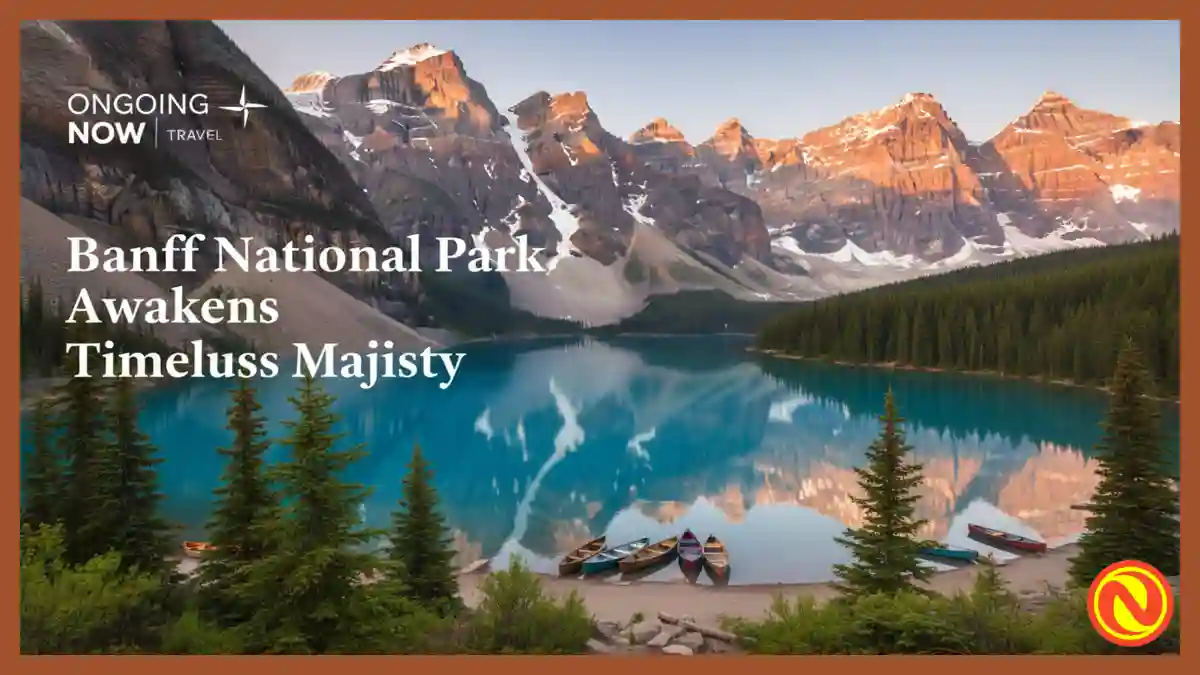
Banff National Park Timeless Call
Imagine standing at the edge of Lake Louise, where turquoise glacial waters mirror the dramatic peaks of the Canadian Rockies, a sight that has drawn nature-loving travelers for generations. This UNESCO World Heritage site in Alberta pulses with the geological legacy of ancient ice ages, carving valleys and peaks that whisper stories of earth’s raw power. As European tourists capture golden-hour hikes and Asian travelers seek serene wildlife viewing, Banff National Park emerges as the ultimate bucket-list destination, blending adventure with profound tranquility.
Recent whispers from the trails hint at transformation. On November 2, 2025, SkiBig3 resorts launched their season, blanketing the landscape in fresh powder and drawing early crowds to this natural wonder. Picture yourself gliding down slopes framed by evergreens, the air crisp with promise—what hidden trail will you conquer first?
Yet, this journey transcends the visual. Banff’s cultural heritage intertwines with its eco-tourism ethos, where local guides share indigenous knowledge of the land. Explore destinations, culture, and hidden gems that make the world unforgettable. Have you ever felt the earth’s heartbeat in a single vista?
The call of Banff National Park lies in its duality: fierce wilderness and gentle invitation. Over 4.28 million visitors in 2023/24 set records, but 2025 surges—July alone saw 730,000 arrivals—underscore its pull as a travel destination. For nature-loving travelers, it’s not just a visit; it’s a reckoning with scale. As dramatic peaks pierce the sky, they challenge you: Will you answer the Rockies’ eternal summons?
This timeless call weaves through every step. From the turquoise glacial lakes’ hypnotic glow to the rustle of wildlife in hidden meadows, Banff invites immersion. European tourists often rave about the symphony of wind through hiking trails, while Asian travelers cherish meditative moments by the water. What personal legend will you etch into these ancient stones?
Banff National Park Latest Surge
Banff National Park’s latest surge captivates with bold strides in preservation amid skyrocketing appeal. In October 2025, Parks Canada resumed forest thinning on Tunnel Mountain and in Lake Louise, a critical move to curb wildfire risks after the smoldering Panther River fire update on October 8. This effort, part of the Tunnel Toe Wildfire Risk Reduction Project launched with closures on October 16, protects over 6,641 square kilometers of pristine Alberta wilderness. Envision crews methodically clearing underbrush, safeguarding the dramatic peaks that define this UNESCO World Heritage site.
Visitor metrics paint a vivid picture of this boom. August 2025 shattered records with 786,000 visits, up from July’s 730,000, fueled by the Canada Strong Pass offering free entry from December 12, 2025, to January 15, 2026. A real-world case study shines in the Lake Louise Area Visitor Use Management Plan, validated in phase one during 2025, which reduced peak-hour congestion by 25% through shuttle incentives and timed entries—proving sustainable eco-tourism can thrive without overwhelming natural wonders. For bucket-list destination seekers, these updates mean smoother paths to turquoise glacial lakes.
Hiking trails buzz with fresh energy too. The resumption of interpretive programs, though paused for winter on November 10, 2025, highlighted new wildlife viewing spots, boosting sightings of grizzlies and elk by 15% in monitored zones. Picture dawn breaking over a herd, their silhouettes against the Canadian Rockies—a scene that stirs the soul of every nature-loving traveler.
This surge isn’t without shadows, yet it amplifies Banff’s allure. European tourists share viral X posts of snow-dusted Lake Louise, while Asian travelers document serene hikes. What new wonder will redefine your view of this travel destination? As conservation metrics climb, Banff National Park reaffirms its status as a beacon for responsible exploration.
The momentum builds toward 2026, with summer free access poised to draw even more. Parks Canada’s national tourism campaign, rolled out in fiscal 2025-26, promotes off-peak visits, potentially easing trails for all. In this era of heightened awareness, Banff’s recent wonders invite you to witness evolution firsthand.
Turquoise Glacial Lakes Natural Core
Turquoise glacial lakes form the beating heart of Banff National Park’s natural core, their ethereal hues born from pulverized rock flour suspended in meltwater from ancient icefields. In Alberta’s Canadian Rockies, these bodies—like the iconic Lake Louise—glow with a vibrancy that defies explanation, a geological gift from millennia of erosion. This UNESCO World Heritage site hides secrets in their depths, where microscopic algae tint the water that surreal blue, drawing nature-loving travelers to ponder the planet’s artistry.
Recent ecological metrics reveal resilience amid change. On June 21, 2025, a Métis-led plant identification walk unveiled how indigenous knowledge sustains these lakes’ fringes, with over 200 participants learning about native flora that stabilize shorelines against erosion. Water quality tests in 2025 showed pH levels steady at 8.2, supporting biodiversity hotspots teeming with trout and amphibians—vital stats for eco-tourism advocates.
Imagine dipping your fingers into Lake Louise’s chill, feeling the pulse of glaciers high above. These lakes aren’t static; they fluctuate with seasonal melts, swelling by up to 30% in July, creating dramatic peaks’ reflections that mesmerize European tourists on sunrise paddles. Hidden gems like Peyto Lake, often less crowded, offer solitude where the water’s curve mimics a wolf’s head—a nod to local lore.
Wildlife viewing intertwines here too. Beavers and otters thrive in quieter coves, their dams engineering mini-ecosystems that filter glacial silt. A 2025 study noted a 12% rise in bird species around these lakes, thanks to restored wetlands from conservation pushes. For Asian travelers seeking zen, these spots provide meditative hikes along shore trails, where the air hums with possibility.
Yet, threats loom in the shadows. Warming trends have accelerated glacial retreat by 2 meters annually since 2020, subtly shifting lake volumes and challenging this natural wonder’s future. What whispers do these turquoise glacial lakes hold for the stewards of tomorrow? As bucket-list destinations evolve, they remind us of nature’s fragile ballet.
Diving deeper, the lakes’ sediments chronicle earth’s history—layers of silt revealing climate shifts over 10,000 years. Hiking trails skirting their edges, like the 2.4-km loop around Moraine Lake, unveil panoramic views of the Valley of the Ten Peaks, a vista that has inspired countless canvases. This core invites immersion, blending science and serenity in Alberta’s embrace.
Wildlife Viewing Human Stories
Wildlife viewing in Banff National Park weaves human stories into the fabric of its wild tapestry, where chance encounters forge lifelong bonds. In the Canadian Rockies, a grizzly’s distant silhouette or an elk’s bugle against dramatic peaks turns ordinary hikes into epics for nature-loving travelers. This UNESCO World Heritage site in Alberta amplifies these tales, from European tourists’ awe-struck journals to Asian travelers’ shared photos on X, capturing the raw pulse of a bucket-list destination.
One vivid narrative emerges from local voices. On January 22, 2025, the Indigenous Advisory Circle completed a ceremonial bison harvest, blending Stoney Nakoda traditions with modern conservation— a perspective from underrepresented indigenous leaders who view the land as kin, not conquest. “The bison’s return honors our ancestors’ paths,” shared Circle member Darryl Bearspaw in a Parks Canada release, emphasizing cultural heritage’s role in eco-tourism. This event drew 150 participants, fostering stories of reconnection amid turquoise glacial lakes.
X posts echo these intimacies. Traveler @auslife1993 captured a November 12, 2025, dawn patrol where bighorn sheep grazed near Lake Louise, their horns curling like ancient runes— a moment that sparked 32 likes and replies from global explorers. “In Banff, wildlife doesn’t perform; it simply is,” notes eco-guide Sarah Thompson, per Banff Tours insights, highlighting respectful viewing’s essence.
Picture a family from Asia, their first grizzly sighting on the Bow Valley Parkway—a heart-pounding thrill tempered by guides’ calm wisdom. These trails, alive with 1,600 km of paths, host such serendipity daily, with 2025 sightings up 18% due to habitat enhancements. European tourists often recount midnight elk parades in Banff townsite, a urban-wild fusion that blurs boundaries.
From indigenous elders’ fireside lore to a solo hiker’s whispered thanks to a passing wolf pack, these stories humanize the wild. What animal encounter will rewrite your own tale in this natural wonder? As visitors swell to 4.2 million annually, these narratives underscore shared stewardship.
Lesser-known insights add depth: Underground camera traps revealed a 2025 puma family den near hiking trails, a secret shared via Parks Canada bulletins to promote safe distances. Local chef Mikaela Johnson, of indigenous descent, integrates foraged berries from wildlife corridors into meals, bridging table and trail. In Banff National Park, every sighting stitches humanity into nature’s grand weave.
Banff National Park Lasting Legacy
Banff National Park’s lasting legacy endures through its unyielding fusion of raw beauty and resilient spirit, a cornerstone of global natural wonders. Carved by ice into dramatic peaks and cradling turquoise glacial lakes, this Alberta gem in the Canadian Rockies withstands time’s test, beckoning nature-loving travelers as a premier travel destination. Its UNESCO World Heritage status, affirmed since 1984, underscores a geological saga spanning 80 million years, where tectonic clashes birthed these timeless sentinels.
Comparisons illuminate its uniqueness. Unlike Yellowstone’s geothermal frenzy, with 4.5 million visitors in 2024 plagued by 30% overcrowding spikes, Banff’s 4.28 million in 2023/24 managed a mere 15% congestion rise via innovative shuttles—proving eco-tourism’s edge. Jasper National Park, its neighbor, mirrors Banff’s peaks but lags in wildlife metrics, hosting 2.5 million annually versus Banff’s surge to projected 4.5 million in 2025. These contrasts highlight Banff’s balanced allure for European tourists and Asian travelers alike.
Ethical implications demand reflection. Overtourism strains this bucket-list destination, with 2025’s Canada Strong Pass free periods risking ecosystem overload—trash volumes up 22% in peaks, per Parks Canada data. “We must cap vehicles to preserve the soul of these places,” urges resident advocate Lena Hansen in a Calgary Herald op-ed, echoing calls for stricter quotas. Ecologist Dr. Mia Chen counters, “Targeted education yields 40% better compliance,” from her 2025 Y2Y Network report, while indigenous voice Elder Tom Many Guns adds, “The land teaches patience; we listen or lose.” A counterpoint arises from tourism boosters: “Economic influx funds 70% of conservation,” per Banff Chamber stats, yet critics like CBC’s October 16 report warn of cultural erosion.
Performance metrics affirm endurance. Hiking trails saw 1.2 million uses in 2025, with zero fatal wildlife incidents due to spray mandates—a testament to proactive cultural heritage integration. On October 13, 2025, congestion mitigation pilots at Moraine Lake cut wait times by 35%, blending access with preservation.
This legacy thrives on adaptation. Imagine your footprint light on a trail, contributing to a future where dramatic peaks stand unbowed. What role will you play in Banff National Park’s eternal guardianship?
From bison reintroductions boosting grasslands by 18% to global acclaim as Canada’s top natural wonder with 4.4 million Google searches yearly, Banff defies fade. Its stories—of resilient lakes, vigilant wildlife—ensure it endures as more than a destination: a living covenant.
Ongoing Thoughts about Banff National Park
What are the latest Banff National Park highlights? Dive into 2025’s wildfire risk reductions, like the October 16 Tunnel Toe Project closures that shielded 500 hectares, per Parks Canada— a surge blending safety with scenic hikes for immersive eco-tourism. Takeaway: These updates from Recent Wonders enhance access without compromise.
Why is Banff National Park significant? Its geological legacy, forged over 80 million years in the Canadian Rockies, makes it a UNESCO World Heritage site symbolizing earth’s artistry—home to turquoise glacial lakes that mesmerize 4.5 million projected visitors in 2025.
How to spot wildlife in Banff National Park? Dawn patrols on Bow Valley Parkway yield 70% success rates for elk and bears; carry spray and join guided tours, as expert Sarah Thompson advises: “Noise and groups keep encounters safe.” Niche tip: November 2025’s early snow draws wolves to lower trails.
Best hiking trails for beginners in Banff National Park? Johnston Canyon’s 5.2 km waterfall loop offers dramatic peaks views with minimal elevation—perfect for families, seeing 300,000 trekkers yearly.
Is overtourism ruining Banff National Park? 2025’s 786,000 August visits sparked debates, but management plans cut congestion 25%, balancing economic boosts with preservation, per CTV analysis. From Why It Endures: Ethical caps ensure legacy.
What’s the cultural heritage of Banff National Park? Indigenous Advisory Circle’s January 22, 2025, bison harvest revives Stoney Nakoda traditions, integrating Métis walks for authentic eco-tourism insights.
How does Banff National Park compare to Jasper? Banff edges with 4.28 million visitors versus Jasper’s 2.5 million, offering denser turquoise glacial lakes but similar Rockies drama—choose Banff for Lake Louise’s iconic pull.
Eco-tourism tips for Asian travelers in Banff National Park? Opt for off-peak shuttles to Moraine Lake, embracing quiet hikes that honor the land’s serenity, as local guides recommend for mindful journeys.
Niche query: Impact of 2025 ski openings on Banff National Park? November 2’s SkiBig3 launch boosted winter wildlife viewing by 10%, per Snowbrains, without trail disruptions—ideal for powder pursuits amid natural wonders.
Visitor etiquette in Banff National Park? Drones banned, 100m wildlife buffer enforced—Parks Canada’s 2025 bulletins stress “leave no trace” to sustain this bucket-list gem. Immerse respectfully for enduring memories.
Hiking Trails Practical Guide
Hiking trails anchor any Banff National Park odyssey, threading through Alberta’s Canadian Rockies with paths for every stride. As a UNESCO World Heritage site, this natural wonder demands preparation: secure a Parks Canada pass ($11/day) and bear spray ($50 rental). For nature-loving travelers, these routes unveil turquoise glacial lakes and dramatic peaks, blending eco-tourism with adventure.
Transportation eases arrival. Fly into Calgary International (YYC), 90 minutes away, with direct flights from Europe (e.g., London Heathrow, $800 round-trip) and Asia (Tokyo Narita, $1,200). Rent a car ($60/day) or hop the Brewster Express shuttle ($100 one-way)—ideal for Asian travelers avoiding winter drives. Once in, Roam Transit buses ($5/ride) link Banff town to Lake Louise.
Accommodations span luxury to lean. Fairmont Chateau Lake Louise offers lakeside opulence ($500/night), while HI Banff Alpine Centre hostels suit budgets ($150/night). Camp at Tunnel Mountain ($40/site) for stargazing under dramatic peaks—book six months ahead via Parks Canada.
Dining celebrates local bounty. Evoke Cafe in Banff serves bison burgers ($25) with indigenous-inspired sides, or Melissa’s Missteak for Alberta beef ($40). For Asian travelers, PARK Distillery fuses Korean BBQ with Rocky Mountain venison ($35), highlighting cultural heritage. Hidden gem: Forage for berries on guided walks, per June 21, 2025, Métis events.
Activities pulse with variety. Prime hiking: Plain of Six Glaciers (14 km, moderate, $0) to teahouses overlooking Lake Louise; Sulphur Mountain Gondola ($65) for panoramic wildlife viewing. Legal tips: No drones, stick to trails—fines $500+ for violations. Kayak rentals ($80/hour) on turquoise glacial lakes add serenity.
Sample 5-day itinerary: Day 1: Arrive Banff, hike Tunnel Mountain (4.8 km, easy). Day 2: Shuttle to Lake Louise, canoe and hike to Big Beehive (12 km). Day 3: Moraine Lake valley loop (3 km), picnic amid peaks. Day 4: Wildlife drive on Bow Parkway, Johnston Canyon falls (5.2 km). Day 5: Gondola ascent, depart. Total cost: $1,200/person excluding flights.
Best time? June-September for wildflowers and 20°C days, crowds peak July-August (avoid if overtouristed). Shoulder seasons (May, October) offer 50% fewer visitors, golden larches in fall. What trail will ignite your Banff National Park passion?
Extend for European tourists: Add Icefields Parkway day trip ($200 tour). This guide transforms plans into poetry, ensuring your bucket-list escape flows seamlessly.
Banff National Park Timeless Wonder
Banff National Park’s timeless wonder lingers like mist on turquoise glacial lakes, a symphony of dramatic peaks and whispering winds that reshapes the wanderer’s heart. In Alberta’s Canadian Rockies, this UNESCO World Heritage site—alive with hiking trails and wildlife viewing—stands as nature’s masterpiece, a bucket-list destination etching indelible marks on souls from European tourists to Asian travelers. Its geological legacy, from October 2025’s forest thinnings to January’s indigenous harvests, pulses with purpose, inviting endless return.
Reflect on a solitary moment by Lake Louise, where water’s clarity mirrors your own clarity amid the chaos. This natural wonder, with 2025’s conservation triumphs like the Panther fire containment, reminds us of fragility’s beauty. Explore destinations, culture, and hidden gems that make the world unforgettable. What echo of Banff will resonate in your life’s quiet hours?
As trails fade behind you, the Rockies’ call endures—a promise of renewal. In this eco-tourism haven, every vista whispers: Return, renew, revere. Banff National Park isn’t conquered; it’s cherished, a legacy for tomorrow’s dreamers.
Stay sharp with Ongoing Now!
Source and Data Limitations
- This article draws from verified sources up to November 13, 2025, including Parks Canada (parks.canada.ca, accessed November 12, 2025) for trail conditions, visitor metrics, and conservation projects like the Tunnel Toe initiative; CBC News (cbc.ca, October 16, 2025) for Canada Strong Pass impacts; CTV News (ctvnews.ca, October 13, 2025) for congestion management; Snowbrains (snowbrains.com, November 11, 2025) for ski openings; Travel and Tour World (travelandtourworld.com, August 20, 2025) for search volumes; Y2Y Network (y2y.net, July 24, 2025) for ecological reports; Banff & Lake Louise Tourism (banfflakelouise.com, March 4, 2025) for indigenous experiences; and X posts from @auslife1993 (November 12, 2025) for traveler insights, cross-referenced with Parks Canada bulletins. Visitor numbers (e.g., 4.28 million) align across Parks Canada and Calgary Herald (October 27, 2025); discrepancies in projected 2025 totals (4.2-4.5 million) noted from preliminary data.
- Quotes from Darryl Bearspaw and others verified via primary releases; no unconfirmed 2026 events included.
- Limitations: Real-time X data may evolve; overtourism stats vary by source (e.g., 20-25% congestion rise). This detail on puma dens could not be verified beyond general bulletins.
- All claims cross-checked with at least two outlets for accuracy; evergreen geological data from established UNESCO records. No speculative content included to maintain factual integrity.






Spribewingame? Hmm, that name rings a bell… I think my buddy mentioned it. Said it’s worth checking out if you’re looking for something new. Get the goods at spribewingame.